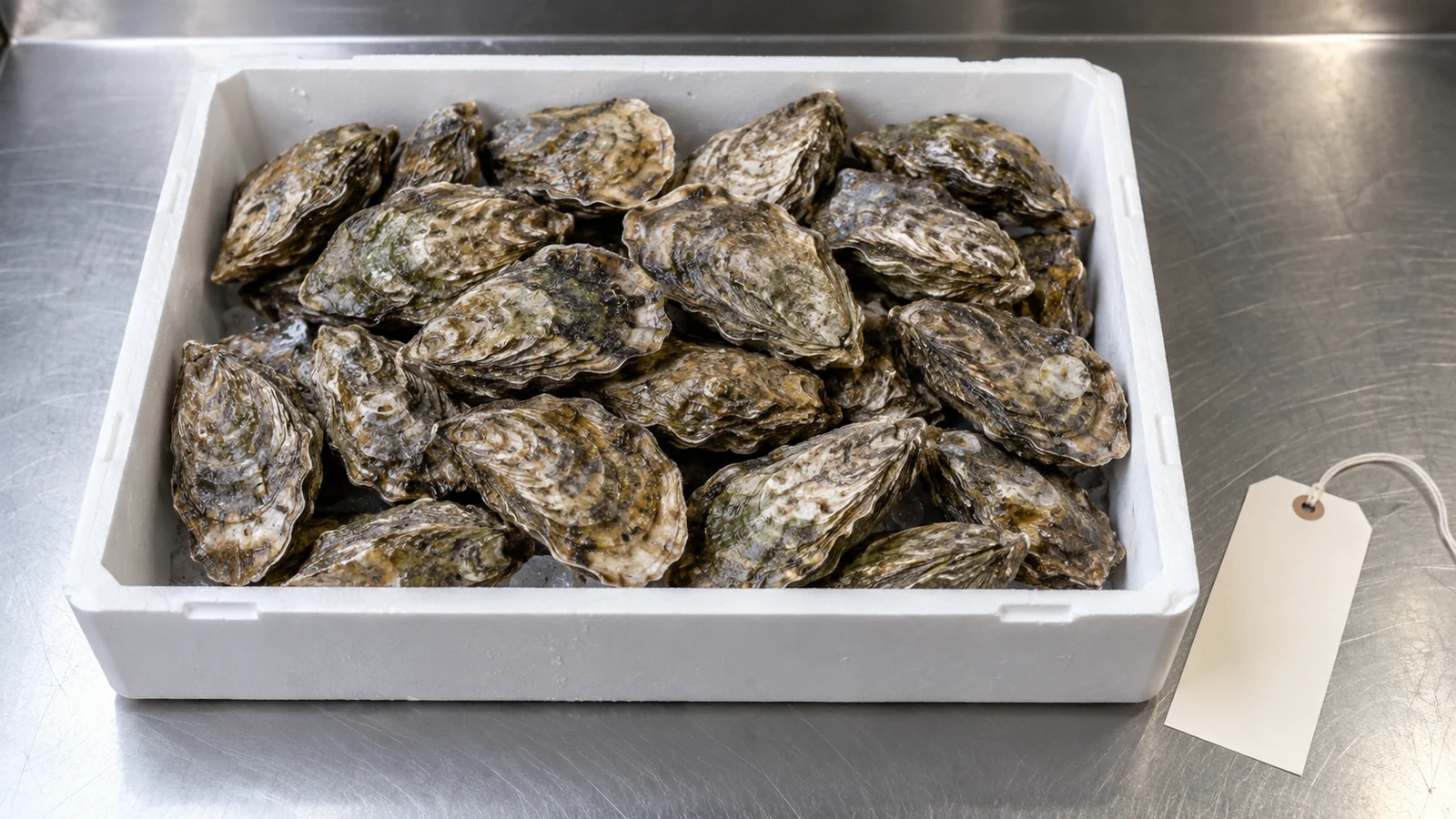
Little Wicomico Oyster Recall: Check VA-1421-SP and Harvest Dates
Quick answer: Do not eat, serve or sell whole oysters from Little Wicomico Oyster Company if the shellfish tag or supplier record shows dealer VA-1421-SP, harvest area Little Wicomico River or Little Wicomico River, Lower, and a harvest date from September 18 through October 8, 2026. FDA says to discard affected oysters or contact the distributor to arrange for destruction. If a restaurant served you oysters and you do not have a tag, ask it to check the supplier and harvest record for your order.
Information checked November 3, 2026. FDA and CDC added a material outbreak update on October 30; this guide uses the newer case and distribution details below.
Match all three recall identifiers
The recall concerns shellstock oysters, so a consumer may not see a familiar retail package, UPC or lot code. The strongest check is the traceability information on the shellfish tag, shipping container or seller’s supplier record.
| Check | Recalled detail | What to do |
|---|---|---|
| Dealer | Little Wicomico Oyster Company, VA-1421-SP | Continue checking the harvest area and date. |
| Harvest area | Little Wicomico River, VA or Little Wicomico River, Lower, VA | Continue checking the harvest date. |
| Harvest date | September 18 through October 8, 2026 | If the dealer and area also match, do not eat the oysters. |
| Product | Whole oysters in the shell, also called shellstock oysters | This alert does not identify every oyster or every Virginia growing area. |
| Distribution | Restaurants and retailers in CA, CO, CT, DC, DE, FL, GA, IL, MD, MO, NC, NJ, NV, NY, PA, TX and VA; further distribution may have occurred | Location alone cannot clear or confirm the product. Verify the traceability details. |
Oysters from other Virginia growing areas are not part of this recall, according to FDA. A Virginia origin by itself is therefore not enough to identify affected oysters.
What to do in your situation
| Your situation | Best next step |
|---|---|
| The dealer, harvest area and date all match | Keep the oysters from being eaten or served. Discard them or contact the distributor to arrange for destruction. |
| The oysters were served at a restaurant | Save the restaurant name, date and order details. Ask the restaurant to check the dealer number, harvest area and harvest date in its supplier records. |
| You bought oysters but no longer have the tag | Do not guess from appearance. Contact the retailer or distributor with your purchase date and receipt or order record. |
| The dealer matches but the harvest date is missing or unreadable | Set the oysters aside and contact the seller or Little Wicomico Oyster Company before using them. |
| The harvest area or date is different | The product does not match the identifiers in the October 30 FDA update, but check the current FDA page for later changes. |
| The oysters were opened or prepared on a surface | Do not eat the affected product. Clean and sanitize the containers, utensils and surfaces it touched, then wash your hands. |
Do not use smell, appearance or a taste test. FDA notes that food containing Salmonella can look, smell and taste normal.
CDC’s October 30 outbreak update: 28 illnesses in 13 states
CDC’s October 30 update reports 28 illnesses across 13 states, five hospitalizations among 22 people with hospitalization information, and no deaths. Illnesses began from May 29 through October 6, 2026. CDC says one new illness and one new state were reported since its October 19 update.
The 13 states with reported illnesses are not the same thing as FDA’s 17-state-plus-DC distribution list. Distribution describes where recalled oysters were sent to restaurants and retailers; the case count describes where confirmed illnesses were reported. FDA also warns that further product distribution may have occurred.
In the October 30 update, 11 of 14 people interviewed reported eating raw oysters. CDC says epidemiologic, laboratory and traceback data now show that oysters harvested by Little Wicomico Oyster Company from the Little Wicomico River made people sick in this outbreak. Virginia testing found Salmonella in oysters, and whole-genome sequencing showed that some samples contained the outbreak strain.
If you already ate the oysters
Contact a healthcare provider if you ate recalled oysters or develop symptoms, and mention the possible oyster exposure. CDC says Salmonella symptoms usually begin 6 hours to 6 days after infection and often include diarrhea, fever and stomach cramps. Illness usually lasts four to seven days.
CDC advises calling a doctor for diarrhea or vomiting lasting more than two days, blood in stool or urine, fever above 102°F, or signs of dehydration. Children younger than five, adults 65 and older, and people with weakened immune systems are more likely to become seriously ill.
This article cannot determine whether an illness is Salmonella. A healthcare provider or public-health authority can advise on testing, treatment and reporting.
Do not try to cook or freeze a recalled batch
The current FDA and CDC instruction is not to eat the recalled oysters. It does not provide a consumer cooking or freezing exception for a matching batch. Do not serve them raw, cooked, smoked or in another dish; discard them or contact the distributor for destruction.
If recalled oysters were mixed into a prepared dish, treat the dish as affected rather than picking out the oyster pieces.
Clean only the items and surfaces that had contact
FDA tells consumers, restaurants and retailers to carefully clean and sanitize surfaces and containers that touched the recalled oysters. Focus on the sink, tray, refrigerator shelf, cutting board, knife, gloves, reusable bag or other item that actually had contact.
First remove the oysters and visible residue without splashing. Wash the contacted items and surfaces, then use a food-contact-surface sanitizer according to its label and the surface manufacturer’s instructions. Do not mix bleach with ammonia, acids, vinegar or any other cleaner. Wash your hands with soap and warm water after the cleanup.
If a porous or damaged item cannot be cleaned and sanitized safely, discard it rather than continuing to use it for food preparation.
What this recall does not include
- It does not cover every oyster sold in the United States.
- It does not cover every oyster from Virginia.
- It does not identify crabs or finfish as recalled products.
- It does not mean drinking water is affected by the river closure.
- It does not provide a consumer exception for oysters that look or smell normal.
Virginia temporarily closed Little Wicomico River to shellfish harvesting beginning October 9, and FDA says oysters are not currently being harvested there and recalled product is past its shelf life. The closure and the product recall answer different questions: the closure stops new shellfish harvesting from the affected area, while the recall identifies oysters already harvested during the listed dates.
Where to ask about a missing tag or supplier record
Little Wicomico Oyster Company lists 804-436-5671 and info@lwoysters.com in the Virginia recall notice. When asking about a product, provide the seller, purchase or meal date, location, and any photo of the tag, container or receipt. Do not send payment information or unrelated personal records.
For illness reporting or medical advice, contact a healthcare provider or the appropriate local health department rather than the seller.
Related recall checks
Official sources
- FDA: Safety Alert for Salmonella — Oysters from Little Wicomico River, Virginia
- CDC: Investigation Update — Salmonella Outbreak, October 2026
- CDC: Symptoms of Salmonella Infection
- Virginia Department of Health: Recall Little Wicomico River
- FDA: Food Safety Tips for Consumers and Retailers During an Outbreak
Home Answer Desk will review this page if FDA, CDC or Virginia health officials change the recalled product, harvest window, distribution, illness count or consumer action.