Family Farmstead Cheddar Recall Updated: Check Lot 7/22/27
Quick answer: Do not eat Family Farmstead Raw Mild Cheddar if the 8-ounce package shows lot code 7/22/27 and Best By 7/22/27. The current FDA-hosted notice says the cheese may contain Shiga toxin-producing E. coli O26:H11 and O45:H2. Discard a matching package or return it to the place of purchase for a full refund.
Information checked November 3, 2026, against FDA’s current recall page. FDA identifies it as a correction to the company’s October 15 release but does not display a separate correction time.
Match the cheese against the recalled identifiers
The recall covers one specific Family Farmstead product and code. The label design or the words “raw cheddar” by themselves are not enough to confirm a match.
| Check | Recalled detail | How to use it |
|---|---|---|
| Brand | Family Farmstead | Confirm the front label |
| Product | Raw Mild Cheddar Cheese | Do not apply this notice to every Family Farmstead product |
| Package size | 8 oz (226 g) | Confirm the size on the front label |
| Lot code | 7/22/27 | Find the package’s printed lot marking |
| Best-by date | 7/22/27 | Both the lot and date should match |
| Current hazard | Shiga toxin-producing E. coli O26:H11 and O45:H2 | Use the current FDA page, not an older headline |
| Official action | Do not consume; discard or return for a full refund | Keep the package closed while checking it |
No other Family Farmstead Dairy products are included in the current notice.
What FDA corrected after the first announcement
Several articles published from the first version of the notice now contain superseded facts. FDA’s current page explicitly says the company update corrects the distribution pattern and serotype.
| Detail | Earlier reports said | Current FDA-hosted notice says |
|---|---|---|
| E. coli type | O157:H7 | O26:H11 and O45:H2 |
| Named distribution | New York and New Jersey | New York, Pennsylvania, New Jersey, Connecticut, Maryland, Virginia and Massachusetts |
| Possible wider reach | Not emphasized | Other states may have received product through downstream distributors |
| Product code | Lot and Best By 7/22/27 | Unchanged: Lot and Best By 7/22/27 |
| Consumer action | Do not eat; discard or return | Unchanged |
The correction does not make a package outside the seven named states automatically safe. Distribution can continue through another business, and the FDA notice says additional states may be involved. The package identifiers are the better check.
Use the package image as a clue, not the final test
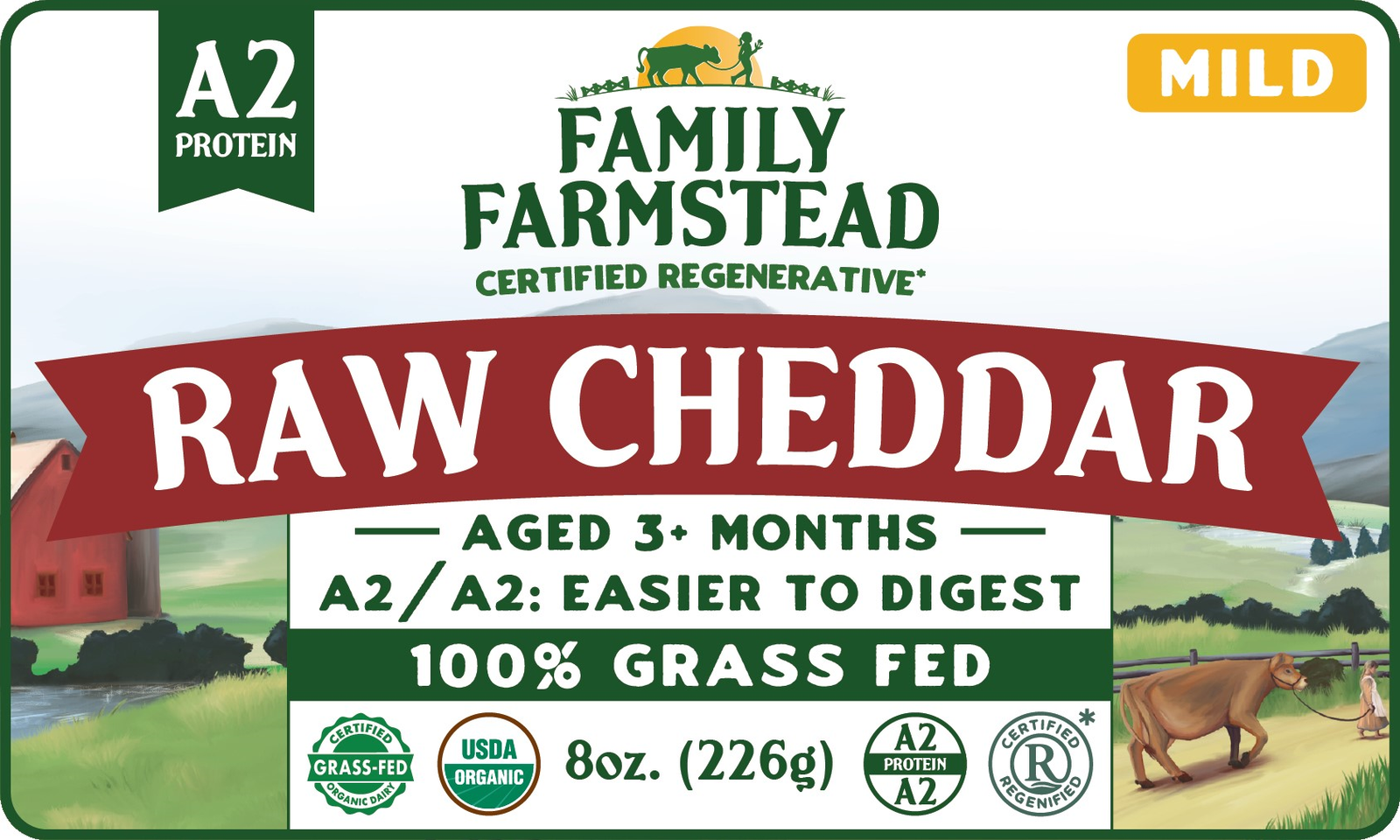
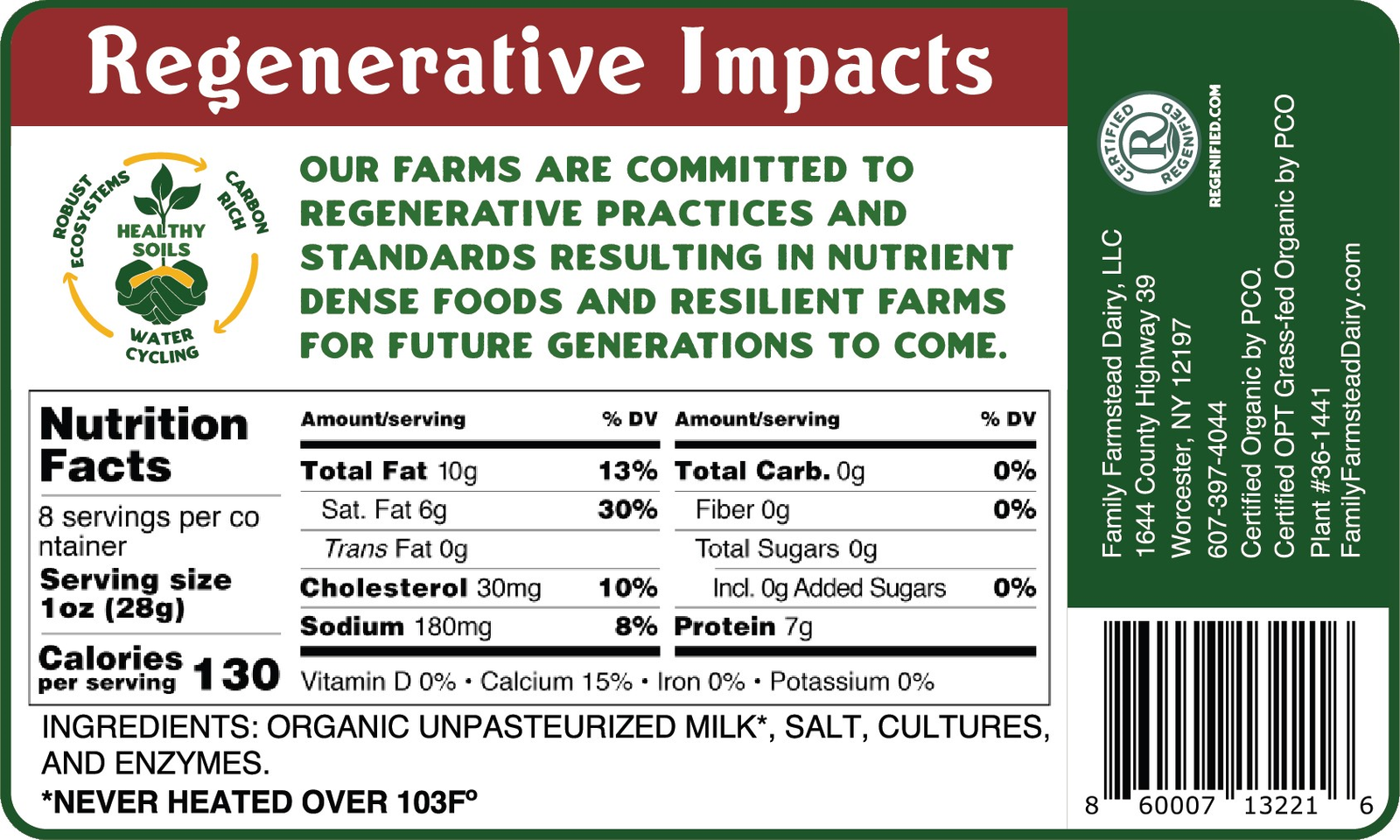
The FDA-hosted label image shows Family Farmstead A2 Protein Raw Cheddar, marked Mild and 8 oz (226 g). The back label lists organic unpasteurized milk among the ingredients. Packaging appearance can help you find the right item, but it cannot replace the printed lot and best-by date.
What to do in four common situations
| What you find | What it means | Best next step |
|---|---|---|
| Product, 8-ounce size, lot 7/22/27 and Best By 7/22/27 all match | The package matches the current recall | Do not eat it. Keep it closed, then discard it or return it for a full refund. |
| Product and size match, but the lot or date is smeared or missing | You cannot use the code to clear the package | Set it aside and contact Family Farmstead or the retailer before eating it. |
| Product looks similar, but the lot or best-by date is different | It is not identified in the current October 15 notice | Check FDA’s current page for later changes; contact the company if uncertainty remains. |
| You already ate some | Exposure does not prove infection | Watch for symptoms and use the CDC thresholds below for medical advice. Do not eat more from a matching package. |
Do not taste the cheese to decide whether it is safe. A foodborne pathogen cannot be ruled out by smell, flavor or appearance.
Where the cheese was distributed
The corrected FDA-hosted announcement names grocers in:
- New York
- Pennsylvania
- New Jersey
- Connecticut
- Maryland
- Virginia
- Massachusetts
It also says downstream distributors may have sent product to other states. If the identifiers match but your state is not listed, follow the recall action rather than relying on location alone.
The notice does not name individual stores. If you no longer have a receipt, the package code is still the key household check.
Return or discard a matching package safely
Keep the cheese closed while you photograph the lot and best-by date or prepare to return it. Do not donate, serve or give away a matching package.
The company announcement allows two routes: discard the cheese or return it to the place of purchase for a full refund. If you discard it, seal it so another person or animal cannot retrieve it. If cheese or liquid leaked onto a refrigerator shelf, drawer or reusable bag, clean the affected items and surfaces. Follow the CDC refrigerator-cleaning sequence below. Follow the refrigerator manufacturer’s care instructions and do not mix cleaning products.
CDC recommends cleaning the refrigerator after recalled food has been stored inside, even if the package appears sealed, because germs can spread to shelves and drawers. Discard the recalled cheese and any food stored with or touching it. Empty the refrigerator without leaving perishable food out for more than 2 hours. Wash removable parts by hand with hot, soapy water; let cold glass parts reach room temperature first. Wipe the interior with hot, soapy water, rinse with clean water, and dry. CDC says optional sanitizing after cleaning uses 1 tablespoon of liquid bleach in 1 gallon of water. Follow the bleach label and refrigerator manual; never mix bleach with other products.
If you already ate the recalled cheese
FDA reported no associated illnesses when it published the current notice. That does not make a matching package safe to eat.
CDC says Shiga toxin-producing E. coli infection can cause watery or bloody diarrhea and severe stomach cramps; some people also have vomiting or a low fever. Call a doctor for diarrhea or vomiting lasting more than two days, bloody stool or urine, fever above 102°F, signs of dehydration, or signs of hemolytic uremic syndrome (HUS).
HUS is a medical emergency. CDC lists warning signs such as urinating less often or not at all, unexplained bruising or tiny red spots, blood in urine, unusual tiredness or irritability, paleness, and decreased alertness. Seek medical care immediately if those signs appear.
Tell the healthcare provider what product you ate and, if available, the lot and best-by date. This article cannot determine whether symptoms are caused by E. coli.
What this recall does not cover
- It does not cover every Family Farmstead product.
- It does not cover every package of raw cheddar.
- It does not identify a different lot or best-by date as recalled.
- It does not say every store in the named states carried the product.
- It does not say a matching package is safe when purchased outside the named states.
Company contact
Family Farmstead Dairy lists 607-397-4044 and customerservice@familyfarmsteaddairy.com for consumer questions, Monday through Friday from 8:30 a.m. to 5 p.m. Eastern.
When asking about an unreadable package code, provide the product name, package size, purchase location and a clear photo. Do not send payment information or unrelated personal records.
Related recall checks
- Sierra Nevada Graziers cheese recall: check the UPC and size
- Lidl Gelatelli gelato recall: check lot 085261
- Current Home Alerts & Updates
Official sources
- FDA: Family Farmstead Dairy Raw Mild Cheddar recall — corrected O26:H11 and O45:H2 notice
- CDC: Symptoms of E. coli infection
- CDC: How to clean your refrigerator because of a food recall
Home Answer Desk will review this page if FDA or Family Farmstead changes the product, codes, distribution, illness information or consumer action.