How to Clean Window Screens Without Damaging Them
Quick answer
To clean most removable window screens, label each screen, lay it flat on a towel, remove loose dust with a vacuum and soft brush attachment, then wash it gently with warm water and a small amount of mild dish soap. Rinse with low-pressure water and let it dry completely before reinstalling it. Use only water on metal mesh if the manufacturer recommends it, and never use a pressure washer.
The safest method depends on the mesh material and whether the screen is removable, fixed, or retractable. A soft fiberglass screen can stretch, an aluminum screen can crease, and a retractable screen can trap moisture when rolled up. Inspect first, then choose the least aggressive method that will remove the dirt.
Before you start: window safety
- Work from inside or at ground level. Do not lean through an open window or climb onto an unstable surface.
- A window screen is an insect barrier, not a fall guard. Keep children and pets away from the open window while the screen is removed.
- Stop if the frame is bent, the mesh is brittle or torn, the spline is loose, or removal tabs are damaged. Cleaning pressure can make these problems worse.
- Check the window manufacturer’s instructions before removing a specialty, high-transparency, or retractable screen.
Choose the right method for your screen
| Screen type | Best first method | What to avoid |
|---|---|---|
| Removable fiberglass or vinyl mesh | Vacuum first, then wash flat with mild soapy water and a soft brush | Hard scrubbing, twisting the frame, and high-pressure water |
| Aluminum or other metal mesh | Rinse with clean water; use mild soap only when the manufacturer permits it | Acidic or abrasive cleaners that may affect the finish |
| Fixed screen | Vacuum both sides where accessible, then wipe gently with a barely damp cloth | Soaking the window opening or leaning outside |
| Retractable or hidden screen | Fully extend it and vacuum lightly; follow its care manual before washing | Retracting it while damp |
| Torn, loose, brittle, or bent screen | Repair or replace it before deep cleaning | Scrubbing that enlarges a tear or releases the spline |
What you need
- Painter’s tape or removable labels and a pencil
- Vacuum with a clean upholstery or soft brush attachment
- Two soft microfiber cloths or a very soft-bristle brush
- Bucket of warm water
- A few drops of mild dish soap, if approved for the screen material
- Garden hose with gentle flow, a watering can, or clean rinse water
- Clean towels and a protected, flat work surface
Do not mix cleaners. Bleach, ammonia, strong solvents, abrasive powders, and stiff brushes are unnecessary for routine screen cleaning and may damage mesh, coatings, or nearby window finishes.
How to clean removable window screens
1. Identify and inspect each screen
Look for a manufacturer label and note whether the mesh appears to be fiberglass, vinyl-coated fiberglass, metal, or a specialty material. Check the corners, frame, spline, clips, and pull tabs. If the mesh is chalky, brittle, sagging, or already separating from the frame, plan a repair instead of a vigorous wash.
2. Photograph, label, and remove it carefully
Take a quick photo of the installed position before removal. Label the screen with its room and window location because similar-looking frames may not be interchangeable. Follow the window manual for the release tabs or clips, support the frame with both hands, and never force it. Lay the screen flat on a clean towel rather than propping it against a wall.
3. Remove dry dust before adding water
Vacuum both sides at low suction with a clean upholstery or soft brush attachment. Let the tool glide over the mesh; do not press it into the screen. A dry pass removes pollen, lint, cobwebs, and grit that could otherwise turn into muddy residue during washing.
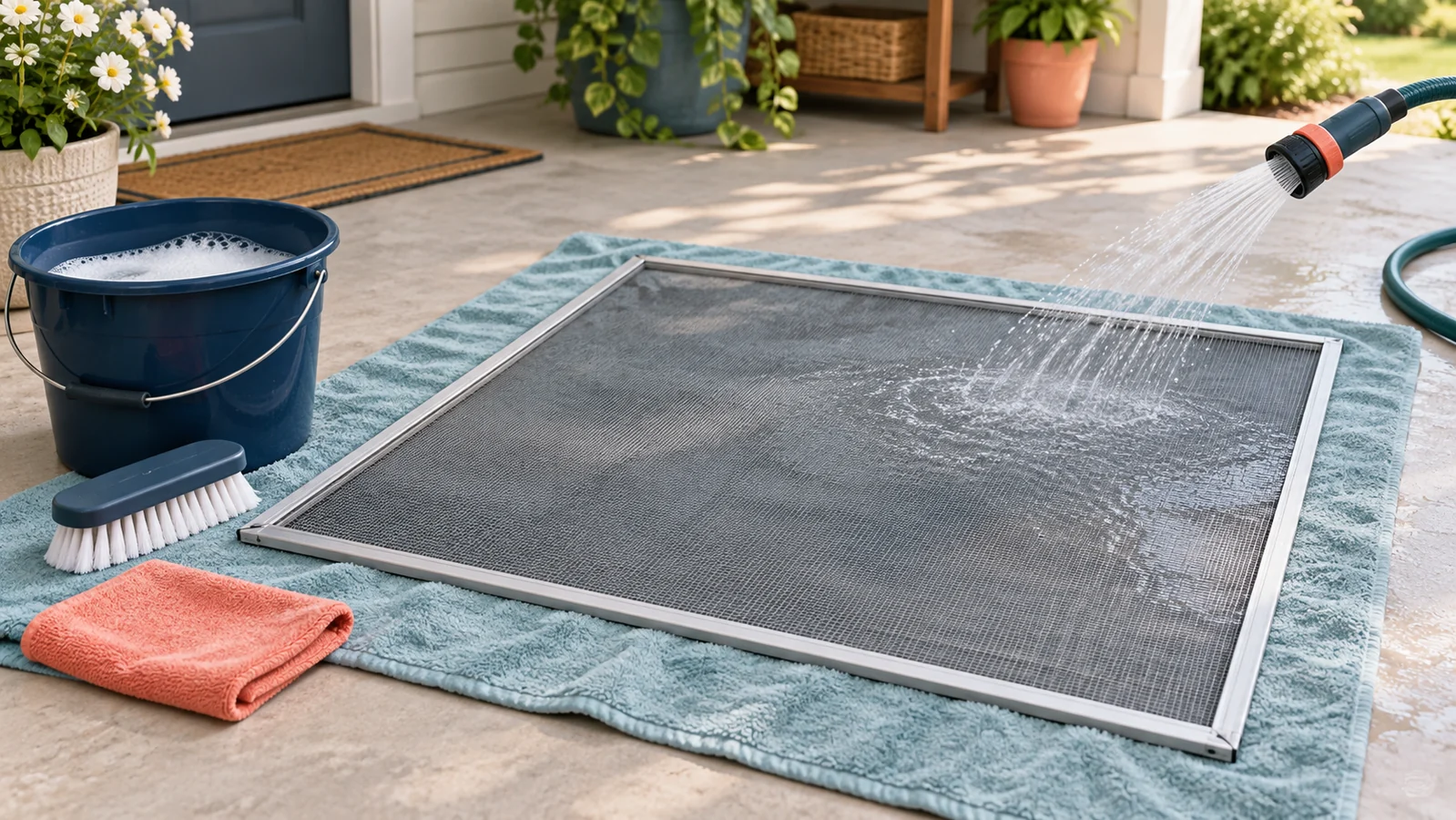
4. Wash gently on a supported surface
For conventional fiberglass or vinyl-coated screens, mix a few drops of mild dish soap into warm water. Dampen a soft cloth or brush and work across the mesh with light, overlapping strokes. Clean the frame and corners without pushing on the center of the screen. Turn the screen over and repeat on the other side.
For metal mesh, begin with clean water. Some manufacturers recommend water only, so use soap only when the product instructions allow it. If oily residue remains, test the approved solution on a small corner before cleaning the full screen.
5. Rinse without pressure
Rinse from the top downward with a gentle hose flow, watering can, or clean damp cloth. Continue until no suds remain. Never use a pressure washer: concentrated water can stretch the mesh, loosen the spline, bend the frame, or push water into the window assembly.
6. Dry fully and reinstall
Blot the frame with a towel, then leave the screen flat or securely upright in a shaded, ventilated area until it is completely dry. While it dries, vacuum the window track and wipe the sill with a damp cloth. Reinstall the screen in its original opening and confirm that every clip or latch is secure.
How to clean a window screen without removing it
If the screen is fixed or difficult to remove, close the window first and place towels along the interior sill. Vacuum the accessible side from top to bottom with light pressure. If the manufacturer’s instructions permit damp cleaning, wipe the mesh with a well-wrung microfiber cloth and clean water or a weak mild-soap solution. Follow with a second cloth dampened with clean water, then leave the window open only when it is safe to do so and the area is supervised.
Do not spray large amounts of water toward an installed screen. Water can enter tracks, walls, or nearby finishes. For an exterior side that cannot be reached safely from the ground, use a professional service rather than leaning out or using an unstable ladder.
What different dirt may need
| What you see | Best response |
|---|---|
| Loose pollen, dust, or pet hair | Vacuum or use a soft dry brush before deciding whether washing is needed |
| Gray film or ordinary outdoor grime | Use mild soapy water on approved fiberglass or vinyl screens, then rinse well |
| Greasy kitchen residue | Use warm water and mild detergent only if the manufacturer allows it; repeat a gentle pass instead of scrubbing harder |
| Salt deposits near the coast | Rinse with fresh water more frequently and dry the frame; follow the manufacturer’s coastal-care schedule |
| Paint, construction material, or unknown chemical residue | Do not scrape or apply solvents blindly; ask the screen or window manufacturer for a compatible method |
| Dark spotting or recurring organic growth | Wear gloves, avoid dry brushing into the air, and address the moisture source; seek professional help if growth is extensive or the material is deteriorating |
When cleaning will not fix the screen
A screen may still look dull after cleaning because the mesh has faded, its coating has aged, or fine material is permanently embedded. Repair or replacement is usually the better choice when the frame is bent, corners are cracked, the spline will not stay seated, the mesh is brittle or badly sagging, or a tear is growing. A small isolated hole may accept a compatible patch, but the patch material and installation method should match the original mesh.
Regular light cleaning prevents a heavy buildup that demands more force later. Most manufacturers recommend at least annual care. Homes near salt air, agriculture, construction, or heavy traffic may need a gentle rinse or vacuum more often.
Common mistakes to avoid
- Pressure-washing the mesh or using a concentrated hose nozzle
- Scrubbing a screen while it is unsupported or standing on one edge
- Using stiff brushes, scouring pads, abrasive powder, or unapproved solvents
- Forcing tabs or bending the frame during removal
- Reinstalling or retracting a screen before it is fully dry
- Assuming a clean screen is strong enough to prevent a fall
Frequently asked questions
Can I use vinegar to clean window screens?
Use vinegar only if the screen or window manufacturer specifically permits it. Material and finish guidance varies, and some metal-screen makers recommend water alone. Clean water or manufacturer-approved mild soap is the safer general choice. Never mix vinegar with bleach or other cleaners.
Can I pressure-wash window screens?
No. Window manufacturers warn against power-washing because it can stretch or tear mesh, loosen its spline, bend the frame, and force water where it should not go. Use a gentle rinse instead.
How often should window screens be cleaned?
Annual cleaning is a reasonable baseline supported by major window manufacturers. Inspect and clean more frequently when the home is exposed to salt spray, agricultural dust, construction, industrial pollution, or heavy pollen.
Why does the screen still look dirty after washing?
Check for dried soap, dirt on the glass or track behind it, faded mesh, corrosion, or an aging coating. Rinse once more with clean water. If the appearance does not improve and the mesh feels brittle or chalky, replacement may be more effective than stronger cleaner.
For a simple room-by-room maintenance routine, use our bathroom cleaning checklist. If buildup is slowing you down, these safe bathroom cleaning shortcuts apply the same principle: loosen dirt gently before adding pressure. You can also browse more advice for stains and household surfaces.