How to Clean a Burnt Pot Without Damaging the Surface
Quick answer: For routine burnt-food residue—not an active fire—let the pot cool completely and identify its food-contact surface. Start with a gentle wash and a maker-approved soft tool; soak only a surface whose care instructions allow it. Do not leave bare cast iron or carbon steel soaking. Uncoated stainless steel, nonstick, enamel, and bare cast iron need different escalation routes. Do not put cold water in a hot pot, mix cleaners, or assume that every silver-colored pot can take an abrasive.
Updated October 23, 2026: moved cleaner-compatibility answers into material selection and removed repeated stain and coating-damage FAQs. The October 22 soak, hot-water, and stop-use precautions and October 19 material guide are retained.
The safest way to clean a burnt pot is to make two decisions before you scrub: what surface is exposed and what kind of mark remains. This guide helps you separate removable food from oil film, mineral residue, and heat discoloration, so you do not damage a sound pot while chasing a mark that needs a different treatment.
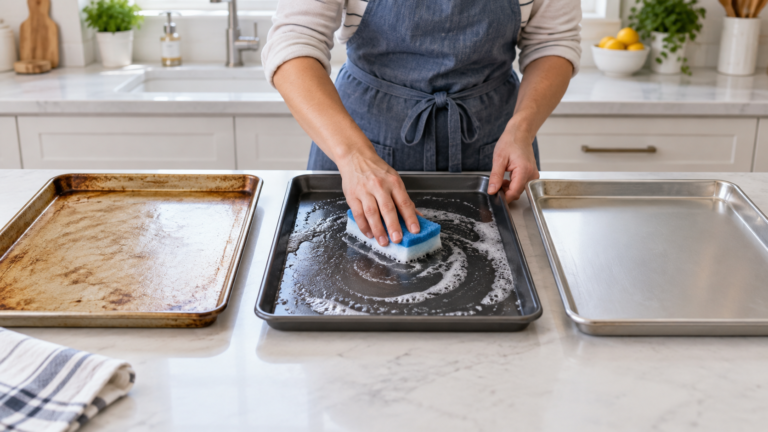
If you are cleaning another type of cookware, use our guides for baking sheets or rust on bare cast iron.
Start the gentle cleaning route · Choose your material · Check before cooking
If the pot is still smoking or on fire: do not carry a burning pot or pour water on a grease fire. Turn off the heat only if safely accessible. If flames are not immediately controlled, you are unsure, or smoke threatens you, leave and call 911 from safety. National Park Service kitchen-fire guidance explains why water is not a grease-fire remedy. The cleaning steps and diagram below apply only after the emergency is over and the pot is fully cool.
At a glance
| Time | Difficulty | Start with | Main risk |
|---|---|---|---|
| Estimate: 15–45 minutes of work, plus cooling and any permitted soak | Easy to moderate | Dish soap, warm water, soft sponge, wood or silicone tool | Thermal shock, scratching, or damaging a coating |
First, identify the pot’s cooking surface
Look at the food-contact surface, not just the exterior. A stainless-looking exterior can surround an aluminum core, and a dark interior may be enamel rather than seasoned iron. If you cannot identify the surface from the pot, packaging, model name, or manufacturer’s care page, use only a brief gentle wash; do not soak, heat a cleaning mixture, or escalate until you identify it.
| Surface | Safe first route | Do not assume |
|---|---|---|
| Uncoated stainless steel | Soak; if the maker permits, simmer plain water and lift softened food with wood or silicone | A permanent color mark is still burnt food |
| Nonstick or ceramic coating | Cool fully; wash with mild soap and a soft sponge | A metal tool or abrasive powder is safe |
| Enameled cast iron | Cool fully; use warm soapy water and a nylon or soft tool | It should be scrubbed like bare iron |
| Bare cast iron or carbon steel | Use a pan scraper or short maker-approved simmer; dry and oil promptly | Long soaking is harmless |
| Aluminum, copper, or unknown lining | Warm soapy water while you find the exact maker instructions | The visible color proves the material or lining |

Stop before cleaning: Do not enter smoke or handle a hot pot to inspect it. Once the situation is safe, let the pot cool completely. Stop using the pot if the handle is loose, the base is badly warped, enamel is cracked or chipped on the food-contact surface, or a nonstick coating is blistered, peeling, or deeply scratched. Cleaning cannot repair structural damage or a failing coating. Never mix bleach with acids or ammonia, and do not combine cleaners in a pot.
Next, identify what is actually stuck
Use texture and location, not color alone. More scrubbing is not the answer to every dark or cloudy mark.
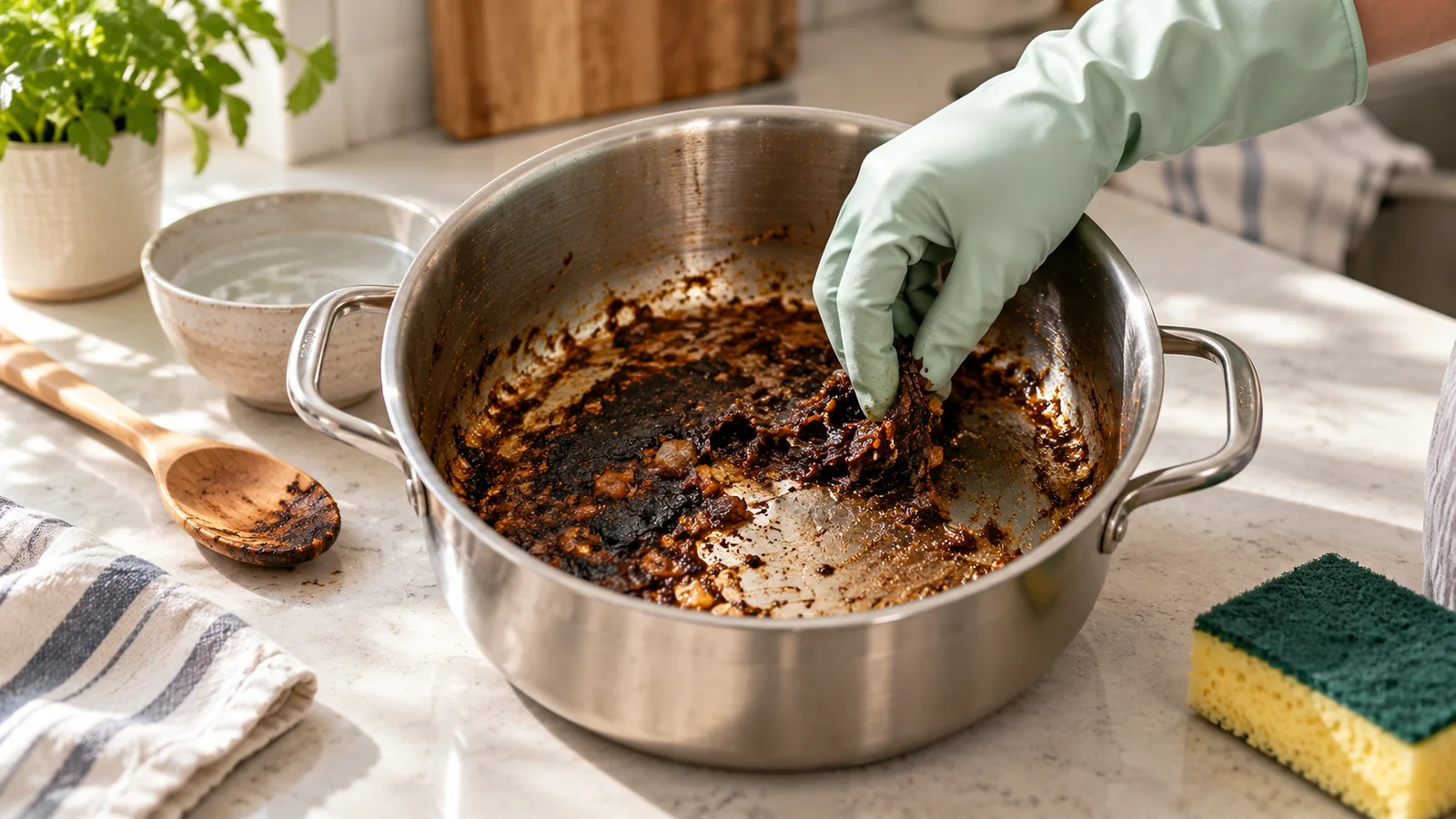
- Carbonized food: Raised food residue visible in good light, often with a defined edge. On an intact, identified surface, a maker-approved soft tool may lift softened food. Do not probe a crack, chip, or lifting coating to identify it.
- Polymerized oil: A thin sticky, amber, brown, or black film, often above the food line or around the sides. It may need the maker’s approved degreasing route rather than another soak.
- Mineral film: Chalky or cloudy white residue left after water evaporates. Treat it as a deposit only if the surface maker allows the recommended cleaner.
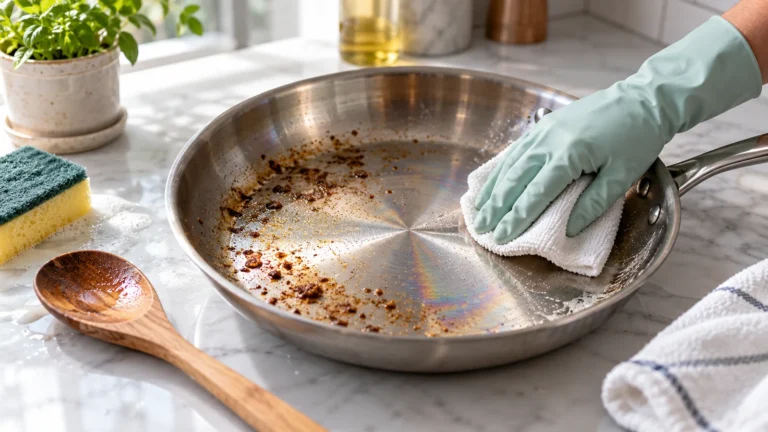
- Heat tint or discoloration: Rainbow, blue, bronze, or brown color on otherwise smooth stainless steel. Stop scraping; use the maker’s discoloration guidance.
- Surface damage: A pit, crack, chip, blister, flake, or deep scratch does not wipe away. Treat it as a condition question, not a cleaning challenge.
The gentlest general method
- Start only after any emergency is resolved. With the heat off, allow the pot to cool naturally before cleaning. Do not move a burning pot, handle hot metal, or speed cooling with cold water. Le Creuset and All-Clad warn against thermal shock.
- Remove loose food. Use a wooden, silicone, or maker-approved plastic utensil. Do not chisel at the surface.
- Choose wash or soak before adding water. Briefly wash bare cast iron or carbon steel; do not leave it soaking. For an identified surface whose maker permits soaking, cover the residue with warm soapy water for the maker’s stated time. If the surface or permission is unknown, stay with a gentle wash and find its care instructions instead of defaulting to a timed soak.
- Wipe from the loose edge inward. Use a soft sponge or approved nylon tool. If a layer releases, rinse it away rather than grinding it back into the surface.
- Reassess what remains. If it is still raised food, repeat a compatible softening step. If it is a smooth film or color change, switch to the matching manufacturer route.
- Rinse and dry completely. Dry bare cast iron or carbon steel promptly and restore the thin oil layer as its maker directs.
How to escalate by material
Baking soda is not a universal burnt-pot treatment. Some manufacturers allow a baking-soda method on specific surfaces, while other finishes require a gentler route. Check the care instructions for the exact cookware before using an abrasive paste or heating a mixture.
Use vinegar only when the manufacturer allows it for that material and finish. Acid can be unsuitable for seasoned cast iron and some reactive or lined cookware. Never mix vinegar with bleach.
Before any permitted simmer: use only an intact pot on its approved heat source, with safe handles and a stable base. Follow the exact maker’s recipe; a plain-water route is not permission to heat soap, an unknown cleaner, or a homemade mixture. Remove previous cleaner by its label directions first. Stay nearby, keep water over the residue, and never boil dry. After switching off, let the pot and liquid cool before emptying or rinsing. Handles can be hot: use dry heat protection when needed, and do not carry a heavy pot of boiling cleaning water to the sink.
Uncoated stainless steel
If a permitted soak leaves raised food, check the exact stainless line’s published stuck-food method before heating or using a cleanser. Follow any simmer recipe exactly, lift softened food only with a compatible tool, and let the liquid cool before emptying. A manufacturer’s baking-soda recipe is not interchangeable with a plain-water or chemical-cleaner recipe. All-Clad permits specific nonabrasive, non-chlorine cookware cleansers for difficult interior marks, but prohibits oven cleaner, steel wool, chlorine bleach, and harsh pads. Follow the care page for your exact stainless line before using a powder or acidic treatment. If the food is gone but white film, rainbow tint, or sticky oil remains, use the stainless-steel pan mark-identification guide to choose the right next step instead of repeating a burnt-food treatment.
Nonstick or ceramic-coated cookware
Keep the route mild: cool fully, use warm soapy water, and clean with a soft sponge or the tool the manufacturer approves. All-Clad advises plastic, nylon, silicone, or wood instead of metal on its nonstick cookware and warns against steel wool, oven cleaner, and harsh detergents. Do not borrow a stainless-steel method for a coating. If the approved gentle method is not loosening the food, consult the exact model’s instructions rather than increasing abrasion or inventing a hotter treatment.
Enameled cast iron
Let the pot reach room temperature, then wash with warm water, mild dish soap, and a soft natural or nylon sponge. Le Creuset warns that cold water in a hot enameled pot can crack the enamel and advises against metal sponges, abrasive cleaners, and metal utensils. For its enameled cast iron, Le Creuset suggests a 15–20-minute warm-soapy-water soak for baked-on food; this is a brand-and-material example, not a rule for every pot. Some enamel makers also publish a controlled simmer method. Use only the exact brand and line’s recipe, then let the pot and liquid cool before emptying and washing.
Bare cast iron or seasoned carbon steel
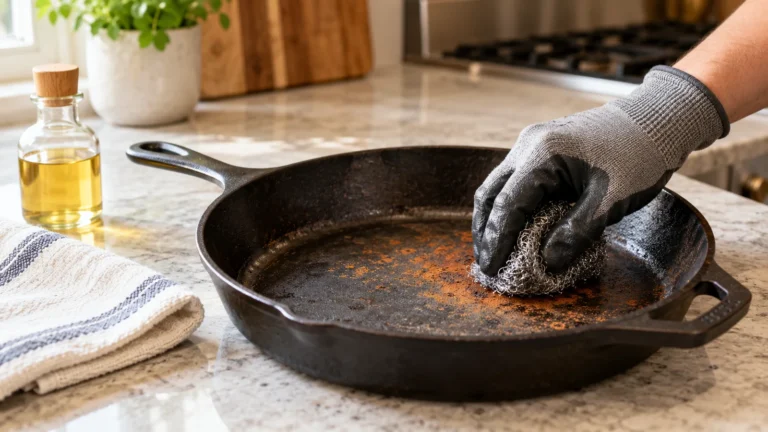
Do not leave seasoned iron soaking. Lodge’s current cast-iron cleaning guide recommends washing, using a pan scraper for stuck food, drying thoroughly, and applying a very thin oil layer. Its separate carbon-steel care page permits a 3–5-minute water simmer for stubborn food; that timing belongs to the carbon-steel instructions, not every cast-iron or coated pot. If following a permitted simmer, switch off and let the pot and water cool before emptying and washing, then dry and oil promptly. If seasoning has failed or rust remains, use the maker’s reseasoning route rather than repeatedly scouring the same spot.
Aluminum, copper, or an unknown lining
There is no safe universal escalation because aluminum may be bare, anodized, or coated, while copper cookware may have a stainless or tin lining. Use only the gentle wash while you identify the brand and construction. Do not use an acidic soak, alkaline oven cleaner, abrasive powder, or boiling treatment simply because it worked on a different pot.
When to repeat, when to stop, and when to replace
Before returning the pot to cooking: let it cool, finish the chosen cleaner’s removal and rinsing instructions, and dry it. Inspect the food-contact surface in good light without running a finger across a suspect chip, pit, sharp edge, or peeling coating. The goal is removed food and cleaner residue—not a like-new color at the expense of the finish.
Ready: removable residue is gone, required rinsing is complete, the pot is dry, and the intact surface, handle, and base show no stop-use problem below. Bare cast iron and carbon steel also need their maker’s thin-oil or seasoning care. Not ready: remaining food or cleaner needs its compatible removal step; a damaged pot needs manufacturer advice, not a heat test to prove it is safe.
| What you find | Next action |
|---|---|
| Raised residue is softer and lifting | Repeat the same compatible softening cycle |
| Surface is smooth but discolored | Stop scrubbing and use the maker’s stain or heat-tint route |
| Pot rocks or no longer sits flat | Stop using it until the manufacturer advises whether it is serviceable |
| Loose handle, crack, deep pit, or sharp edge | Do not continue cooking; cleaning cannot restore structural safety |
| Flaking, blistered, or deeply scratched coating | Stop using it and follow the maker’s replacement or warranty guidance |
Methods that create more risk than value
- Do not pour cold water into a very hot pot.
- Do not use steel wool, metal scrapers, or abrasive powder on nonstick or enamel.
- Do not use oven cleaner unless the exact cookware manufacturer expressly permits it.
- Do not mix vinegar with bleach, bleach with ammonia, or one commercial cleaner with another.
- Do not heat a cleaning mixture in coated cookware unless the maker publishes that exact method.
- Do not keep scrubbing to erase a pit, crack, chip, failing coating, or permanent heat mark.
Sources
- All-Clad — Use and Care Guide
- All-Clad — Cleaning and Care FAQ
- Le Creuset — How to Care for and Clean Enameled Cast Iron
- Lodge — Beginner’s Guide to Cast Iron Cleaning and Care
- Lodge — Carbon Steel Cleaning and Care; material-specific simmer timing
- Lodge — Current Cast Iron Cleaning Guide
- National Park Service — Kitchen and Grease-Fire Safety
- KitchenAid — How to Clean a Burnt Pot