How to Clean a Stainless-Steel Pan: Food, Heat Tint, and Mineral Film
Quick answer: Confirm the cooking surface is intact, uncoated stainless steel, then let the pan cool completely. Remove loose food, soak in warm soapy water if needed, wash with a soft sponge, rinse, and dry. Treat stuck food, white mineral film, rainbow heat tint, and sticky burned oil as different problems. Try the soak before the maker-approved water-simmer route below. A cleaner labeled for stainless appliances is not automatically suitable for a pan’s cooking surface. Stop if the pan is cracked, peeling, sharply damaged, or unstable.
Stainless steel is durable, but the wrong diagnosis can turn a cosmetic mark into permanent scratching. First decide whether the surface holds food, mineral scale, heat discoloration, polymerized oil, or physical damage.
Updated October 23, 2026: removed two FAQ repeats already covered in the cooling and heat-tint sections. The October 22 hot-water, cleaner-selection, and damage precautions and October 20 material guidance are retained.
Identify the mark · Loosen stuck food safely · Check whether to stop
Identify the mark before choosing a cleaner
| What the mark looks like | Likely cause | Start here | Do not confuse it with |
|---|---|---|---|
| Raised brown or black food | Burned starch, protein, sauce, or fat | Warm soak first; use the water-simmer route only if allowed for this pan | Pitting in the metal |
| Chalky white spots or cloudy ring | Hard-water minerals | Maker-approved mild acid rinse, then wash and dry | Salt pitting |
| Blue, gold, or rainbow sheen | Heat tint/oxidation | Approved stainless cleaner or diluted vinegar if permitted | Nonstick coating damage—the pan must be uncoated stainless |
| Sticky amber film around sides | Polymerized cooking oil | Degreasing soak and approved stainless cleanser | Normal brushed finish |
| Small permanent pits, deep/sharp damage, peeling, or a warped base | Physical or corrosion damage | Do not scrub away pits. Ask the maker about uncertain damage; stop using a peeling, sharply damaged, or unstable pan | A removable stain |
Time: 10–30 minutes; severe burned food may need repeated short treatments. Difficulty: easy to moderate. Supplies: dish soap, soft sponge, wood or silicone utensil, baking soda or stainless cleaner only if the manufacturer allows it, and soft towels.
Surface boundary: This guide is for uncoated stainless-steel cookware, not merely a pan with a stainless exterior. If the cooking surface is nonstick, enameled, copper-lined, hard-anodized, or unknown, use its exact care instructions instead. Never heat proprietary cleaner or an unidentified residue. Do not add cold water to a hot pan, mix cleaning products, use chlorine bleach, or continue using cookware that is cracked, delaminating, sharply damaged, or unstable on the burner.
Routine cleaning after cooking
- Let the pan cool. All-Clad advises cooling completely before washing to reduce warping risk.
- Remove food and excess oil. Wipe oil into the trash rather than sending a large amount down the drain.
- Soak if necessary. Add warm water and dish soap. A short soak is usually enough for fresh residue.
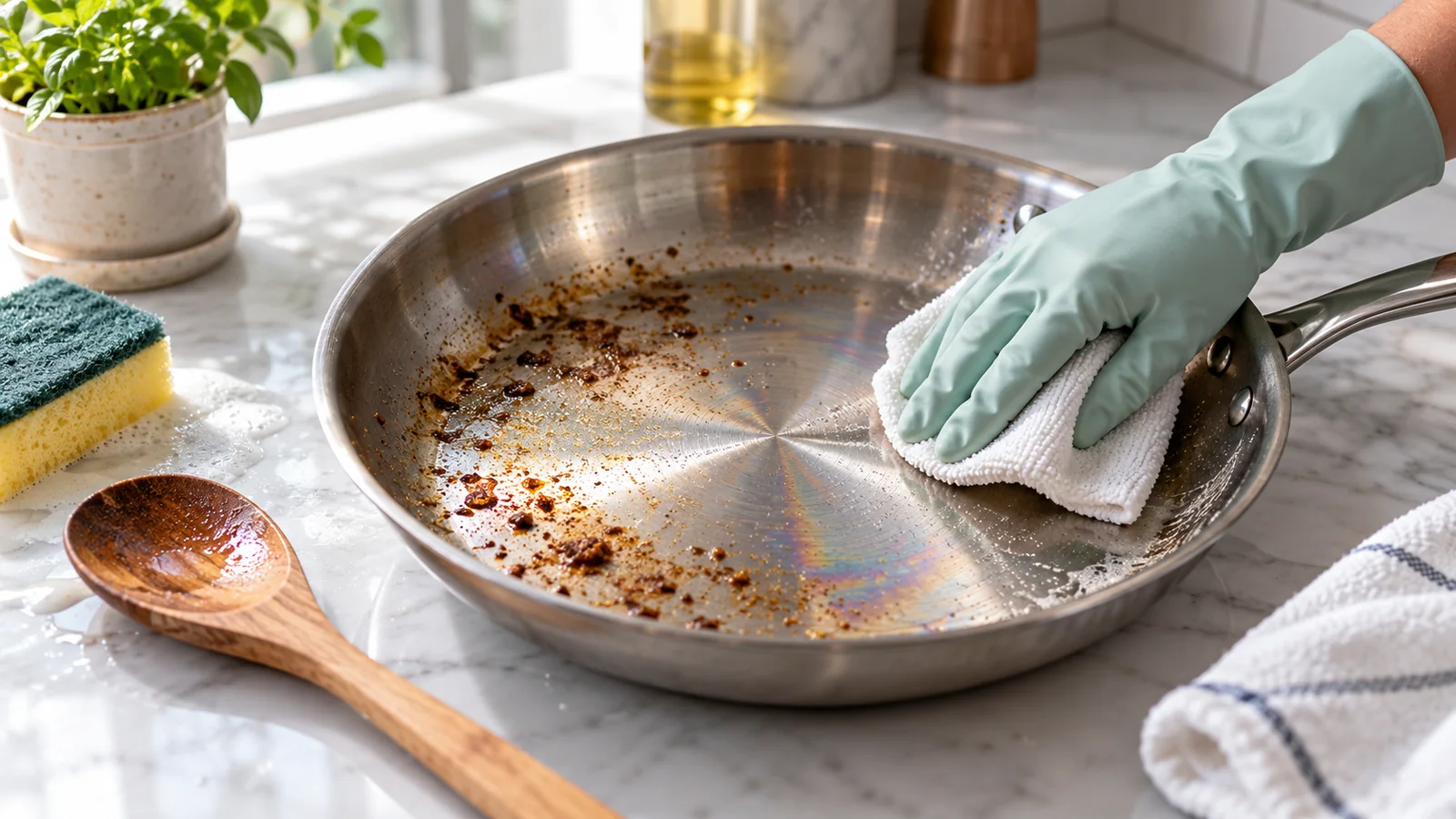
- Wash with a soft sponge or cloth. Clean the inside, rim, rivets, underside, and handle joint. Use a small soft brush around rivets if food collects there.
- Rinse thoroughly. Soap left on polished steel can dry as a cloudy film.
- Dry immediately. A soft towel prevents many water spots and lets you inspect whether soil remains.
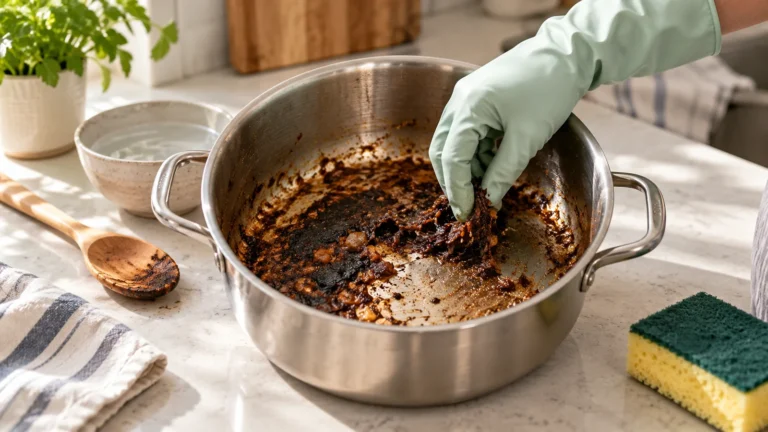
Burned-on food: soak first, then consider a water simmer
- Start cool and soak. Remove loose food, add warm soapy water, and try a soft sponge once the residue softens. If it releases, wash, rinse, and dry; heating is unnecessary.
- Check before heating anything. Use the water-simmer route only if the exact pan’s care instructions permit it and the base and handle are sound. Empty the soak and rinse away soap or other products first. Do not heat a pan containing proprietary cleanser, appliance polish, or unidentified chemical residue.
- Use water, not a generic chemical recipe. Add enough water to cover the stuck food in the cooled pan. On a stable burner, gently simmer only as the maker allows. Stay with it and stop before it boils dry. All-Clad’s stainless-cookware care section includes a heated-water method; that is not permission to boil a cleaner in another brand or coated pan.
- Stop the heat before handling. Turn off the burner and let the pan and water cool to safe handling temperature. Do not carry or pour a pan of boiling water. Then gently lift softened food with a wood or silicone utensil; do not pry with a knife or force a stubborn patch. Empty and wash the pan normally.
- Treat remaining film separately. On a cool pan, use only a cookware cleaner the pan maker permits for that interior and exterior, following its current label. All-Clad describes a light paste of its own cleaner with gentle cloth or sponge pressure. A stainless-appliance polish is a different product; see the Bar Keepers Friend answer below.
- Rinse, dry, and reassess. Repeat a short, compatible treatment only while residue is visibly loosening. If it does not change, check the diagnosis and ask the maker before increasing heat, concentration, contact time, or abrasion. A permanent mark is not a reason to keep scrubbing.
A razor blade, knife, drill brush, oven cleaner, or coarse grinding pad can permanently scratch a polished surface and may void a warranty. Steel wool guidance varies by manufacturer and finish; do not assume it is safe for a brushed exterior because one brand permits it on an interior.
White mineral film and water spots
Minerals left after boiling water can form a chalky ring that soap does not remove. If the cookware maker permits acid cleaning, cover the cool mark with diluted white vinegar or use the named stainless cleaner for the specified time. Wash with dish soap afterward, rinse, and dry. Do not leave acid standing around rivets or on an aluminum exterior layer.
To reduce salt pitting, follow the pan maker’s instructions: All-Clad specifies adding salt after liquid boils or food starts cooking, then stirring well. Wash and dry after use. Undissolved salt can leave permanent tiny pits, unlike removable white film. All-Clad says small pitting does not affect its cookware’s cooking performance; a pit is not automatically a reason to replace a pan. Do not try to polish holes away. Deep or sharp damage, separation, or uncertainty about the construction calls for the maker’s assessment.
Rainbow heat tint
A thin blue, bronze, or rainbow film is usually oxidation from high heat. It is generally cosmetic on intact uncoated stainless steel. After the pan cools, wash it normally. If the color remains, use a manufacturer-approved stainless cleaner or a brief diluted-vinegar wipe when permitted, then wash, rinse, and dry. Lower heat and preheating only as long as the recipe requires can reduce new tint.
Sticky brown oil on the sides or exterior
Oil heated repeatedly can polymerize into a hard amber coating. Start with warm soapy water and an approved degreasing dish soap. For the remaining film, use the pan maker’s stainless cleanser in a small test area. Work in short passes and rinse between them so you can see whether the film—not the finish—is changing.
| After one safe pass | What it suggests | Next step |
|---|---|---|
| Film softens or transfers to cloth | Removable grease remains | Repeat the same approved method |
| Color changes but surface stays smooth | Heat tint or cosmetic staining | Use approved stainless cleaner; stop when clean |
| Permanent pits remain, or you see peeling, separation, or sharp damage | Not simply a removable deposit | Do not scrape or run a finger over damage. Small pits may be cosmetic; stop use for sharp damage or separation and contact the maker |
| Pan rocks on a flat counter | Warped base | Replace if unstable or incompatible with the cooktop |
Dishwasher guidance is brand-specific
Some stainless pans are labeled dishwasher-safe, but repeated machine washing can dull a polished finish, discolor exposed aluminum edges, or attack rivets and handles. Hand-washing is the lowest-risk route when the care label is unknown. Do not put a hot pan directly into a dishwasher.
The clean-pan test
After the final rinse, dry the cool pan and inspect it in good light. There should be no loose food, sticky oil, soap, or cleanser residue; the handle and base must be sound and stable. Do not test a questionable edge with your fingers. A faint rainbow tint, old superficial scratch, or small stable pit is not the same as leftover food. Stop polishing once removable soil is gone. If the surface is peeling or sharply damaged, the base rocks, or you cannot identify an earlier cleaner, do not cook in it until the maker resolves the uncertainty.
Frequently asked questions
Can I use Bar Keepers Friend?
Only if the exact product and method are allowed for your pan. Bar Keepers Friend Cookware Cleanser & Polish has its own directions: use on a wet surface with gentle pressure, rinse thoroughly within one minute, and dry. A difficult-stain paste must not stay longer than one minute. It contains an abrasive; do not assume every finish permits it. Follow the current label, patch-test where appropriate, and never mix it with another cleaner.
Do not substitute Stainless Steel Cleaner & Polish merely because its name says stainless steel. The manufacturer describes that spray as an appliance-care product and directs pan cleaning to other formulas. If appliance polish was already used inside your pan, stop and ask the product and cookware makers how to remove it safely before cooking.
Do I need to season stainless steel?
Routine permanent seasoning is not required for most stainless cookware. Good preheating, enough cooking fat, and temperature control reduce sticking without leaving a baked-on coating.
Related cookware guides
- Choose a burnt-pot method by metal and coating
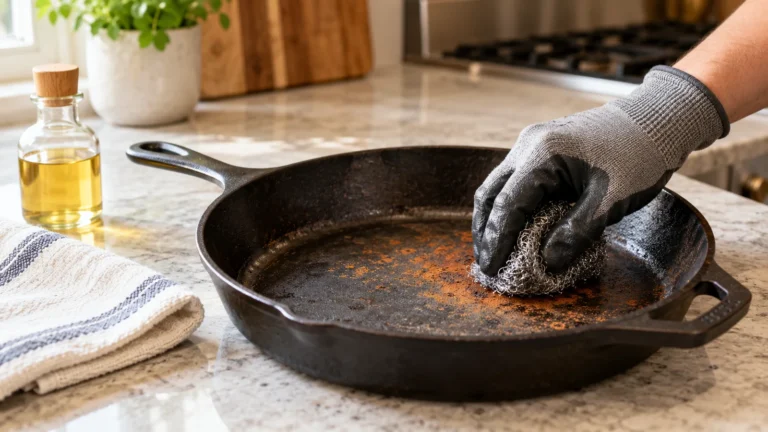
- Remove rust and reseason bare cast iron
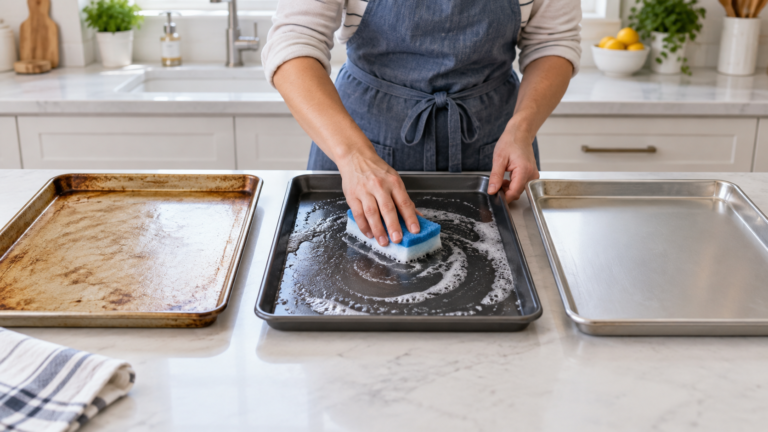
- Clean baking sheets without stripping their finish
Sources
- All-Clad — Stainless steel cleaner and pan-care method
- All-Clad — Cookware cleaning and support guidance
- All-Clad — Use and care: select the stainless-steel section
- Bar Keepers Friend — Cookware product directions and ingredients
- Bar Keepers Friend — Appliance-polish uses and pan-cleaning distinction
Material-specific guidance checked October 20, 2026; cleaner selection, hot-water handling, and pitting thresholds rechecked October 22, 2026. Layered construction, exterior finishes, dishwasher compatibility, and approved cleaners vary by cookware line.