Toilet Clogged? Safe Causes and Fixes
If your toilet is clogged, stop flushing and shut off the water before the bowl overflows. Turn the shut-off valve behind the toilet clockwise, or lift the tank lid and close the flapper. Then use a toilet flange plunger with a steady seal. If plunging fails, a closet auger is the next tool for a blockage inside the toilet trap. Repeated clogs, several slow drains, sewage backing up elsewhere, or an object that cannot be retrieved call for a plumber.
Quick answer
Control the water before you try to clear the clog
- Bowl rising after a flush: close the toilet shut-off valve or the tank flapper immediately.
- Water level is stable but high: do not add more water; remove some with a bucket if needed.
- Several fixtures are slow or backing up: stop using water and arrange a plumbing inspection.
- A toy, wipe, or other object went in: do not force another flush; retrieve it only if it is visible and reachable without pushing it deeper.
What is causing the toilet clog?
| What you notice | What it may point to | Best first move |
|---|---|---|
| The bowl rises once after a large flush | Paper or waste caught in the toilet trap | Close the valve and use a flange plunger |
| The toilet drains slowly and clogs again | Partial blockage, weak flush, or mineral buildup | Clear the trap, then investigate the flush and rim jets |
| The toilet clogs after a toy, wipe, or sanitary item was flushed | Foreign object or material that does not break down | Stop flushing and retrieve or auger it carefully |
| Several toilets or drains back up together | Branch drain, main drain, vent, or sewer restriction | Stop using water and call a plumber |
| The toilet barely moves water even after clearing | Tank, flapper, flush valve, rim jet, or supply problem | Check the tank and flush components separately |
| Sewage returns through a tub or floor drain | Downstream drain blockage or sewage backup | Keep people and pets away and arrange urgent service |
Protect yourself and the bathroom
Wear waterproof gloves and place towels around the base before working. Treat overflowing or backed-up toilet water as contaminated, keep it away from skin and eyes, and wash your hands after cleanup. Never mix a drain opener with bleach, vinegar, toilet cleaner, or any other product. If a chemical cleaner has already been poured into the bowl, do not plunge or use an auger; follow the product’s emergency instructions and call a professional.
How to unclog a toilet safely
1. Stop the next flush
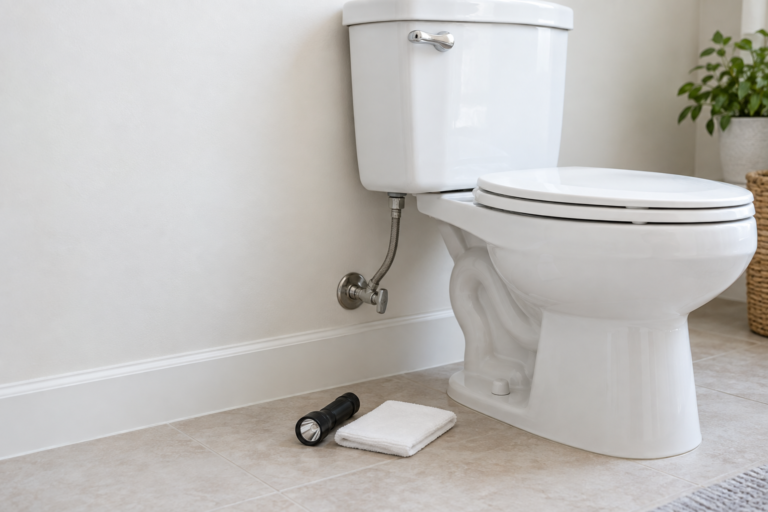
Turn the shut-off valve behind the toilet clockwise until it stops. If the bowl is already rising and the valve is stuck, lift the tank lid and press the rubber flapper closed to stop tank water entering the bowl. Do not keep testing the flush while the outlet is blocked.
2. Lower the bowl to a workable level
Wait for the level to settle. If the bowl is too full to make a seal, remove some water with a disposable container and bucket. Put the water in a sanitary drain only after the clog is cleared and local disposal rules allow it. Keep the floor dry so a slip or splash does not spread contaminated water.
3. Use a toilet flange plunger
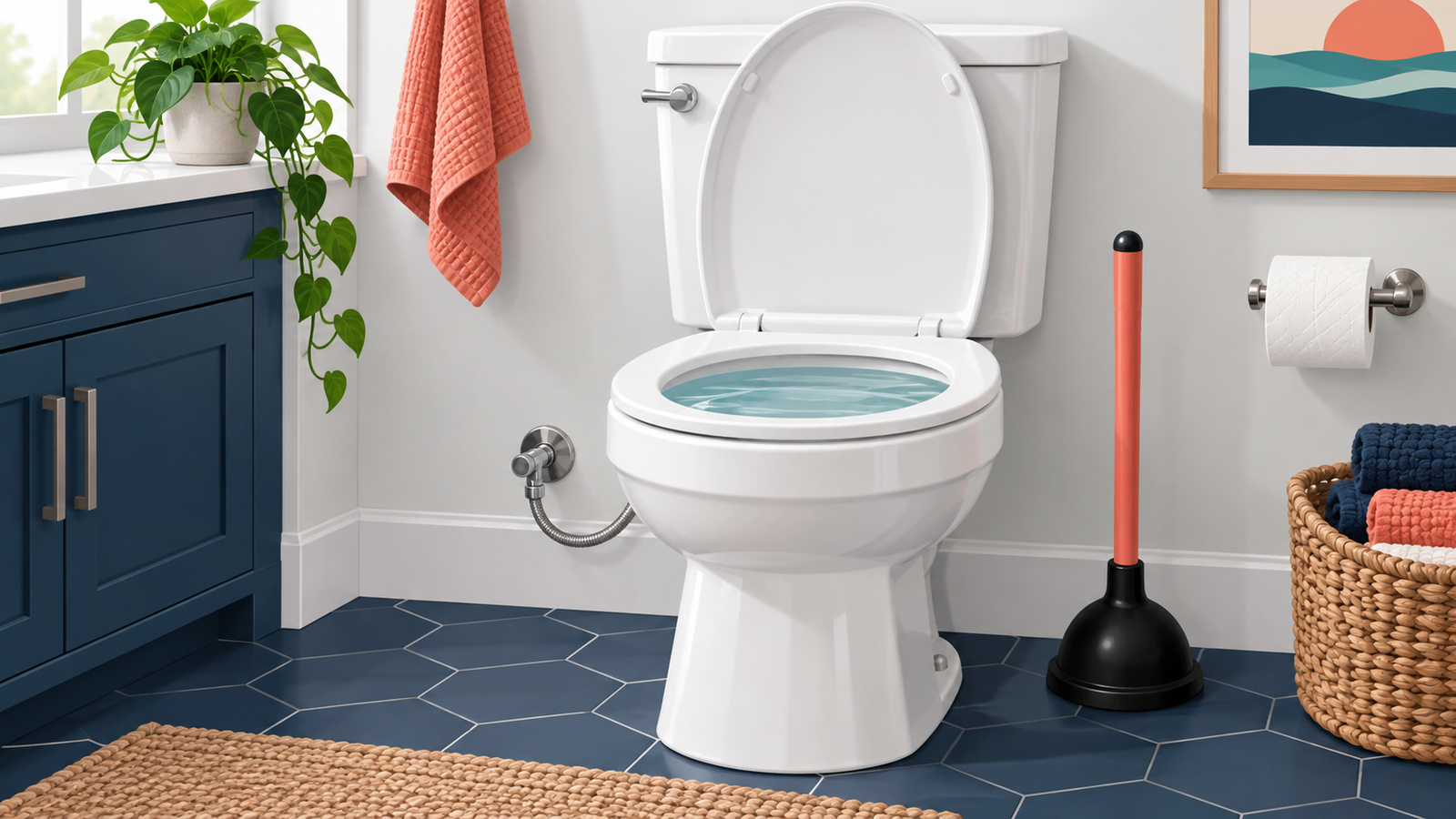
Choose a flange or beehive plunger made for toilets; a flat sink cup usually cannot seal the outlet. If the bowl is nearly empty, add enough water to cover the rubber flange. Set the flange into the drain opening at an angle so the cup fills with water, then keep the seal in place.
Start with a gentle push to remove trapped air. Follow with controlled strokes that keep the flange submerged. Pulling back firmly while maintaining the seal can draw the obstruction toward the bowl instead of packing it farther into the trap. Work through several short cycles, then pause to see whether the water level falls. Do not use violent force that could splash contaminated water or stress the toilet seal.
When the bowl drains, keep the shut-off valve closed and add a small amount of clean water to test the flow. If it drains normally, open the valve slowly and perform one supervised flush. Close the valve again if the level rises.
4. Escalate to a closet auger
If the flange plunger cannot clear the obstruction, use a toilet or closet auger with a protective guide. This tool is designed to follow the toilet’s curved trap without scraping the porcelain. Feed the protected end into the bowl, turn the handle slowly, and stop if the cable binds hard or the toilet shifts.
When you feel resistance, rotate gently to break up or catch the blockage. Retract the cable slowly and inspect what comes out. Do not substitute a bare metal drain snake or a coat hanger; those can scratch the bowl, damage the trap, or push a solid object farther downstream. Clean and disinfect the auger after use.
5. Test the toilet without creating another overflow
With the shut-off valve still closed, pour a small bucket of water into the bowl. A clear, steady drain suggests the trap is open. If the level rises, stop and remove the water rather than flushing again. Once the test succeeds, open the valve slowly, let the tank fill, and watch one flush from start to finish.
If plunging does not solve the problem
- The auger meets a hard stop: a solid object may be lodged in the trap. Stop before forcing it deeper.
- The toilet clears but clogs again soon: check for a partial blockage, weak flush, low tank water, or mineral-restricted rim jets.
- Another fixture gurgles or backs up: the restriction may be farther down the branch or main drain.
- Water comes up in the tub or floor drain: stop using all nearby fixtures and treat it as a possible sewage backup.
- The bowl drains but the flush is weak: use our bathroom checklist to separate a clog from a tank or supply problem.
Do not remove the toilet from the floor just to try another homemade tool. Removing a toilet can damage the wax or other floor seal and exposes you to contaminated water. Leave that work to a qualified plumber unless you have the correct replacement seal, tools, and experience.
What not to pour into a clogged toilet
Skip corrosive drain openers, boiling water, and improvised chemical mixtures. They may damage plumbing, create hazardous splashes, or leave dangerous residue for the next person who plunges the bowl. Baking soda and vinegar are also poor substitutes for a tool when a solid blockage is present. Use mechanical clearing first and follow the product label or a professional’s direction if a specialist cleaner is genuinely appropriate for your system. For broader bathroom upkeep, see our bathroom cleaning guide.
When to call a plumber
- The toilet overflows, sewage backs up, or contaminated water reaches the floor.
- Two or more toilets, sinks, tubs, or floor drains are slow or backing up.
- A solid object is lodged and cannot be retrieved without pushing it deeper.
- Plunging and a correctly used closet auger do not restore normal flow.
- The toilet rocks, leaks at the base, or the floor around it is soft or damaged.
- A chemical cleaner was already used, or you cannot isolate the water safely.
Prevent the next toilet clog
- Flush only human waste and toilet paper. Put wipes, paper towels, tissues, dental floss, sanitary products, and other waste in the trash; “flushable” marketing does not make wipes equivalent to toilet paper.
- Use reasonable amounts of toilet paper and split unusually large loads into separate flushes.
- Keep a flange plunger and a closet auger where they can be reached before an overflow starts.
- Correct a weak flush, a tank that does not fill, or mineral buildup before it becomes a repeated clog.
- If you have a septic system, follow the EPA’s guidance for what belongs in the toilet and avoid drain chemicals that can affect the system. Our Bathroom guides cover related fixture and cleaning problems.
Frequently asked questions
What should I do first when my toilet is clogged?
Stop flushing and close the shut-off valve or tank flapper. Protect the floor, lower the bowl if needed, and use a toilet flange plunger before trying an auger.
Can I use a sink plunger on a toilet?
A flat sink cup may not seal the toilet outlet. A flange, beehive, or toilet plunger is shaped to make a better seal and transfer pressure where the blockage is.
Is a toilet auger better than a regular drain snake?
Yes for a toilet trap. A closet auger has a guide that protects the porcelain and follows the trap’s curve. A bare metal snake or hanger can scratch the bowl or push an object farther into the drain.
Why does my toilet keep clogging?
Recurring clogs can come from partial blockage, too much paper, non-flushable items, a weak flush, mineral buildup, or a restriction farther down the drain. Repeated problems deserve a plumbing diagnosis rather than repeated plunging.
Can I pour boiling water into a clogged toilet?
No. Boiling water can damage porcelain or seals and does not reliably remove a solid blockage. Use mechanical tools and stop if the water backs up or a chemical cleaner is present.
Sources
This guide was checked against current home-improvement guidance and U.S. Environmental Protection Agency septic-system guidance. Toilet designs and local plumbing systems vary, so the fixture manual and a qualified professional take priority when the blockage is persistent or affects more than one fixture.