How to Remove Mildew Smell From Towels
Last updated: October 21, 2026 — Clarified what to check when odor remains after the first wash or returns during use or storage.
Start with the towel, then check the washer
Towels can smell musty because they stayed damp after use or washing, but a fresh wash will not solve every case. If only one towel smells, start with that towel’s care label and drying habits. If several loads smell, check the washer. If towels feel coated or the load was packed tightly, review detergent dose, load size, and rinsing before adding another product.
A quick way to find the likely source
| What you notice | What it may suggest | First useful action |
|---|---|---|
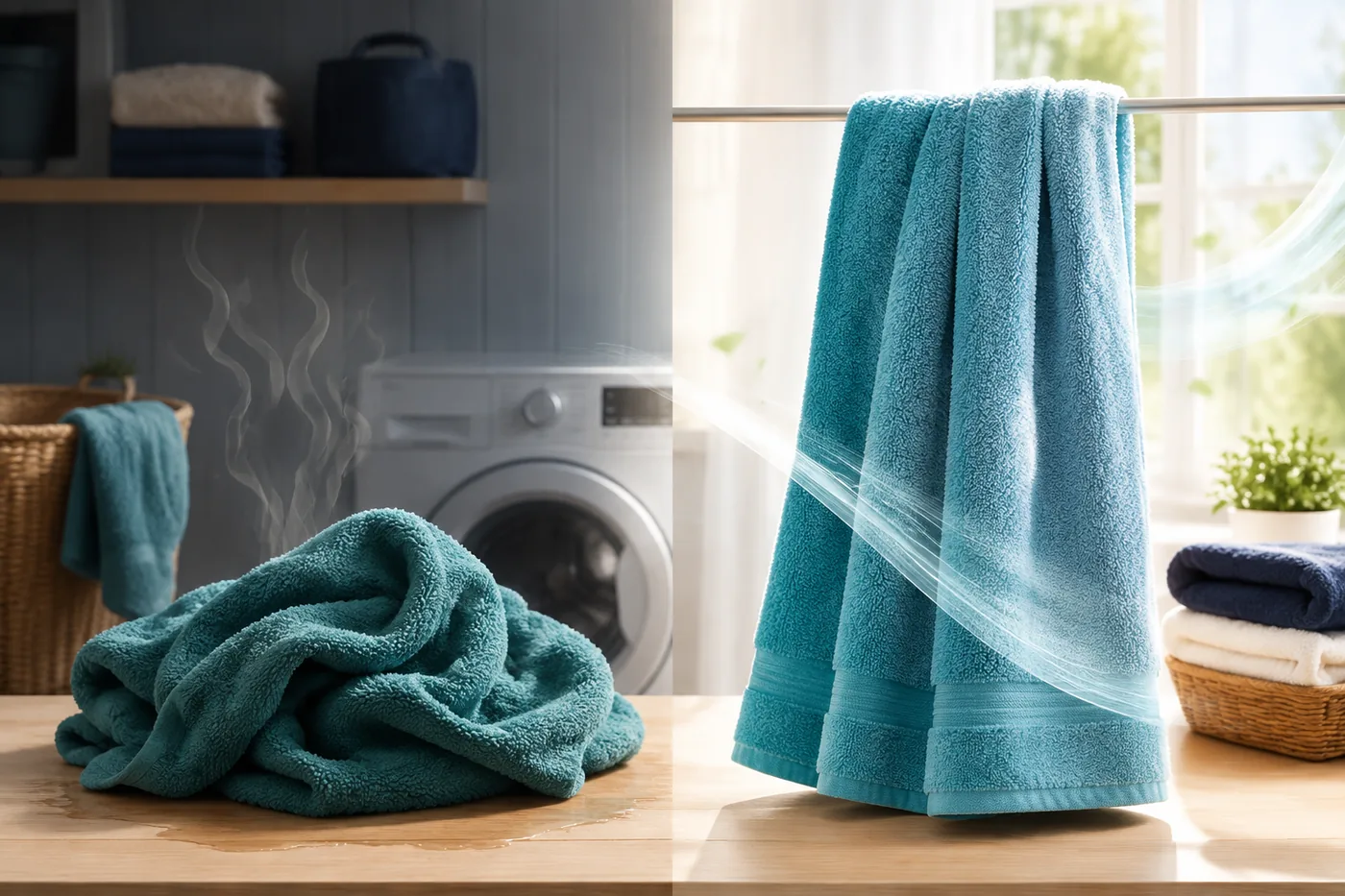
| One towel smells after hanging bunched up or sitting wet in a hamper | It did not dry between uses | Rewash by its label, dry fully, then spread it out after each use |
| The towel smells fresh dry but sour when wet again | Residue or repeated slow drying may still be involved; smell alone cannot identify which | Check whether it absorbs normally, then follow the wash-and-dry sequence below |
| Several towels feel coated, absorb poorly, or came from a tightly packed load | Softener, excess detergent, or poor rinsing in an overloaded drum may be leaving residue | Wash a smaller, loose load with the directed detergent amount; if residue clues remain and the washer manual permits it, use an extra rinse |
| Towels and other laundry smell as soon as the washer finishes | The washer or a wet load left in the drum may be contributing | Inspect the accessible gasket/dispenser and run only the machine’s approved cleaning cycle |
| Towels smell after being folded away | They may have been stored before fully dry, or the storage area may be damp | Check thick hems and the storage space before rewashing |
These are clues, not a lab diagnosis. A damp towel, detergent residue, an overloaded load, and a washer problem can occur together.
Rewash a musty towel without damaging it
- Read the towel’s care label. Check the allowed wash temperature, bleach restrictions, and drying method. Decorative trim, microfiber, and colored towels may have different limits from plain cotton. Separate affected towels from delicate clothing. Use a load size that leaves room for towels to lift, move, and rinse rather than packing the drum tightly.
- Use detergent as directed for the load. Choose the warmest water the towel label permits and an appropriate normal or towel cycle. Measure detergent for the load and product; extra detergent can leave buildup. If the towels feel soapy or coated after washing and the washer manual allows it, an extra rinse may help remove remaining suds. It does not replace the correct dose or load size. Do not assume that a hot or sanitizing setting is safe when the care label does not allow it.
- Do not add a second chemical by habit. If the towel feels coated, first stop using fabric softener or dryer sheets on that load and use the recommended detergent amount. Whirlpool notes that softeners can reduce towel absorbency. If you choose a laundry additive, use one that the towel label, washer manual, and product label all permit, following its exact compartment and dose directions. Never mix chlorine bleach with vinegar, ammonia, acids, or unknown cleaner residues.
- Dry promptly and completely. Move towels out of the washer when the cycle ends. Shake them out and use the label-approved dryer setting or hang them fully spread out with airflow. Check thick hems before folding. Whirlpool advises prompt transfer and complete drying to avoid musty smells.
After the first wash: choose the next step
Finish the care-label-safe wash and dry the towel completely, including thick hems, before judging the result. Note when the smell appears: as the washer finishes, after drying, when the towel gets damp during use, or after storage. Use that pattern to choose the next check; smell alone does not identify the cause.
- Towels and other laundry smell as soon as the cycle ends. Check that the wet load was removed promptly. If the problem affects different loads, inspect only the gasket, dispenser, and other user-accessible areas named in the washer manual, then follow its approved cleaning-cycle instructions. If the odor is sulfur-like rather than musty, use the separate washing-machine odor guide before treating the towels again.
- Only the same towel stays musty after complete drying. Review whether it still feels coated or absorbs poorly, and whether the previous load was packed tightly or used excess detergent or softener. If you find a missed step, correct that specific dose, load-size, or rinse issue within the towel and washer instructions. If those checks were already correct, do not keep repeating an unchanged wash or adding more detergent.
- It smells fresh when dry but turns sour after getting damp during use. Compare its drying position with the towels that stay fresh. Spread it so air can reach both sides rather than leaving it bunched on a hook, folded tightly on a bar, or damp in a hamper. If it dries slowly, correct that drying arrangement before choosing another treatment.
- It smells fresh before folding but musty after storage. Check the thick hems for remaining dampness and check whether the closet or shelf is damp. Put towels away only when fully dry. Address the storage moisture as well as rewashing affected towels; an added fragrance does not fix that condition.
If odor remains after the relevant wash, washer, and drying checks, use an additional laundry treatment only when the towel’s care label, washer manual, and treatment label all permit it. Follow that product’s exact dose, timing, and compartment directions. Do not increase heat beyond the care label, combine treatments, or use disappearance of the smell as proof that the towel has been disinfected.
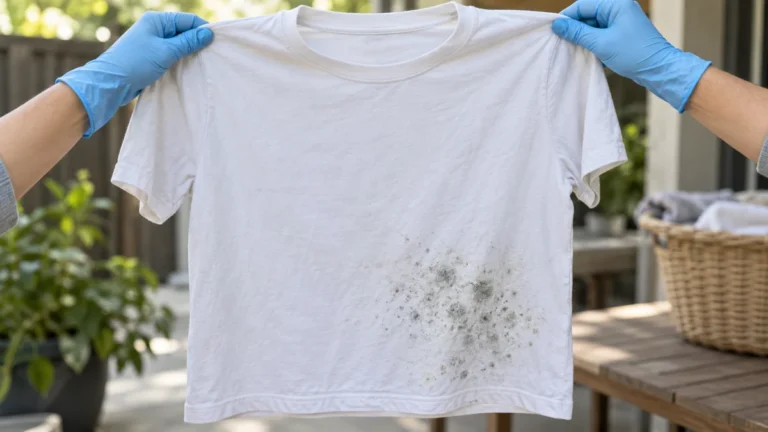
Persistent visible growth, a towel that remains musty despite correct washing and complete drying, or a towel that is deteriorating is not a reason to keep escalating chemical treatments. Set it aside and follow the towel maker’s care guidance; replacement may be more sensible when the material cannot be cleaned or dried reliably. For visible mold on fabric, see the mold-on-clothes decision guide before assuming an ordinary odor wash is enough.
Keep towels from smelling again
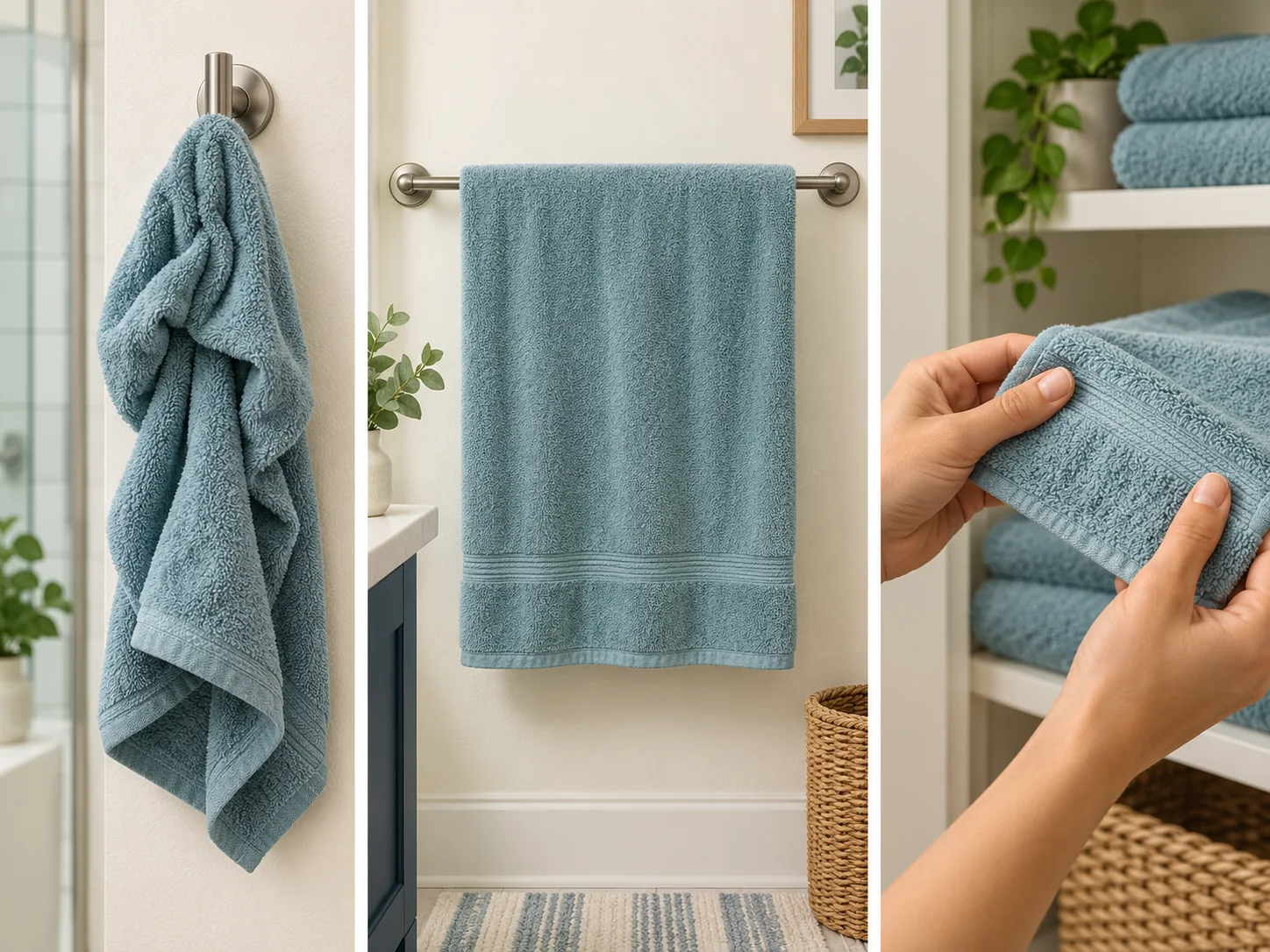
Spread each used towel so air reaches both sides, rather than leaving it in a heap or folded tightly on a hook. Let wet towels dry before putting them in a laundry hamper. Wash bath towels regularly according to use and household conditions; Whirlpool suggests around every three uses as a general guide. Dry washed towels before they go into a closet. If the bathroom repeatedly stays humid or surfaces remain damp, use the indoor-humidity guide to check the room condition instead of treating the towel alone.
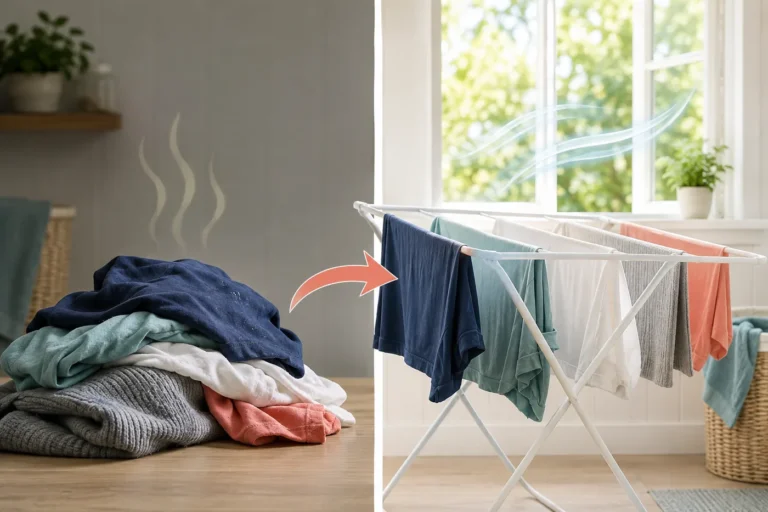
For musty garments other than towels, use the broader musty-clothes guide. It separates clothing fabrics and storage problems that need a different care-label decision.
Sources
- Whirlpool: How to wash and dry towels — care-label precedence, loading, detergent residue, softener and absorbency, and complete drying.
- Clorox: How to get mildew and odors out of towels — damp-use and washer-soil routes; its product-specific additives are not generalized here.
- Poison Control: Chlorine gas safety — why chlorine bleach must not be mixed with vinegar, acids, or ammonia.