How to Get Musty Smell Out of Clothes
To get a musty smell out of clothes, rewash the affected items using the warmest care-label-approved setting, the correct detergent amount, and a complete drying cycle. If the odor affects every load, investigate the washing machine instead of repeatedly treating the clothes. Do not mix bleach, vinegar, ammonia, or other cleaners.
Identify the source first
| What you notice | Likely cause | Safe next check |
|---|---|---|
| One garment smells after storage | Damp storage or incomplete drying | Check the fabric label and rewash it separately |
| A load smells after sitting in the washer | Trapped moisture | Rewash promptly and dry completely |
| Every load smells musty | Washer residue or poor ventilation | Run the washer’s approved cleaning cycle |
| Odor remains after two careful washes | Deep residue, mold damage, or fabric deterioration | Stop and consider professional cleaning or replacement |
Quick answer
Wash, dry, then diagnose the washer
Check the care label, avoid overloading the washer, use the correct detergent amount, and dry clothes immediately and completely. If the smell returns across different loads, inspect the washer’s gasket, dispenser, and maintenance instructions.
For odor concentrated in bath linens, follow the focused guide to remove mildew smell from towels. If every load develops a sulfur-like odor, diagnose why the washing machine smells like rotten eggs.
Steps to remove the musty odor
1. Separate and inspect the clothes
Do not mix musty garments with clean laundry. Check the care label, seams, pockets, and any visible mold or water damage. Dry-clean-only items should follow their cleaner’s instructions, and garments with persistent visible mold may not be safe to salvage at home.
2. Rewash with the label-approved temperature
Use the warmest setting the label permits and the detergent amount recommended for the load. A crowded drum prevents good rinsing, while excess detergent can leave residue that traps odor. Use an oxygen-based laundry product only when the fabric and product instructions allow it.
3. Add an extra rinse only when suitable
An extra rinse can help remove detergent residue, but follow the garment and washer instructions. Never combine cleaning products. Do not use a hotter cycle than the label permits just to chase an odor.
4. Dry the clothes immediately
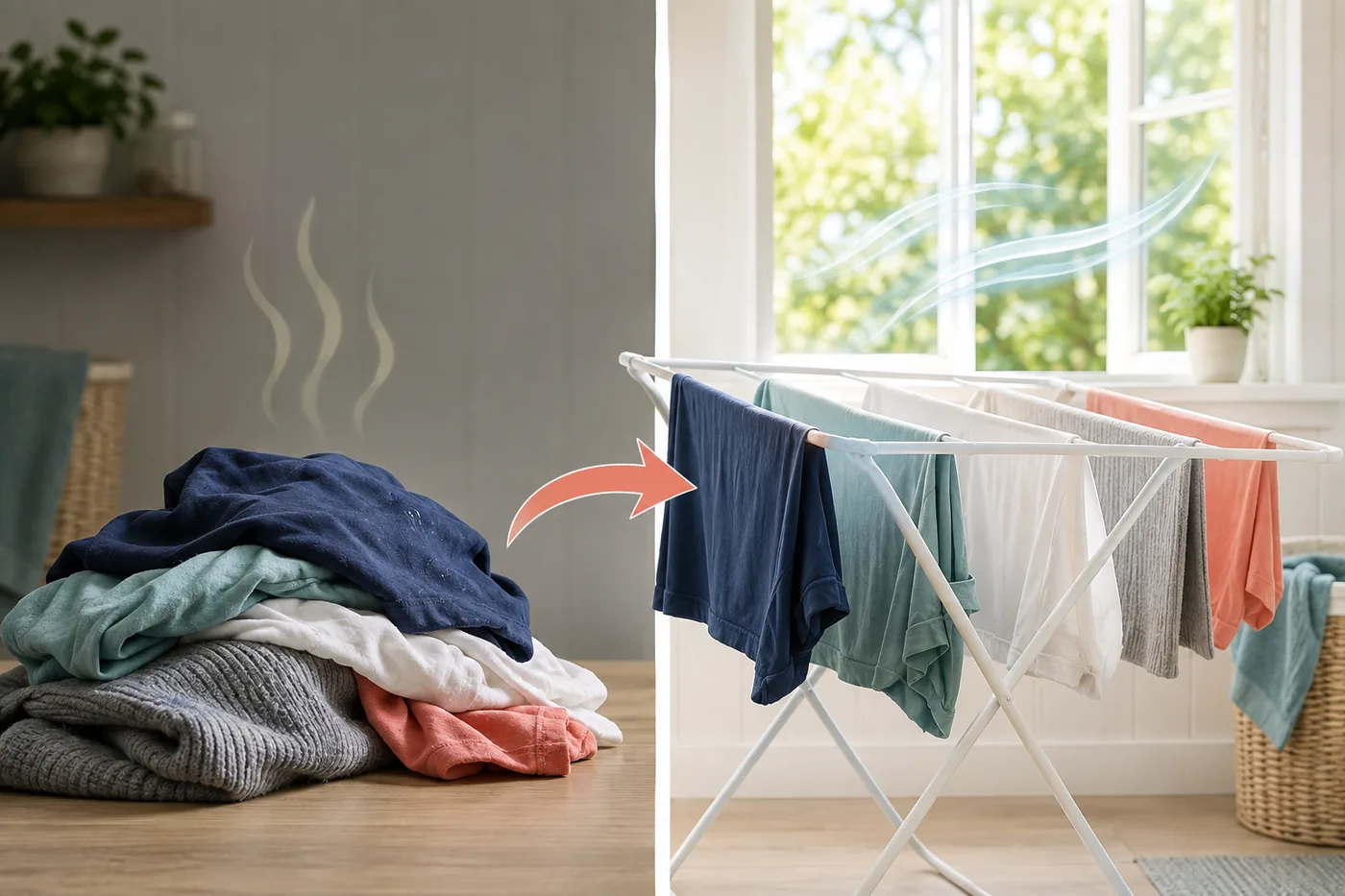
Move the load out of the washer as soon as the cycle ends. Use the label-approved dryer setting or air-dry the garment in moving air. Do not fold or store clothes while seams, waistbands, pockets, or thick areas are still damp.
5. Check the washing machine when the odor repeats
If several loads smell, inspect only the accessible gasket, dispenser, and filter areas described by the washer manual. Run the approved tub-cleaning cycle and leave the door or lid ajar between loads when safe. A washer that smells like rotten eggs, sewage, or mildew needs its own diagnosis.
When to stop
Stop home treatment if the garment has extensive visible mold, the odor remains after two careful wash-and-dry cycles, the fabric is weakening, or the item is dry-clean-only and the label gives no home method. A professional cleaner can assess whether the item is salvageable.
Frequently asked questions
Why do clothes smell musty after washing?
Moisture may have remained in the garment, the load may have sat in the drum, or the washer may contain residue. Check the clothes and appliance separately.
Does more detergent remove musty smells?
Not necessarily. Excess detergent can remain in fibers and contribute to odor. Follow the detergent and garment instructions instead.
Can I use vinegar and bleach together?
No. Never mix bleach with vinegar, ammonia, or other cleaners because dangerous fumes can form.
Match the treatment to the fabric
Cotton, linen, synthetics, wool, silk, and stretch fabrics do not share the same temperature or chemical limits. A care label that allows cold washing does not authorize a hot soak, bleach, or aggressive brushing. For dark or delicate garments, use a hidden-area test and stop if the color changes, the fabric feels rough, or the odor comes from visible mold rather than ordinary dampness.
If the smell returns
Do not keep repeating stronger treatments. Check whether the clothing sat wet in the drum, whether the washer gasket or dispenser stays damp, and whether the closet or laundry basket has poor airflow. Wash a small test load after the washer has completed its approved cleaning cycle. If only one garment still smells, the fabric may have retained damage or contamination and a professional cleaner should assess it.
Sources
This guide follows care-label and odor guidance from Persil, Whirlpool, Tide, Whirlpool’s mildew guide, and Canada’s housing guidance. Follow the exact garment label when it differs from general advice.