How to Remove Mold from Carpet: Clean, Replace, or Call a Pro?
Quick answer: A moldy carpet cannot always be cleaned back to a reliably mold-free condition. Carpet is porous, and growth can extend into the backing or pad where surface treatment cannot reach. First stop the moisture, identify whether the water was clean or contaminated, and check the backing, pad, and floor below. A small area may fall under EPA’s general homeowner-cleanup guidance, but that size guideline does not guarantee that mold can be removed from carpet. Moldy padding or contaminated water usually calls for removal or an experienced professional.
Check the whole floor assembly before choosing a method
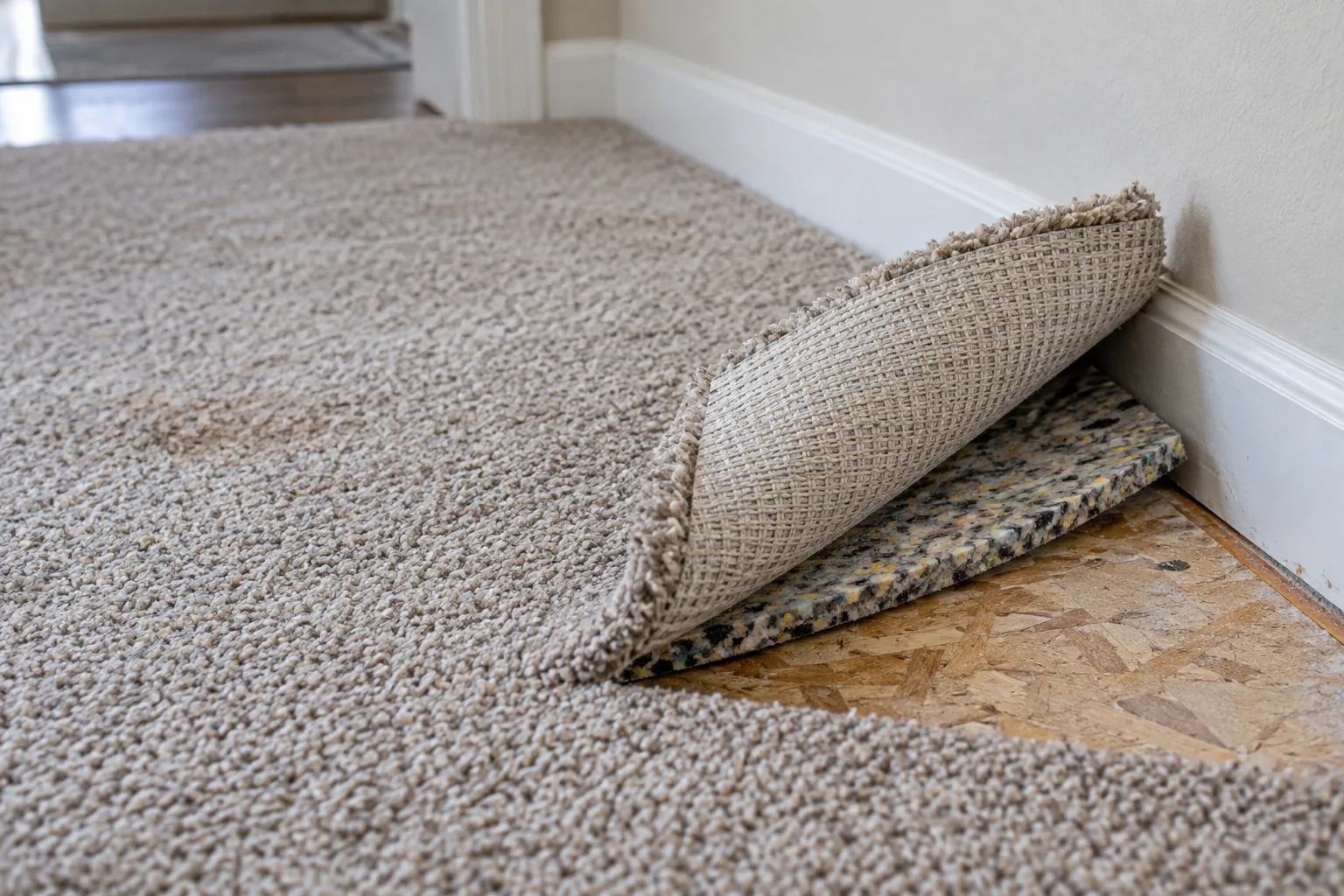
Look at the carpet face and its underside, the pad, and the subfloor. A mark on top alone cannot show whether lower layers are affected. Do not lift carpet if it is stuck down, waterlogged, contaminated, or the work would disturb extensive growth. In an apartment, contact the landlord or building manager before pulling up installed carpet.
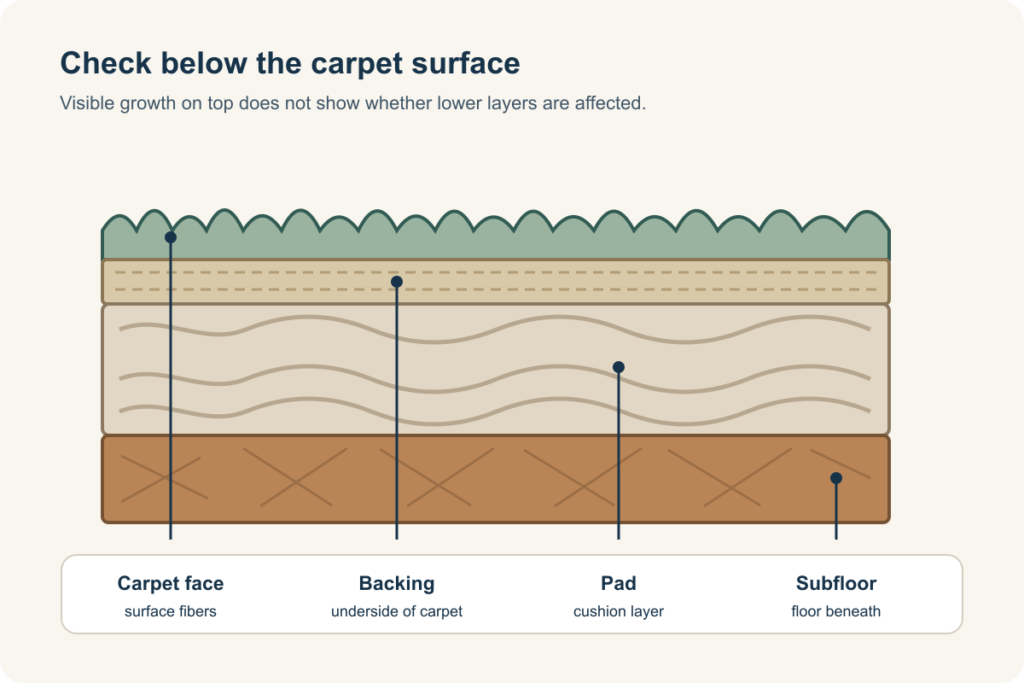
| Carpet face | Visible fibers |
|---|---|
| Backing | Underside attached to the fibers |
| Pad | Cushion layer beneath the carpet |
| Subfloor | Floor beneath the pad |
| What you find | What it changes | Safer next step |
|---|---|---|
| Carpet got wet recently from a known clean-water spill; no visible mold or musty odor | This is a drying problem, not yet proof of mold. | Remove water promptly using equipment intended for water extraction; dry the carpet, backing, pad, and floor. If you cannot access or dry every layer, arrange water-damage help. |
| Small visible patch on the face, but the backing and pad have not been checked | Surface appearance does not reveal hidden contamination. | Do not scrub or soak it as a first move. Stop the moisture source and ask a qualified carpet cleaner or mold professional to assess whether the material can be cleaned. |
| Growth or persistent odor on the backing or pad; soft/wet subfloor; growth returns | Moisture or mold may extend below the fibers. | Avoid surface-only treatment. Have the affected carpet/pad evaluated; moldy or saturated pad may need replacement, and the source beneath it must be repaired. |
| Sewage, floodwater, or another contaminated source; more than about 10 sq ft; extensive water damage; suspected HVAC involvement; health concerns | Exposure or contamination risk is higher, and ordinary carpet cleaning is not enough. | Stop DIY cleanup and contact an experienced remediation professional. EPA recommends professional help for contaminated water and extensive damage. |
The U.S. Environmental Protection Agency says that, in most cases, a moldy area smaller than about 10 square feet can be handled by the homeowner. However, extensive water damage, contaminated water, or health concerns change the decision. That general threshold is not a guarantee that porous carpet can be fully cleaned. EPA mold-cleanup guidance
Stop before cleaning: contact an experienced professional if the water came from sewage or floodwater, growth covers more than about 10 square feet, the pad/subfloor is affected, HVAC contamination is possible, or someone in the home has health concerns. Do not run electrical equipment around standing water.
What to do first
- Stop the water source. Address the leak, seepage, condensation, or spill. If the source is unresolved, cleaning the carpet will not prevent recurrence. The Home Moisture and Mold Decision Chart can help sort likely water paths.
- Do not disturb visible growth while deciding. Avoid dry-brushing or running a household vacuum over it; these actions do not show whether the backing or pad is affected and can spread material into the room. Keep children and pets away from the spot while you arrange assessment.
- Separate recent clean-water wetness from established mold. EPA describes water extraction and drying all carpet layers for newly wet carpet. That advice is not a surface-mold removal recipe. If mold is already visible or water may be contaminated, follow the decision table above.
- For a small surface-only area, get carpet-specific guidance. Ask the carpet manufacturer or a qualified carpet cleaner which method is compatible with the fiber and backing. Do not saturate the carpet or apply several chemicals. Patch-test only if a professional or manufacturer directs a product for the material. CDC says not to mix cleaning products.
- Recheck the layers and moisture source. Odor, dampness, staining, or visible growth that remains or returns means the problem was not resolved. The mold-smell guide explains why odor is a clue to find moisture, not proof that the source is gone.
When should moldy carpet be replaced?
Carpet and pad are not the same material. The carpet face may look clean while the underside or cushion remains wet or moldy. UGA Extension says moldy padding should be discarded and replaced; EPA cautions that porous carpet may be difficult or impossible to clean completely once moldy. If growth is on the backing or pad, the carpet has been soaked, or there is water damage below it, ask a remediation or water-damage professional to assess removal and the floor beneath. Do not reinstall material until the moisture source is fixed and the layers are dry. UGA Extension guidance
EPA’s “about 10 square feet” threshold is a general rule for who may handle mold cleanup. It is not a carpet guarantee: the actual water damage, contamination, hidden layers, and household health circumstances still matter. For a larger area, sewage or floodwater, suspected HVAC contamination, or health concerns, do not rely on a DIY carpet-cleaning method.
Reduce the chance that it returns
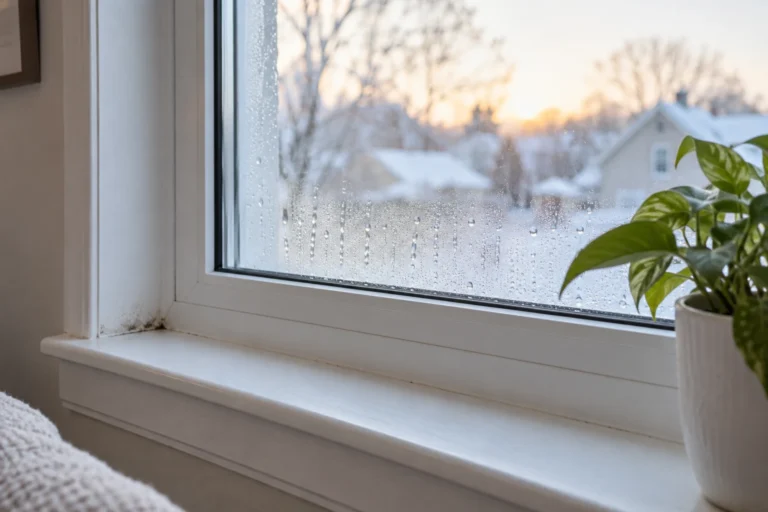
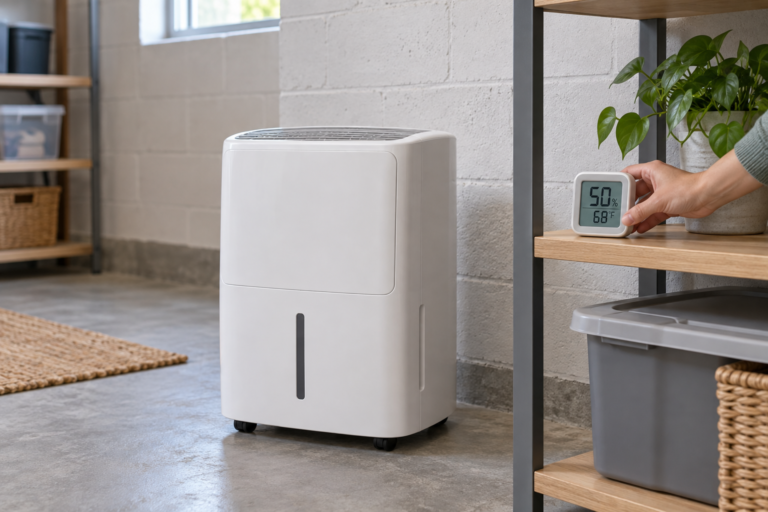
Fix leaks and water entry rather than treating the carpet alone. For a new clean-water spill, remove water quickly and dry the backing and pad too. EPA describes 24–48 hours as a prevention window for drying wet materials when possible, not as proof that a carpet is mold-free after the clock runs out. Keep indoor humidity in the recommended range with the indoor humidity guide and investigate recurring dampness instead of masking the smell.
Frequently asked questions
Can I use vinegar or bleach on moldy carpet?
There is no universal cleaner that can reach every carpet layer. EPA warns that mold in porous carpet may be difficult or impossible to remove completely. Do not layer or mix products; CDC says never mix cleaning products. Ask the carpet maker or a qualified cleaner about a material-compatible method.
Does a small mold spot mean I can save the carpet?
Not by itself. EPA’s small-area guidance applies to general cleanup decisions and does not prove the pad or subfloor is clear. Check the water source and underlying layers, and get help if you cannot assess them safely.
Should I use a fan on wet carpet?
Only after you know the water is clean and the electrical setup is safe. EPA describes fans as part of drying clean-water-wet carpet, but contaminated water needs professional cleanup. Do not run electrical equipment around standing water.
Does black color prove the carpet has mold?
No. Color alone does not identify a substance or mold type. Treat visible growth, moisture, and odor as reasons to investigate the source and affected layers, not to identify species by appearance.