Home Moisture and Mold Decision Chart: Find the Source First
Stop and get appropriate help for active flooding, sewage, unsafe electricity, a gas odor, soft or sagging material, structural damage, widespread growth, or health circumstances that make mold exposure a concern. For a limited problem, identify and control the water source before cleaning the surface.
A mold spot is only the visible part of the problem. Before cleaning, use the location and timing of the moisture to decide whether you are dealing with indoor condensation, a plumbing or appliance leak, rain entry, or a possible hidden source. Fixing that source is what keeps the problem from returning.
First, check for an urgent stop condition
Do not begin ordinary cleanup when there is active flooding, sewage or other contaminated water, unsafe electrical equipment or wiring, a gas odor, a soft or sagging ceiling, or visible structural damage. Leave the affected area and contact the appropriate emergency, repair, landlord, building-management, or restoration service.
If mold contamination of the HVAC system is known or suspected, do not run it; arrange qualified assessment. Do not touch wet wiring, switches, appliances, or other electrical equipment to investigate dampness. Keep the observations below to safe, accessible positions: no climbing, opening assemblies, moving suspect materials, or close-sniffing to find a source.
People with mold allergies, immune suppression, underlying lung disease, asthma, or COPD should not take part in mold cleanup. If exposure or a health condition is a concern, ask a health professional about your circumstances and have someone appropriate assess the building. CDC explains who should not clean mold and the protective equipment required.
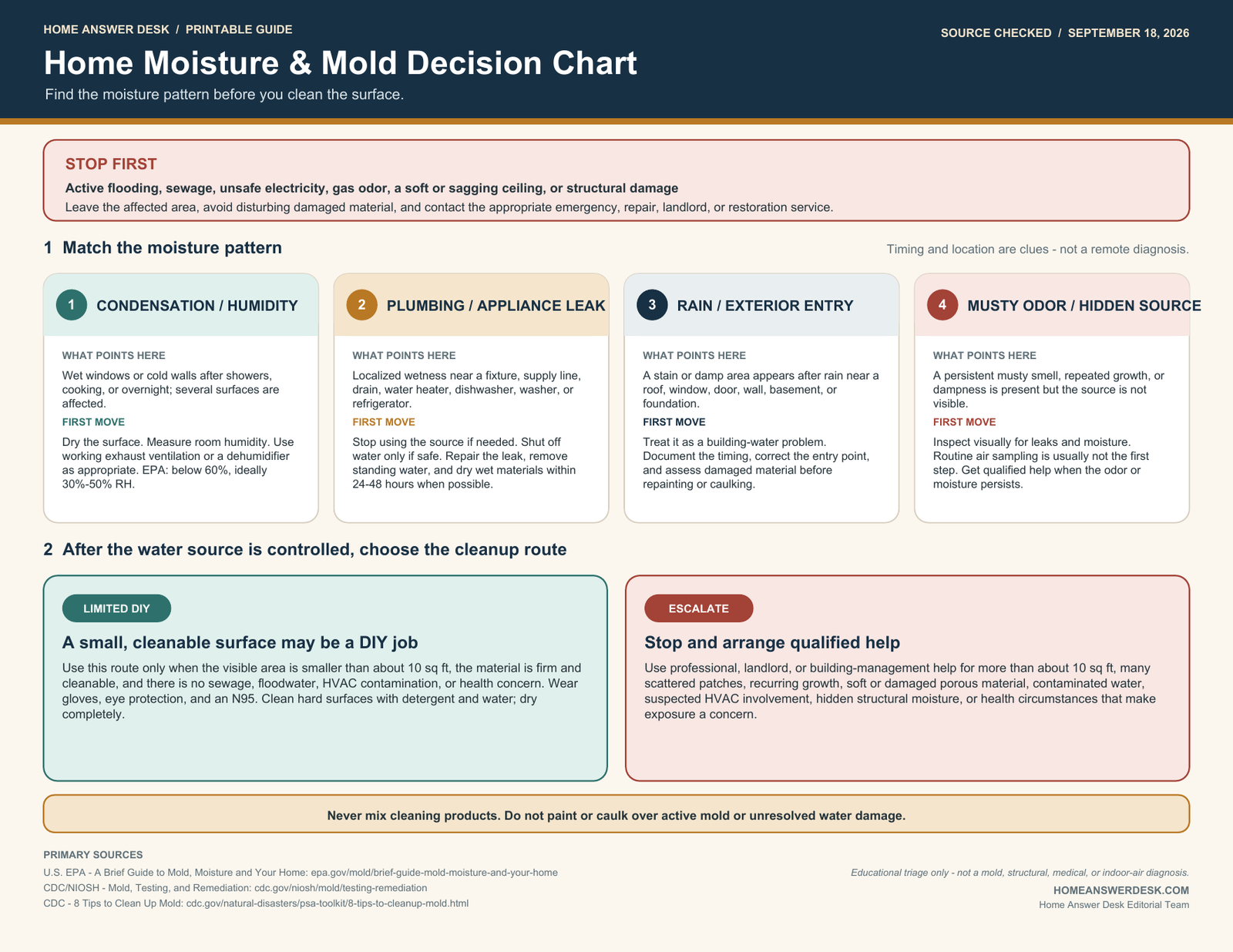
Download the printable moisture and mold decision chart (PDF). It is a one-page reference for homeowners and renters; use the page below for the full safety limits and source links.
Match the moisture pattern
Use what you have already observed during ordinary use or natural weather. These are possible source routes, not tests to reproduce a leak. Drying or equipment use in the table applies only after the stop conditions above have been excluded; a dehumidifier does not repair a water-entry problem.
| What you notice | What it may point to | First move |
|---|---|---|
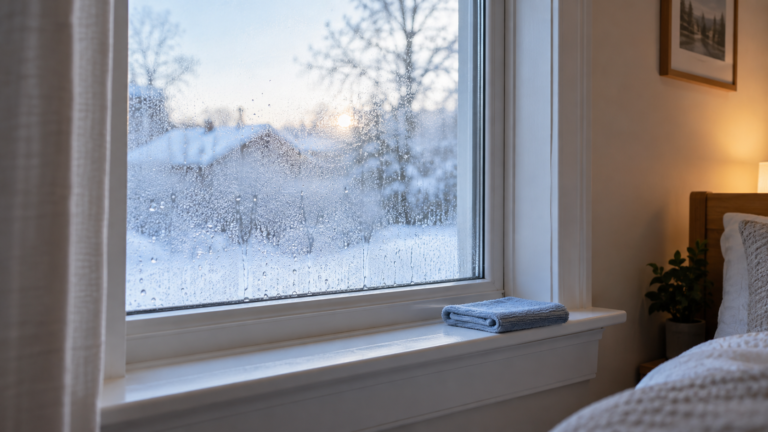
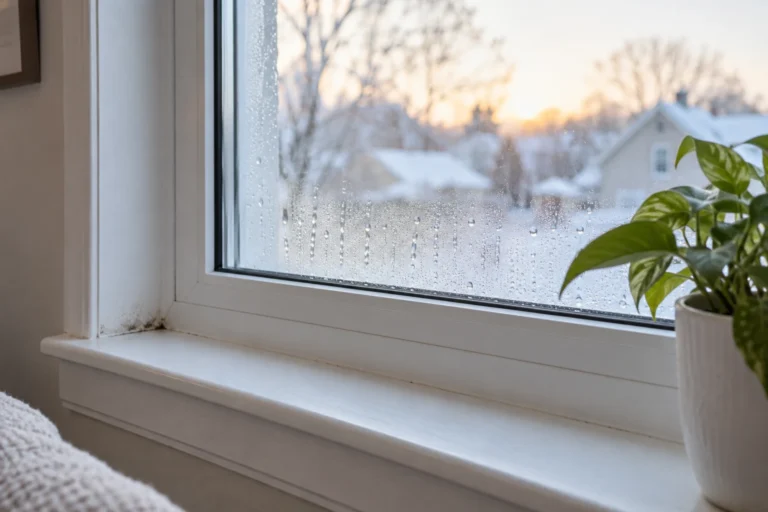
| Condensation on several windows, pipes, or cold walls after showers, cooking, or overnight | Indoor humidity and cold-surface condensation | Dry the wet surface. Measure room humidity. Use working exhaust ventilation or a dehumidifier when appropriate. EPA recommends keeping indoor humidity below 60%, ideally between 30% and 50%. Continue with the window-condensation guide when glass and frames are the main location. |
| Localized wetness near a sink, toilet, shower, water heater, dishwasher, washing machine, or refrigerator | A plumbing, drain, supply-line, or appliance leak | Stop using the source if needed, shut off water only when it is safe to do so, arrange the repair, and dry wet materials within 24 to 48 hours when possible. |
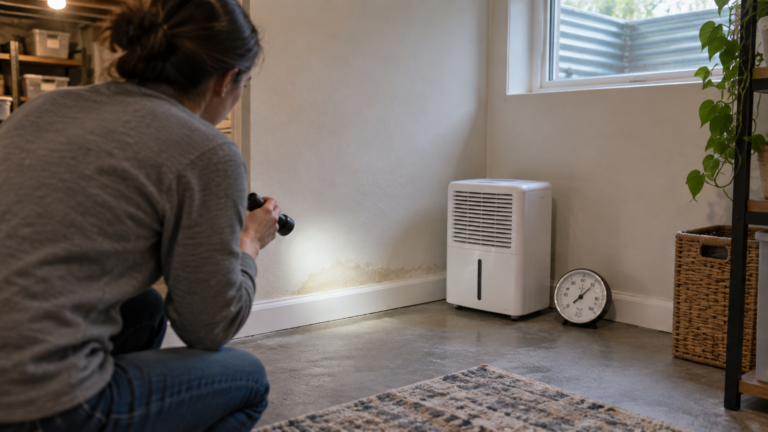
| A stain or damp area that appears after rain near a roof, window, exterior wall, basement, or foundation | Rain or exterior water entry | Document the timing and repair the entry point. Do not paint or caulk over an active moisture problem. Assess soft or damaged material before surface cleanup. |
| A persistent musty odor, recurring growth, or dampness with no visible source | Hidden moisture or mold may be present | Start with a careful visual inspection for leaks and water damage. CDC/NIOSH does not recommend routine air sampling as the default assessment. Seek qualified help if the odor or moisture persists. |
The pattern is a clue, not a remote diagnosis. A single room can have more than one moisture source.
If the source remains uncertain, do not guess from the odor or disturb a wall or floor to confirm it. The mold-smell source investigation guide explains how to record an unresolved odor and arrange assessment without close-sniffing or opening materials.
Record three clues before you clean or call
- Note the date, time, exact location, and the most recent trigger: rain, a shower, cooking, overnight cooling, or an appliance cycle.
- From a safe, accessible position, take one detail photo and one wider photo that shows the location; do not approach growth or unsafe material to obtain them. If condensation is suspected and you have a hygrometer, record the room humidity too. One reading is evidence, not a diagnosis.
- After the source has been repaired or otherwise confirmed safe and the area dries, observe the same spot during later permitted ordinary use or natural weather. Do not turn on a leaking fixture, appliance or suspect HVAC to reproduce moisture. If it returns, stop using the affected source when safe and arrange assessment.
Do not remove trim, open a wall, or disturb soft or damaged material just to look for hidden mold. Renters can send the dates, photos, and written description to the landlord or property manager. This is practical documentation, not legal guidance; rental rules vary by location.
Decide whether limited cleanup is appropriate
The U.S. EPA says that, in most cases, an area smaller than about 10 square feet can be handled by the homeowner. That limited route is reasonable only when the material is firm and cleanable, the water source has been corrected, and there is no sewage, floodwater, suspected HVAC contamination, widespread damage, or health concern.
Small area alone is not permission to clean. Moldy porous or absorbent material, including carpet and ceiling tiles, may be difficult or impossible to clean completely and may need removal or replacement by an appropriate professional. Do not soak damaged drywall or disturb concealed growth; ask for assessment when the material, water history, or extent is uncertain.
- Keep children, pets, and people with relevant health concerns away from the work area.
- Wear protective gloves, goggles providing complete eye protection without open ventilation holes, and at least a NIOSH Approved N95 respirator. Fit and use the respirator according to its instructions.
- Clean the hard surface with detergent and water.
- Dry the surface completely and watch for recurrence.
Never mix cleaning products. Do not paint or caulk over active mold or unresolved water damage.
After source control: recurrence, remaining marks, or unresolved dampness
A surface that looks dry immediately after cleanup does not prove that the water source is fixed. Use existing observations or the next natural rain or temperature change. Observe a shower, cooking period or appliance cycle only after the source has been repaired or confirmed safe for ordinary use; do not deliberately recreate a leak or operate suspect equipment as a test. If the same area becomes damp again, stop repeating surface cleanup and move back to source repair or qualified assessment.
A quieter odor, a dry top surface, or a negative short air sample does not establish that hidden material is dry or that exposure is safe. In its building-air-quality guidance, NIOSH cautions against routine mold air sampling and notes that short negative samples may not represent exposure. Keep the source, material condition, and repair record—not a home test alone—as the basis for the next assessment.
When to stop and arrange qualified help
Contact an experienced professional, landlord, or building manager when the affected area is larger than about 10 square feet; there are many scattered patches; growth returns after the moisture source was addressed; material is soft, sagging, crumbling, or difficult to clean; the water involved sewage or flooding; the HVAC system may be affected; the moisture appears structural or concealed; or someone in the home has health circumstances that make exposure a concern.
Continue with the guide that matches the location
- Wet glass or frames: Condensation on Windows? Find Out Where the Moisture Is First
- Growth at a window: Mold Around Windows? Find the Moisture Source and Clean It Safely
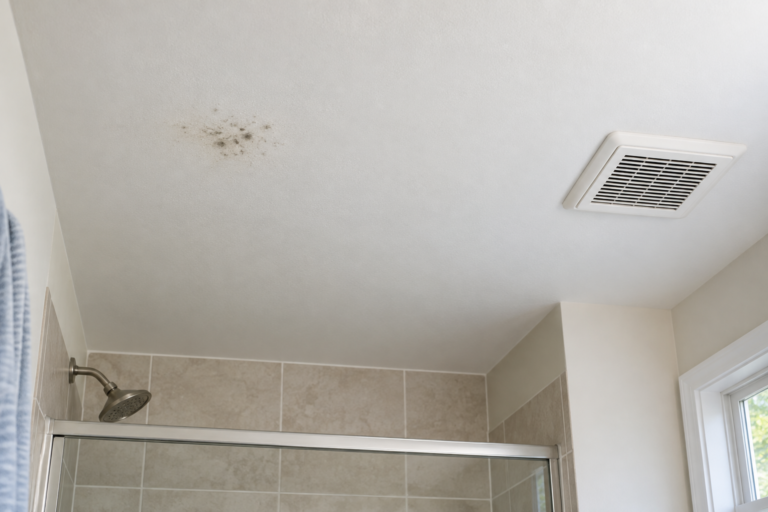
- Ceiling patch or stain: How to Remove Mold From a Bathroom Ceiling Safely
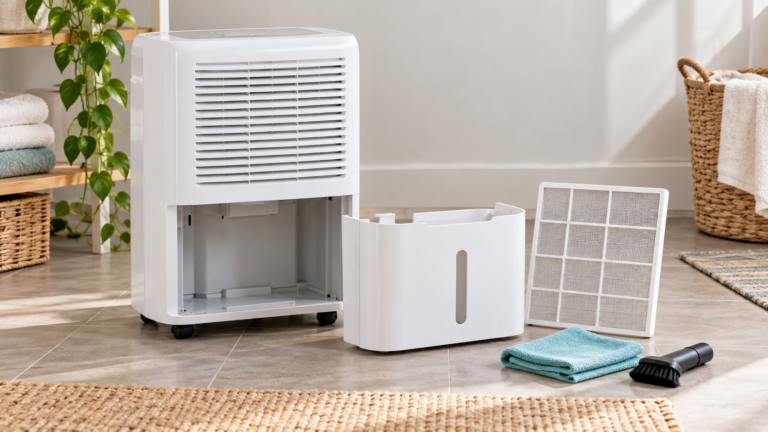
- Maintenance of a safely operating dehumidifier, not leak repair: How to Clean a Dehumidifier Safely
Sources
- U.S. EPA – A Brief Guide to Mold, Moisture and Your Home
- CDC/NIOSH – Mold, Testing, and Remediation
- CDC – 8 Tips to Clean Up Mold
- Wisconsin Department of Health Services – Controlling Indoor Mold
Update record
Updated October 23, 2026: Clarified that follow-up observation must not deliberately reproduce a leak or restart suspect equipment; the chart and download remain reference aids, not clearance to operate a faulty source.
Also updated October 23, 2026: kept the four-pattern source chart and three-clue record; moved the answer and safety boundaries ahead of the download, added direct reading routes, clarified health/PPE and absorbent-material limits, and labeled related guides by the next decision. The original chart and PDF were retained as summary references.
Previous update, October 6, 2026: added a three-clue moisture-evidence log, renter documentation guidance, post-repair verification, the inline decision chart, and a direct route to the window-condensation guide.