How to Remove Static From Clothes—and Stop It in the Dryer
Quick answer: Match the fix to when the static appears. Read the care label before treating a clinging garment. On water-safe fabric, a trace of moisture after a successful dry patch check may help; a smooth metal hanger is an optional alternative only where it will not snag. For static after drying, use the garment-approved sensor or a shorter cycle, remove clothes when they are dry, and separate polyester and nylon from natural fibers. Dryer sheets are optional—not a safe default for activewear, microfiber, towels, flame-resistant clothing, or water-repellent fabric.
Check first: Do not spray hairspray, air freshener, or another aerosol on clothing. Do not put safety pins, loose foil, or other improvised metal objects in a dryer. Check the garment label and the dryer manual before using water, heat, a steam feature, fabric softener, or a dryer sheet.
Not just clothing cling: A shock or tingle when touching an appliance case, control, cord or outlet is not something this fabric remedy can diagnose. ESFI warns that even a mild electrical tingle can signal danger. Stop using the equipment, keep others away and contact a licensed electrician. Do not touch it again to test the sensation, spray it with water, apply a hanger to it or open its cabinet. If water, smoke or sparking makes approaching it unsafe, stay away and get help with safe power isolation.
For one clinging garment, use the garment-safe quick fix. After treatment, use the result check before repeating it or changing your laundry routine.
Choose the fix by when the static happens
| What is happening | Best first move | What to avoid |
|---|---|---|
| One garment clings while you are wearing it | Remove and inspect the garment. Use moisture only if the label permits it and a small hidden test dries without a mark. A smooth, non-snagging hanger is optional. | Saturating the garment, wetting dry-clean-only fabric, or applying lotion directly to the cloth |
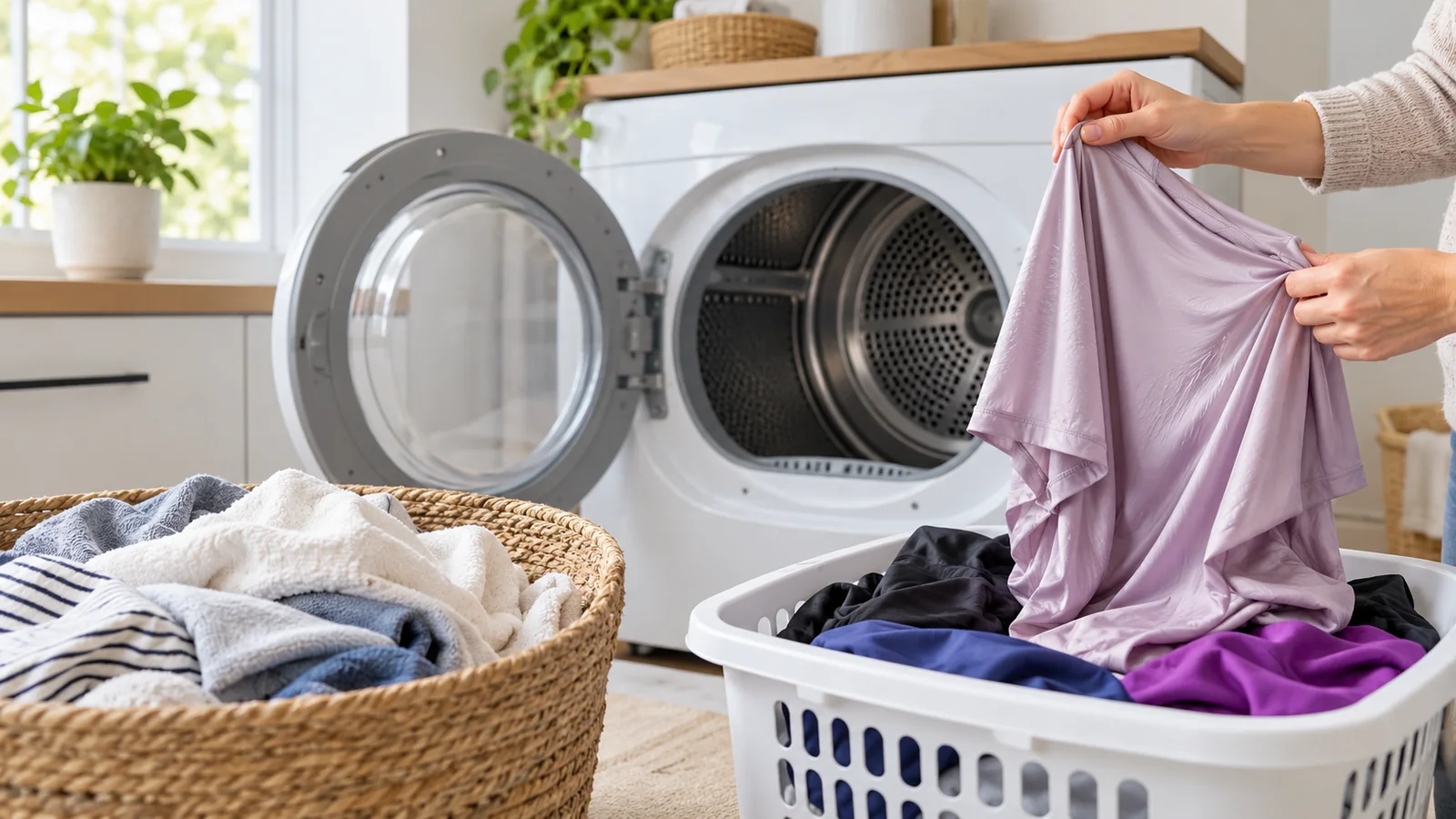
| Clothes cling together as they leave the dryer | Remove them as soon as they are dry. Next time, use the approved sensor or a shorter/lower-heat cycle and keep the load loose enough to tumble. | Running an already-dry load longer or adding an improvised object to the drum |
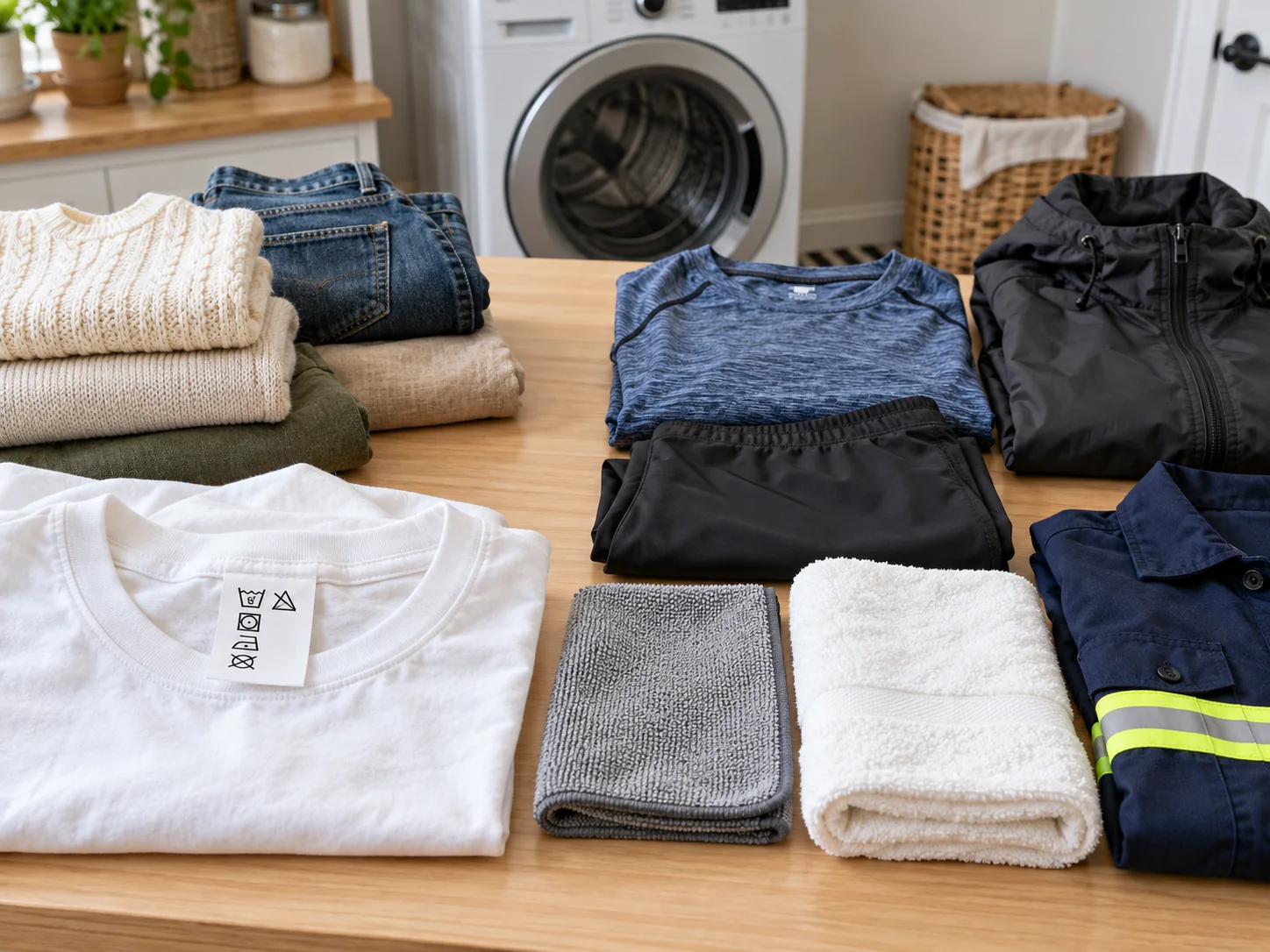
| Polyester, nylon, fleece, or activewear has most of the static | Dry synthetics separately from natural fibers and air-dry or use lower heat when the care label permits. | Assuming a dryer sheet is compatible with performance finishes |
| Towels, microfiber, flame-resistant, or water-repellent items are involved | Follow the item manufacturer’s care directions; use a product only when all labels permit it. | Treating fabric softener or dryer sheets as a universal fix |
| Static is common around the home in a dry season | Check indoor humidity separately and manage it within a healthy range. | Assuming static alone proves the air is too dry |
| The dryer also smells burnt, overheats, leaves loads damp, or runs unusually long | Stop if there is heat, smoke, sparks, or burning odor; otherwise troubleshoot the dryer as a separate problem. | Opening the cabinet or treating static as the only sign of a dryer fault |
| A shock or tingle occurs when touching the appliance or its controls | Stop using the equipment and get a licensed electrician to assess it; do not try to reproduce the shock. | Treating a possible electrical fault with water, a hanger, dryer sheets or repeated touching |
How to release static from a garment safely
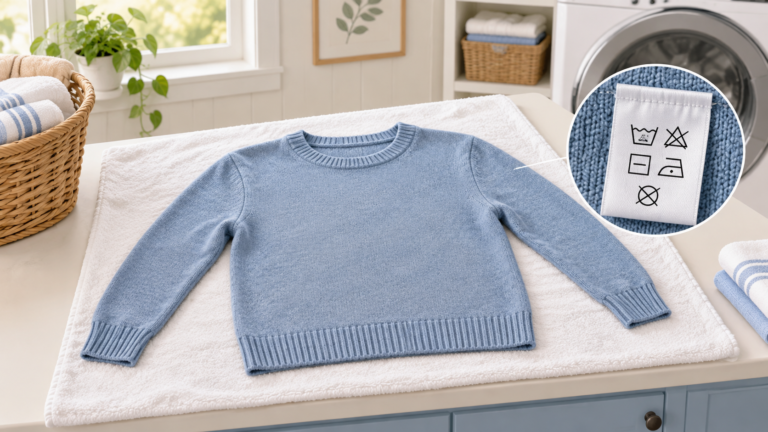
1. Read the garment label first
The Federal Trade Commission’s Care Labeling Rule requires manufacturers and importers to provide cleaning instructions so consumers know how to care for garments. Use that information before adding moisture, applying a laundry product, or putting an item back in a dryer.
Do not wet leather, suede, structured garments, dry-clean-only pieces, or fabrics that may water-spot unless the maker or a qualified cleaner says the method is safe. A hidden test does not make a prohibited method safe. If moisture is permitted, test a small inside area and let it dry fully before judging color, texture or water spotting. Skip moisture when you cannot confirm that it is compatible.
2. Add only a trace of moisture to water-safe fabric
Remove the garment and work away from appliances, outlets and other powered equipment. If the label permits moisture and the hidden patch has dried without a change, lightly wipe the inside of the clinging area with a clean, barely damp cloth or use a very light water mist. Do not soak the fabric or spray a garment while wearing it. Let it dry as its care instructions allow; stop if dye transfers, a ring appears or the finish changes.
This is a temporary release, not a reason to rewash the whole item. Water can mark silk, rayon blends, structured clothing, and some dyed or finished fabrics, so the label and a hidden-area check matter.
3. Try a smooth metal hanger
Whirlpool lists a metal hanger as an option for clothing static. With the garment off your body, pass a clean, smooth hanger lightly over a small area first. Stop if it catches or pulls a thread; do not press harder. Keep it away from loose knits, metallic decoration, delicate trims, and any surface it could snag.
Do not substitute a safety pin, foil ball, or loose metal object inside a running dryer. An outside-the-dryer hanger technique is not permission to put metal into the appliance.
4. Separate the garment from the layer creating friction
Static can return when two dry materials keep rubbing. Smooth the garment away from tights, a lining, or another layer and give it a gentle shake. If the problem repeats with the same outfit, check the fiber labels: polyester and nylon are more prone to holding charge than many natural fibers.
Check the fabric and the cling after treatment
After any damp area has dried, compare it with an untreated area in the same light. If there is a new ring, dye transfer, roughness or a pulled thread, stop that method. Do not rub harder, add a solvent or use heat to erase a treatment mark; follow the garment maker’s advice or ask a qualified cleaner.
If the fabric is unchanged and the cling has eased, no further treatment is needed now. If cling returns only with the same tights, lining or outfit, address that rubbing combination instead of adding more water. When whole loads cling straight out of the dryer, use the drying controls below. This observation can guide the next step; it does not prove that the garment or appliance has no other problem.
How to stop static in the dryer
Remove clothes when they are dry
Continuing to tumble a dry load adds more friction and removes the remaining moisture that helps charges dissipate. ENERGY STAR says dryers with automatic termination detect when clothes are dry and help prevent overdrying and garment wear. If your machine has a functioning sensor cycle that the garment labels allow, use it. Otherwise, choose the shortest label-approved cycle that gets the load dry and check it promptly.
Do not copy a universal time or temperature from an article. Fabric labels, load size, dryer design, and moisture level differ.
Separate synthetics from natural fibers
Polyester and nylon tend to hold charge, especially when they rub against other materials in dry air. Drying synthetics separately from cotton and other natural fibers reduces that mixed-material friction. When the label allows it, air-drying a static-prone synthetic item can remove the dryer friction entirely.
This sorting step also makes the result easier to diagnose. If static drops when synthetics are separated, the machine is not automatically at fault.
Leave room for clothes to tumble
A tightly packed load dries unevenly and cannot move as the appliance was designed to handle it. Follow the dryer’s loading instructions rather than a universal number of garments. ENERGY STAR notes that the drum needs enough space for clothes to tumble freely and for air to circulate.
Static by itself does not prove that the vent is blocked. But if the load also stays damp, takes much longer than usual, or the dryer becomes unusually hot, use the dryer airflow troubleshooting guide and stop using the machine for smoke, sparks, burning odor, or overheating.
Clean the lint filter as routine maintenance
Clean the lint filter according to the dryer manual, normally after every load. ENERGY STAR identifies this as both an airflow and safety measure. Do not run the dryer without its filter, and do not reach behind a guard or open the cabinet for a static problem.
If clothes also collect loose fibers rather than simply clinging, use the lint identification and removal guide to distinguish lint, tissue, residue, and pilling.
Should you use dryer sheets or fabric softener?
They can reduce static on compatible everyday loads, but they are not required and are not universal. Whirlpool explains that dryer sheets deposit softening and lubricating ingredients on fabric. The same source advises avoiding them on athleticwear and microfiber, towels, flame-resistant clothing, and water-repellent fabric because coatings can affect wicking, absorbency, self-extinguishing performance, or water repellency.
Before using either product, confirm that the garment label, laundry-product directions, and appliance manual all permit it. Use the labeled amount; more product is not a stronger safety margin. Skip fragrance products when a household member reacts to the fragrance or dye.
If you use dryer sheets, inspect and clean the lint screen as the dryer manufacturer directs. ENERGY STAR notes that dryer-sheet film can reduce airflow through the screen over time.
Does indoor humidity cause static clothes?
Dry air can make static more noticeable because electrical charge dissipates less readily. That makes humidity a contributing condition, not a diagnosis. Static can still come from overdrying, synthetic fabrics, and friction.
Do not buy or run a humidifier based on static alone. Check the room with a reliable hygrometer and use the indoor humidity guide to balance comfort with condensation and mold risk. If you already use a humidifier, keep it clean and follow its manual; excessive humidity creates a different household problem.
Frequently asked questions
Can I use a dryer sheet on clothes I am already wearing?
Only if the garment and product directions permit contact. Dryer-sheet ingredients can coat fibers, so do not treat this as a default for activewear, microfiber, towels, flame-resistant clothing, or water-repellent fabric. For a product-free alternative, remove the garment and follow the compatible moisture-test or smooth-hanger method above.
Will putting a wet towel in the dryer remove static?
Do not add a wet item to a hot load based on a generic tip. Use only a steam or static-reduction feature described in your dryer’s manual, and make sure every garment in the load permits that cycle. For the next load, avoiding overdrying is the simpler prevention step.
Are wool dryer balls guaranteed to stop static?
No. Results depend on the load, fabrics, dryness, and product instructions. A wool product may also be unsuitable for a person avoiding animal fibers or with a sensitivity. Treat dryer balls as an optional accessory, not as a substitute for correct sorting and cycle selection.
If the garment has changed size rather than merely clinging, use the unshrinking-clothes guide; static treatment cannot reverse a fiber or sizing change.