Dryer Takes Too Long to Dry? Start With the Airflow Clues
Quick answer
If a dryer used to finish a normal load in one cycle but now leaves clothes warm and damp, start with airflow—not an internal part. A blocked lint screen, crushed transition duct, or restricted outside vent can trap moist air and make drying take much longer. If the dryer tumbles but produces little or no heat, or a safe airflow check does not improve the problem, stop there and arrange model-specific service.
Stop using it when there is a safety warning
Stop using the dryer and get qualified help if you notice a burning smell, smoke, a damaged power cord, a gas odor, or unusual heat around the appliance. Do not take the dryer apart or reach into ductwork while it is running.
Match the clue before you try a fix
| What you notice | Most useful next check | What it may mean |
|---|---|---|
| Clothes are warm but still damp, and drying time has slowly increased | Check lint removal and outside exhaust airflow | Moist air may not be leaving the dryer efficiently. |
| The outside vent flap barely opens while the dryer runs | Stop using extra cycles and inspect the accessible vent path after unplugging | The transition duct or exhaust path may be restricted. |
| The drum turns but clothes are cool and wet | Check the model manual and arrange service if the setting is correct | A heating or control problem is possible; the symptom does not identify a specific failed part. |
| Only bulky, mixed, or very wet loads take a long time | Reduce the load and consider whether the washer spun the load properly | Air may not be moving through the load, or the clothes entered the dryer unusually wet. |
| You have a heat-pump or condenser dryer | Check the manual’s lint-filter and condenser-care instructions | These dryers do not use a normal exterior exhaust path and cycle time varies by model. |
1. Start with one normal, cleanly separated load
Before diagnosing the machine, try a normal-size load of similar-weight items on the cycle your manual recommends. An overloaded drum can keep air from moving through the fabric. A load that comes out of the washer dripping wet may point to the washer’s spin or drain performance rather than the dryer.
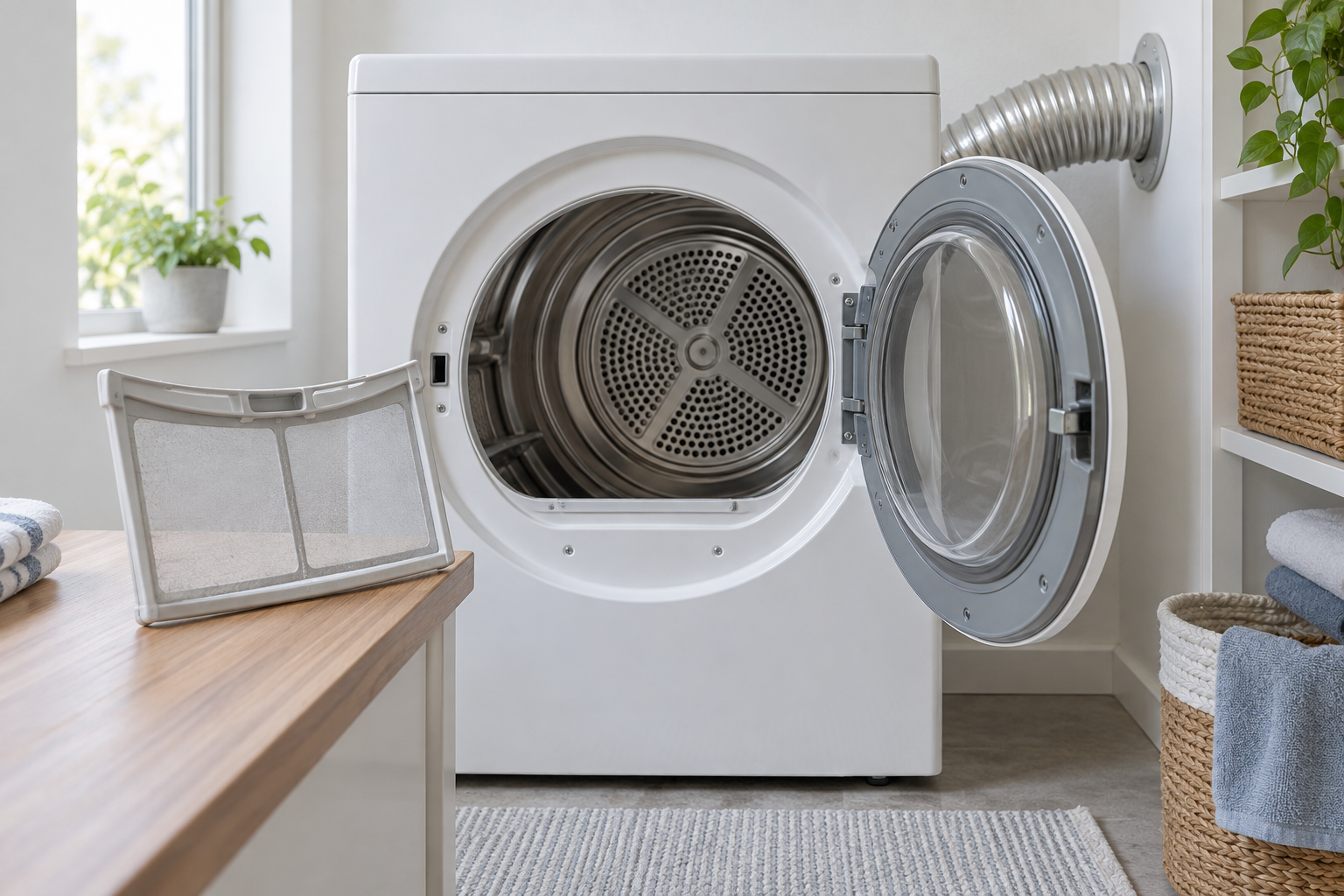
Clean the lint screen before the test load. The U.S. Consumer Product Safety Commission (CPSC) says a load that remains damp after a typical cycle or suddenly needs longer drying time can signal a blocked lint screen or exhaust duct. Do not run the dryer without its lint filter.
If the clothes entered the dryer much wetter than usual, see Why Is My Washing Machine Not Spinning? before assuming the dryer is at fault.
2. Look for the safe airflow clue outside
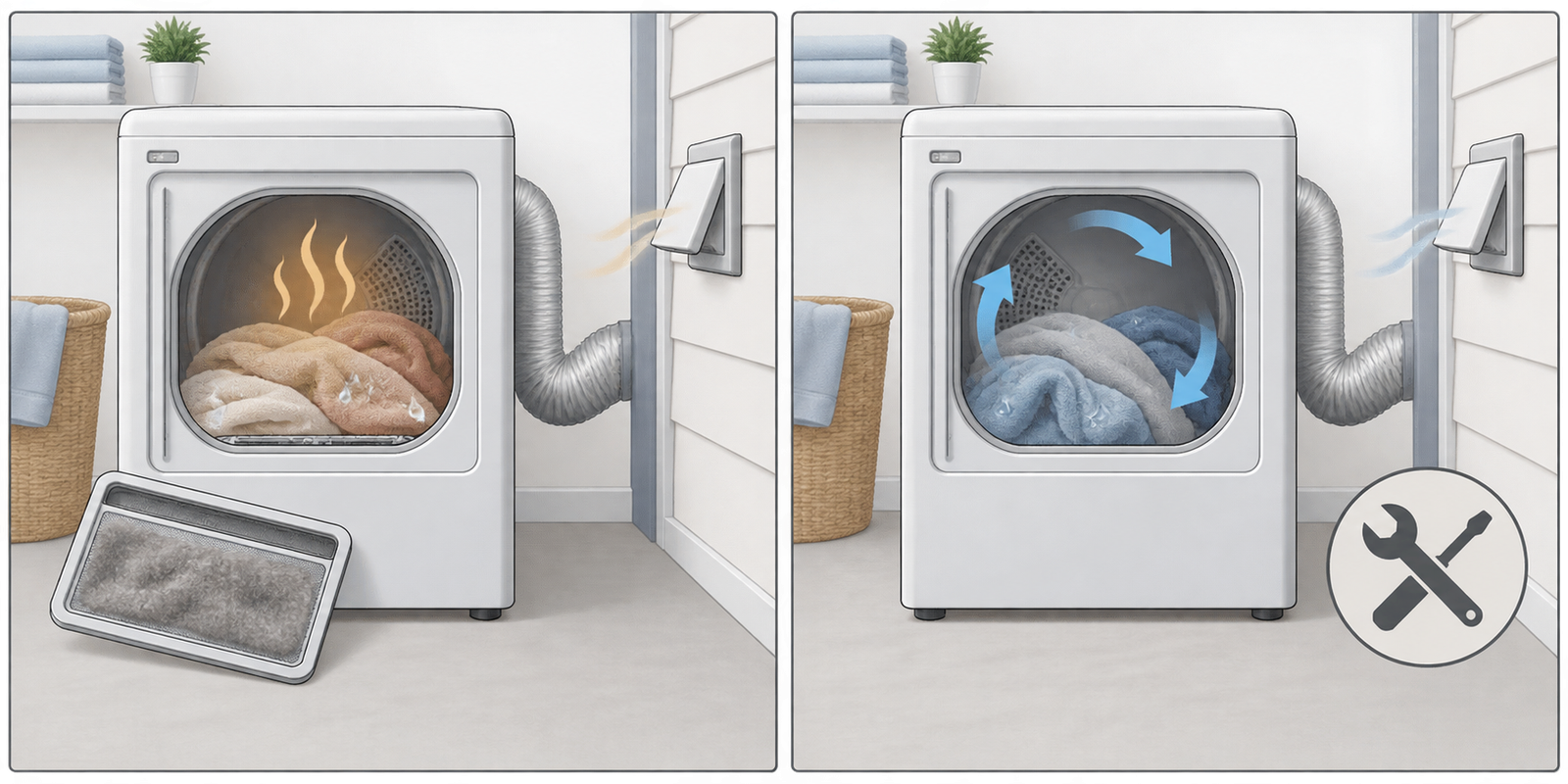
While the dryer is running, check the exterior vent cover from a safe outdoor location. The flap should open so exhaust air can escape. Do not insert your hand or tools into the opening. A flap that stays closed, weak airflow, lint collecting at the outlet, or hot humid laundry-room air points toward a restricted vent path.
This matters for more than cycle time. CPSC warns that lint can block airflow, raise temperatures, and create a fire risk. It recommends periodic cleaning of the lint screen, vent, and exhaust duct, along with checking that the outdoor vent opens during operation.
3. Unplug the dryer before checking the accessible duct behind it
Turn the dryer off and unplug it before looking behind the appliance. Check only what you can see without disassembly:
- Make sure the short transition duct is not crushed, sharply bent, torn, or pulled loose.
- Move the dryer only enough to avoid pinching the duct; do not strain the electrical cord or gas connection.
- If the path disappears into a wall, ceiling, crawlspace, or roof, do not try to clear it blindly. A vent-cleaning or appliance professional can assess the full run.
CPSC recommends rigid or corrugated semi-rigid metal ducting instead of plastic or foil accordion-style ducting because flexible materials can trap lint and kink more easily. Your dryer’s installation instructions still control the allowed vent type, length, and connection details for your model.
4. Separate an airflow problem from a heating problem
A dryer can feel warm and still dry poorly when moist air cannot escape. That is different from a dryer that tumbles but stays cool. If the outside flap opens normally, the lint screen is clean, the accessible duct is not restricted, and the clothes stay cool, do not guess at a heating element, gas valve, sensor, or electrical component. Use the troubleshooting section of the model manual or arrange service.
For a separate symptom guide, see Dryer Not Heating? Safe Checks Before Service. If the dryer is making scraping, thumping, or buzzing sounds as well as taking longer to dry, see Dryer Making a Loud Noise? Identify the Sound Before You Arrange Service.
5. Use the right path for vented and ventless dryers
Most conventional U.S. dryers vent moist air outdoors, so the outside-flap check is useful. Heat-pump dryers work differently: ENERGY STAR notes that they do not release air through an exterior vent. On those models, use the manual’s maintenance instructions for filters, condensers, and water collection rather than looking for an outdoor exhaust flap.
Do not compare every dryer to one fixed cycle time. Fabric type, load size, starting moisture, sensor settings, room conditions, and dryer design can all change how long a load takes. The useful change is a clear, repeated increase from your own normal drying time.
When to stop troubleshooting
- Drying time stays much longer after the lint screen and accessible duct checks.
- The duct run is hidden, long, roof-vented, or otherwise not safely accessible.
- The dryer tumbles without warming the load.
- The exterior flap will not open, or exhaust air cannot escape.
- You notice a burning smell, smoke, a gas odor, damaged wiring, or excessive heat.
Avoid repeatedly running extra cycles to compensate for a restriction. The safer next step is to correct the airflow problem or have the appliance and venting assessed.
Keep drying time from creeping up again
- Clean the lint screen before each load.
- Keep the area behind and around the dryer free of lint and clutter.
- Check that the outside vent cover can open and is not blocked by debris.
- Have hidden or long exhaust runs cleaned on a schedule appropriate to your use and installation.
- Follow your model manual for any heat-pump, condenser, or sensor maintenance.
Sources
- U.S. Consumer Product Safety Commission: Overheated Clothes Dryers Can Cause Fires
- U.S. Fire Administration: Appliance and Electrical Fire Safety
- Whirlpool Product Help: Dryer Is Not Drying or Experiencing Long Dry Times
- GE Appliances: Dryer Taking Too Long To Dry Clothes or Not Drying at All
- ENERGY STAR: Clothes Dryers