Garbage Disposal Not Draining? Safe Steps to Clear It
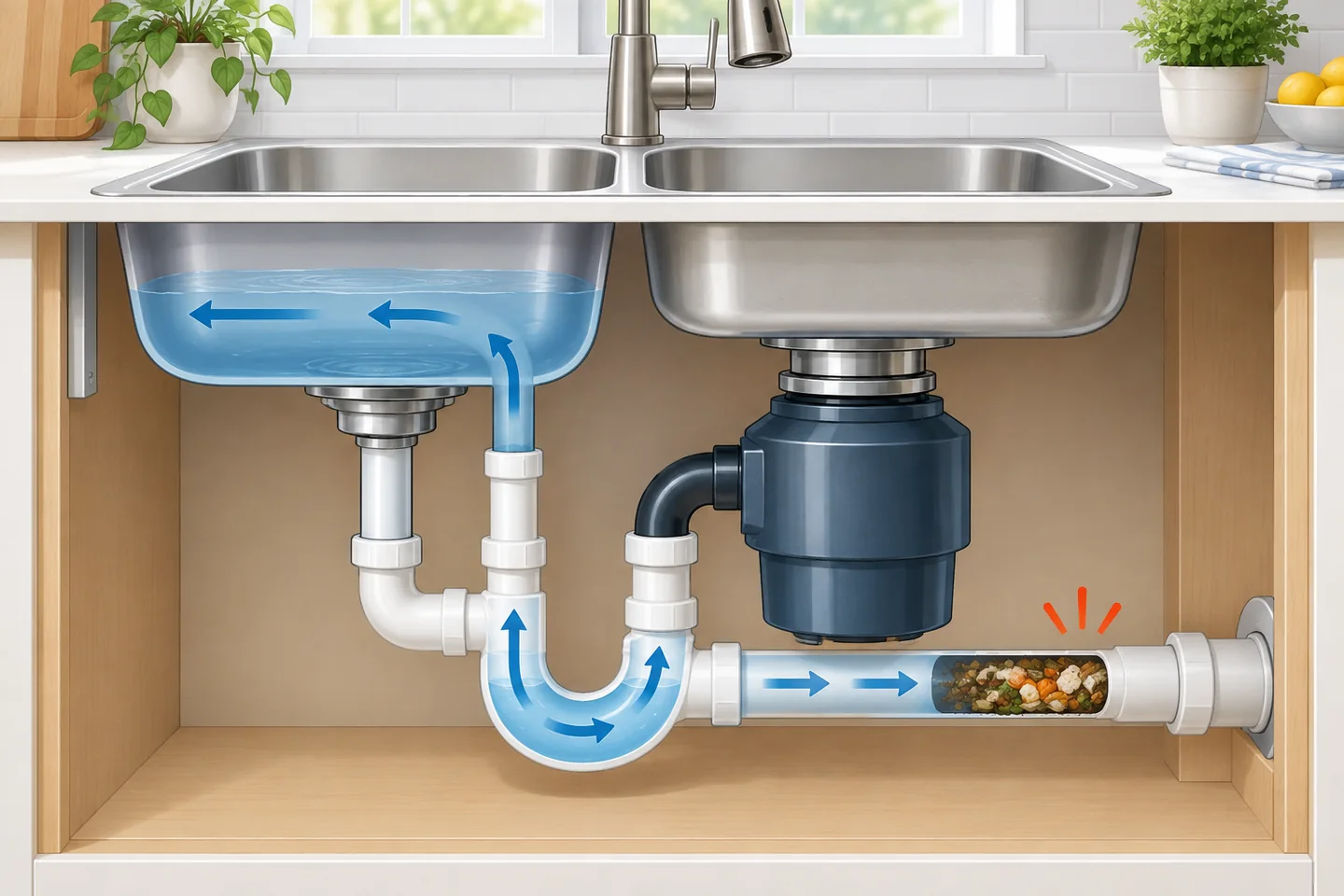
If your garbage disposal runs but the sink will not drain, the blockage is usually in the disposal outlet, P-trap, or drain pipe downstream—not in the motor. Stop adding food, keep the dishwasher off, and do not put your hand into the disposal. Start with a plunger; inspect the trap only after disconnecting power and only if no chemical drain cleaner has been used.
Quick answer
Use the sound and water movement to locate the problem
- It runs and creates a whirlpool: the drain line is probably clogged. Plunge the disposal opening first.
- It hums without grinding: switch it off immediately. Clear the jam before treating the drain.
- It is completely silent: follow the no-power checks instead of opening the plumbing.
- Several fixtures are backing up: stop and call a plumber; the blockage may be beyond the kitchen branch.
What the symptom points to
| What you notice | Likely location | Safest next step |
|---|---|---|
| Water swirls while the motor sounds normal | Disposal outlet, P-trap, or branch drain | Plunge the disposal opening |
| Both bowls of a double sink fill | Shared trap or downstream drain | Seal the second bowl and plunge; escalate if it persists |
| Only the other sink bowl backs up when the disposal runs | Restriction in the shared drain path | Stop running the unit and clear the shared drain |
| Steady hum with no grinding | Jammed grinding mechanism | Switch off immediately and use the humming guide |
| Kitchen sink plus another fixture drains slowly | Deeper branch or main-drain problem | Call a plumber |
| Problem began after a new installation | Misaligned connection, trapped debris, or an existing clog | Have the installation and drain layout checked |
Before working near the drain
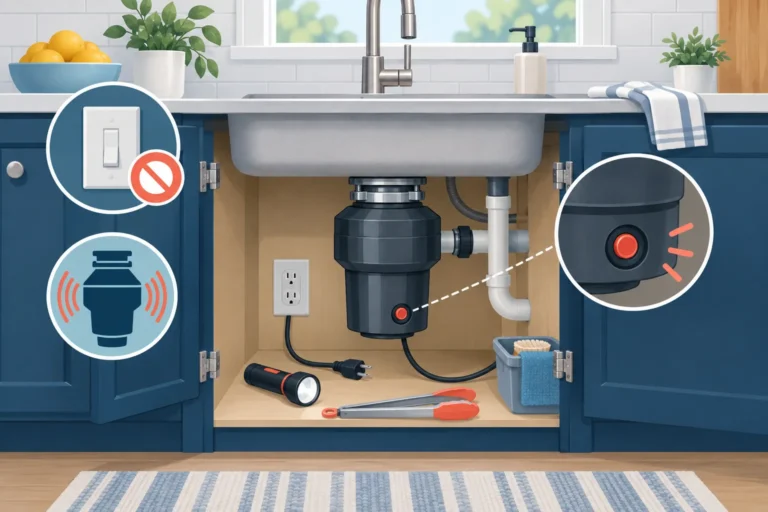
Turn the wall switch off. Before putting a tool into the opening or disconnecting any pipe, unplug the disposal with dry hands or switch off its circuit breaker if it is hardwired. Never reach inside, even when the switch is off. Do not open the P-trap if drain cleaner, bleach, acid, or another chemical is in the standing water; splashing or opening the pipe could cause a serious exposure.
What you may need
- Sink plunger with a flat cup
- Stopper or wet cloth for the second bowl of a double sink
- Bucket, towels, and waterproof gloves
- Channel-lock pliers only if your trap has removable slip nuts
- Flashlight
How to clear a garbage disposal that is not draining
1. Confirm that this is a drain problem
Keep hands and tools away from the opening and run the disposal for only a moment. A normal motor sound with water spinning in the sink points toward a clogged drain line. If the unit hums without grinding, switch it off immediately and follow the safe jam-clearing guide. If it makes no sound, use the checks in Garbage Disposal Not Working.
2. Remove enough standing water to work safely
Switch off the disposal. Scoop excess water into a bucket, leaving enough to cover the plunger cup. Keep the cabinet, outlet, plug, and your hands dry. Do not run the dishwasher while the sink drain is blocked because wastewater may back up through connected plumbing.
3. Plunge the disposal opening
InSinkErator recommends a plunger as the first clog-clearing method. For a double sink, seal the other drain tightly with its stopper or a wet cloth. Add about 4 inches (10 cm) of water if needed, center the plunger over the disposal opening, press down gently, and pull up firmly several times. The seal matters more than speed.
Remove the plunger and watch the water. If it drains, clear loose debris from the sink with tongs rather than your fingers. Restore power only after every tool is out of the opening, then run cold water and the disposal for a brief test.
4. Check the removable P-trap if plunging fails
Do this only if the disposal is disconnected from power, the plumbing is cool, and no chemical drain cleaner has been used. Put a wide bucket under the U-shaped trap. Photograph the pipe arrangement before loosening anything. Support the trap while loosening its slip nuts, then lower it carefully because it will contain water.
Remove soft buildup with a nonmetallic brush and rinse the trap in another sink or outdoors. Do not force metal tools through plastic pipe. Check that the slip washers remain in the same orientation, reinstall the trap without overtightening plastic nuts, and run plain water while watching every joint. If a joint drips, switch off the water and correct the washer alignment before using the disposal.
5. Stop if the trap is clear but the sink still backs up
A clear trap with continued standing water suggests a blockage farther into the branch drain, a venting problem, or an installation issue. Avoid repeated disposal use and do not improvise with corrosive chemicals. A plumber can clear the line without exposing someone later to trapped cleaner or damaging the disposal and pipe connections.
Why the sink may back up into the other bowl
In many double sinks, both bowls join the same trap or branch pipe. If the shared path is clogged, the running disposal pushes water toward the open bowl instead of down the drain. Seal the second opening while plunging so pressure reaches the clog. If water returns as soon as you stop, the obstruction is probably farther downstream and needs a drain-line inspection.
Do not pour drain cleaner into the disposal
Standing water can hold a concentrated chemical where it may splash during plunging or spill when someone opens the trap. Drain cleaner can also conflict with the disposal manufacturer’s care instructions. If a chemical has already been added, keep people away from the sink, do not plunge or disconnect pipes, and tell the plumber exactly what product and amount were used.
When to call a plumber
- The P-trap is clear but the sink remains blocked.
- Several fixtures drain slowly or back up at the same time.
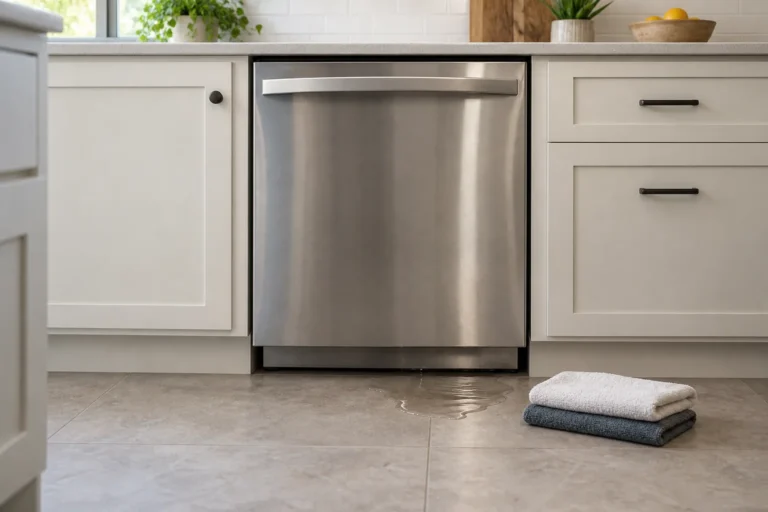
- Wastewater enters the dishwasher or another fixture.
- The clog returns soon after being cleared.
- A pipe is corroded, cracked, glued in place, or cannot be reassembled without leaking.
- Drain cleaner or an unknown chemical is in the standing water.
Keep the disposal disconnected if water is leaking near the cord, outlet, switch, or motor housing. Use the disposal leak-location guide to identify the source without energizing a wet appliance.
How to prevent another disposal clog
- Run a moderate flow of cold water while grinding and for a few seconds afterward.
- Feed small amounts gradually instead of packing the chamber.
- Keep grease and fat out of the disposal and drain.
- Follow the restrictions in the manual for fibrous scraps, starches, bones, pits, and shells.
- Stop when drainage slows; continued grinding can compact more waste into the pipe.
Frequently asked questions
Why does the disposal run but the water stay in the sink?
The motor and drain perform different jobs. If the unit sounds normal and creates a whirlpool, it is moving water but a restriction in the outlet, P-trap, or downstream pipe is preventing that water from leaving.
Can I plunge a sink with a garbage disposal?
Yes. InSinkErator specifically recommends plunging a clogged disposal drain. Switch the disposal off, seal the other bowl of a double sink, and maintain enough water to cover the plunger cup. Keep hands out of the disposal opening.
Why does water come up in the other sink?
The two bowls probably share a blocked drain path. Water pushed by the disposal follows the open route into the second bowl. Seal that bowl while plunging; persistent backup usually means the shared trap or branch line needs clearing.
Should I use baking soda and vinegar?
They are not a dependable way to remove a compacted food or grease blockage. The manufacturer-supported first step is mechanical plunging. Avoid mixing any product with a drain cleaner or unknown residue already in the sink.
Sources
This guide was checked against current manufacturer instructions and established repair guidance. Your disposal manual and local plumbing requirements take priority when they differ from general advice.