Garbage Disposal Not Working? Safe Checks Before Service
If your garbage disposal is not working, listen before you touch anything. A unit that is completely silent usually needs a power or overload check. A disposal that hums but does not grind is more likely jammed. If it runs but the sink stays full, the problem is in the drain path rather than the motor. Turn the wall switch off immediately if you hear humming, smell burning, see smoke, find a leak near electrical parts, or notice damaged wiring.
Last updated: September 13, 2026 — Added a sound-based disposal diagnostic to help readers find the relevant next step.
START WITH THE SOUND
What happens when you flip the switch?
Listen only briefly and keep hands, tools, and objects away from the sink opening. Choose the closest match for the safest next step.
Choose a symptom to see the safest next step.
Quick answer
Start with the sound it makes
- No sound: confirm the plug, GFCI, breaker, and disposal reset button.
- Humming: switch it off immediately, disconnect power, and follow the model’s jam-clearing instructions.
- Runs but does not drain: treat it as a sink or discharge-pipe blockage.
- Trips again: stop resetting it and arrange qualified service.
What is the disposal doing?
| What you notice | Likely direction | Safest first check |
|---|---|---|
| Completely silent | No power or the overload protector has tripped | Switch off; check the plug, GFCI, breaker, then the reset button |
| Low hum but no grinding | The grinding plate may be jammed | Switch off immediately and disconnect power before inspecting |
| Starts, then stops | Overload, recurring jam, or motor problem | Let it cool and reset once after clearing any obstruction |
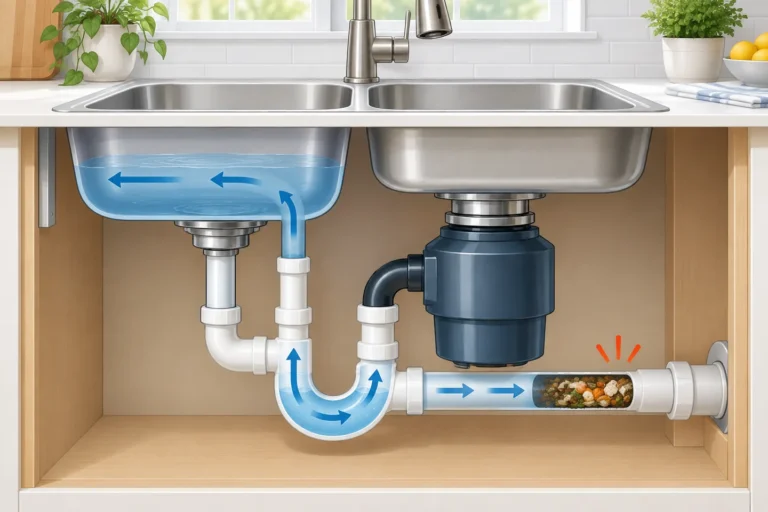
| Motor runs but water backs up | Clogged disposal outlet, trap, or drain line | Stop feeding waste and diagnose the drain path |
| Leaks, sparks, smoke, or burning smell | Unsafe electrical, seal, or housing problem | Do not use it; disconnect power safely and call a professional |
Before you inspect the disposal
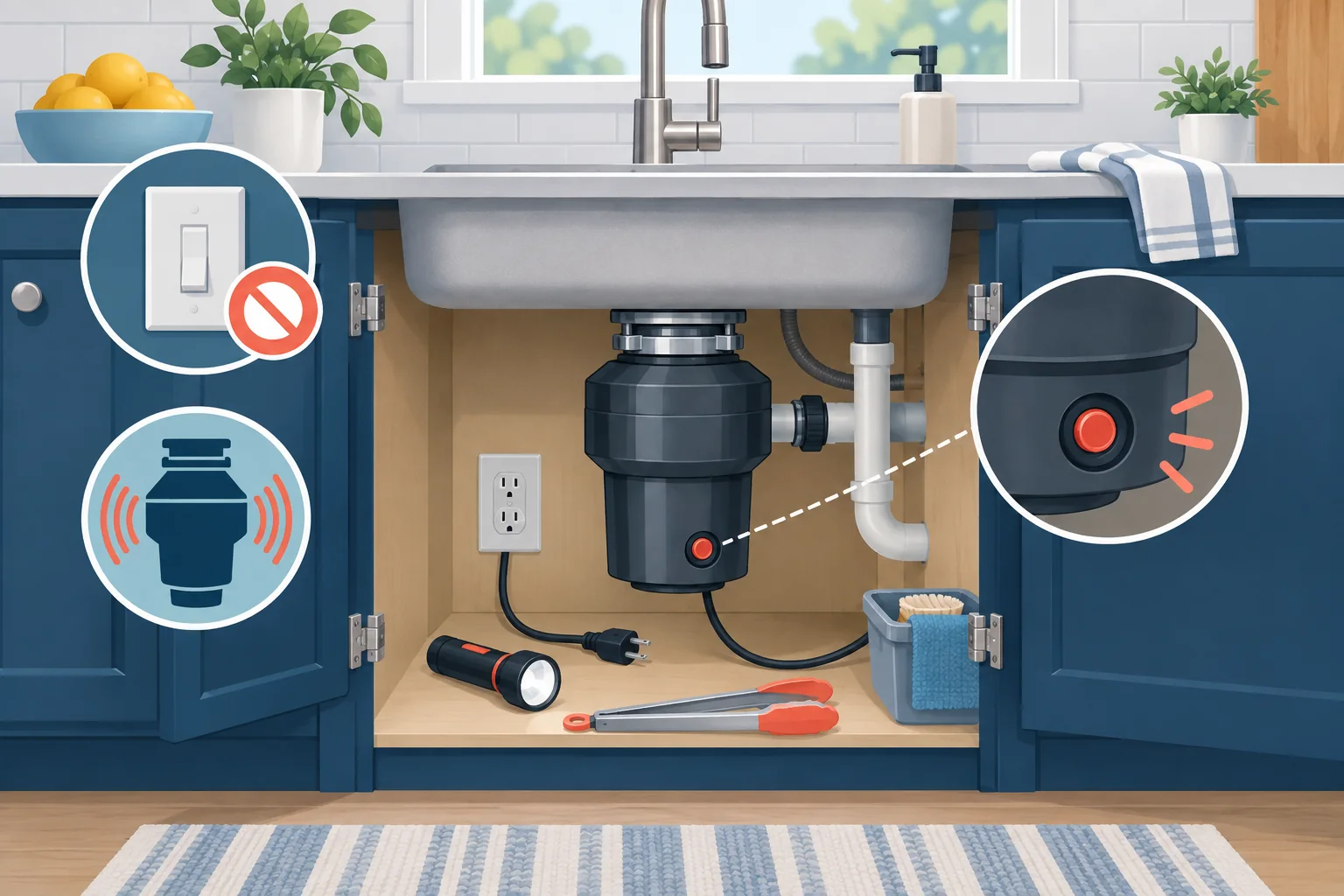
Turn the wall switch off. Unplug the disposal under the sink, or switch off its circuit breaker if it is hardwired. Keep the plug and your hands dry. Never place a hand or fingers inside the grinding chamber, even when the switch is off. Use a flashlight and long-handled tongs only after power is disconnected. Do not remove wiring covers, touch wet electrical parts, or continue if you cannot verify that the unit is disconnected.
Garbage disposal not working: safe steps in order
1. Decide whether it is silent or humming
Test the switch for no more than a moment while keeping hands and objects away from the sink opening. If there is no sound, follow the power path below. If it hums, switch it off immediately. A humming motor is receiving power but may be unable to turn, and repeated attempts can overheat it.
2. For a silent disposal, check the visible power path
With the switch off, look under the sink and confirm that a corded disposal is fully plugged into a dry outlet. Check whether a nearby GFCI outlet has tripped; the controlling GFCI may be elsewhere on the same kitchen circuit. At the electrical panel, move a tripped breaker fully off and then back on once. If the breaker or GFCI trips again, leave it off. Repeated tripping can indicate a jam, damaged appliance, wet connection, or electrical fault that needs a qualified electrician or appliance technician.
3. Let the motor cool, then press the reset button once
Most disposals have a small red overload-reset button on the bottom or lower side. GE advises turning the switch off and allowing two to five minutes for the overload control to cool before pressing it. Whirlpool also directs users to cut power before resetting. If the button will not stay in, pops out again, or the disposal stops soon after restarting, do not keep pressing it. The unit may still be jammed or may need service.
4. For a humming disposal, clear only a model-approved jam
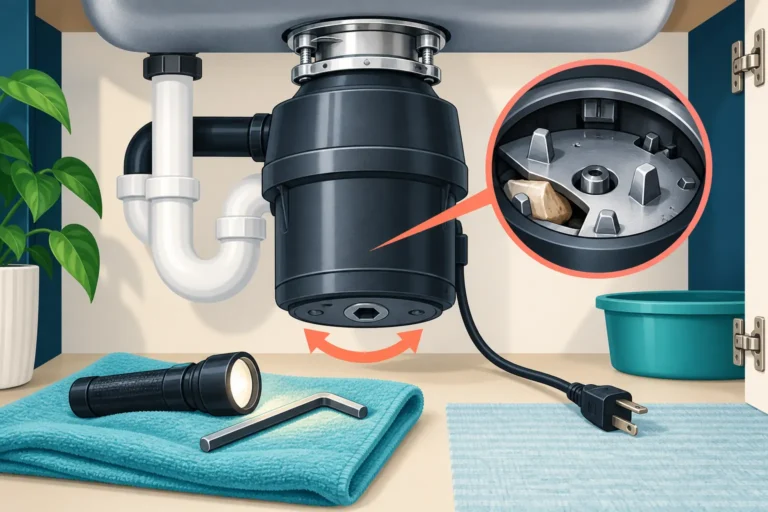
Disconnect power first. Shine a flashlight through the sink opening and use long-handled tongs to remove visible non-food objects such as a bottle cap, utensil, glass, or hard fragment. Never reach inside by hand.
Many, but not all, models have a hex socket centered on the bottom. If your manual shows one, insert the disposer wrench or the exact hex-key size specified for the model and work it gently back and forth until the mechanism moves freely. Remove the wrench before restoring power. Do not force an unknown opening, use a power tool, pry against internal parts, or follow a generic procedure that conflicts with the model manual.
5. Reset and perform one controlled test
After the obstruction is removed, all tools are out of the sink, and the bottom wrench is removed, press the reset button if the model instructions require it. Restore power, run cold water, and briefly switch on the disposal while standing clear of the opening. A smooth grinding sound and normal drainage suggest the obstruction is gone. Switch it off if the hum returns, it rattles sharply, water leaks, or the reset or breaker trips.
If it runs but the sink still does not drain
A spinning motor does not prove the drain is clear. Standing water may point to compacted waste in the disposal outlet, a blocked P-trap, or a clog farther down the branch line. Do not pour chemical drain cleaner into a disposal; it can leave corrosive liquid where someone may later open the plumbing. Stop using the unit and arrange a safe drain inspection, especially when both bowls of a double sink back up or a dishwasher connection is involved.
When to stop and call a professional
- The breaker, GFCI, or reset button trips repeatedly.
- You smell burning, see smoke or sparks, or find scorched wiring.
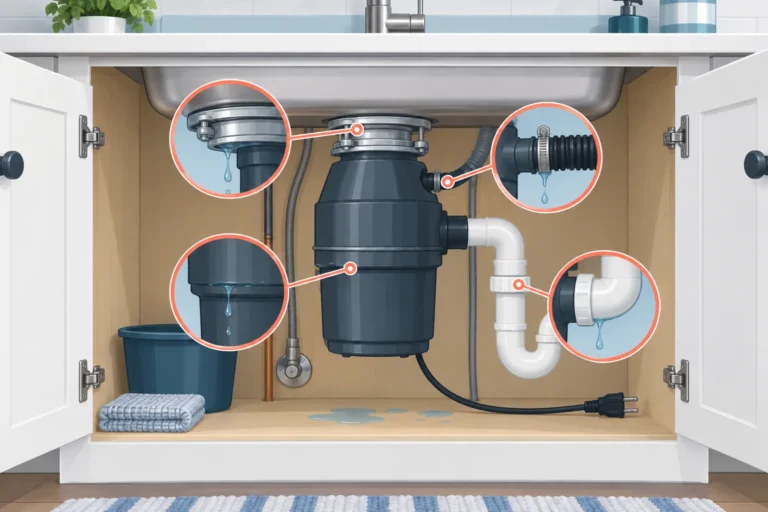
- Water is leaking from the disposal housing or near an electrical connection.
- The unit remains locked after a gentle, model-approved wrench attempt.
- The disposal is hardwired and the fault appears to involve the switch, cable, or junction box.
- Metal, glass, or another dangerous object cannot be removed without disassembly.
A plumber can diagnose drain and mounting problems. An electrician or qualified appliance technician should handle electrical faults. If the disposal is under warranty, contact the manufacturer before removing it or opening any housing.
How to reduce another shutdown
- Run cold water before, during, and after grinding.
- Feed small amounts gradually instead of packing the chamber.
- Keep grease, oil, utensils, glass, plastic, and non-food items out.
- Follow the model manual for fibrous scraps, bones, pits, peels, and cleaning.
- Stop immediately when the sound changes instead of repeatedly cycling the switch.
Frequently asked questions
Why is my garbage disposal completely silent?
The disposal may be unplugged, controlled by a tripped GFCI or breaker, or shut down by its overload protector. Check the visible power path with the switch off, allow the motor to cool, and press the reset button once. Repeated tripping needs professional diagnosis.
Why does the disposal hum but not spin?
A hum usually means the motor has power but the grinding mechanism cannot turn. Switch it off immediately. After disconnecting power, remove visible objects with tongs and use only the model-approved unjamming method.
Where is the garbage disposal reset button?
It is commonly a small red button on the bottom or lower side of the unit. Its exact position varies, so use the model manual if it is not obvious. Turn the switch off and let the motor cool before pressing it.
Should I keep pressing reset until it runs?
No. A reset that pops again is warning that the jam or fault remains. Repeated resets and repeated humming can overheat the motor or keep energizing a faulty circuit.
If the disposal hums, follow the jam-specific humming checks. If water is escaping, use the garbage disposal leak guide to identify where it starts before deciding on repair.
Sources
This guide was checked against current manufacturer troubleshooting instructions. Model designs differ, so the manual supplied with your disposal takes priority over general advice.