Refrigerator Leaking Water? Find the Source and Fix It Safely
Quick answer
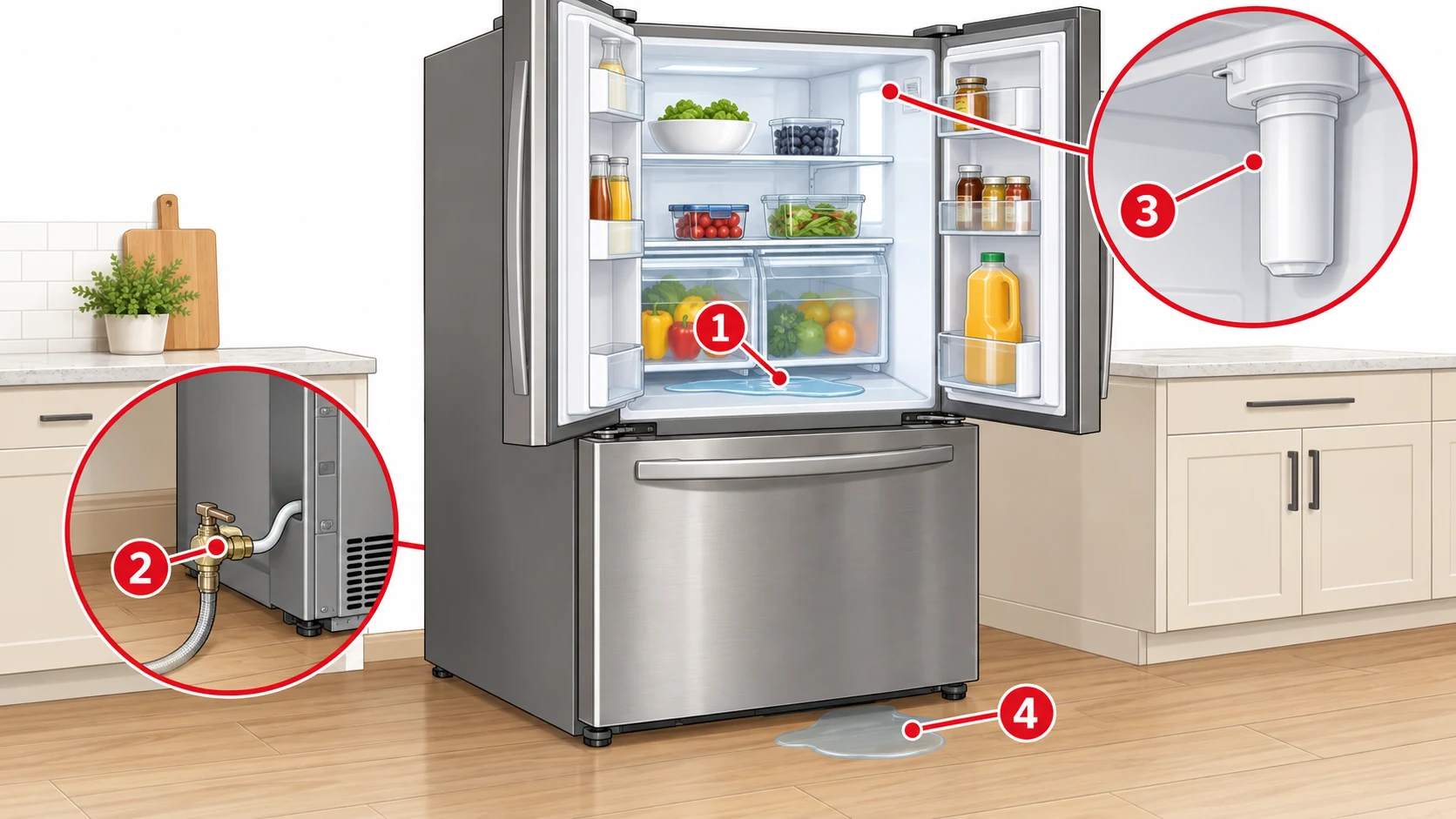
A refrigerator leak is easiest to diagnose by where the water appears. Water under the crisper drawers often points to a defrost-drain problem. Water behind the refrigerator usually calls for a water-line, fitting, or inlet-valve check. Water around a newly changed filter or dispenser points to that system. Dry the floor first, then use the matching safe check rather than trying every repair.
Make the area safe before checking the refrigerator
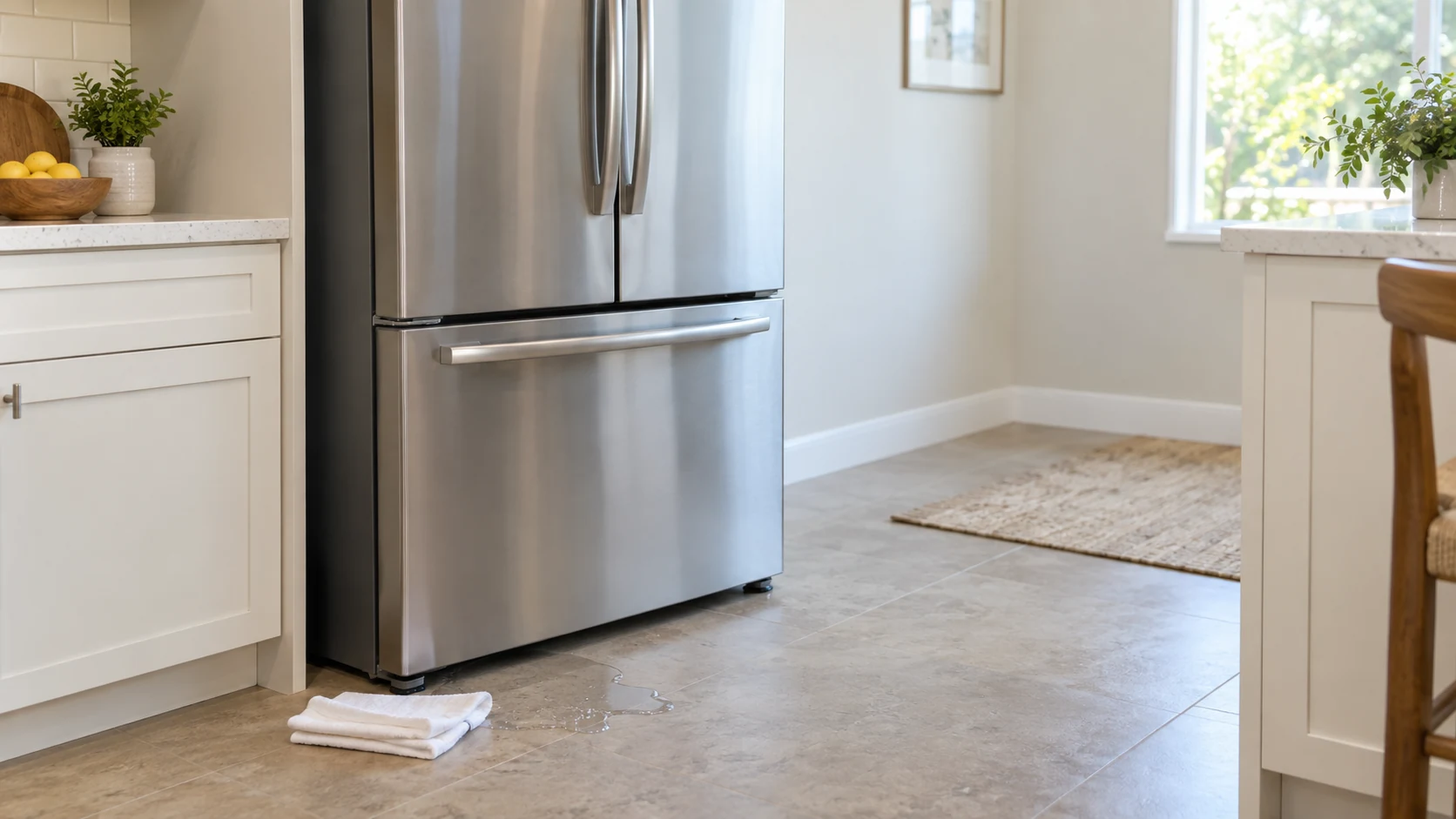
- Dry the floor so nobody slips. Keep children and pets away from the wet area.
- If water is near an outlet, power cord, or electrical component, do not handle the appliance while standing in water. Stop and get qualified help.
- If the refrigerator has an ice maker or water dispenser and the leak is at the rear line, valve, or filter area, turn off the refrigerator water supply before disconnecting anything. GE and Maytag both give model-specific shutoff guidance for refrigerator water systems.
- Do not tip or move a full refrigerator by yourself. Ask for help before pulling it forward.
Start with the location of the water
| What you see | What it may point to | Safest first move |
|---|---|---|
| Water or ice under the crisper drawers, on the refrigerator floor, or at the bottom of the freezer | A blocked or frozen defrost-drain path is possible | Find the model manual before removing any interior cover. If the manual provides a drain-cleaning procedure, follow it exactly. Do not chip ice with a knife or use a flame. |
| Water on the floor behind the refrigerator | A loose, damaged, or leaking supply line, fitting, or water inlet valve is possible | Turn off the refrigerator water supply. With the unit unplugged only when it is safe to do so, inspect accessible connections for moisture, cracking, or a loose tube. |
| Water at the filter housing or inside the fresh-food section after a filter change | A cracked, damaged, incompatible, or poorly seated filter may be leaking | Remove and reinstall the filter only as the model manual directs. Replace a cracked filter or a filter with a missing or damaged seal. |
| A few drops from the dispenser immediately after filling a glass | On some models, a small after-drip can be normal | Wipe the dispenser area and observe it after ordinary use. A continuing drip, wet dispenser area, or water running down the door needs model-specific service guidance. |
| Water under the refrigerator with no obvious line leak | A drain pan, excess frost, or an internal drainage issue may be involved | Do not force out a pan that is not designed for homeowner access. Check the model manual and arrange service if the pan is cracked, inaccessible, or the leak returns. |
This table narrows the next step; it does not identify the failed part remotely. Check your model number before ordering a part or removing an interior panel.
If water is inside the refrigerator or under the crisper drawers
Water inside the fresh-food section, a sheet of ice on the freezer floor, or water under the drawers can occur when defrost water is not draining as designed. The drain location and approved cleaning method differ by model. A refrigerator manual may call for a specific panel, drain opening, or service procedure, so do not use a generic tool or technique inside the freezer.
First remove food from the wet area, dry the water, and look for the model number. If ice is present, do not strike it, force a wire through an unseen drain, or use an open flame. If the same ice or water returns after the manual’s approved procedure, book appliance service. A recurring problem can involve a drain component or another condition that needs model-specific diagnosis.
If water is behind the refrigerator or on the floor at the rear
For refrigerators connected to a household water line, a rear puddle may come from the supply line, a connection, or the inlet valve. Whirlpool’s refrigerator guidance recommends checking whether the supply line is damaged and whether connections are firmly seated. GE Appliances likewise advises turning off the water supply if a valve appears to be leaking or flooding.
- Turn off the ice maker, if your model has one, and turn off the refrigerator water supply. The shutoff may be behind the refrigerator, under a nearby sink, in a cabinet, basement, or crawl space. Follow your own model and home-plumbing setup. Maytag’s shutoff overview illustrates common locations.
- Dry accessible tubing and fittings with a paper towel. Look for a fresh wet spot, split tubing, or a loose connection. Do not over-tighten fittings or substitute tubing that is not approved for the appliance.
- Keep the water off if a line, valve, or connection is actively leaking. A damaged household supply line may require a plumber; an inlet valve or internal line issue may require appliance service.
Call for service rather than repeatedly turning the water back on to test a leak. Continuous water can damage flooring or cabinetry quickly.
If the filter or filter housing is leaking
A leak that starts after replacing the water filter deserves a focused check. Frigidaire notes that a filter that is cracked or not securely installed can leak in the cabinet, while Whirlpool notes that an incorrect or incompatible filter can lead to drips at the filter head or connected lines. See the manufacturer’s support guidance for refrigerator water leaks and filter installation checks.
- Use the correct filter for the exact refrigerator model.
- Inspect the old and replacement filter for cracks or a missing O-ring or seal, if your model uses one.
- Reinstall it straight and only as the manual directs. Do not force or over-tighten it.
- If the housing itself is cracked, water keeps returning, or the filter will not seat properly, leave the water supply off and arrange service.
If the dispenser drips
A few drops immediately after dispensing water may be normal on some refrigerators. GE Appliances explains that pressure and temperature changes can cause a small after-drip. That is different from a stream that continues long after use, water appearing inside the door, or a dispenser area that stays wet.
Wipe the area dry, use the dispenser normally once, and watch the result. If the drip persists, use the model manual or contact service. Do not take apart the dispenser housing or assume the same repair applies to every door design.
What not to do
- Do not ignore water on the floor, especially near the cord or outlet.
- Do not use a knife, screwdriver, or sharp wire to attack ice or an unseen drain tube.
- Do not use a flame, boiling water, or chemical cleaner inside the refrigerator to thaw or clear a drain.
- Do not keep resetting an actively leaking water system to see whether it stops.
- Do not buy a universal replacement part without matching the refrigerator’s model number and manufacturer guidance.
When to call an appliance technician or plumber
- Call appliance service for a repeating defrost-drain problem, a cracked or inaccessible drain pan, an inlet-valve leak, a leaking filter housing, or any leak that requires disassembly not covered by the manual.
- Call a plumber if the household water line, shutoff valve, or plumbing connection supplying the refrigerator is split or leaking.
- Request urgent help if water reaches electrical parts, the leak is rapid, flooring is becoming saturated, or you cannot safely isolate the appliance and water supply.
Prevent another refrigerator leak
Use the manufacturer-approved filter and replace it on the schedule in your manual. After moving the refrigerator or changing a filter, check accessible connections for moisture once the appliance is running normally. Keep doors closed fully, because an extended open door can increase frost and contribute to water-leak conditions on some models. Frigidaire includes door-related frost among its troubleshooting checks for refrigerator leaks.
Common questions
Why is there water under my refrigerator but no water dispenser?
A refrigerator without a dispenser can still leak because of its defrost drainage system or drain pan. Start with the water location and the model manual rather than assuming the household water line is involved.
Can I use my refrigerator while it is leaking?
Do not continue normal use if water is reaching electrical parts, the leak is active, or you cannot determine the source safely. If the leak is at the water system, turn off the refrigerator water supply and arrange the right repair.
Why did my refrigerator start leaking after I changed the filter?
The replacement filter may be cracked, incorrectly seated, incompatible, or have a damaged seal. Remove and reinstall or replace it only according to the manual for your model. Persistent leakage can indicate a damaged filter head or housing.
Sources
- Frigidaire: Refrigerator Water Leaks
- Whirlpool: What to Do if There Is Water on the Floor
- GE Appliances: Refrigerator Water Leaking Onto the Floor
- GE Appliances: Dripping or Leaking Water From Dispenser
- Maytag: How to Locate and Shut Off Your Refrigerator Water Supply
Related guide: If the fresh-food compartment is warm while the freezer still works, use our fridge not cooling but freezer works guide to investigate that separate symptom.