Fridge Not Cooling but Freezer Works? Safe Checks Before Service
Quick answer
If the freezer is cold but the refrigerator section is warm, cold air may not be reaching the fresh-food compartment as it should. Start by checking the actual refrigerator temperature, the model’s controls, visible vents, and door closure. Do not remove interior panels or assume a specific part has failed: frost, a circulation issue, or a control problem can need model-specific service.
Protect food before troubleshooting
Use an appliance thermometer to check the fresh-food compartment. The USDA says a refrigerator should stay at 40°F or below. If perishable food has been above 40°F for more than two hours, do not rely on its smell or appearance to judge safety; follow the USDA’s food-safety guidance and do not consume it. Move food to another working refrigerator or a cooler with ice while you assess the appliance.
CHOOSE THE SAFEST NEXT CHECK
What do you notice first?
Choose the closest pattern. This tool does not identify a failed part; it helps you protect food and decide whether a visible check or appliance service is the better next step.
Start with food safety. Choose a pattern above for a focused, no-disassembly next step.
Why this symptom is different from a refrigerator that is completely warm
Many refrigerator designs cool the freezer and move chilled air into the fresh-food section through supply and return vents. A cold freezer therefore does not prove that the refrigerator compartment is receiving enough airflow. The exact air path, controls, and service procedures differ by model, especially on multi-evaporator and smart refrigerators.
That is why the safest approach is to check the simple, visible causes first, then stop before a repair requires a panel, wiring, or sealed-system work.
| What you notice | What it can mean | Safest next move |
|---|---|---|
| The refrigerator thermometer reads above 40°F, but freezer food is still solid | The fresh-food section is not staying food-safe | Move perishables to cold storage first, then check the model’s temperature and cooling settings. |
| Packages cover a vent, are pressed against the rear wall, or the compartment is crowded | Airflow between sections may be restricted | Move items away from visible vents and leave space for air to circulate. Do not change multiple settings at once. |
| A door does not close fully, a shelf is out of position, or an item hits the door | Warm room air can enter and reduce cooling performance | Rearrange the obstruction and make sure the gasket can meet the cabinet all the way around. |
| Heavy or recurring frost is visible in the freezer or around an interior vent | An airflow or defrost condition may need model-specific diagnosis | Do not chip ice or remove covers. Check the manual and arrange service if frost returns or the refrigerator stays warm. |
| The controls are correct and the simple checks do not restore safe temperature | A component or cooling-system problem is possible | Book appliance service. Keep the model number and the measured temperatures ready for the technician. |
This table helps choose a first check; it cannot identify a failed part from a symptom alone.
Safe checks to make in order
1. Check the temperature, not just how the air feels
Place an appliance thermometer in the refrigerator section and keep the door closed long enough to get a stable reading. The USDA recommends maintaining 40°F or below throughout the refrigerator. If the reading is above that limit, treat food protection as the urgent task while you diagnose the appliance.
2. Confirm that cooling is on and use your model manual for the controls
Some refrigerators have separate refrigerator and freezer controls; others use a shared control, a cooling-off mode, or a display setting that does not work like a numbered dial. Check the manual for your exact model before changing anything. If a manufacturer tells you to make an adjustment, make one small change and allow the full recovery time in that manual before changing it again. Whirlpool’s guidance commonly calls for 24 hours between adjustments, but the model manual takes priority.
3. Clear only the visible air path
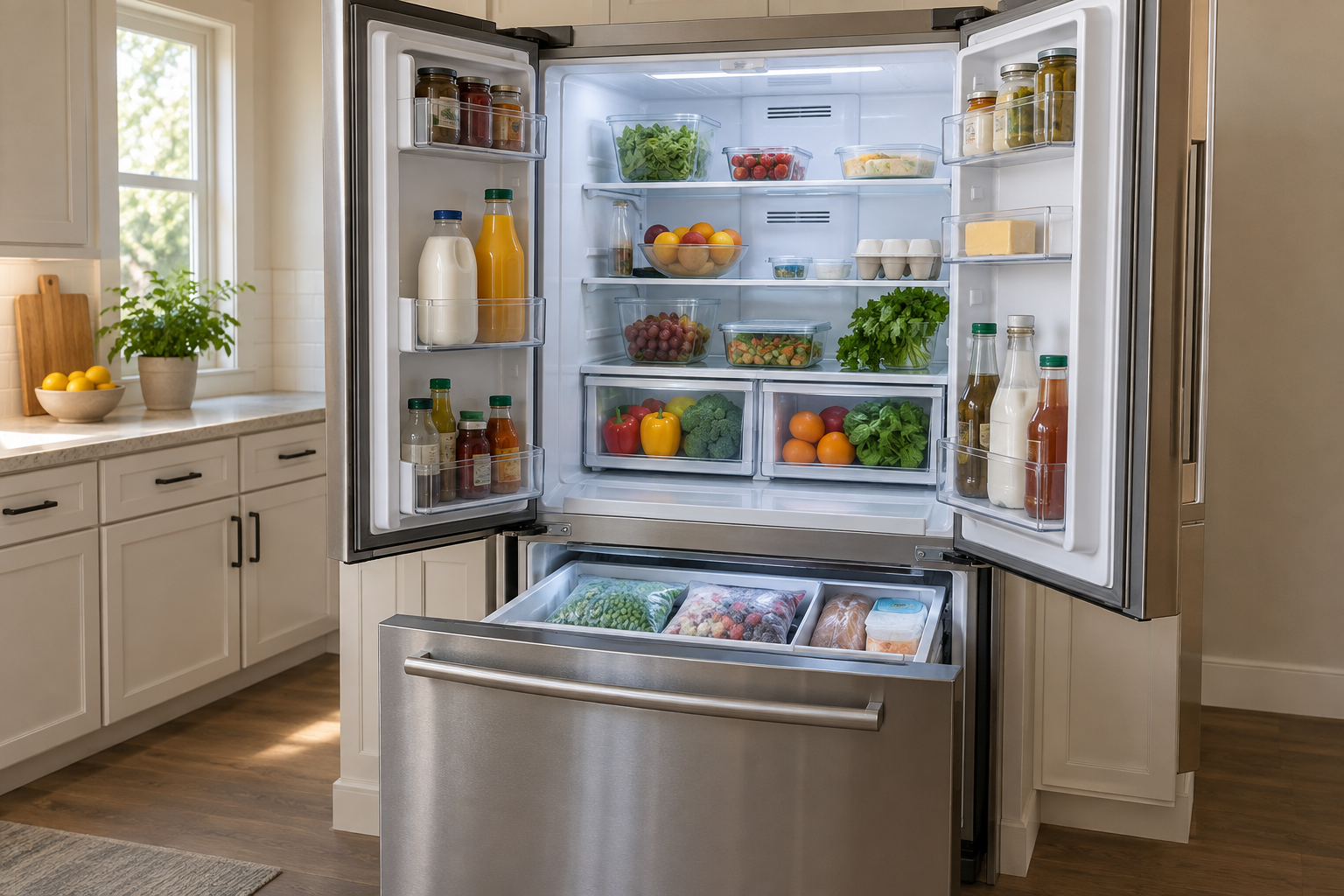
Look in both compartments for food packages blocking vents, especially near the rear wall or around shelf-level openings. Move bulky items away from those openings and avoid packing food tightly against the back wall. Whirlpool notes that blocked supply or return vents can interrupt air circulation between the freezer and fresh-food sections.
4. Check that both doors can seal and close normally
Remove anything that keeps a door from closing, such as an overfull bin, a shifted shelf, or a tall container. Look for a gasket that is visibly loose, torn, or dirty, but do not pull trim apart or attempt a gasket repair without the model instructions. LG lists incomplete door closure and poor air circulation among its first checks when a refrigerator is not cold enough.
5. Record frost, display messages, and the model number instead of disassembling the appliance
Note where frost is visible and whether the display shows an alert or error code. Take a photo of the model-and-serial label and look up the owner’s manual. Do not poke at ice, remove an interior cover, test live wiring, or try to access a fan or refrigerant line. Those procedures differ by model and can create an electrical, mechanical, or sealed-system repair issue.
When service is the better choice
Arrange appliance service if the fresh-food section remains above 40°F after the model-approved checks, frost keeps returning, the controls show an error, or the refrigerator has a burning smell, damaged cord, or water near electrical parts. GE Appliances similarly directs owners to service when a no-cool condition persists after its basic checks.
Keep the appliance plugged in unless its manual, a safety condition, or a qualified technician tells you otherwise. If there is a burning odor, smoke, a damaged cord, or water reaching electrical parts, do not keep using it; turn off power only if you can do so safely and seek qualified help.
Do not use the freezer as proof that the refrigerator section is safe
The freezer can stay cold while food in the refrigerator section warms into an unsafe range. A cold freezer also does not tell you which component is responsible. Measuring the refrigerator section and protecting perishables first avoids the two most common mistakes: waiting too long on food safety and buying a part before the model-specific diagnosis is clear.
Related guide
If you find water on the floor, inside the refrigerator, or under the crisper drawers while checking this problem, use our separate guide: Refrigerator Leaking Water? Find the Source and Fix It Safely. You can also browse the site’s Appliances guides for other symptom-based checks.
Common questions
Can a blocked vent make the refrigerator warm while the freezer is cold?
Yes. On many models, cold air moves between the freezer and fresh-food sections through vents. A package blocking a supply or return opening can reduce that circulation. The vent locations differ by model, so only move visible food items; do not remove panels to reach a hidden opening.
How long should I wait after adjusting the refrigerator control?
Use the timing in your refrigerator’s manual. Whirlpool advises waiting 24 hours between adjustments on many models. Avoid repeatedly changing controls while the appliance is trying to stabilize.
Why is my refrigerator warm but the freezer still works?
A setting, door-closure issue, blocked air path, frost condition, or a model-specific component problem can affect the fresh-food section while the freezer remains cold. The symptom narrows the next checks, but it does not identify a part remotely.