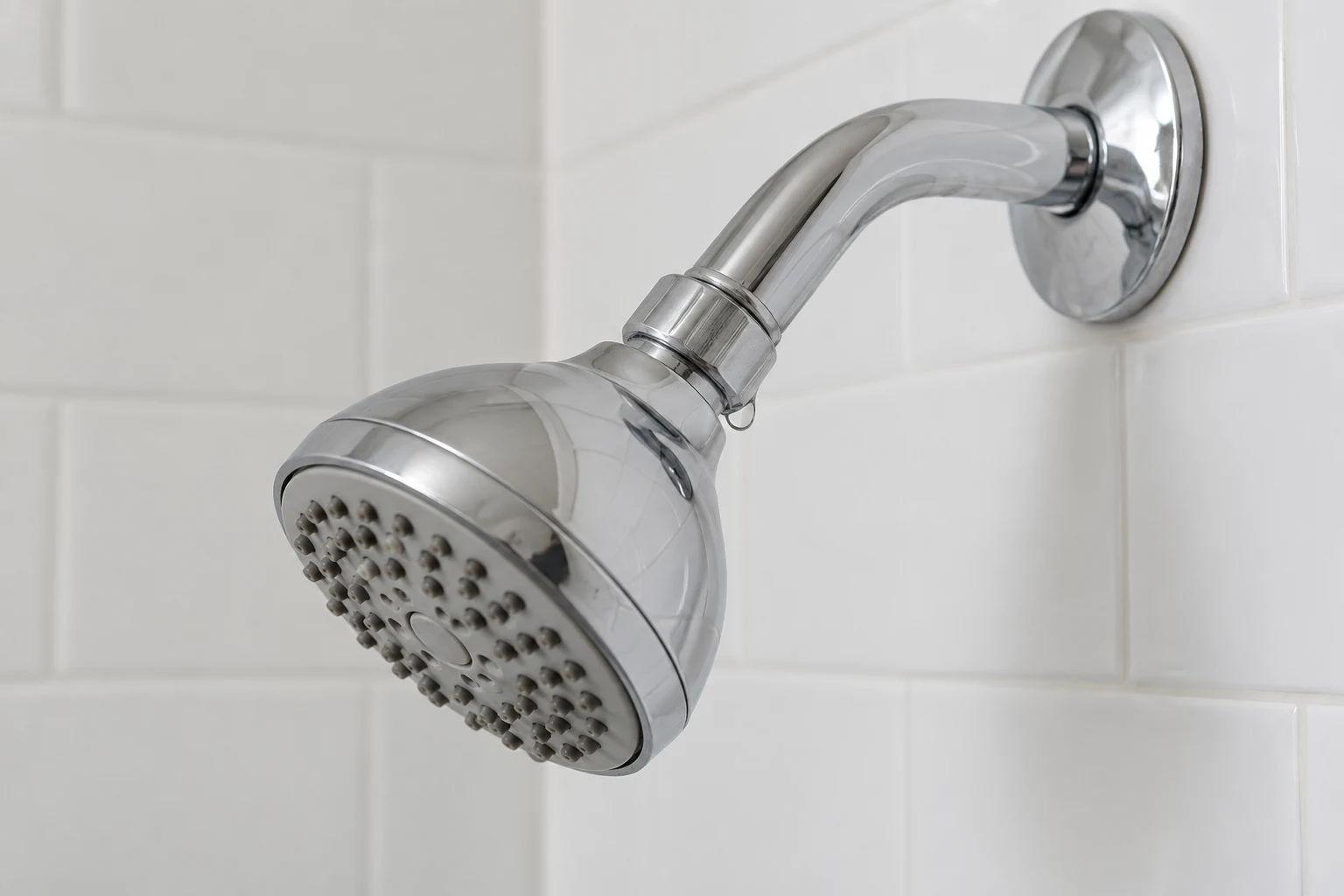
Shower Head Leaking? Find the Source Before You Repair It
Quick answer: First notice when and where water appears. A few drops that stop after the shower is turned off can be normal drainage from the head or pipe. Water that keeps dripping long afterward usually points to the shower valve behind the wall, while water that sprays or beads at the shower head connection while the shower runs is more likely a fixture or connection problem.
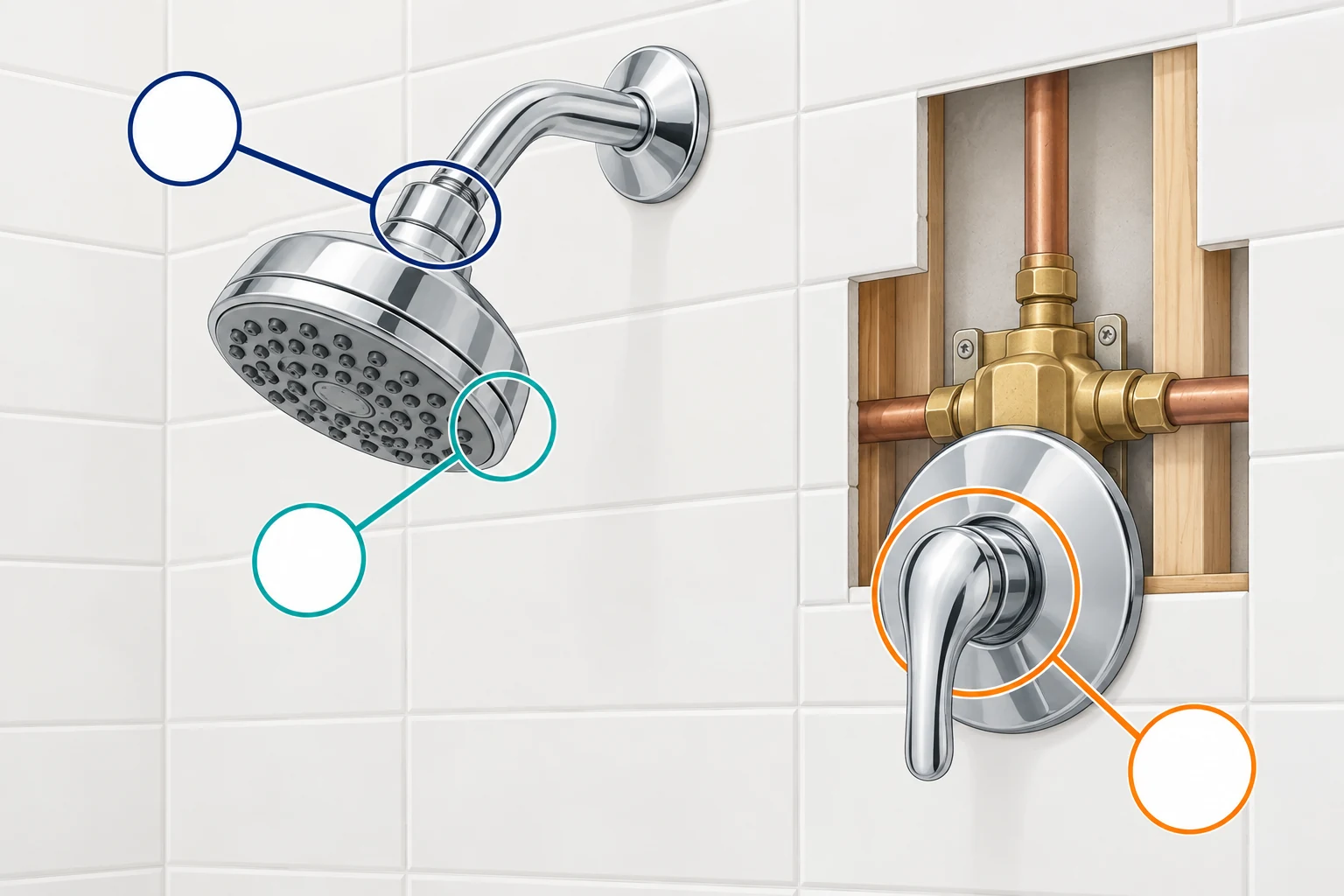
A leaking shower head is not always a bad shower head. The outlet, the threaded shower arm connection, the spray face, the tub spout, and the control valve can all make water appear in the same area. Dry the outside of the fixture, run the shower briefly, and watch for the first place fresh water returns. That observation keeps you from replacing the wrong part.
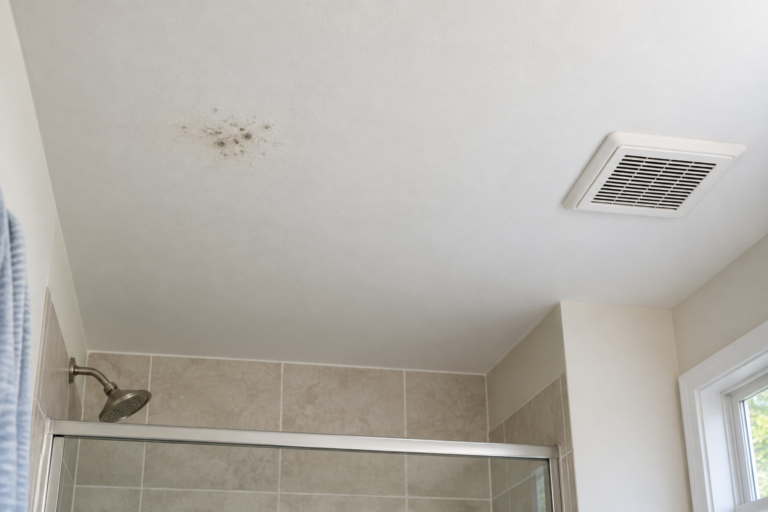
Stop and get help: Do not open the wall or remove the shower control when there is a wet wall or ceiling, loose tile, a musty odor, visible corrosion at the arm, or water that will not stop. Turn off the shower if you can do so normally, protect the area from further water, and contact a qualified plumber. Valve parts and shutoff arrangements are model-specific.
Find the leak by its location and timing
| What you notice | What it may mean | Safest first move |
|---|---|---|
| Water sprays or beads at the nut where the head meets the shower arm, only while the shower runs | A loose connection, a worn gasket, or debris at the connection | Check that the head is secure without forcing it; then inspect the maker’s instructions before removing it. |
| Water escapes from the spray holes with an uneven pattern while the shower runs | Mineral buildup around the nozzles or a fixture-specific internal issue | Inspect for scale and use the approved cleaning method for the exact finish. |
| Water comes from a seam in the shower head body | A damaged head or a model-specific defect | Do not seal the seam with a temporary adhesive; check the warranty or replace the head with a compatible model. |
| The head keeps dripping long after the control is off | Water may be passing through the shower valve or cartridge behind the wall | Identify the fixture model and use the manufacturer’s service path or call a plumber. |
| Water runs from the tub spout while the shower head is selected | A diverter or installation-related flow problem | Treat it as a separate tub/shower issue rather than tightening the shower head. |
A short drip after shutoff may be normal
Water left inside the shower head and pipe can drain after you turn the control off. Delta notes that a little dripping after shutoff is not necessarily a problem, and Kohler says certain shower setups can have residual drips for up to 90 seconds. Those are useful examples, not a universal timer for every fixture.
The important pattern is whether the drips taper off and stop. If the head continues dripping well after it should have drained, or starts dripping again hours later, the water may be getting past the valve that is supposed to shut the flow off. The shower head is then the outlet, not necessarily the failed part.
If the shower head leaks while the water is on
Leak at the shower arm connection
Look closely at the nut where the shower head attaches to the arm. EPA lists the shower arm and threaded connection among the places to inspect for shower leaks. If the head feels loose, secure it gently. Do not keep tightening a connection that is already firm: overtightening can damage a gasket, the nut, or the fitting.
If the leak remains, use the manufacturer’s instructions for your model before taking the head off. The head may use a gasket, a screen, threads, or a combination of these. EPA recommends a tight connection and says pipe tape can be used when necessary; tape belongs on the exposed threaded shower arm, not on a connection that is intended to seal with a gasket. If the shower arm itself moves, stop rather than applying more force—turning it can damage the pipe connection behind the wall.
Leak or stray spray from the nozzles
White scale around flexible spray nozzles can change the spray pattern and make water shoot sideways. Start with the fixture’s care instructions, especially on plated, matte, brass, or specialty finishes. For a model that allows it, a soft cloth and the approved cleaning method may clear the residue. EPA also recommends periodic inspection for scale buildup.
Use our guide on how to clean a shower head without damaging the finish if scale is the visible problem. If spray is still weak after safe cleaning, the restriction may be beyond the nozzles; see low water pressure in the shower for the next diagnostic checks.
Leak from a seam or an unused spray setting
A crack or leak at a seam in the shower head body is different from a loose arm connection. Delta advises contacting the manufacturer for a seam leak because the repair path is model-specific. For a multi-function head that leaks from a setting that is not selected, check the manufacturer’s support or warranty information instead of disassembling the selector without a parts diagram.
If the shower head leaks after the water is off
Once you have ruled out brief drainage, a continuing drip often points upstream. Delta’s troubleshooting guidance says that leaks with the water off are most likely related to the valve cartridge and may require disassembling the handle and control. That repair is not universal: cartridges, washers, seats, retaining clips, shutoffs, and trim layouts vary by brand and valve generation.
The safe next step is to identify the brand and exact valve model from the trim, paperwork, or manufacturer support. If you cannot confirm the replacement part and isolation method, use a plumber. Do not buy a cartridge based only on a photo or force a similar-looking part into a valve body.
Do not confuse a tub-spout leak with a shower-head leak
On a tub-and-shower combination, turn on the water and divert it to the shower head. EPA’s WaterSense guidance recommends waiting one minute and checking whether the tub spout has more than a few drips of continuing seepage. A continuing stream from the spout while the shower is selected points to the tub/shower flow path, not a leak at the shower head nut.
A weak shower spray and tub-spout flow at the same time can involve the diverter, valve, or installation details. Because those details differ between fixtures, use the manufacturer’s documentation or arrange service rather than treating it as a shower-head cleaning problem.
When to call a plumber now
- Water is appearing in a wall, ceiling, or room below. Hidden moisture can damage finishes and framing.
- The shower arm is loose, corroded, or moves at the wall. Do not try to tighten the arm further.
- A persistent drip continues after an approved head or gasket check. The valve may need model-specific service.
- You cannot identify the valve or isolate the water safely. The wrong part or procedure can create a larger leak.
- The handle is hard to operate, damaged, or leaking around the trim. This is no longer a shower-head-only problem.
If the issue includes sewage odor or a bathroom drain problem rather than clean-water leakage, use our guide to a bathroom that smells like sewage for separate, safe first checks.
Frequently asked questions
Can a shower head leak because it is loose?
Yes. A leak at the nut while water is running can come from a loose connection, a gasket problem, or debris at the connection. Tighten only enough to make the head secure, and do not force the shower arm.
Why does the shower head drip after I turn it off?
A small amount of residual water may drain and stop on its own. If the drip keeps going long after drainage should be finished, the shower valve or cartridge may not be sealing completely and should be diagnosed for the exact fixture model.
Will plumber’s tape stop a leaking shower head?
It may help at an exposed threaded shower-arm connection when the fixture’s installation instructions call for it. It will not repair a leaking valve, a cracked shower head, or a gasket-sealed connection that needs a new gasket instead.