Bathroom Smells Like Sewage? Find the Source Safely
Quick answer: A bathroom that smells like sewage often has a dry drain trap, a failed toilet seal, or a drain or vent problem. If the odor is strong, sudden, accompanied by hissing, or could be natural gas, leave immediately without using switches or a phone inside and call 911 or your gas utility from a safe location. For a mild odor clearly centered on a little-used drain, start by running water into that drain to restore its water seal.
Last updated: September 13, 2026 — Added a location-first odor guide and visual to help readers choose the safest first check.
A sewage-like bathroom odor is unpleasant, but its location and timing can narrow the cause quickly. Work through the checks below in order. You do not need to pour chemicals into every drain, remove the toilet, climb onto the roof, or open a septic tank to find the likely source.
First, rule out a natural gas emergency
Leave first if you are unsure what you smell. Natural gas odorant is commonly described as rotten eggs and can be confused with a sewer odor. If the smell is sudden or strong, is near a gas water heater or other gas appliance, comes with hissing, or anyone feels dizzy, nauseated, or unwell, take everyone outside. Do not turn lights, fans, flashlights, or appliances on or off, and do not use a phone near the odor. Call 911 or your gas utility after you are safely away. Do not investigate the source yourself.
If there is no reason to suspect natural gas and the sewage odor is mild and localized, continue with the noninvasive checks below. If at any point the odor becomes intense or you develop symptoms, move to fresh air and get professional help.
What the location and timing can tell you
| What you notice | Likely starting point | Safest next check |
|---|---|---|
| Odor at an unused sink, shower, tub, or floor drain | Dry drain trap | Run water long enough to refill the trap, then recheck later |
| Odor concentrated at one sink opening or overflow | Dry trap or buildup in an accessible drain area | Refill the trap and clean only accessible surfaces |
| Odor strongest at the toilet base, especially with rocking or seepage | Failed toilet seal or flange problem | Stop using the toilet and arrange a plumbing inspection |
| Several drains gurgle, drain slowly, or smell at the same time | Drain blockage or plumbing vent problem | Limit water use and call a plumber |
| Odor appears when an exhaust fan or HVAC runs | Air pressure drawing odor through a weak trap or failed seal | Refill traps; get the drain and vent system checked if it returns |
| Strong or sudden rotten-egg odor, hissing, or symptoms | Possible gas leak or concentrated sewer gas | Leave immediately and call for emergency help from outside |
FIND THE LIKELY STARTING POINT
Where is the odor strongest?
Choose the closest pattern for a safe first check. If the odor is strong, sudden, includes hissing, or could be natural gas, follow the emergency guidance above instead.
Choose a pattern to see the safest next step.
How to find a bathroom sewage smell safely
1. Note when and where the smell is strongest
Stand at the bathroom doorway first. Without taking repeated deep breaths, note whether the odor is strongest near a sink, shower, tub, toilet, floor drain, or plumbing access panel. Also note whether it starts after flushing, showering, running an exhaust fan, or using another fixture. These clues are more useful than trying to identify the gas by smell alone.
Do not enter a crawlspace, utility pit, sewer opening, or other confined area to follow an odor. Do not climb onto the roof to inspect a plumbing vent. Those checks belong to equipped professionals.
2. Refill every little-used drain trap
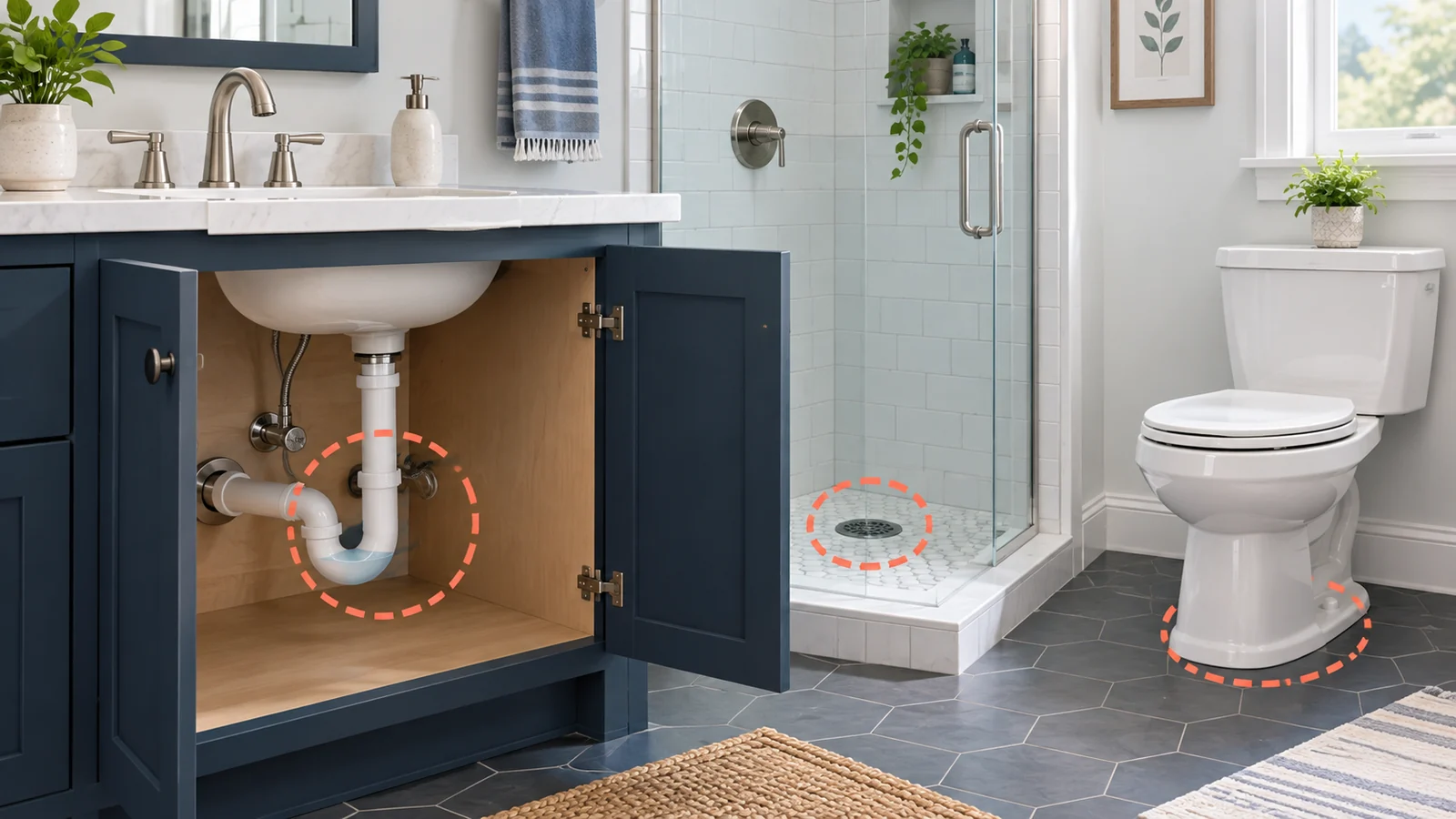
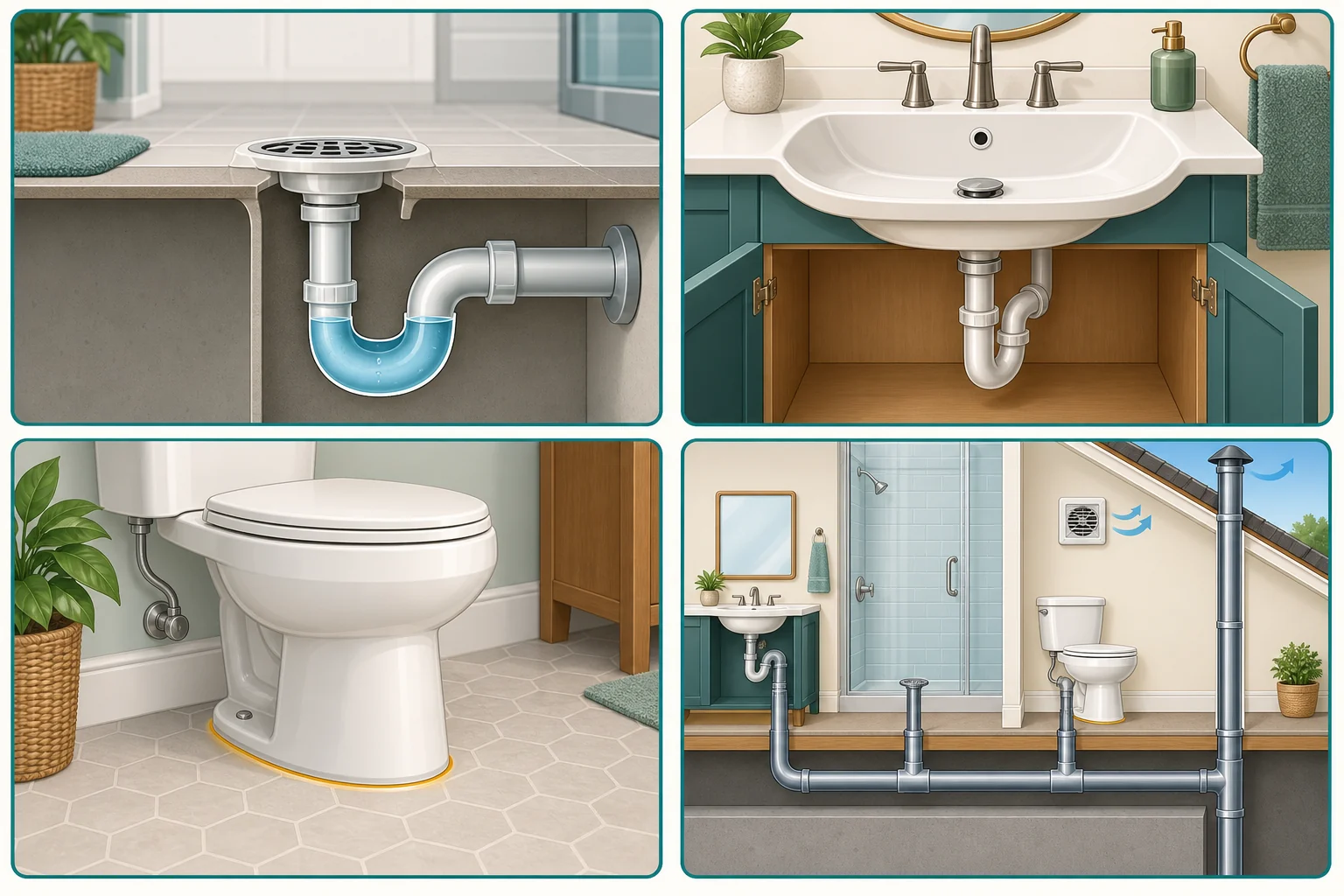
The curved trap under a fixture holds water that blocks gases from the drainage system. When a guest-bath sink, shower, tub, or floor drain is unused for a long time, that water can evaporate. Public sewer authorities identify dry traps as a common cause of indoor sewer odor.
- Run water into one little-used fixture at a time. For a sink, shower, or tub, let water flow for about a minute. For a floor drain, add water slowly without overflowing it.
- Wait a few minutes, then check whether the odor at that fixture has eased.
- Repeat for every drain in the bathroom, including a floor drain hidden under a mat or near a water heater.
- If the smell returns soon after the trap is refilled, the trap may leak or air pressure may be siphoning out its water. Call a plumber rather than repeatedly masking the odor.
If the bathroom is rarely used, make running water through its fixtures part of a simple bathroom maintenance routine.
3. Check one smelly sink without dismantling it
If the odor is limited to one sink, shine a light from outside the basin and look for visible residue around the stopper and overflow opening. Hair, soap film, and organic buildup near accessible surfaces can create a drain-like odor. Clean the stopper and the reachable rim of the drain using the fixture maker’s care guidance. Wear gloves and keep cleaners separate.
Then run water to refill the trap. If the cabinet beneath the sink smells stronger, feels damp, or shows staining, stop there. A loose connection or damaged trap needs repair. Do not loosen plumbing while chemical drain cleaner may be present.
4. Look for signs of a failed toilet seal
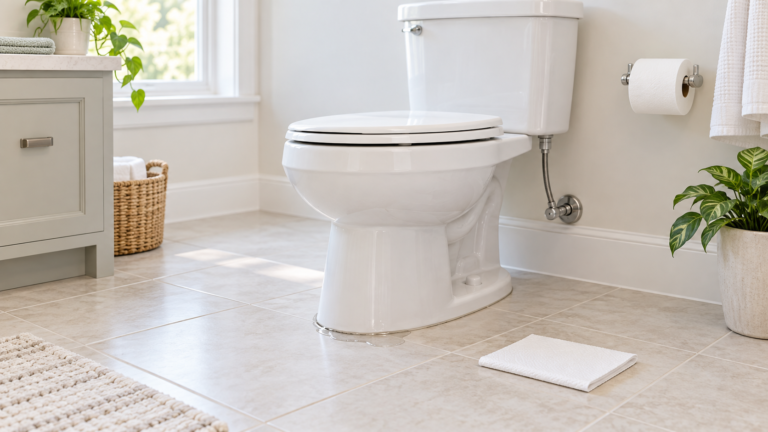
A toilet is sealed to its drain at the floor. That hidden seal can fail even before a large puddle becomes obvious. Warning signs include odor concentrated at the base, a toilet that rocks, damp flooring, staining, or a smell that becomes stronger after flushing.
Do not caulk over unexplained seepage or keep using a loose toilet. Stop using it and have a plumber check the seal and flange. If the bowl is also draining poorly, use the symptom checks in our clogged toilet guide, but do not plunge a toilet that is leaking at the base.
5. Watch for a shared drain or vent problem
A plumbing vent lets air move through the drainage system and carries gases outdoors. If a vent or shared drain is obstructed, using one fixture can make another drain gurgle or lose part of its water seal. Clues include several slow drains, bubbles in a toilet when a sink drains, recurring trap odor, or a smell that follows flushing elsewhere in the home.
These symptoms call for a plumber. Avoid repeated flushing or sending large amounts of water down the system, especially if drains are backing up. A professional can distinguish a local fixture problem from a branch drain, main drain, or vent fault without unsafe roof access.
6. Consider pressure changes from fans
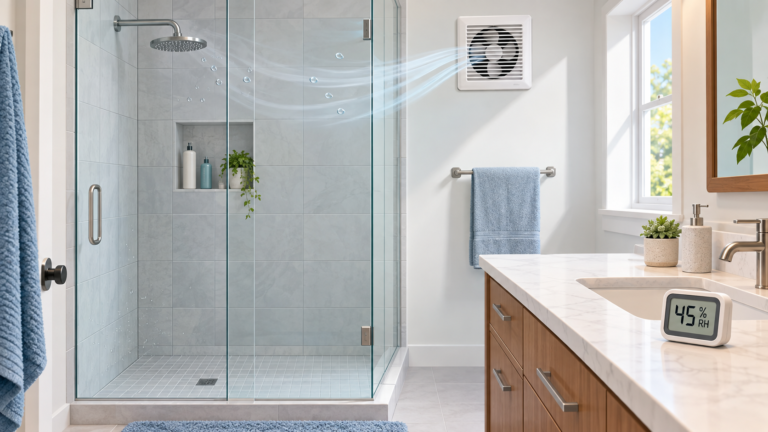
If the odor appears only when the bathroom exhaust fan, dryer, or HVAC system runs, the pressure change may be pulling air through a dry trap, loose seal, or plumbing defect. Refill all nearby traps first. If that does not solve it, have the plumbing seals and venting checked. Do not use air freshener as the diagnosis; it can hide the timing clue without stopping the source.
7. Treat septic clues as a service issue
For a home with a septic system, indoor sewer odor can still come from a dry trap or toilet seal. However, an active alarm, sewage backing up, unusually wet ground near the system, or strong outdoor odor needs prompt attention from a septic professional. Keep people and pets away from affected ground. Never open or enter a septic tank; its gases and confined space can be fatal.
What not to do
- Do not mix drain cleaners, bleach, vinegar, ammonia, or other products. Unknown residues can react and release dangerous fumes.
- Do not rely on the odor fading. Your sense of smell can become less sensitive during continued exposure.
- Do not light a match to “test” the air. Sewer gas and natural gas can contain flammable components.
- Do not switch on a fan if natural gas is possible. Leave without operating electrical equipment.
- Do not seal around a leaking toilet or pipe as a shortcut. The leak and damaged material still need repair.
- Do not climb onto the roof or enter confined spaces. Vent, sewer, crawlspace, and septic work requires the right training and equipment.
When to call for help
Call the gas utility or emergency services from outside if a rotten-egg odor might be natural gas, even if it is not strong. Call a plumber if refilling the traps does not stop a mild localized odor, the smell keeps returning, the toilet rocks or leaks, multiple fixtures gurgle or drain slowly, or wastewater backs up. A recurring smell means the water barrier, seal, drain, or vent system is not working as intended.
How to prevent the smell from returning
- Run water regularly in guest-bath fixtures and floor drains.
- Keep sink stoppers and other accessible drain surfaces free of buildup.
- Address a rocking toilet, slow drain, gurgling, or small leak before it worsens.
- Keep a note of when the odor appears; timing helps a plumber identify pressure and drainage patterns.
- Use our bathroom guides to track related fixture symptoms instead of treating every odor as a cleaning problem.
Frequently asked questions
Can a dry P-trap make the whole bathroom smell like sewage?
Yes. A dry trap removes the water barrier between the room and the drainage system, and air movement can spread the odor beyond the fixture. Refill every little-used drain. If the odor returns soon, the trap may leak or a vent problem may be siphoning out the water.
Why does the bathroom smell after I run the exhaust fan?
The fan lowers air pressure in the room. That can reveal a dry trap, loose toilet seal, or other opening by drawing odor through it. Refill the traps, but arrange an inspection if the smell continues.
Can a toilet seal leak odor without leaking water?
It can. The hidden seal may allow gas through before visible water appears. Odor at the base, rocking, floor staining, or smell after flushing are reasons to stop using the toilet and have the seal and flange checked.
Is sewer gas dangerous?
Sewer gas is a variable mixture, and high concentrations of some components can be hazardous. A household odor does not reveal the concentration, and smell is not a reliable exposure meter. Leave if the odor is strong, if symptoms occur, or if you cannot rule out natural gas, then call the appropriate emergency or plumbing service from a safe location.
Sources
- Con Edison: Gas Leak Frequently Asked Questions
- City of Minneapolis: Sewer Safety and Maintenance Tips
- South Davis Sewer District: Sewer Odors and P-Traps
- University of Minnesota: Septic System Troubleshooting
- ATSDR/CDC: Hydrogen Sulfide Medical Management Guidelines
- Oatey: Common Household Sewer-Gas Entry Points