Home Moisture and Mold Decision Chart: Find the Source First
Quick answer: Stop and get appropriate help for active flooding, sewage, unsafe electricity, a gas odor, soft or sagging material, structural damage, widespread growth, or health circumstances that make mold exposure a concern. For a limited problem, identify and control the water source before cleaning the surface.
A mold spot is only the visible part of the problem. Before cleaning, use the location and timing of the moisture to decide whether you are dealing with indoor condensation, a plumbing or appliance leak, rain entry, or a possible hidden source. Fixing that source is what keeps the problem from returning.
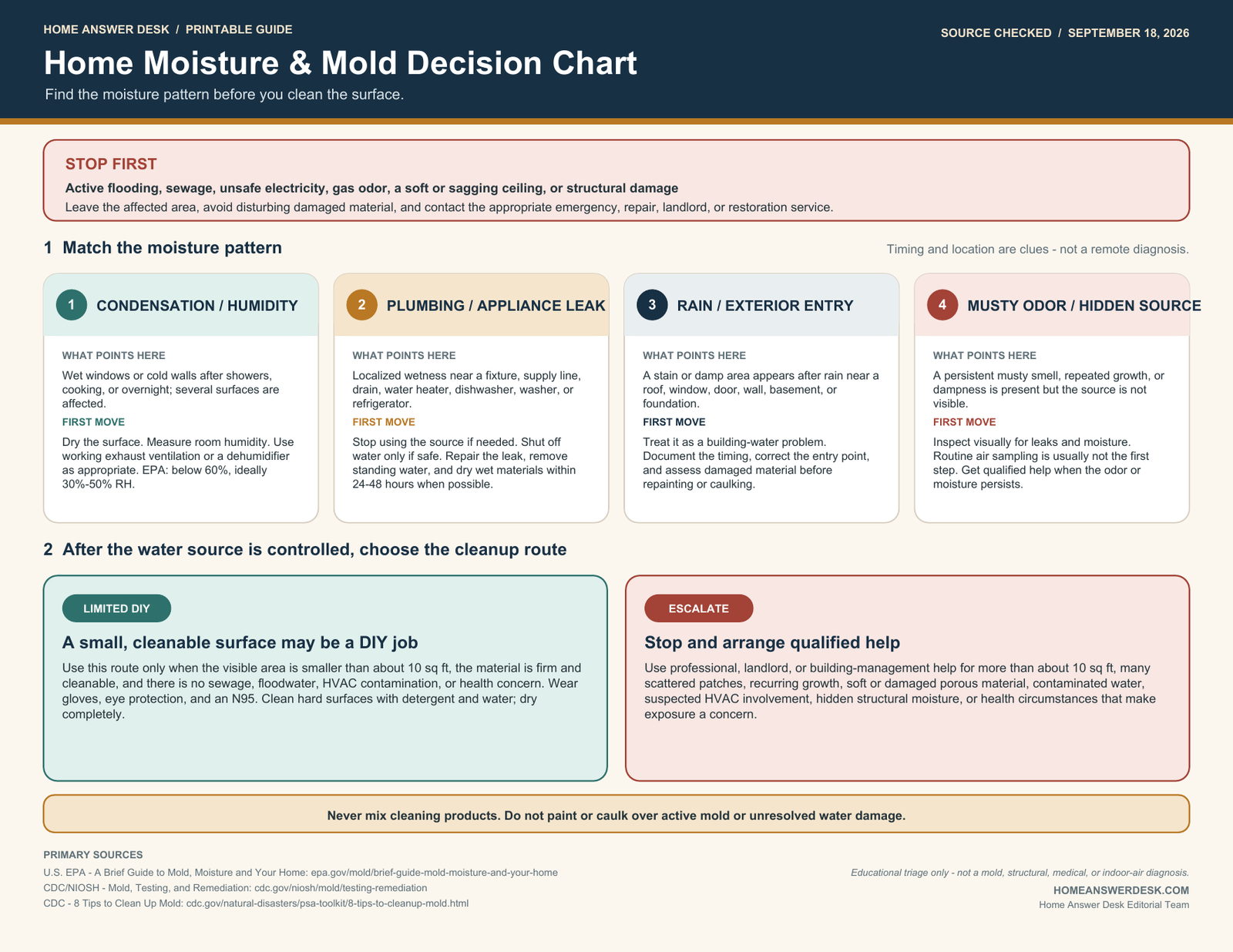
Download the printable moisture and mold decision chart (PDF). It is a one-page reference for homeowners and renters; use the page below for the full safety limits and source links.
First, check for an urgent stop condition
Do not begin ordinary cleanup when there is active flooding, sewage or other contaminated water, unsafe electrical equipment or wiring, a gas odor, a soft or sagging ceiling, or visible structural damage. Leave the affected area and contact the appropriate emergency, repair, landlord, building-management, or restoration service.
Match the moisture pattern
| What you notice | What it may point to | First move |
|---|---|---|
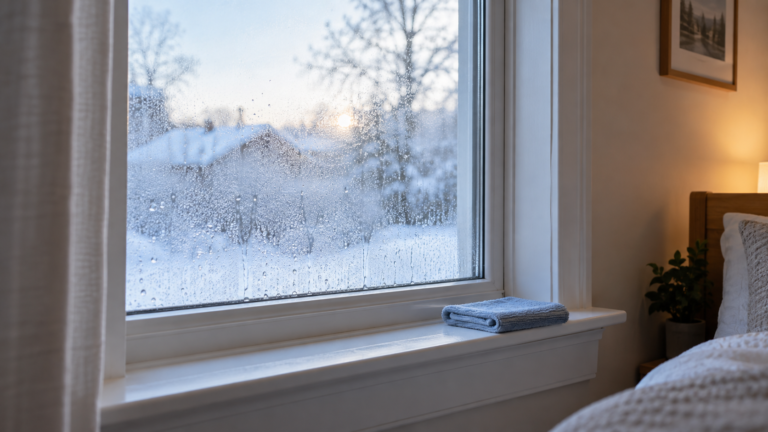
| Condensation on several windows, pipes, or cold walls after showers, cooking, or overnight | Indoor humidity and cold-surface condensation | Dry the wet surface. Measure room humidity. Use working exhaust ventilation or a dehumidifier when appropriate. EPA recommends keeping indoor humidity below 60%, ideally between 30% and 50%. |
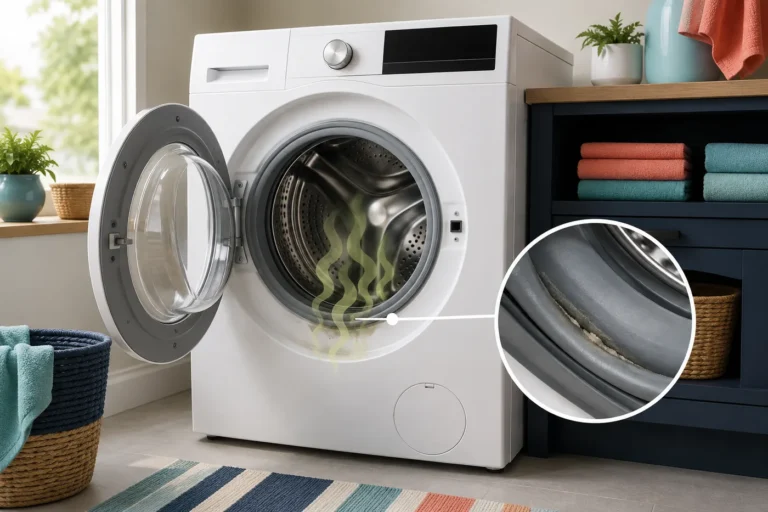
| Localized wetness near a sink, toilet, shower, water heater, dishwasher, washing machine, or refrigerator | A plumbing, drain, supply-line, or appliance leak | Stop using the source if needed, shut off water only when it is safe to do so, arrange the repair, and dry wet materials within 24 to 48 hours when possible. |
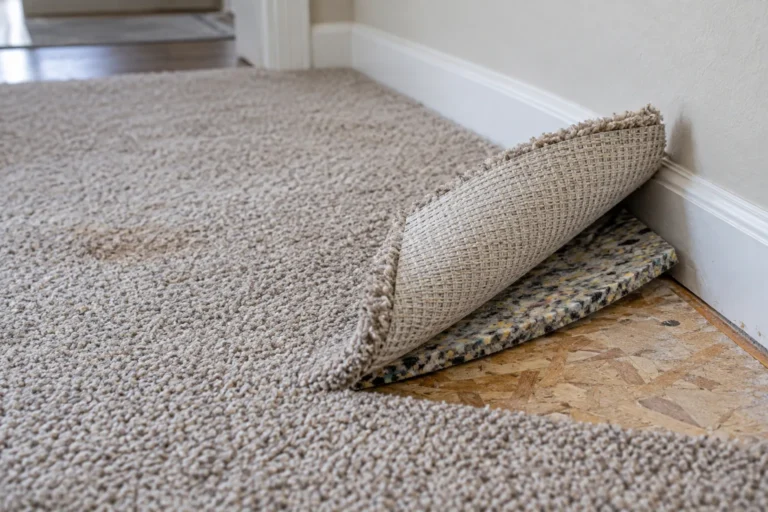
| A stain or damp area that appears after rain near a roof, window, exterior wall, basement, or foundation | Rain or exterior water entry | Document the timing and repair the entry point. Do not paint or caulk over an active moisture problem. Assess soft or damaged material before surface cleanup. |
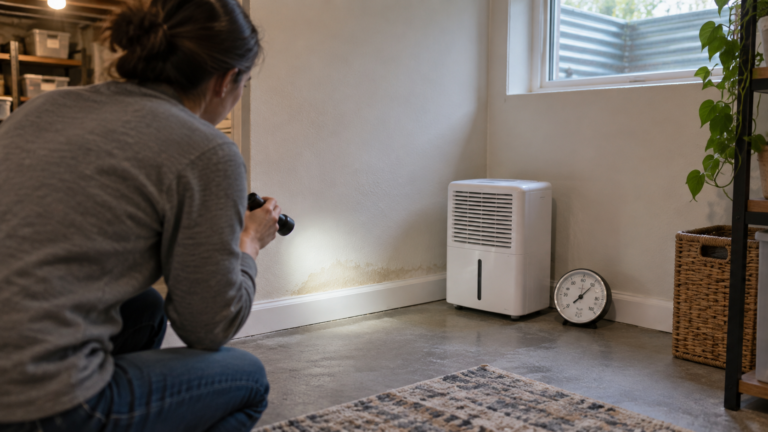
| A persistent musty odor, recurring growth, or dampness with no visible source | Hidden moisture or mold may be present | Start with a careful visual inspection for leaks and water damage. CDC/NIOSH does not recommend routine air sampling as the default assessment. Seek qualified help if the odor or moisture persists. |
The pattern is a clue, not a remote diagnosis. A single room can have more than one moisture source.
Decide whether limited cleanup is appropriate
The U.S. EPA says that, in most cases, an area smaller than about 10 square feet can be handled by the homeowner. That limited route is reasonable only when the material is firm and cleanable, the water source has been corrected, and there is no sewage, floodwater, suspected HVAC contamination, widespread damage, or health concern.
- Keep children, pets, and people with relevant health concerns away from the work area.
- Wear gloves, close-fitting eye protection, and a well-fitting N95 respirator.
- Clean the hard surface with detergent and water.
- Dry the surface completely and watch for recurrence.
Never mix cleaning products. Do not paint or caulk over active mold or unresolved water damage.
When to stop and arrange qualified help
Contact an experienced professional, landlord, or building manager when the affected area is larger than about 10 square feet; there are many scattered patches; growth returns after the moisture source was addressed; material is soft, sagging, crumbling, or difficult to clean; the water involved sewage or flooding; the HVAC system may be affected; the moisture appears structural or concealed; or someone in the home has health circumstances that make exposure a concern.
Continue with the guide that matches the location
- Mold Around Windows? Find the Moisture Source and Clean It Safely
- How to Remove Mold From a Bathroom Ceiling Safely
- How to Clean a Dehumidifier Safely