How to Remove Mold From a Bathroom Ceiling Safely
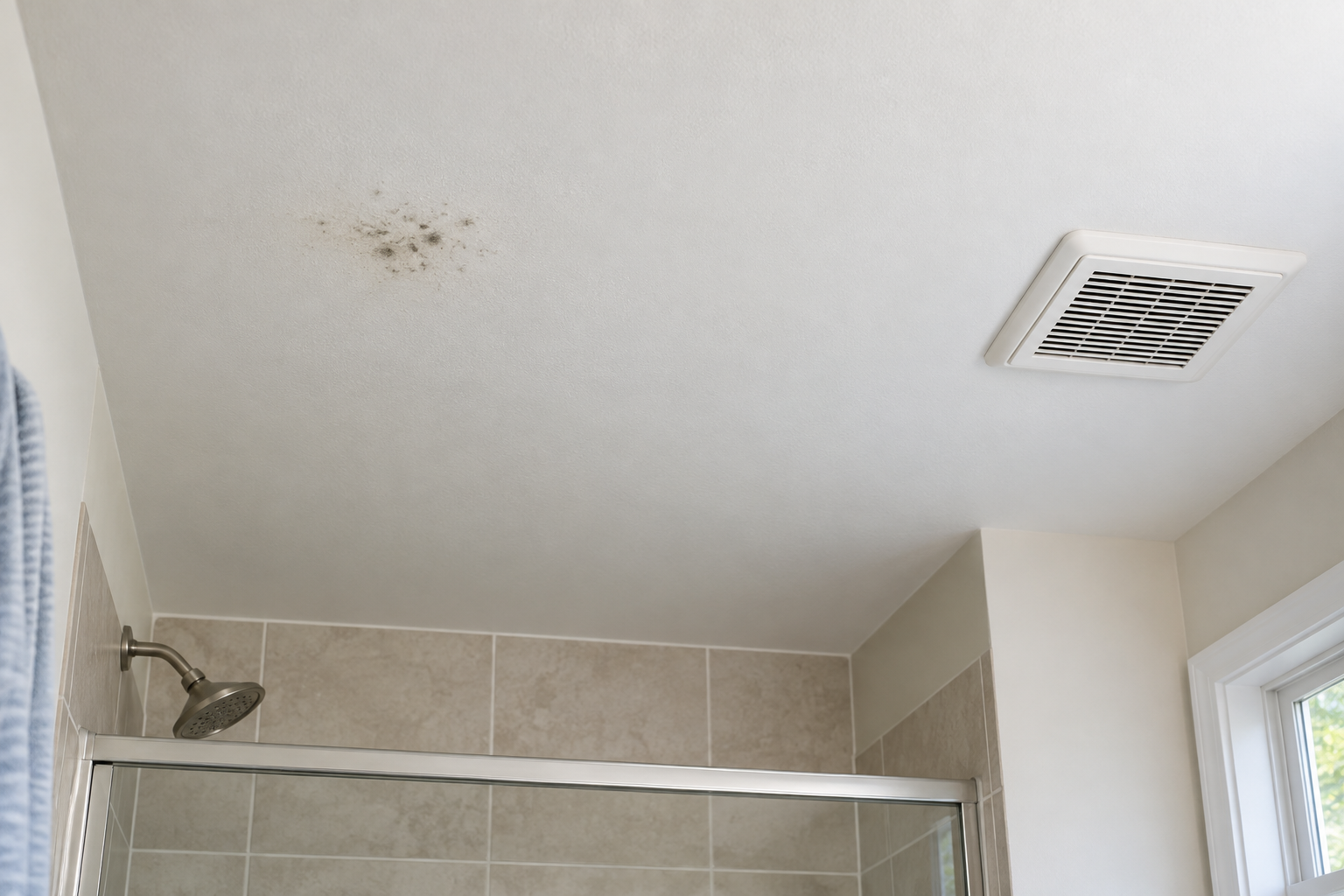
Quick answer: A few dark specks on a sound, dry bathroom ceiling can often be cleaned as a small job. First make sure there is no water stain, peeling paint, soft drywall, active leak, or large or recurring patch. If any of those signs are present, cleaning the surface is not the fix: find and correct the moisture problem before repairing the ceiling.
Start with the ceiling condition, not the cleaner
Bathroom ceilings often stay damp after showers, especially where warm air collects or ventilation is weak. But not every dark mark has the same next step. A light surface patch on intact paint is different from a water-damaged section of drywall.
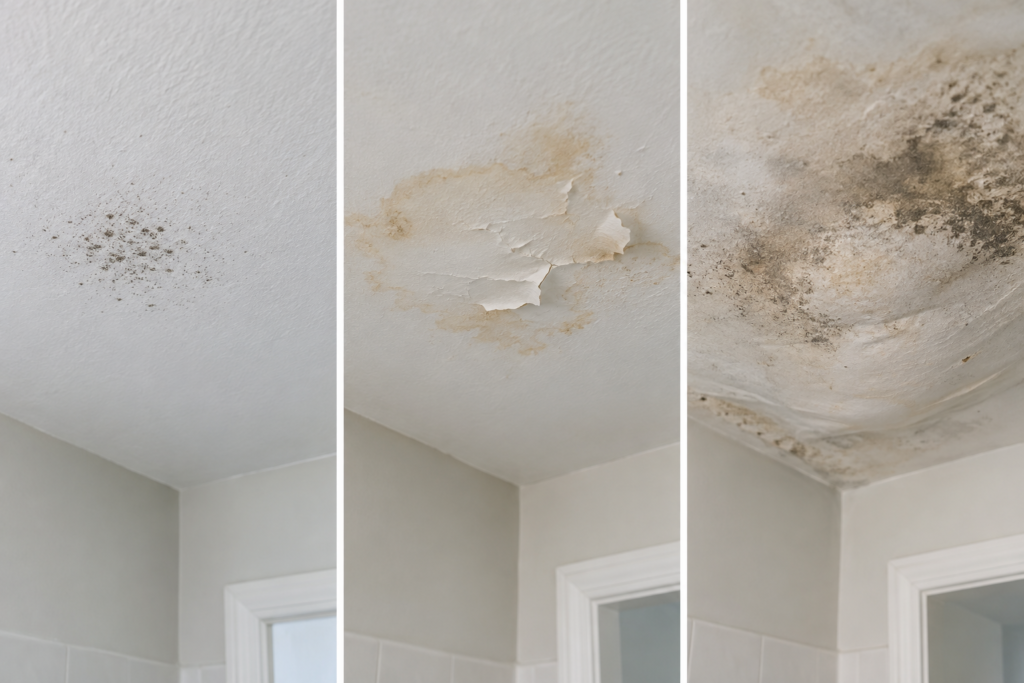
| What you see | What it can mean | Safest next move |
|---|---|---|
| A small, dry-looking cluster of specks; paint is firm and intact | Surface growth linked to repeated humidity | Clean the small area carefully, dry it, then correct the moisture pattern. |
| Brown water stain, blistering or peeling paint, soft material, or a new mark after rain or plumbing use | Moisture may be coming from above the ceiling | Do not paint over it or keep scrubbing. Find and repair the leak or water source first. |
| More than about 10 square feet, fast return after cleanup, sewage or flood water, or an affected person has respiratory or immune-health concerns | Larger or higher-risk cleanup | Stop the DIY job and contact an experienced professional, landlord, or appropriate building manager. |
The U.S. Environmental Protection Agency says that, in most cases, a moldy area smaller than about 10 square feet can be handled by the homeowner, but extensive water damage, contaminated water, or health concerns change that decision. EPA mold-cleanup guidance
Stop before cleaning if the ceiling is soft, sagging, peeling, actively wet, stained after rain or plumbing use, affected by sewage or flood water, or the growth is larger than about 10 square feet. Those signs point to a moisture-repair or professional-cleanup decision, not a stronger cleaner.
Before you clean a small ceiling patch
Do not start by spraying a ceiling from below. That can send drips into your eyes, soak drywall, and make the job harder to control. For a small patch on an intact, painted surface:
- Keep the bathroom as ventilated as practical and move towels, medications, and personal items out of the splash area.
- Do not do the cleanup if you have a mold allergy, asthma or COPD, immune suppression, or another health concern that makes exposure a problem. CDC identifies those groups as higher risk during mold cleanup. CDC cleanup guidance
- Wear gloves and close-fitting goggles. CDC recommends at least a NIOSH-approved N95 respirator for mold cleanup; choose a stable way to reach the ceiling and do not work where a slip or fall is likely.
- If the ceiling has an unknown textured coating, is soft, or is shedding material, stop rather than scraping or saturating it. That is a repair assessment, not ordinary surface cleaning.
How to clean a small patch on sound painted drywall
This method is for a limited area on firm, intact painted material after you have ruled out a leak or significant damage.
- Dampen a cloth or soft sponge with water and a small amount of household detergent. It should be damp rather than dripping. EPA advises scrubbing mold from cleanable hard surfaces with detergent and water, then drying completely. Do not soak drywall.
- Wipe the affected area gently. Keep the work controlled rather than aggressively dry-scrubbing. If paint starts lifting, the surface feels soft, or the mark extends beyond the visible patch, stop.
- Wipe away residue and dry the ceiling completely. A fan, open door, and time can help the room dry; the important part is to avoid leaving the ceiling damp.
- Dispose of or wash the used cleaning materials safely. Remove gloves carefully, wash hands, and let the room air out.
You do not need to mix cleaners. In particular, CDC says never to mix bleach with ammonia or any other cleanser. For this page, detergent and water are the first, limited method because they avoid treating a small painted ceiling patch as a chemical-removal project.
Do not paint over active mold or water damage
Paint can hide a mark without correcting why it appeared. EPA specifically advises cleaning and drying a moldy surface before painting or caulking; paint over moldy material is likely to peel. If the ceiling has a water stain, peeling paint, softness, or staining that returns, repair the moisture source first and assess whether the damaged material needs replacement.
Prevent the same patch from returning
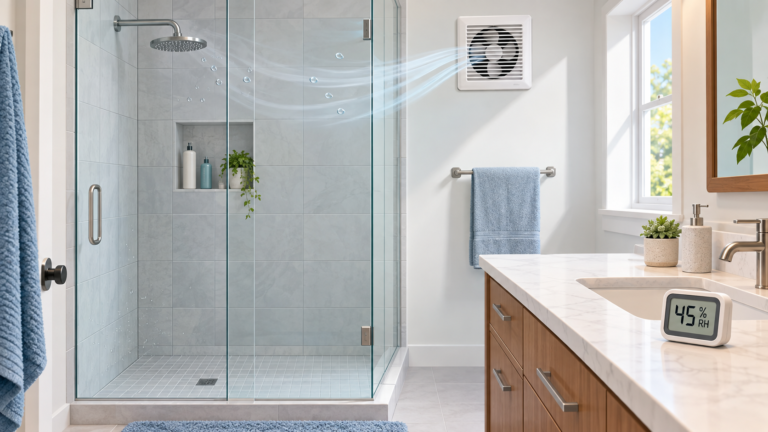
- After showers: run the bathroom exhaust fan and use available ventilation until the room has had time to dry.
- One cold spot or exterior-facing area: look for persistent condensation, insulation or air-sealing issues, and whether the patch returns in the same location. The mold around windows guide explains how to distinguish ordinary indoor condensation from signs of water entry.
- Whole bathroom stays humid: a dehumidifier can help manage indoor humidity only after water entry, plumbing leaks, and ventilation issues have been addressed. See how to clean a dehumidifier safely so its filter and bucket do not become another moisture-maintenance problem.
- A stain appears after a shower, rain, or plumbing use: trace that timing before you clean again. It points to a moisture source that needs repair, not more surface treatment.
EPA’s core rule is simple: clean up mold and fix the water problem. If the water problem remains, the mold is likely to return. EPA: How do I get rid of mold?
When to call someone instead of cleaning it yourself
Arrange professional help, contact your landlord, or involve building management when the affected area is larger than about 10 square feet; drywall is soft, sagging, crumbly, or repeatedly wet; the damage followed sewage, flooding, or contaminated water; a roof, plumbing, or upstairs-bathroom leak is suspected; the patch comes back after the room and moisture source have been addressed; or a person in the home has health circumstances that make mold exposure a concern.
If you are unsure whether a ceiling is just stained or still wet, treat it as a moisture-repair question first. Cleaning a small, dry surface patch is reasonable; guessing at hidden water damage is not.
Frequently asked questions
Can I use bleach on bathroom-ceiling mold?
CDC notes that bleach or dish detergent can be used for mold cleanup, but never mix bleach with ammonia or any other cleaner. This guide does not require bleach for a small superficial patch on intact paint. If you choose a product, follow its label, protect your eyes and lungs from ceiling drips or fumes, and stop if the surface is damaged or the problem is larger than a small area.
Is a brown ceiling stain the same as mold?
Not necessarily. A brown stain, blistering paint, or soft drywall is a reason to check for water intrusion or a leak. Do not assume surface cleaning will solve it.
Will repainting keep mold from coming back?
No. Clean and dry the surface and correct the moisture source before painting. Paint over an active moldy or damp surface can peel and does not correct the cause.