Condensation on Windows? Find Out Where the Moisture Is First
Quick answer: If water is collecting on a window, first identify where it is. Moisture on the room-side glass usually means humid indoor air is reaching a cold surface. Dew on the exterior glass can be weather-related. Fog trapped between double panes is a window-unit question. Damp trim or wall material, especially during or after rain, needs a possible water-entry investigation. Dry the visible moisture promptly, then match the next step to its location instead of treating every foggy window the same way.
Updated: September 22, 2026. The guidance and source links below were reviewed against current U.S. EPA, ENERGY STAR, and University of Minnesota Extension materials.
Condensation on windows is often the first visible sign that moisture and a cold surface are meeting. It does not automatically mean that a window has failed, and it does not automatically mean that a dehumidifier is the answer. A few observations before you wipe the glass can prevent the wrong repair.
Start by locating the moisture
Take a photo first if the pattern keeps returning. Note the room, the weather, whether the moisture is on one window or many, and whether it appears after a shower, cooking, laundry, a humidifier, or rain. Do not lean through an opening or use an unsafe exterior access method to inspect the outside of an upper-floor window.
| What you see | Likely category | Safe first step | Do not assume |
|---|---|---|---|
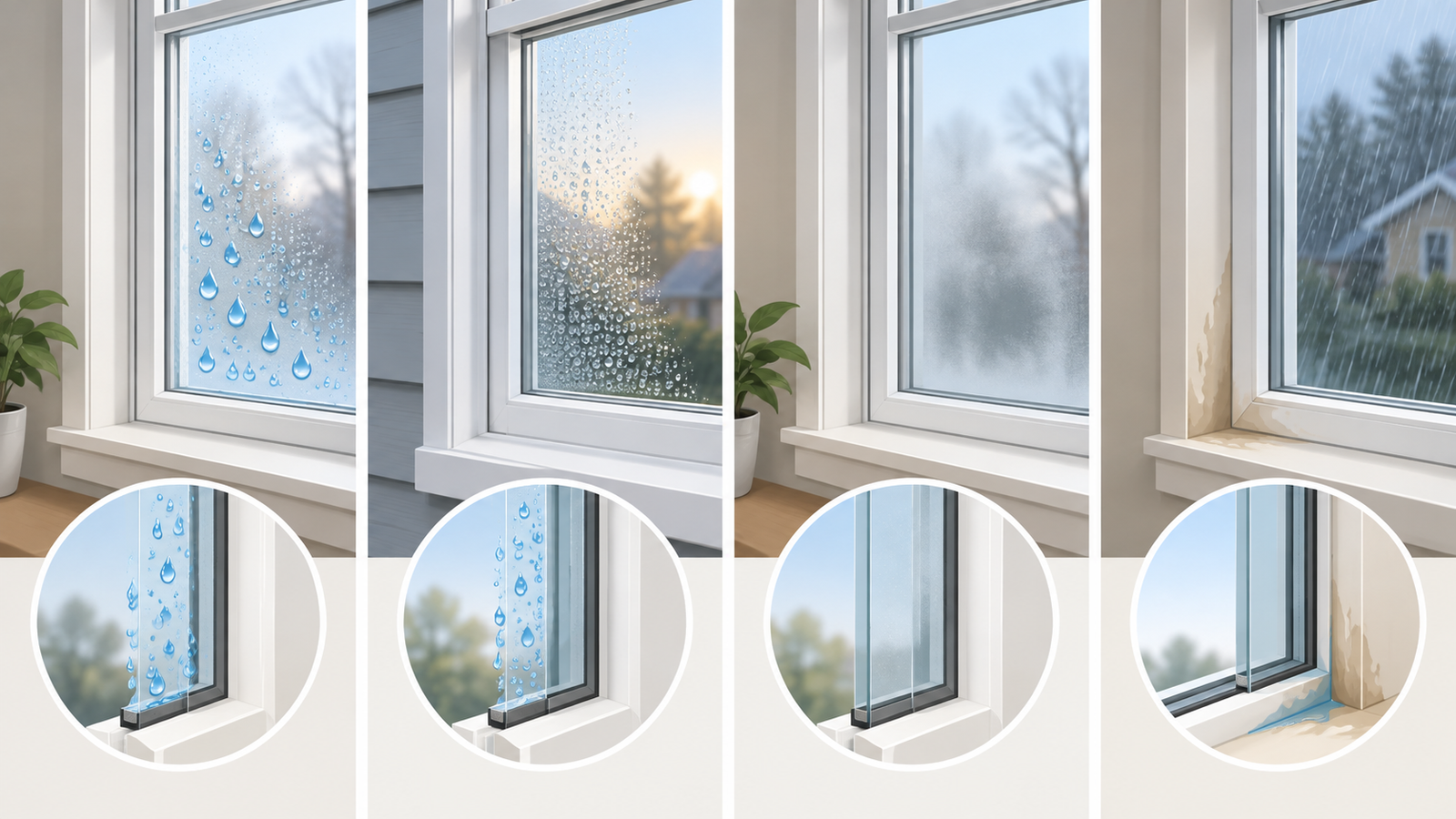
| Droplets or fog on the room-side glass | Indoor moisture meeting cold glass | Dry the glass and sill. Check the room’s relative humidity and nearby moisture sources. | The window is defective. |
| Dew on the outside of the glass, which clears as conditions change | Outdoor weather and glass temperature | Leave it alone if it is only on the accessible exterior surface and no water is entering the room. | Water is leaking through the window. |
| Haze, droplets, or residue between panes of a double- or triple-pane unit | Sealed insulating-glass-unit issue | Photograph it, identify the affected sash or unit, and check warranty or service options. | It can be wiped from either accessible glass surface. |
| Damp trim, staining, softened material, or moisture that starts during or after rain | Possible water intrusion or a separate moisture path | Document the timing and protect nearby finishes. Arrange an appropriate building or window assessment if it recurs. | It is ordinary room-side condensation. |
When the room-side glass is wet
Room-side condensation happens when the inside surface of the glass is colder than the dew point of the air touching it. Cold weather, higher indoor humidity, restricted air movement, and less-insulated glass can make it more likely. ENERGY STAR notes that even efficient windows can develop interior condensation in cold weather when humid indoor air reaches a cold enough surface.
Start with the simple actions that protect the sill and help you understand the moisture source:
- Dry the glass, frame, and sill. Do not let water sit against painted trim, wood, blinds, or fabric window coverings. The EPA advises acting quickly when moisture collects on windows and reducing the moisture or water source.
- Measure instead of guessing. Use a hygrometer in the affected room and compare it with a nearby hallway or another room at a different time of day. The EPA advises keeping indoor relative humidity below 60%, ideally between 30% and 50%. In cold weather, a home may need a lower setting to avoid condensation on very cold glass.
- Check what is adding moisture near the window. A shower, cooking, indoor clothes drying, a frequently running humidifier, houseplants, or a plumbing leak can add moisture. Minnesota Extension lists bathing, cooking, dishwashing, humidifiers, plumbing leaks, unvented appliances, and damp basements or crawl spaces among common home moisture sources.
- Restore airflow. Open blinds or curtains enough to let room air reach the glass. Use kitchen and bathroom exhaust fans that vent outdoors. ENERGY STAR also recommends venting dryers outdoors and running kitchen or bath fans during moisture-producing activities; leave the fan running after a shower or cooking when the manufacturer’s instructions allow it.
If water only appears on a bedroom window overnight, look at the room first: a closed door, closed blinds, a humidifier, and multiple sleepers can create a different microclimate than the rest of the home. Do not change the entire house based on one wet window without comparing rooms and sources.
For a broader reading and symptom guide, see What Should Indoor Humidity Be? If you find persistent room dampness but no active leak, the Dehumidifier Size Calculator can help you estimate a device range after you have addressed the source.
When the moisture is on the outside of the window
Exterior condensation can form when humid outdoor air meets an outer glass surface that is cooler than the outdoor dew point. ENERGY STAR notes that this can happen in warm, humid weather when indoor cooling lowers the exterior glass temperature. It can also appear as morning dew.
If the moisture is clearly on the accessible outside surface, clears with changing conditions, and the interior trim is dry, it is usually a weather observation rather than evidence that water is entering the home. Do not buy a new window or apply a sealant simply because exterior dew appears.
The situation changes if water is appearing around the frame, moving inside during rain, staining interior finishes, or staying wet long enough to damage materials. In that case, use the rain-linked branch below rather than treating it as harmless dew.
When fog is trapped between double panes
Double- and triple-pane windows have a sealed space between their glass layers. If haze, droplets, or mineral-looking residue are truly inside that sealed space, cleaning the room-side and exterior surfaces will not remove it. Window-industry guides commonly treat this pattern as a sealed-unit or glazing-service question.
Before calling for service, photograph the condition in different light and record which sash or unit is affected. Look for a manufacturer label, purchase paperwork, or warranty information. Ask a qualified window professional whether the available remedy is insulated-glass replacement, sash replacement, or another model-specific service. Do not drill into the glass, try to inject a drying material, or take apart a window unit yourself.
Fog between panes is different from normal interior surface condensation. A room dehumidifier may improve indoor humidity, but it cannot dry a sealed cavity that is no longer sealed.
When the sill, trim, or wall gets wet during rain
Condensation usually follows indoor humidity and surface temperature. Moisture that begins during or after rain, especially on one side of the home or after wind-driven rain, can have a different path. Damp trim, bubbling paint, staining, softened wood, or wet wall material deserve more investigation than a few droplets on room-side glass.
Take photos before cleaning, note the weather and wind direction, and move absorbent items away from the area. If you rent, report recurring moisture or plumbing problems to the owner or property manager promptly. The EPA advises renters to report persistent water problems that are not addressed. Keep water away from outlets, cords, or electrical equipment; if moisture has reached an electrical component, stop handling the area and seek qualified help.
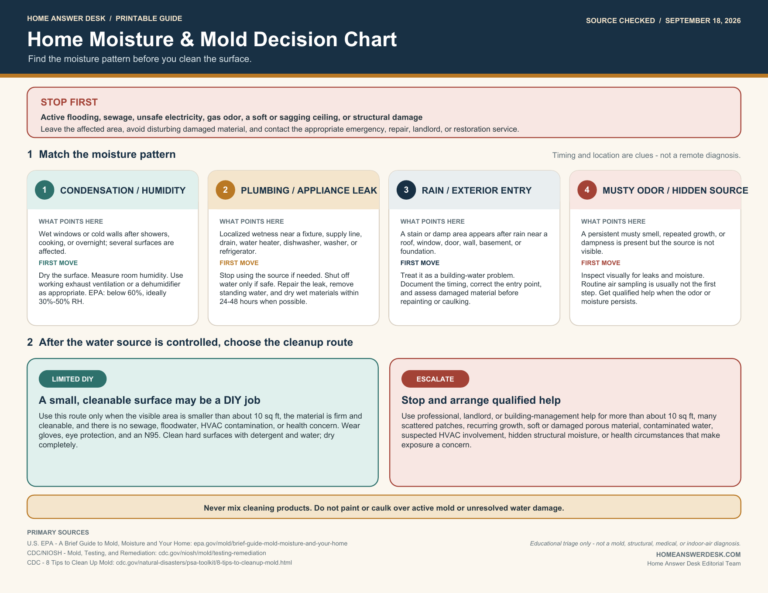
For a whole-home triage route, use the Home Moisture and Mold Decision Chart If repeated wetness has led to visible growth around the window, use Mold Around Windows for small-area cleanup limits and source-control steps.
Reduce recurring room-side condensation without guessing
The useful fix depends on the source. These are practical starting points supported by EPA and ENERGY STAR guidance:
- Bathroom: Run an exhaust fan that vents outdoors during a shower and afterward. If the bathroom stays steamy or mold returns, check the fan, the moisture path, and whether the room has enough airflow. The bathroom mold prevention guide can help with that branch.
- Kitchen: Use a kitchen exhaust fan that vents outdoors when cooking creates steam. Avoid assuming that wiping the window alone solves the moisture load.
- Laundry: Make sure the clothes dryer vents outdoors. If you dry clothes indoors, notice whether condensation becomes worse in the same room or nearby bedrooms.
- Humidifier use: Turn a humidifier down or off temporarily if window moisture begins after it runs. Do not keep increasing humidity because the room feels dry without checking a measured reading and the cold-window symptom.
- Cold glass and drafts: Window coverings should allow some air movement across the glass. When weatherization or window work is being considered, use a qualified installer or follow product instructions. ENERGY STAR notes that proper insulation at the frame-to-rough-opening area and window treatments that allow airflow can reduce the risk of condensation.
What not to do
- Do not treat bleach, vinegar, glass cleaner, or a fragrance product as a moisture-control solution. They may clean a surface but do not remove the humidity, leak, or glass-unit condition that caused the water.
- Do not mix cleaners. If visible mold is present, use the appropriate cleanup guidance for the surface and area rather than experimenting with chemical combinations.
- Do not rely on a dehumidifier to repair rain entry, a plumbing leak, damaged trim, or a sealed glass-unit problem.
- Do not wait for repeated wet sills to damage surrounding materials. The EPA advises drying wet surfaces promptly and reducing the moisture source.
When to get more help
Arrange an appropriate assessment when moisture repeatedly enters during rain, finishes are soft or deteriorating, mold-like growth keeps returning, water has reached electrical components, or fog is trapped between panes. Those situations need a closer look at the building opening, moisture source, or window unit rather than more wiping.
Sources
- U.S. EPA: A Brief Guide to Mold, Moisture and Your Home
- U.S. EPA: What Are the Main Ways to Control Moisture in Your Home?
- ENERGY STAR: Residential Windows, Doors, and Skylights
- University of Minnesota Extension: Controlling Moisture Problems in Your Home
- This Old House: How To Prevent Condensation on Windows — used only for current consumer-facing context on between-pane service patterns.
Editorial source ledger
| Consequential statement | Source | Scope or limitation |
|---|---|---|
| Keep indoor RH below 60%, ideally 30% to 50%; dry collecting moisture promptly and reduce its source. | U.S. EPA brief guide | General U.S. home moisture guidance; cold conditions may require a lower setting to avoid window condensation. |
| Excess window moisture can come from showers, cooking, indoor drying, humidifiers, leaks, and other moisture sources. | U.S. EPA moisture-control page; UMN Extension | Source identification comes before equipment selection. |
| Interior condensation depends on the glass surface falling below the dew point of humid indoor air; exterior condensation can occur in warm, humid weather with indoor cooling. | ENERGY STAR | Does not diagnose a failed window by itself. |
| Lower winter RH may be needed to prevent condensation; ventilation and dehumidification follow source control. | UMN Extension | Climate, weather, and window temperature affect the needed setting. |
| Between-pane fog needs a window-unit service path rather than accessible-surface cleaning. | This Old House; current result-set context | Do not generalize a repair method across window models. |