How to Clean Baking Sheets Without Damaging the Finish
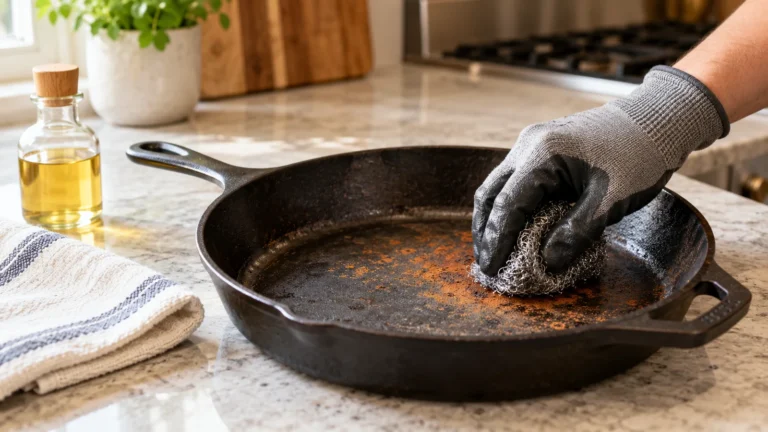
A baking sheet does not need to look new to be clean. First identify the surface: a dark nonstick coating needs the gentlest care, while bare aluminum often develops brown marks that may be cosmetic. If you cannot identify the pan, use warm water, mild dish soap, and a soft sponge first, then check the manufacturer’s care instructions before trying anything stronger. If the pan is cast iron rather than a baking sheet, use the cast-iron rust-removal and reseasoning guide; cast iron needs a different rust-removal and drying process.
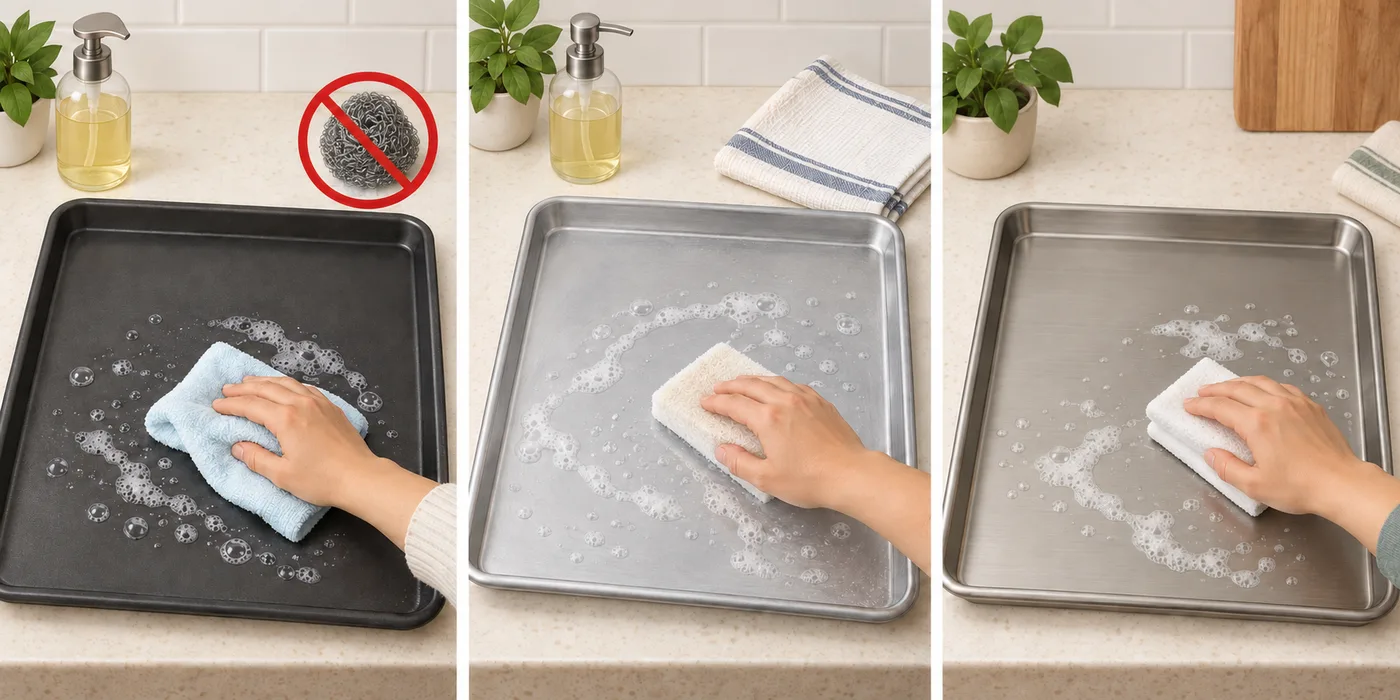
Updated October 22, 2026: clarified clear and silver nonstick coatings, removed a fingernail damage test, separated conflicting spray-cleaner instructions from the gentle wash, and added a clean, reclean, or stop-use check. The illustration now shows soft cloths rather than a scouring sponge.
Start the gentle wash · Choose a stuck-food next step · Check before baking
Safety first
Let the sheet cool completely before washing. Do not use bleach, oven cleaner, a self-cleaning oven cycle, steel wool, or a harsh abrasive on a coated or unknown pan unless its maker specifically permits that exact method. Never combine cleaning products. If the residue is in the oven cavity or on the racks rather than on the sheet, use the oven-cleaning route or the rack-type cleaning guide instead.
Quick answer
Use the mild method until you know the surface
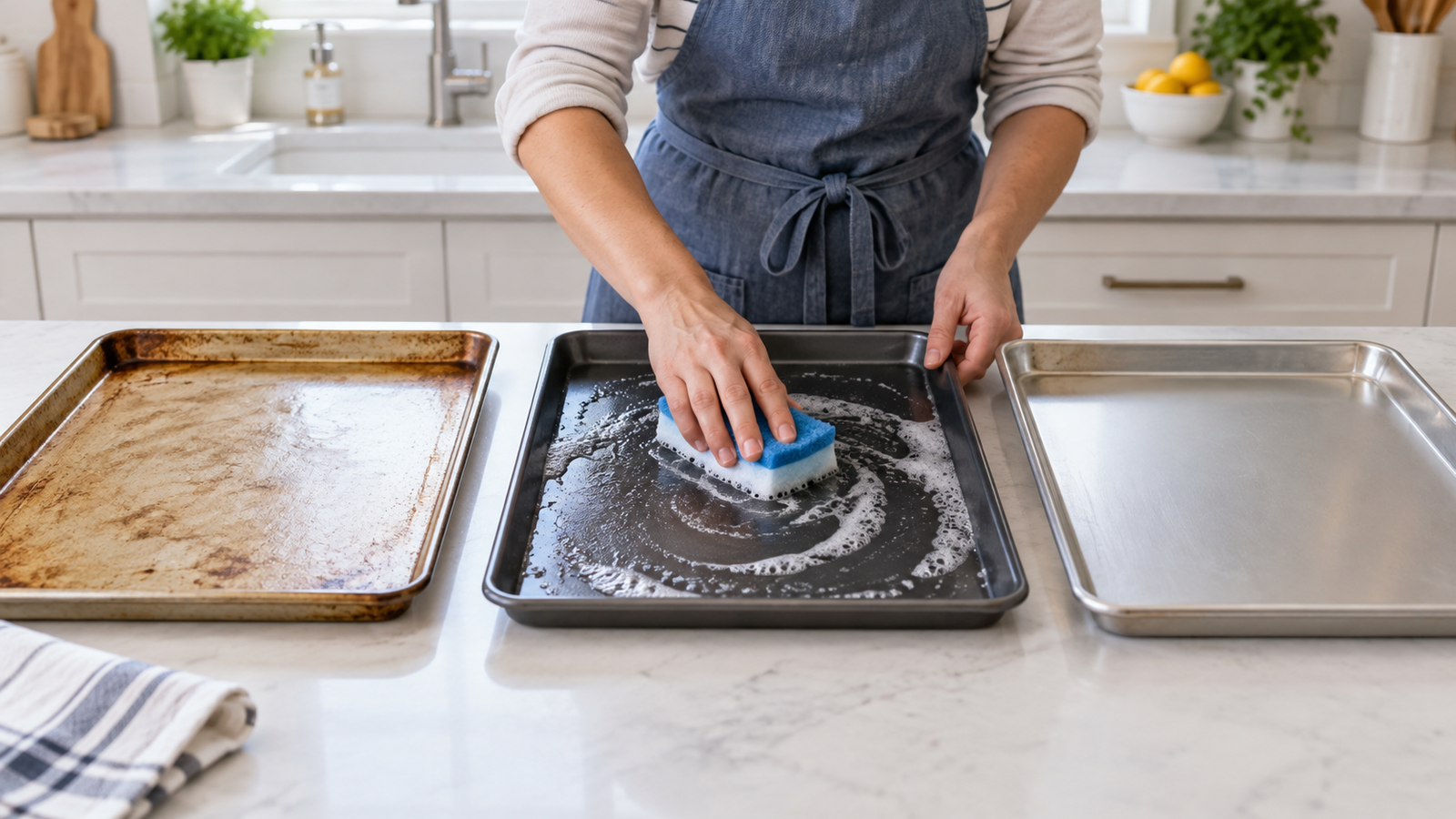
For most baking sheets, start with warm water, mild dish soap, and a soft cloth or nonabrasive sponge. A nylon pad is an option only when the exact pan maker permits that type. Keep abrasives away from nonstick or unknown pans. A brown mark on bare aluminum may be cosmetic; peeling, pitting, corrosion, or warping needs a different decision.
Match the cleaning method to the sheet
| What you have | Safest first method | Avoid unless the maker permits it |
|---|---|---|
| Identified nonstick or silicone-coated sheet, including clear or silver coatings | Hand-wash with warm water, mild dish soap, and a soft cloth or nonabrasive sponge; use a pad only if the maker permits it | Steel wool, abrasive pads, harsh cleaners, sharp tools, aggressive scraping |
| Bare natural aluminum sheet | Hand-wash with warm soapy water; rinse and towel-dry | Dishwasher use, long contact with acidic cleaners, rough scouring when appearance matters |
| Stainless or aluminized-steel sheet | Warm water, mild dish soap, and a nonabrasive sponge; then dry | Assuming its care rules match aluminum or nonstick; check the maker’s instructions |
| Material or coating is unknown | Use only the mild method and look for a mark, packaging, or manual | Strong cleaners, abrasive pads, oven-cleaning products, or a self-clean cycle |
What you need
- Mild dish soap
- A soft cloth or nonabrasive sponge; a nylon pad only when the exact pan instructions permit it
- A silicone, wood, or plastic scraper for loose food only
- A clean towel
- The sheet’s manual, packaging, or maker’s care page when available
How to clean a baking sheet safely
1. Let it cool and remove loose food
Do not put a hot sheet under running water. Once it is cool, lift away crumbs and loose baked-on pieces with a silicone, wood, or plastic tool. Avoid digging at a surface with a knife or metal scraper. A scratch in a coated pan is more important than a small brown mark.
2. Identify the surface before choosing a stronger method
Color does not identify the food-contact surface. Some nonstick coatings are clear or silver, and aluminized steel can resemble bare aluminum. Use the logo, product code, receipt, packaging, or maker’s product page to identify the actual finish. USA Pan’s FAQ, for example, describes its Americoat coating as clear. Until you know, stay with mild soap and a soft cloth; do not scratch a hidden spot to test whether a coating is present.
USA Pan recommends warm, soapy hand-washing with a soft sponge or nylon pad for its silicone nonstick bakeware and tells users to avoid steel wool and harsh abrasives. Nordic Ware likewise advises hand-washing its natural aluminum sheets and says dishwasher detergents can discolor the aluminum. Those are product-specific instructions, but they explain why the mild method is the right starting point for most home sheets.
3. Wash with warm, soapy water and gentle pressure
Apply mild dish soap with warm water and wipe with a soft cloth or nonabrasive sponge using light pressure. Use a nylon pad only if the exact pan maker allows it. Do not turn a normal hand-wash into an extended soak: USA Pan’s current bakeware care page expressly says not to soak its bakeware. A different brand’s soak or spray instructions do not override that restriction. Rinse thoroughly so no soap remains where food will touch the pan, then towel-dry it before putting it away. Wash soon after the pan has cooled when you can; that helps reduce residue buildup but does not promise every old mark will disappear.
4. Treat stuck-on food separately from brown discoloration
If food is stuck, repeat the mild wash and use only a nonmetal tool to lift what releases easily. Inspect the cool, dry surface in good light. If a coating is lifting, flaking, blistered, deeply cut, or uncertain, stop and ask the maker before reuse. Do not run a fingernail or finger across a suspect edge or scrape it to identify the damage. A light cosmetic mark on sound uncoated metal is not automatically a failed coating; color alone cannot make that distinction.
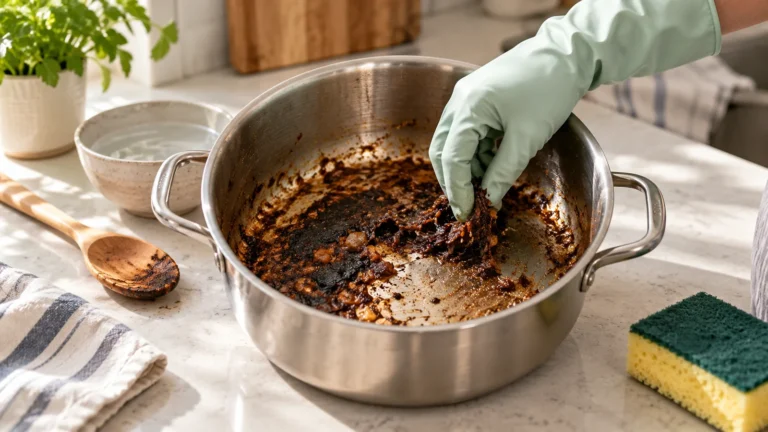
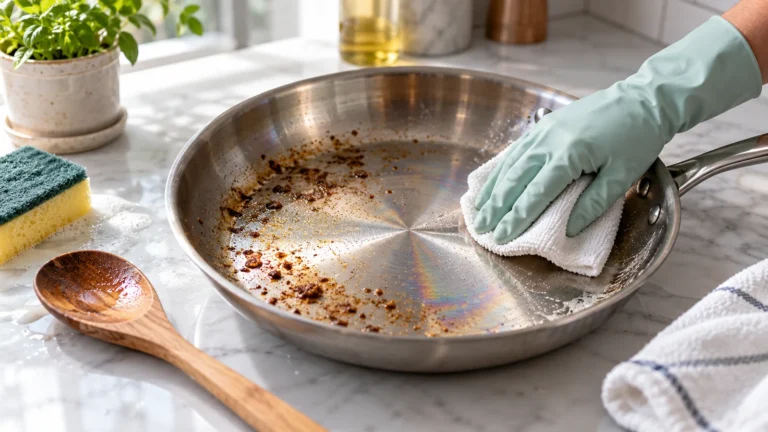
If the same residue is inside a saucepan or Dutch oven rather than on a sheet, switch to our material-specific burnt-pot cleaning guide before escalating. For a confirmed uncoated stainless skillet with rainbow tint, white spots, or sticky oil, use the stainless-steel pan cleaning guide; do not transfer its methods to an aluminum or coated baking sheet.
Do not combine conflicting product instructions. Nordic Ware’s Naturals aluminum and Brilliant nonstick pages name Dawn Powerwash for baked-on food and specify contact times. However, Dawn’s current use guide advises avoiding coated surfaces and recommends immediate rinsing on finished aluminum; it also excludes unfinished cast aluminum. That cast-aluminum exclusion is not a statement that every rolled aluminum sheet is cast. The pages still do not provide a single consistent permission for every sheet and finish.
If the current bottle’s surface or contact-time restrictions conflict with the pan maker’s advice, do not use the longer wait, substitute another spray, or average the times. Stay with the compatible mild wash and ask the pan and cleaner makers about the exact product and finish before escalating. Do not heat cleaner in a sheet pan or move the pan to a stovetop to boil residue loose; a cookware method is not automatically a bakeware method.
For uncoated aluminum, brown or gray discoloration can remain after normal washing. Nordic Ware says dishwasher-related discoloration on its natural aluminum pans is cosmetic and does not affect baking properties or safety. That does not mean every stain on every pan is harmless: pitting, corrosion, loose coating, or a warped surface deserves a closer look or replacement.
5. Dry, inspect, and store it without scratching
Rinse as the dish-soap or approved cleaner directs so no food-contact cleaner residue remains. Dry the pan fully, including its rim, before checking the result or stacking it. Put a clean towel, silicone mat, or parchment between stacked sheets if their surfaces rub together. Use parchment or a reusable liner for sticky or high-fat foods when the recipe and pan instructions allow it; this can reduce future buildup without adding a stronger cleaner to the process.
Check before baking: clean, reclean, or stop using it
Inspect the sheet while it is cool, clean, and dry. Judge removable food and cleaner residue separately from permanent color. Do not heat an empty pan to see whether an unknown film burns off.
| What remains | Next action |
|---|---|
| No removable food or cleaner residue; intact finish and stable shape | Return to the pan maker’s normal baking use; a cosmetic color change need not be scrubbed away |
| Raised crumbs, sticky food, or cleaner film | Keep it out of cooking use while completing a compatible wash or required rinse; do not increase abrasiveness or heat |
| Smooth discoloration on confirmed uncoated aluminum, with no damage signs | Check the maker’s cosmetic-discoloration guidance instead of chasing a new-pan appearance |
| Lifting coating, deep cuts, corrosion, sharp damage, or unstable warping | Stop use and ask the maker about replacement or serviceability; a liner cannot repair the pan |
When should you not try to restore the finish at home?
- A nonstick coating is flaking, deeply scratched, blistered, or peeling.
- An aluminum sheet is deeply pitted, corroded, or leaves unusual residue after normal washing.
- The pan is warped enough that it rocks or no longer sits safely on the oven rack.
- You only know a social-media cleaning trick, not the pan material or the cleaner’s compatibility.
Do not assume that an oven cleaner or a self-cleaning cycle is a safe shortcut. A cleaner intended for an oven cavity is not automatically suitable for a coated sheet. Follow the pan’s exact care restrictions and the cleaner label together; if they disagree, do not proceed with that treatment.
Common mistakes that make baking sheets harder to care for
- Using steel wool on a dark coated sheet: It can damage the release surface even if the pan looks cleaner temporarily.
- Putting bare aluminum in the dishwasher: The sheet may discolor; the change may be cosmetic, but the maker may still advise against it.
- Using vinegar or another acidic cleaner on natural aluminum without checking: Nordic Ware notes that prolonged contact can darken, pit, or corrode natural aluminum.
- Chasing a brand-new appearance: A stained but smooth, stable uncoated sheet may still work normally.
- Stacking damp sheets: Trapped moisture can leave water marks or encourage surface changes during storage.
Keep baking sheets easier to clean next time
Let the sheet cool, wash it with the recommended mild method, and dry it before putting it away. For foods likely to bake onto the surface, use parchment or a reusable liner only if it is suitable for the recipe and the pan’s temperature limit. A liner helps prevent buildup, but it does not replace normal washing after use.
Questions about baking sheets
Can I use baking soda on a baking sheet?
Check the manufacturer’s instructions first. A baking-soda paste is commonly suggested online, but a mildly abrasive method is not automatically appropriate for a coated, unknown, or damaged surface. Start with mild soap and a soft sponge; use anything stronger only when the pan’s care information supports it.
Is a brown baking sheet dirty?
Not necessarily. A sheet can be washed and still have cosmetic brown or gray discoloration, especially if it is bare aluminum. Check for loose food, residue, pitting, corrosion, warping, or peeling coating rather than judging cleanliness by color alone.
Can baking sheets go in the dishwasher?
It depends on the sheet. Nordic Ware advises against dishwasher use for its natural aluminum sheets because detergent and heat can discolor them. USA Pan recommends hand-washing for its coated and uncoated bakeware. Follow the directions for your particular pan.
Sources
- USA Pan Bakeware Use & Care
- USA Pan FAQ: Clear Coating and Material Identification
- Dawn Powerwash: Current Surface Restrictions and Rinsing Instructions
- Nordic Ware Naturals Aluminum Bakeware Use and Care
- Nordic Ware Warranty
- Wilton: Cookie Sheets 101 – How to Clean Cookie Sheets and More
- Nordic Ware Naturals Aluminum Bakeware: baked-on food care
- Nordic Ware Brilliant Nonstick Bakeware: baked-on food care