Garbage Disposal Leaking From Bottom? Find the Source
If your garbage disposal is leaking from the bottom, switch it off and disconnect power before touching the unit or the cabinet floor. Water can travel down the outside of the disposal, so a drip at the lowest point does not always mean the bottom seal has failed. The safest first job is to dry the area and identify where the water first appears.
Quick answer
What a bottom leak usually means
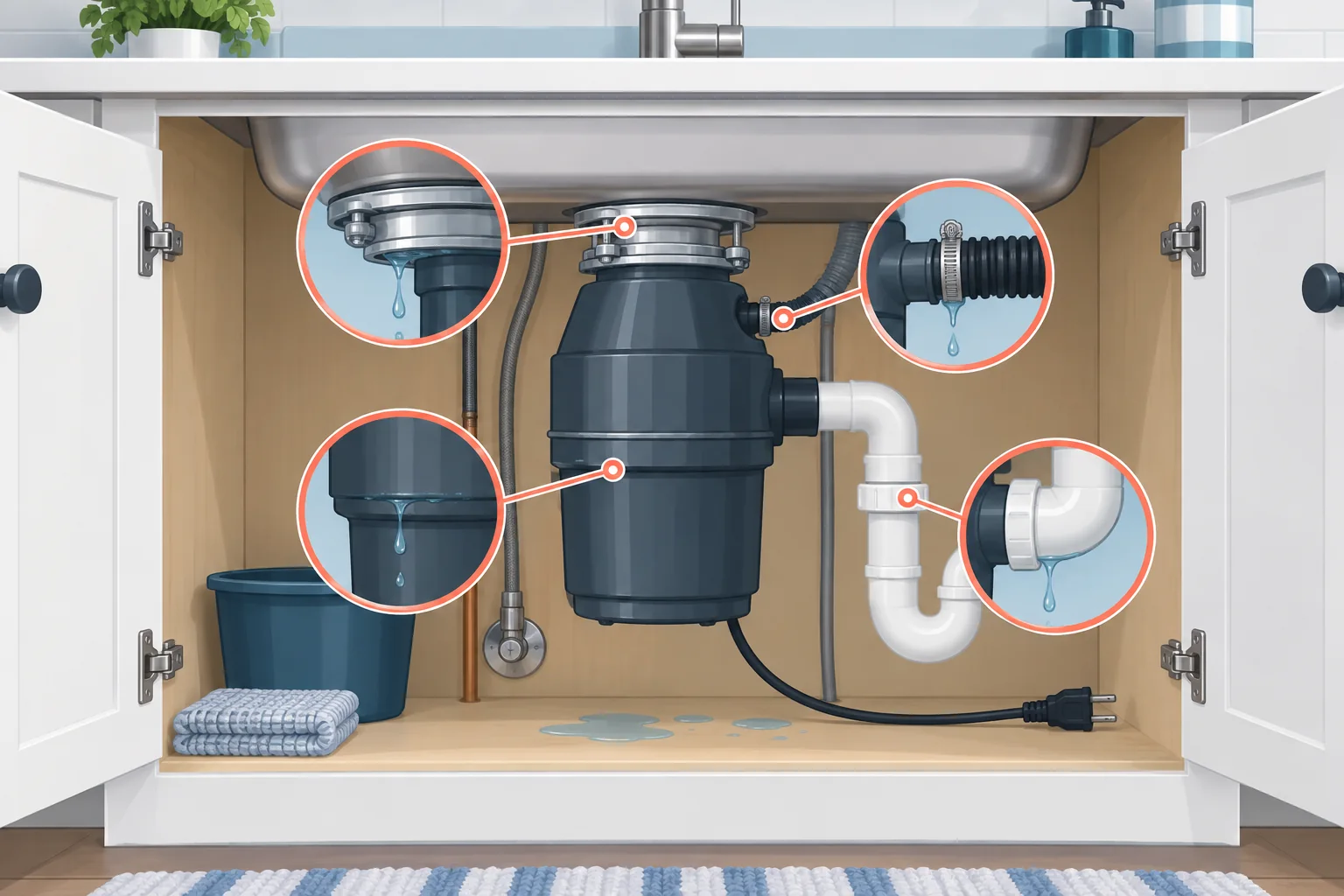
First rule out water running down from the sink flange, dishwasher inlet, or discharge elbow. Those connection leaks may be repairable. If water truly emerges through the disposal body, motor joint, or bottom cover, stop using it and contact the manufacturer or a qualified plumber; the unit may need replacement.
Where is the water first appearing?
| First wet location | Likely source | Best next step |
|---|---|---|
| Sink flange at the top | Mounting ring, sink seal, or installation issue | Stop the test and inspect the mounting assembly |
| Dishwasher hose connection | Loose clamp, damaged hose, or adapter | Tighten or replace the model-approved connection |
| Discharge elbow or pipe | Loose bolts, damaged gasket, cracked elbow, or loose trap joint | Repair the visible drain connection |
| Outer shell below a connection | Water may be traveling behind or over the shell | Trace upward before deciding the disposal has failed |
| Body seam, motor joint, or bottom cover | Possible internal leak, corrosion, or failed seal | Leave power disconnected and arrange service or replacement |
Stop before water reaches electricity
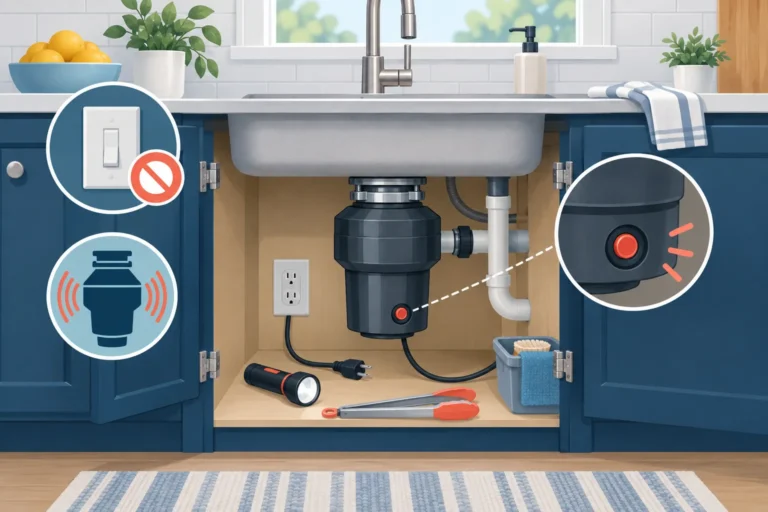
Turn off the wall switch, unplug the disposal with dry hands, or switch off its breaker if it is hardwired. Do not touch a wet plug, outlet, junction box, switch, or wiring cover. If water is near electrical parts, the breaker or GFCI has tripped, or you cannot disconnect power safely, leave the area alone and call a qualified electrician or plumber.
Find a garbage disposal leak safely
1. Empty and dry the cabinet
Remove stored items and absorb standing water. Dry the disposal, pipes, sink underside, cabinet floor, and nearby connections. Place a dry sheet of paper or newspaper below the plumbing so a new drip leaves a clear mark. Also check the faucet supply lines, sprayer hose, water filter, dishwasher hose, sink rim, and countertop seam; water from these areas can imitate a disposal leak.
2. Mark the main leak points with dry paper towels
Wrap separate dry paper towels around the top mounting area, the dishwasher inlet if present, and the discharge elbow where the disposal connects to the drain pipe. Keep another towel under the bottom cover without removing the cover. Separate towels make it easier to see which location becomes wet first.
3. Test the sink flange while the disposal stays off
Place the stopper in the sink and add several inches of water. Wait a few minutes while watching the towel at the top of the disposal. If it becomes wet before the sink drains, the leak is likely at the sink flange or mounting assembly. A loose mounting ring, incorrect assembly, or deteriorated seal may require the unit to be remounted according to its installation manual.
4. Release the water and watch the side connections
Release the stopper with the disposal still off. Watch the discharge elbow, gasket, fasteners, trap joint, and dishwasher connection. Water appearing only while the sink drains points toward the drain path. InSinkErator recommends checking discharge fasteners, the gasket for debris or damage, and the elbow for cracks. Moen notes that a damaged discharge gasket can let water travel between the shell and the disposal before exiting near the bottom plate.
5. Confirm a true bottom or body leak
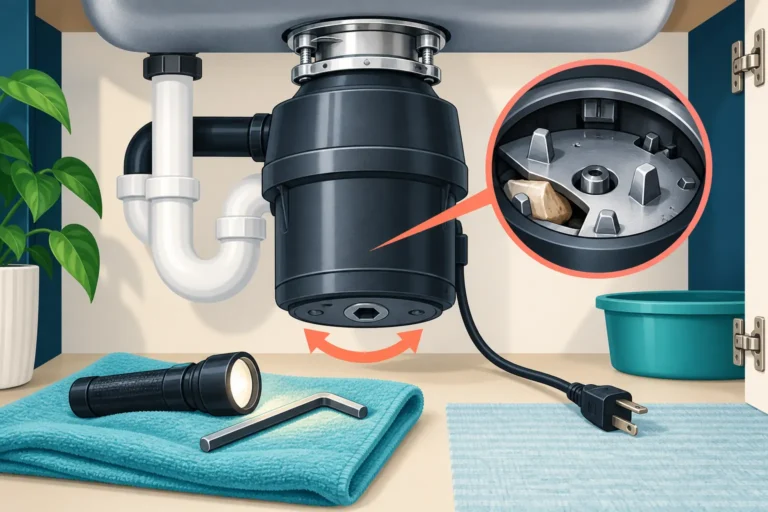
If the upper towels and side connections remain dry but water emerges from the body seam, motor joint, or bottom cover, treat it as an internal leak. Do not remove the bottom electrical cover, drill the housing, apply sealant to the shell, or continue operating the disposal. InSinkErator directs owners to contact support when a bottom, container-body, or motor-joint leak is confirmed.
Can the leak be repaired?
- Top mounting leak: it may be repairable by correcting the mounting assembly or renewing the sink seal according to the model instructions.
- Dishwasher inlet leak: a loose clamp, deteriorated hose, or damaged adapter may be replaceable.
- Discharge leak: the fasteners, gasket, elbow, or trap joint may need cleaning, tightening, or replacement.
- Body or motor-joint leak: do not attempt a housing repair. Ask the manufacturer about warranty coverage and plan for professional service or disposal replacement.
Use parts and procedures listed for your exact model. If the disposal also hums, repeatedly trips, or will not start, follow the separate guide for a garbage disposal that is not working after the leak has been resolved and the unit is completely dry.
When to call a professional immediately
- Water is touching the plug, outlet, wiring, switch, or electrical cover.
- The breaker or GFCI trips, or you smell burning.
- The housing is cracked, corroded, swollen, or leaking at a seam.
- The disposal is hardwired and must be removed or electrically disconnected.
- A repaired connection leaks again during the first test.
Protect the cabinet while you wait
Keep the disposal disconnected and avoid using that sink if drainage can send water through the leaking connection. Dry the cabinet, improve airflow, and remove wet shelf liners or damaged particleboard. A shallow tray can catch an occasional residual drip, but it is not a substitute for repair and should never allow water to collect around electrical parts.
Frequently asked questions
Does a bottom leak always mean the disposal must be replaced?
No. Water may run down from the sink flange, dishwasher inlet, or discharge connection and drip from the lowest point. A confirmed leak through the body, motor joint, or bottom cover is more serious and usually needs manufacturer guidance, professional service, or replacement.
Can I use the other side of a double sink?
Only if the bowls do not share a drain path that sends water through the leaking disposal connection. When the plumbing arrangement is unclear, avoid both bowls until the leak is diagnosed.
Can I seal the bottom with caulk or epoxy?
No. The bottom area contains electrical and motor components, and an external patch can hide an active internal failure. Keep power off and follow the manufacturer’s service or replacement advice.
Should I run the disposal to find the leak?
Start with the disposal off. Filling and draining the sink can identify many flange and discharge leaks. Do not energize the unit when water is near electrical parts, the housing appears damaged, or you are uncertain that the area is safe.
Sources
This guide was checked against current manufacturer troubleshooting instructions. Garbage disposal designs and mounting systems vary, so the installation and service manual for your exact model takes priority.