How to Get Gum Out of Carpet Without Pulling the Fibers
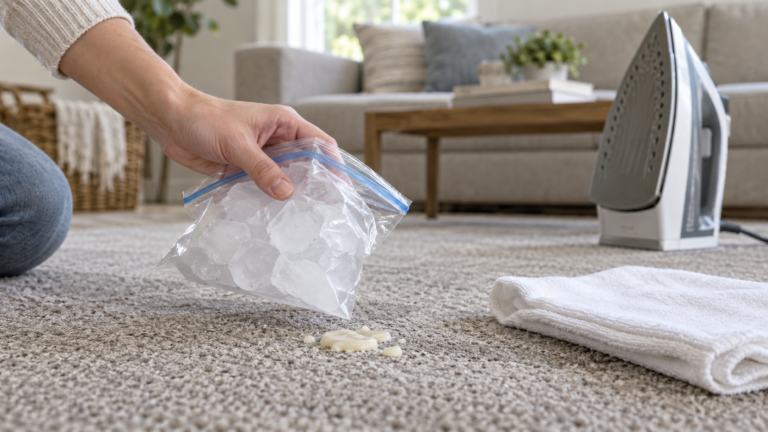
For gum on a known water-washable synthetic carpet, keep people and pets off the spot, make the gum firm with a sealed cold pack, then lift small pieces with a smooth plastic card or spoon. Do not pull soft gum, rub it into the pile, use a blade, soak the carpet, or try several cleaners. If the carpet is wool, silk, leather, antique, hand-knotted, valuable, or unknown, remove only loose surface pieces and check the maker’s care guidance or use a qualified carpet cleaner.
Stop if the construction starts to move: On loop pile, Berber-style carpet, or a seam, one caught loop can turn into a visible run. If a loop rises, a long strand appears, or the card catches, stop and use a qualified carpet cleaner.
Start the cold-and-lift steps · Check the residue treatment · Read the dry result
Check the carpet and whether the yarn moves
The fiber, pile construction, backing, dyes, and earlier treatments change what is safe. A technique that works on a modern water-washable synthetic carpet may not be safe for wool, silk, leather, antique, natural-fiber, hand-knotted, or unknown carpet. Do not use heat, a household solvent, peanut butter, oil, or a stain-remover mixture to make gum release from unknown carpet. These can leave a second residue or change the finish before the gum is removed.
| What you have | Safe first move | Avoid |
|---|---|---|
| Fresh gum sitting on known water-washable synthetic carpet | Block traffic, firm it with a sealed cold pack, and lift a little at a time | Pulling, rubbing, or flooding the spot |
| Flattened gum or loop-pile carpet | Cool and attempt only a gentle edge lift; stop if firm gum will not release or a loop moves | Forceful scraping, brushing, or cutting a raised loop |
| Wool, silk, leather, antique, hand-knotted, valuable, or unknown carpet | Remove loose surface pieces only; check care guidance | Any household solvent, oil, heat, or internet mixture |
| Solid gum is gone but a sticky film remains | Check the maker-approved product and complete test/removal process below before treating | Stacking products or pouring cleaner onto the carpet |
| Only color remains, or a damp/changed surface persists | Stop scraping. Use the dry-result decisions; suspected wet backing or pad needs professional advice | More scraping, heat, or repeated soaking |
Cold removal: lift only the pieces that release gently
Set out the cold pack and smooth-edged tool
- Ice or a reusable cold pack inside a sealed plastic bag
- Clean white cloths
- A plastic card or plastic spoon with a smooth edge
- A carpet-maker-approved cleaner only if the care guidance permits it
The sealed bag helps cool the gum without adding meltwater to the carpet and pad. Keep a sheet of paper or a small container nearby for the pieces you lift.
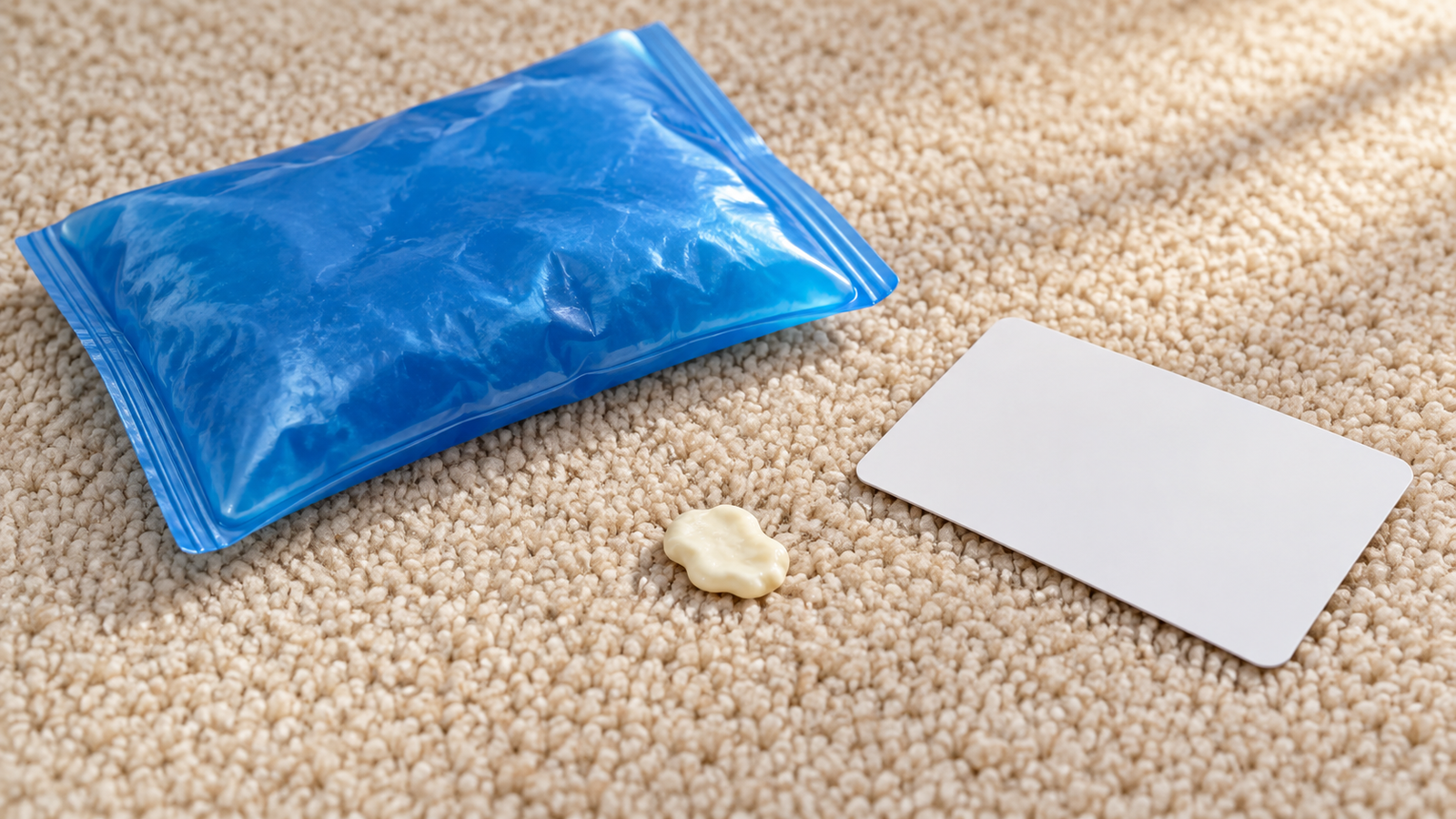
1. Protect the spot before the gum spreads
Keep shoes, children, and pets away while you gather supplies. Foot pressure can spread soft gum across more fibers or push it closer to the backing. Press a clean white cloth beside the gum if you need to steady the surrounding pile, but do not tug upward.
2. Firm it with a sealed cold pack
Place the sealed cold pack against the exposed gum without rubbing or pressing it deeper. Check that the bag is intact and wipe condensation from its outside before contact. Cool until the exposed gum becomes firm enough for a gentle edge lift; do not probe beneath the pile to check the hidden underside. Remove only solid pieces that release easily before considering wet cleaning.
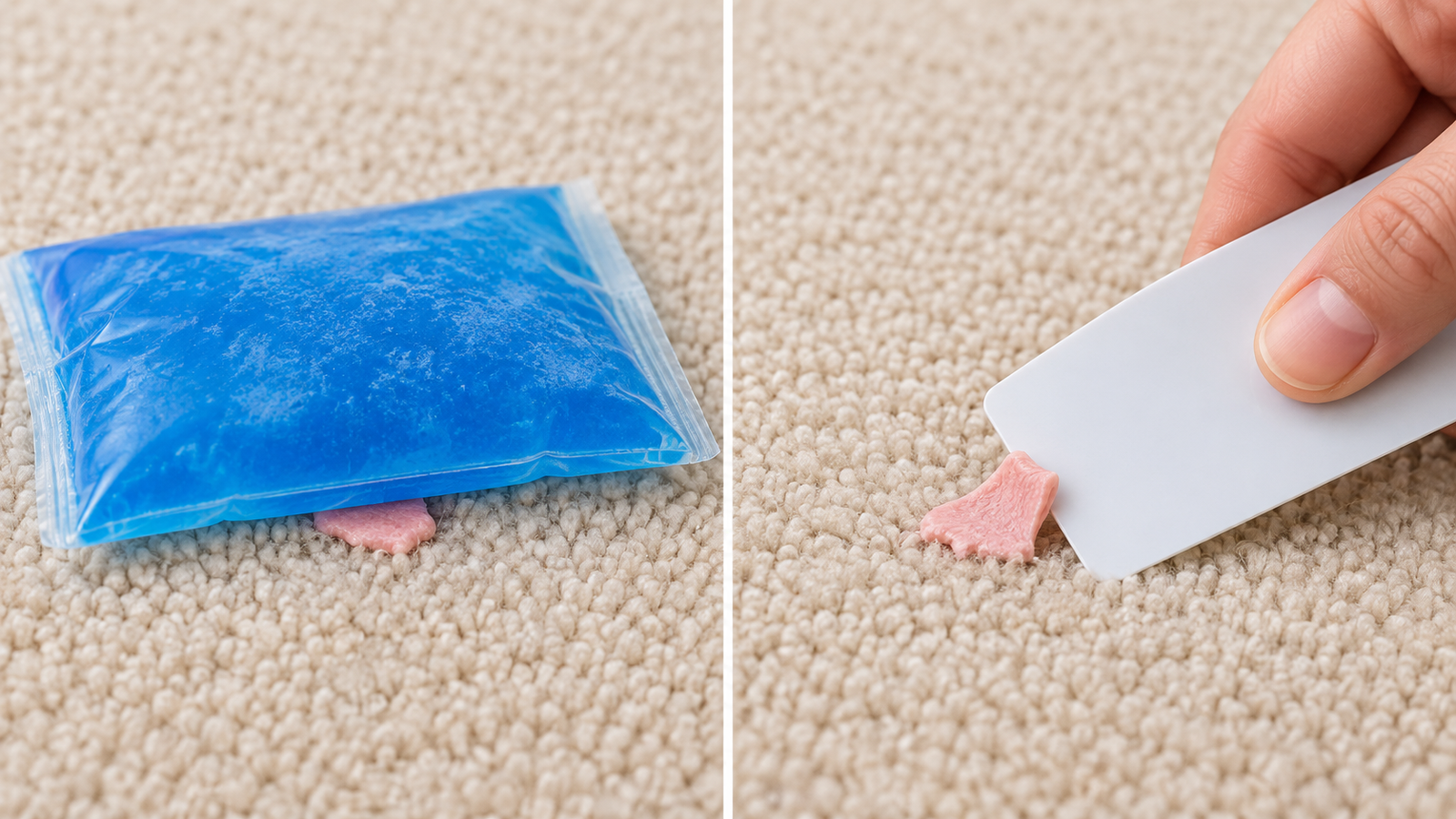
3. Lift small pieces with a non-sharp edge
Slide a plastic card or a smooth plastic spoon under an outer edge. Keep the tool close to the carpet and lift gently toward the center. Work in small sections and keep the edge almost parallel to the carpet. If softening interrupts a lift that was releasing pieces without yarn movement, cool it again. If the firm gum stays anchored, catches a loop, or no further pieces come away gently, stop. Do not turn repeated cooling into permission for harder scraping.
Do not use a blade or metal scraper. They can cut loops, fray the pile, or catch a seam. Stop if a loop rises or the tool pulls a long strand. Collect lifted pieces with the card or your fingers; do not vacuum gum fragments because they can stick inside the vacuum.
Sticky film: a separate treatment, only if needed
Once the cold pack is removed and any surface moisture has dried, inspect in good light. Do not touch unknown cleaner residue with bare skin. If no gum or tacky deposit remains and the pile is unchanged, stop; a clean patch does not require another chemical step.
If the area is not sticky but a color shadow remains, stop scraping. That is now a stain or dye-transfer question, not solid gum. Follow the carpet maker’s stain instructions or use a qualified cleaner. Do not combine cleaners, vinegar, alcohol, oils, or heat.
Choose a permitted method you can fully remove
If a small sticky film remains, find the carpet maker’s gum-residue instructions and the exact product directions before applying anything. For the home spot-cleaning route here, choose only a water-based carpet spotter expressly permitted for that fiber, backing, stain treatment, and application method.
Read the dilution, contact time, removal and drying directions. If only a solvent or specialized extraction method is specified, or the product cannot be fully removed with the equipment you can safely use, ask a qualified cleaner instead of substituting a kitchen degreaser or solvent.
Finish the hidden-area test before treating the spot
Test the exact permitted method on a hidden area of the same carpet, not a different rug. Use the labeled amount and contact time, check a clean white cloth and the pile for color transfer or surface change, then complete the required rinse or extraction before drying.
Compare the fully dry test with untouched carpet for color, texture, rings, and tackiness. Stop immediately if dye transfers, a loop rises, or the surface changes; do not wait for drying before ending a damaging treatment. A failed or incomplete test is not permission to clean the visible spot.
Blot and remove the selected spotter as directed
If the test is unchanged and the complete method is allowed, transfer a small amount of the selected spotter on a clean white cloth and blot the residue from its outer edge inward. Keep product off the backing and avoid rubbing.
Remove the spotter with fresh cloths and only the rinse or extraction sequence specified for it; do not pour water in to compensate for an unsuitable product. Never leave a rinse-required product to dry as a test. Pause when no more residue transfers or the mark no longer improves rather than adding a second cleaner.
The Carpet and Rug Institute’s care guide supports pretesting, gentle cloth application, complete treatment removal, and drying before traffic. It also warns that leftover spotter can attract soil. Those general precautions do not make every product or machine suitable for your carpet.
Finish with full drying before traffic returns
After the approved removal sequence, blot remaining moisture with clean, dry white towels without scrubbing. Keep people and pets off the spot until the carpet is fully dry; allow safe ventilation as the carpet and product instructions permit. Do not use an iron, hair dryer, or other direct heat to hurry it. Keep electrical equipment away from wet areas.
A dry-feeling surface alone does not establish that the backing or pad is dry. If liquid leaked from the pack, the area was soaked, dampness persists, or an odor develops, stop adding moisture and seek professional drying advice.
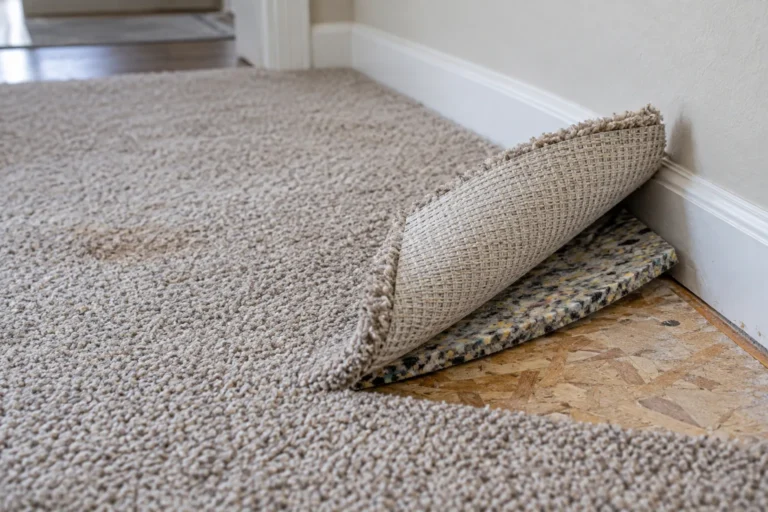
Do not peel back installed carpet or pull at a seam to investigate. Compare the dry pile with the surrounding area before reopening the spot to traffic; use the decisions below.
Read the dry result: gum, film, color, or changed pile
| Dry result | What it tells you | Next move |
|---|---|---|
| No gum or tacky film; pile and color match the surrounding area | No further spot treatment is needed | Finish only when the approved removal and full drying are complete. Do not add a cleaner for appearance alone. |
| A colored shadow remains but no solid gum is left | More mechanical lifting is not the answer; appearance alone cannot identify dye transfer or damage | Stop scraping. Ask the carpet maker about its stain route or use a qualified cleaner. |
| Tackiness persists or the patch attracts dirt again | Gum residue or retained cleaning product may remain; this is not proof that more gum is hidden | Record the product and removal steps. Get advice if the permitted treatment made no progress; do not stack products or keep wetting it. |
| A raised loop, fuzziness, light patch, ring, or changed texture appears | The carpet may have been affected by the removal or cleaning | Stop. Photograph the change and contact the maker or a qualified cleaner, without cutting yarn or treating a larger area. |
| Dampness or new odor persists, or soaking reached beyond the small spot | A small surface-cleaning guide cannot establish the condition of the backing or pad | Keep the area out of use and arrange professional assessment instead of more rinsing. |
When the home route ends
Call a qualified cleaner if the carpet is valuable or delicate, the gum has been walked deep into the pile, it covers a large area, a loop starts to pull, firm gum no longer releases gently, sticky residue persists after the permitted treatment, the pad is wet, or the pile or color changes. Tell the cleaner what has already been used so the next treatment does not react with an earlier product.
Photographs taken before treatment and after full drying can help explain the change to a cleaner. Record the carpet identity, products already applied, whether the bag leaked, and which actions released gum. These observations organize the next decision; they are not a test for chemical safety or hidden moisture.
Related carpet guides
- How to Remove Candle Wax From Carpet Without Melting the Fibers — a similar-looking solid spill with a different residue and heat decision
- How to Deodorize Carpet: Find the Odor Source and Freshen It Safely
- How to Remove Mold From Carpet: Clean, Replace, or Call a Pro?
Updated October 23, 2026: removed the repeated opening and separated gentle cold removal from optional sticky-film treatment. The complete product-test/removal and dry-result precautions added October 22, and the October 6 loop-pile and traffic precautions, are retained.