How to Remove Candle Wax From Carpet: Freeze First, Use Heat Only If Safe
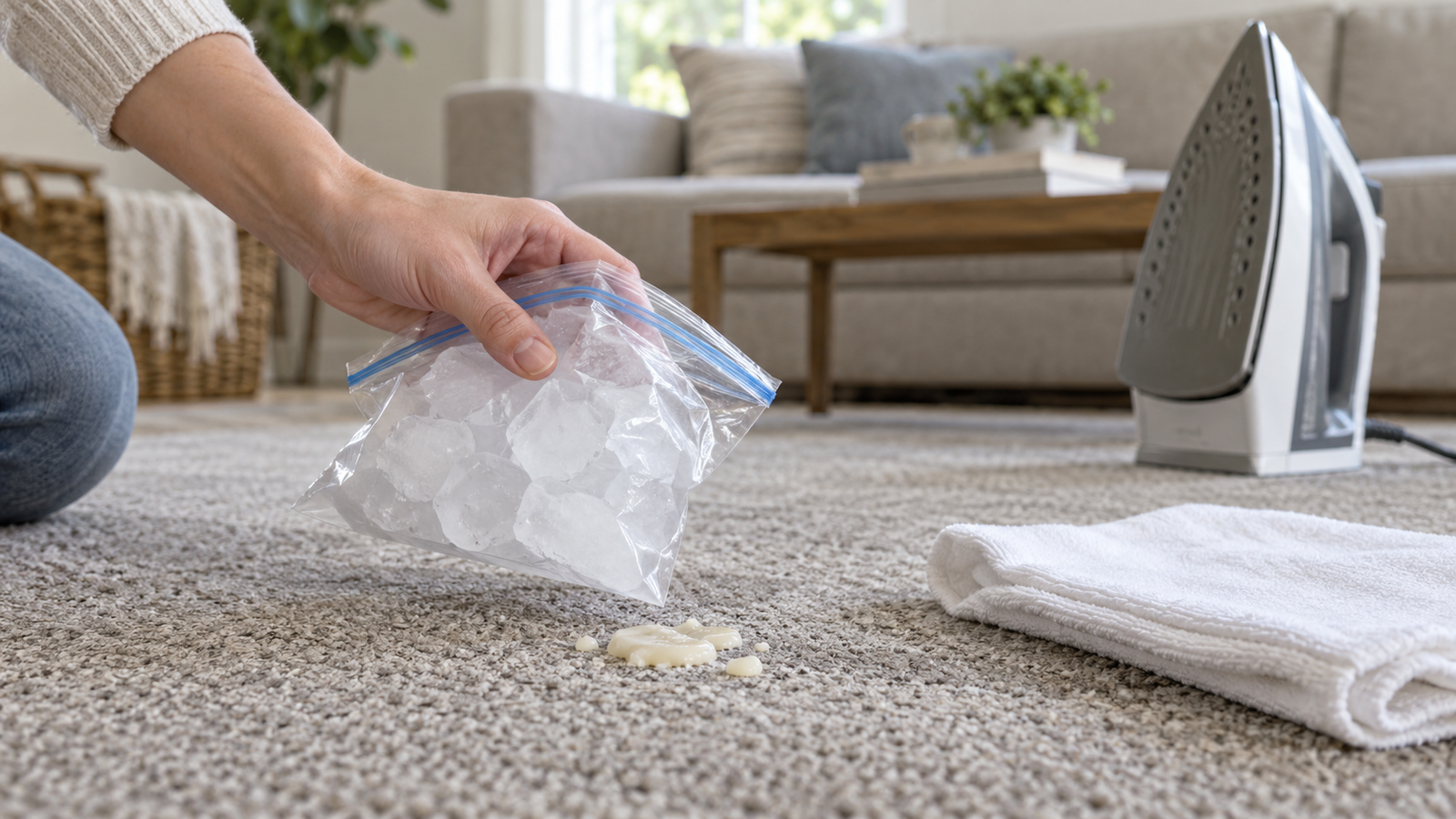
Do not wipe up warm candle wax. Harden it with ice in a sealed plastic bag, then lift off the brittle pieces with a spoon or another blunt edge. Only before any solvent or other cleaner has been used, and if your carpet’s care instructions permit heat, a clean white barrier and a brief warm—not hot—iron pass can transfer the last traces. The iron never touches the carpet and steam stays off.
Pause before using heat or cleaner: If the carpet is wool, natural fiber, loop pile, delicate, unknown, or under a warranty you cannot check, use only the cold-and-lift step until you have the maker’s care instructions.
If any previous cleaner, remover or spill is unknown, stop before applying heat, running a vacuum or adding another product. A dry surface or absent odor does not establish that flammable residue is gone. Keep heat away from solvent-treated material and follow its label or obtain qualified advice. Never mix cleaning products.
Choose cold-only removal or maker-permitted warm transfer
A candle spill can leave solid wax, colored dye, fragrance or oil residue, or more than one of these. Removing one does not mean the next needs the same treatment.
| What you know | Best first move | Do not do |
|---|---|---|
| Unknown, wool, natural-fiber, loop, or delicate carpet | Cool and lift loose wax; then consult care guidance | Guess with heat or solvent |
| Care directions permit a warm iron method | Cool and lift first; test a hidden spot | Put the iron directly on the pile |
| Wax is gone but color remains | Treat it as a dye-stain question | Keep heating the color |
| Area feels oily or sticky | Use the maker’s approved spot-care direction | Saturate backing or padding |
Lift the hardened wax first
Set out the supplies; keep the iron optional
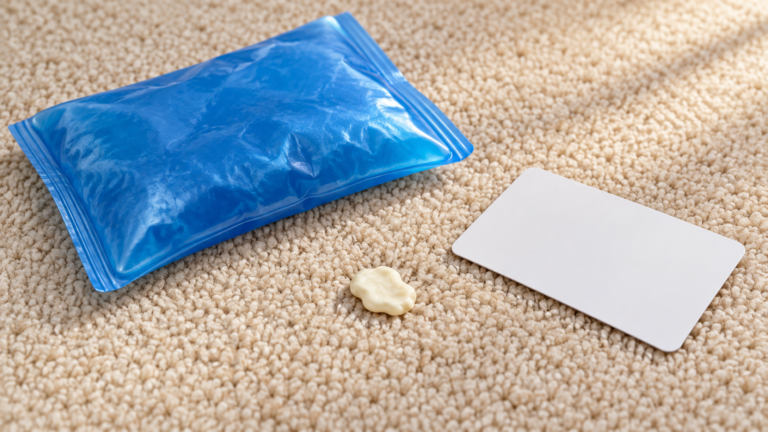
- Ice cubes or an ice pack inside a leakproof plastic bag
- A spoon, plastic card, or blunt scraper
- A vacuum hose with a smooth nozzle suitable for the carpet
- Clean white paper towels or a white cotton cloth
- A dry household iron only if the carpet maker permits it
Harden the wax with bagged ice
Place the bagged ice over the spill until the wax is hard and crumbly. The bag keeps meltwater out of the pile and backing. The University of Georgia Extension recommends this cold-first approach for carpet wax, along with checking care instructions and testing any cleaning agent in an inconspicuous area. Read its candle-wax guidance.
Lift loose pieces, then collect dry fragments
Hold a spoon, plastic card, or blunt edge nearly flat and ease loose pieces upward. Work from the outer edge toward the center. If you have to force the tool under the wax, cool the spot again. Do not use a sharp blade.
Vacuum only loose, dry wax fragments before any cleaner is used, using a smooth nozzle that the carpet and vacuum instructions permit. Do not vacuum liquid, solvent-treated material or an area with unknown chemical residue. Keep rotating brushes off loop or delicate pile because they can catch yarns and loops. The Carpet and Rug Institute’s wax guidance also directs readers to break up solids and vacuum before moving to spot treatment.
This lift-not-pull approach is also useful for gum in carpet, but wax and gum do not share the same cleanup chemistry.
Consider warm transfer only before any cleaner
Carpet materials do not all tolerate the same care. Ruckstuhl’s material-specific guidance says to let candle wax harden completely, lift it gently, and use undyed absorbent paper with very low, pretested heat for suitable natural-fiber rugs. It recommends professional treatment for colored or deeply embedded residue. Check its material-specific care guidance.
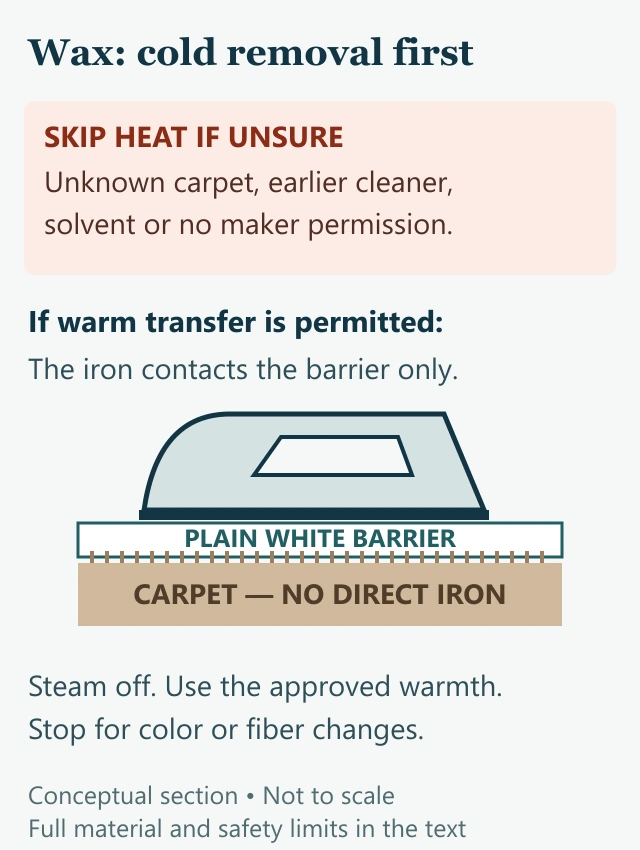
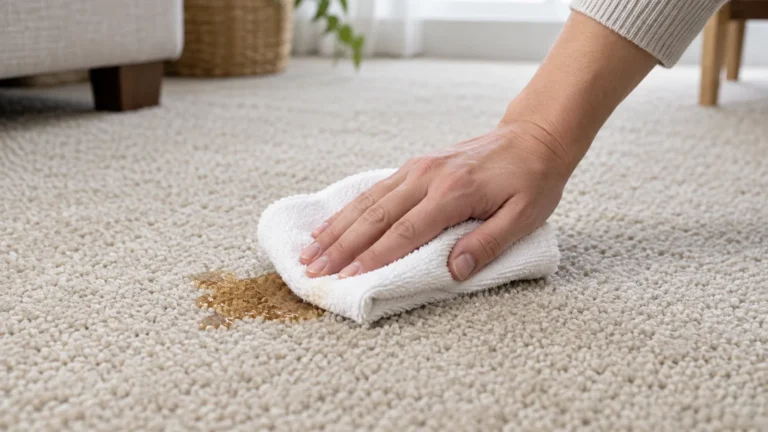
Use white, unprinted absorbent material. Printed bags, newspaper, and dyed cloth can transfer color when warmed.
- The warm-transfer step belongs before any cleaner or solvent step, not after it. Skip heat when treatment history is uncertain, a cleaner has already been applied or any flammable material may remain. Turn steam off and use only the lowest warm setting your carpet instructions allow.
- Cover the wax with several layers of clean white absorbent paper or white cloth.
- Make a brief, light pass with the iron on the barrier only. Keep it moving.
- Lift the barrier, check for transferred wax, and replace it with a clean area before repeating.
- Stop heating when no more wax transfers to a clean part of the barrier.
- Stop immediately if you smell scorching, see color transfer, or notice flattened, shiny, or fused fibers.
UGA’s carpet guidance describes a warm—not hot—iron over absorbent material. It also warns that solvent-based cleaners can harm backing or padding if used too wet. Never use steam or put an iron directly on the carpet.
Can I use a hair dryer instead?
Not as a universal substitute. It can soften wax and spread it deeper into the pile. Start cold; use heat only when the carpet care guidance supports it.
After the wax lifts: color, tackiness, or damage?
Colored shadow or streak
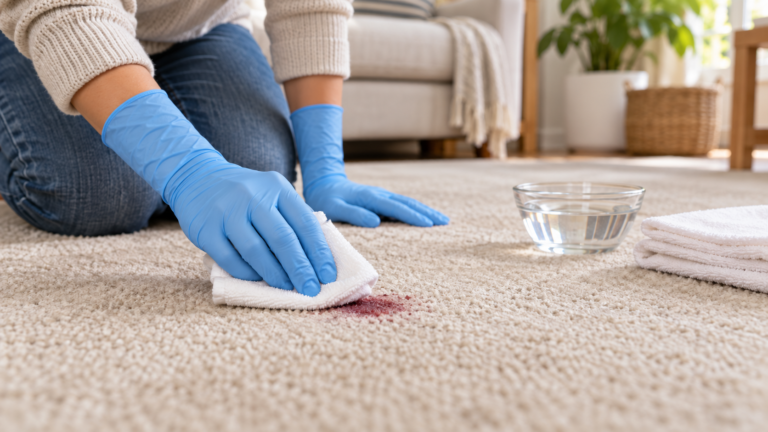
This may be candle dye. Stop adding heat and follow the carpet maker’s approved dye or spot-treatment process. Test any allowed product in a hidden spot. Apply it sparingly to a white cloth instead of pouring it onto the carpet, then blot without rubbing.
Oily or sticky feel
Do not keep ironing. Use the manufacturer’s approved spot-care direction and avoid soaking the backing. The Carpet and Rug Institute recommends pretesting any spot solution, applying it to a white cloth, working gently from the edge toward the center, and never pouring solvent directly onto the carpet or allowing it to reach the backing.
Dark, shiny, flattened, or fused pile
Stop. That is a damage signal, not leftover wax. Photograph the area and ask the carpet maker or a qualified cleaner for next steps.
Finish without leaving a damp or sticky spot
If you used only the dry cold-and-lift method, collect or gently vacuum the remaining loose fragments. If an approved spot product or rinse was used, follow its label and the carpet maker’s instructions, blot out as much moisture as possible, and keep people and pets off the area until it is fully dry.
When to call a professional
A professional is the safer choice for a large spill, wax walked into deep pile, wool or natural fiber, a seam or edge, an unknown carpet, an active warranty, or visible dye after the wax is gone.
Related carpet guides
If wax has lifted but you cannot identify a leftover mark as dye, oil, or another spill, use the carpet-stain decision guide to check the material and stain depth before adding a second treatment.
For a different stain, use the right method: remove blood from carpet uses cold-water handling rather than wax steps. If a fully dry carpet later has an odor, start with how to deodorize carpet instead of layering fragrance over the spot.
Updated October 23, 2026: put the answer before the editorial history and separated cold removal, conditional warm transfer, and the remaining-mark decisions. The prior-cleaner/solvent stop added earlier October 23, and the October 6 residue, vacuuming and heat-stop precautions, remain in place.
Sources
These primary and specialist references support the material limits, diagnostic order, and safety boundaries used above. Follow the current care label or exact model manual when it is more specific.
- University of Georgia Extension — Candle Wax and Paraffin Stain Removal
- Carpet and Rug Institute — Wax Spot Solver
- Ruckstuhl — Carpet Cleaning and Care
Sources rechecked October 23, 2026; the earlier source review was October 18, 2026.