How to Deodorize Carpet: Find the Odor Source and Freshen It Safely
Quick answer
To deodorize carpet safely, identify the source before choosing a method. For a mild stale odor on completely dry carpet, vacuum first. If both the carpet-care instructions and vacuum manufacturer allow fine powder, patch-test baking soda, sprinkle a light layer, leave it for about 15 minutes, and vacuum thoroughly. Use a product labeled for the source when treating pet or organic odors, and address any leak or damp padding before adding deodorizer.
Do not saturate carpet, mix cleaners, or use fragrance to hide a musty, moldy, smoke, or sewage odor. If the carpet or pad is moldy, extensively wet, sewage-contaminated, or the smell keeps returning, stop and contact an experienced carpet or water-damage professional.
First, identify what is making the carpet smell
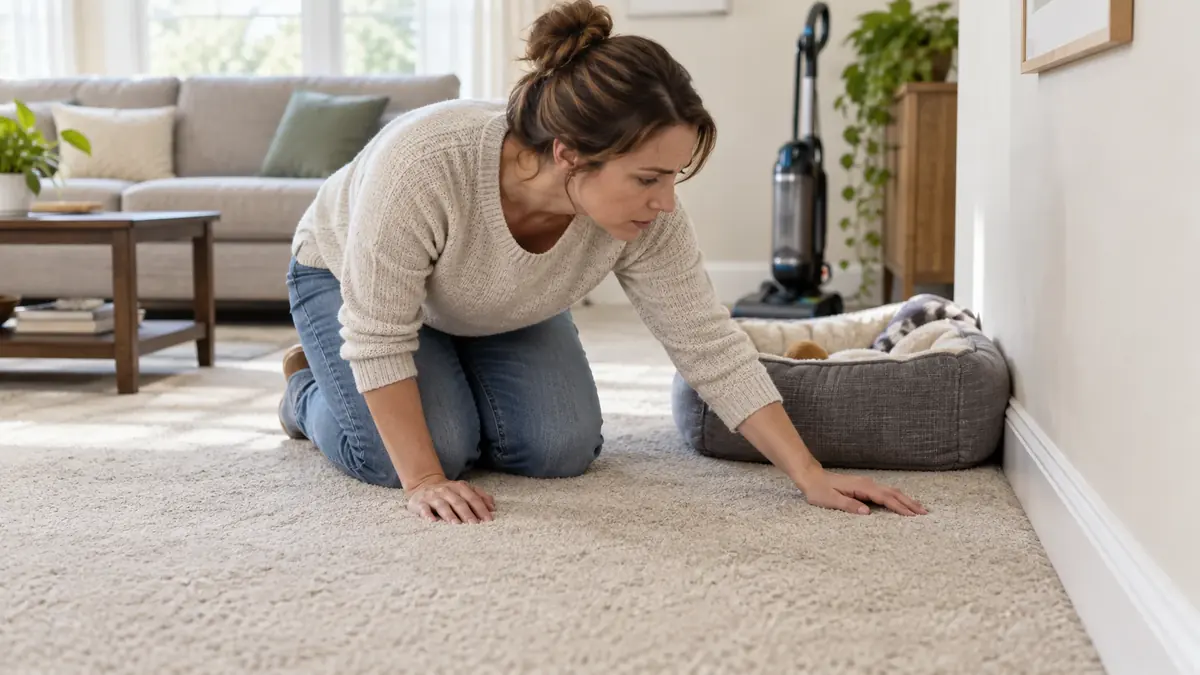
An odor that returns after vacuuming is a clue, not a diagnosis. Walk around the room and note whether the smell is everywhere or concentrated in one spot. Check the carpet, the edge near the baseboard, nearby upholstery, and any area beneath a pet bed, shoe rack, food bowl, or plant.
- Dry, mild stale odor: Often associated with tracked-in soil, food residue, or a carpet that needs routine cleaning.
- Localized pet or organic odor: A urine, vomit, or food accident needs source-specific treatment. A perfume-only spray can leave the cause behind.
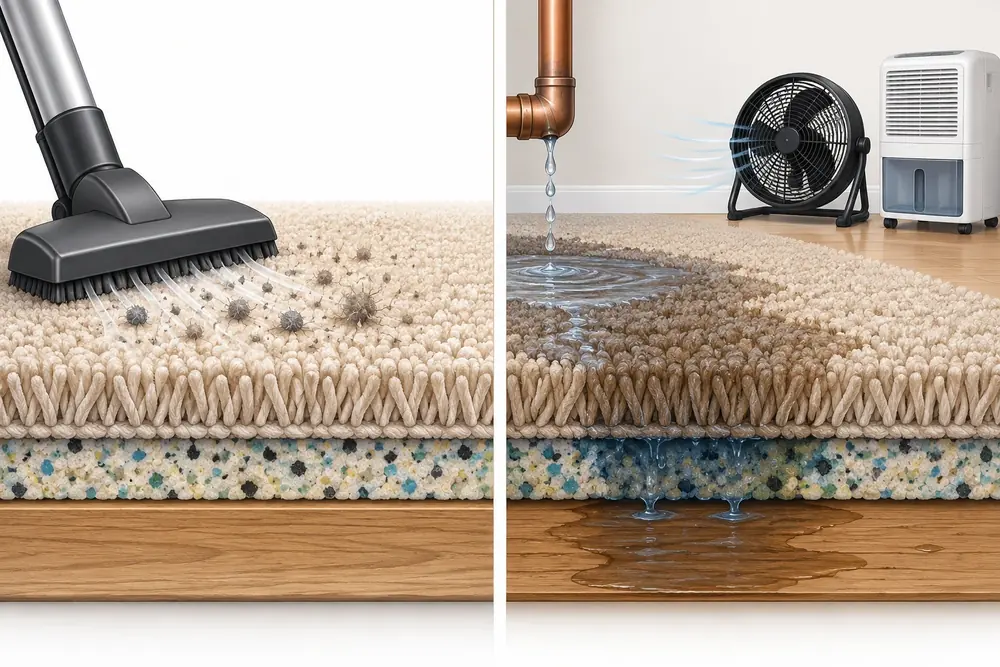
- Musty odor or dampness: Look for a recent spill, leak, condensation, wet pad, or water that has reached the subfloor.
- Smoke or unknown persistent odor: The source may also be in the pad, subfloor, curtains, upholstery, walls, or ventilation.
If you can see mold or the carpet was wet from floodwater or sewage, skip household deodorizing and read the escalation section below.
Match the method to the odor
| What you notice | Start here | Avoid or escalate when |
|---|---|---|
| Dry, mild stale odor with no spill or dampness | Vacuum; if the carpet and vacuum instructions allow it, patch-test a light baking soda treatment | Avoid unnecessary wetting, excess powder, and heavy fragrance. Investigate below or beside the carpet if the odor returns quickly or is concentrated in one area. |
| One known pet or organic spot | Blot and use a carpet-safe product labeled for that source | Avoid perfume-only products and mixed cleaners. Escalate if the odor reaches the pad or subfloor, recurs, or covers a large area. |
| Musty odor, leak, recent soaking, or visible mold | Stop the moisture source and dry the carpet, backing, and area below | Do not cover the odor or add more liquid. Escalate for mold, sewage or floodwater, or carpet that cannot be dried promptly. |
| Smoke or an unknown persistent odor | Inspect nearby soft furnishings, pad, subfloor, and ventilation | Avoid ozone and unsupported chemical recipes. Escalate if the smell persists after the source is addressed. |
How to deodorize dry carpet with a general stale odor
This route is for carpet that is dry, has no visible mold, and has no known urine, vomit, sewage, or flood contamination.
- Remove loose items and vacuum slowly. Follow the vacuum and carpet manufacturer’s instructions. Make overlapping passes in high-traffic areas and empty the vacuum as needed.
- Check both care manuals. Confirm that the carpet-care instructions allow baking soda or a dry deodorizer and that the vacuum manufacturer does not prohibit fine powders. Fiber, backing, stain-resistant treatments, and warranty requirements differ.
- Patch-test the dry method. Test a hidden area as the product directs. Stop if the color, texture, backing, or finish changes.
- Treat only dry carpet. For compatible carpet and equipment, Arm & Hammer directs users to sprinkle a light layer of baking soda over dry carpet. Do not grind the powder into the pile or use it on a damp, moldy, or contaminated area.
- Wait about 15 minutes, then vacuum thoroughly. This timing follows the manufacturer’s general carpet-refreshing directions. Make enough passes to remove the visible powder. Bissell cautions that fine baking-soda particles can be difficult to remove from carpet, so skip this method if the vacuum instructions warn against powder or if residue remains difficult to collect.
- Ventilate and reassess. Check the room again after the carpet settles. An odor that returns quickly points to a source below or beside the carpet rather than a need for more powder or fragrance.
How to handle pet urine, vomit, or another organic odor
First remove any solid material and blot liquid with clean towels. Do not rub, because friction can spread the contamination through the pile. Then select a product whose label specifically covers carpet and the type of organic odor involved. Use it exactly as labeled, including the amount, dwell time, ventilation, and drying instructions.
Do not combine an enzyme product with bleach, vinegar, ammonia, detergent, or another cleaner. If another product is already on the carpet and you do not know its ingredients, stop and ask the product manufacturer or a professional cleaner how to proceed.
If the smell returns after the surface dries, the liquid may have reached the carpet backing, pad, or subfloor. Repeatedly spraying the top can spread moisture and make the problem harder to solve. A professional may need to inspect below the carpet and use extraction or other equipment suited to the material.
What to do when the odor is musty or the carpet is wet
Treat a musty smell as a possible moisture problem until you rule that out.
- Stop the leak or other moisture source if it is safe to do so.
- Remove standing water and increase airflow. Dry the carpet, backing, pad, and subfloor—not just the visible fibers.
- Do not seal, cover, or deodorize a damp area before it is dry.
- Inspect for visible mold and consider whether the water was contaminated.
The US EPA explains that porous materials such as carpet may have to be discarded when moldy, because mold can grow in spaces that are difficult to clean completely. EPA mold-remediation guidance also says carpet and backing should be dried within 48 hours after water damage when possible (EPA Mold Course, Chapter 4). These are water-damage boundaries, not a claim that every ordinary carpet odor is mold.
Call an experienced water-damage or carpet professional when the carpet or pad is moldy, the water came from sewage or floodwater, the area is extensive, or you cannot dry it promptly. The CDC recommends precautions to reduce exposure during mold cleanup; do not disturb extensive mold while trying to deodorize it yourself.
Smoke and odors that keep returning
Smoke odor can settle into carpet fibers, padding, upholstery, curtains, and other porous materials. Inspect the whole room instead of repeatedly treating one patch. If the smell began after a fire, heavy indoor smoking, or a ventilation problem, professional assessment is more reliable than layering scented sprays.
For any odor that returns after the carpet is fully dry and the obvious source is gone, check the pad, subfloor, nearby fabrics, wall cavities, and HVAC or ventilation path. A professional cleaner can advise whether extraction, pad replacement, or another service is appropriate.
What not to use on carpet
Do not mix cleaning chemicals
Never mix bleach with ammonia, vinegar or another acid, alcohol, or an unknown residue. The CDC warns that mixing bleach or disinfectants with other cleaners can release dangerous vapors. Use one labeled product at a time and follow its rinsing and ventilation instructions.
Do not saturate carpet for general deodorizing
Excess liquid can reach the backing and pad, leave residue, cause wicking, or prolong drying. Shaw’s carpet-care instructions advise against saturation and warn that unapproved products or topical treatments can damage some carpets or affect warranty coverage (Shaw carpet-care guidance). A source-specific pet treatment may have different label directions so it can reach contamination below the surface; follow that label exactly and make sure the material can dry. Your own carpet manufacturer’s instructions take priority.
Do not assume household recipes are universal
Vinegar, lemon, baking soda, borax, essential oils, rubbing alcohol, and disinfectants appear in many online recipes. Their safety and effectiveness depend on the fiber, dye, backing, finish, concentration, residue, and drying conditions. This guide does not treat any kitchen mixture as a universal carpet deodorizer.
Do not use ozone to solve a household odor
Do not use an ozone generator in an occupied space. The US EPA says ozone can harm health, is generally ineffective at permitted concentrations, and should not be used where people or pets may be exposed. Because odor source, exposure, and equipment safety vary, ozone is outside this household DIY guide; use source removal and qualified professional advice instead.
When to call a professional or replace material
Ask a professional cleaner or water-damage specialist for help when:
- the carpet or pad has visible mold;
- the water came from sewage, a flood, or another contaminated source;
- the carpet stayed wet or cannot be dried promptly;
- the odor returns from below the surface;
- smoke odor affects a large area or multiple porous materials;
- the carpet is wool, antique, valuable, or covered by a warranty with specific care rules; or
- you do not know what chemical was already applied.
Share the odor’s history and every product used. That information helps the professional avoid an incompatible treatment. Replacement may be necessary when porous carpet or padding is moldy or contaminated; it is not an automatic recommendation for a merely stale, dry carpet.
Prevent carpet odors from returning
- Clean spills promptly and dry the area fully.
- Use entry mats and vacuum at a frequency suited to traffic and the carpet manufacturer’s advice.
- Keep pet areas, food bowls, and plant containers from creating repeated moisture or residue.
- Repair leaks and condensation before they reach the carpet or pad.
- Follow the carpet and vacuum manuals for approved products and cleaning methods.
- Reassess a recurring odor instead of repeatedly adding deodorizer.
Frequently asked questions
What is the safest way to deodorize carpet?
Start by identifying the source. For compatible, dry carpet with a mild stale odor, vacuuming followed by a short, light baking-soda treatment may be enough. Pet, smoke, moisture, mold, sewage, and recurring odors need source-specific treatment or professional assessment.
Can I sprinkle baking soda on every carpet?
No. Check both the carpet-care instructions and your vacuum manufacturer’s guidance first. Patch-test, apply only a light layer to dry carpet, and vacuum it thoroughly after about 15 minutes. Do not use powder to hide a damp or moldy odor, and stop if residue is difficult to remove.
Will vinegar remove a musty carpet smell?
Do not assume vinegar is safe or sufficient for every carpet. A musty odor can indicate moisture or mold, which requires finding and correcting the water problem. Never use vinegar on carpet that has bleach or an unknown cleaner on it.
Why does my carpet smell again after cleaning?
The odor source may remain in the backing, pad, subfloor, nearby fabrics, or ventilation system. It can also return when excess moisture or residue has not dried. Inspect below and around the carpet before applying another product.
Should I use a carpet deodorizer spray on pet urine?
Only if its label specifically permits carpet use and the relevant odor source. A fragrance spray does not replace removal of urine or other organic contamination. Follow the product label and escalate if the smell returns.
Sources
- US EPA: Mold Cleanup in Your Home
- US EPA: Mold Course, Chapter 4—Dry Quickly
- CDC: Mold Cleanup
- CDC: Cleaning and Disinfecting With Bleach
- US EPA: Ozone Generators That Are Sold as Air Cleaners
- Arm & Hammer: How to Clean Carpet With Baking Soda
- Bissell: Baking Soda Particle and Residue Caution
- Shaw: Carpet Care and Maintenance
- Mohawk: Carpet Care and Guidelines
Related guide: If the odor began with smoke, see how to get smoke smell out of a house so you can address the source beyond the carpet.