How to Remove Detergent Stains From Clothes
Detergent marks are usually residue that did not dissolve or rinse away. To remove them, check the care label, rewet the garment, rinse or rewash it with the correct detergent amount, and avoid heat until the mark is gone. Do not mix bleach, vinegar, ammonia, or other cleaners.
Last updated: September 14, 2026 — Added a separate care-label-first step for waxy fabric-softener residue.
What does the mark look like?
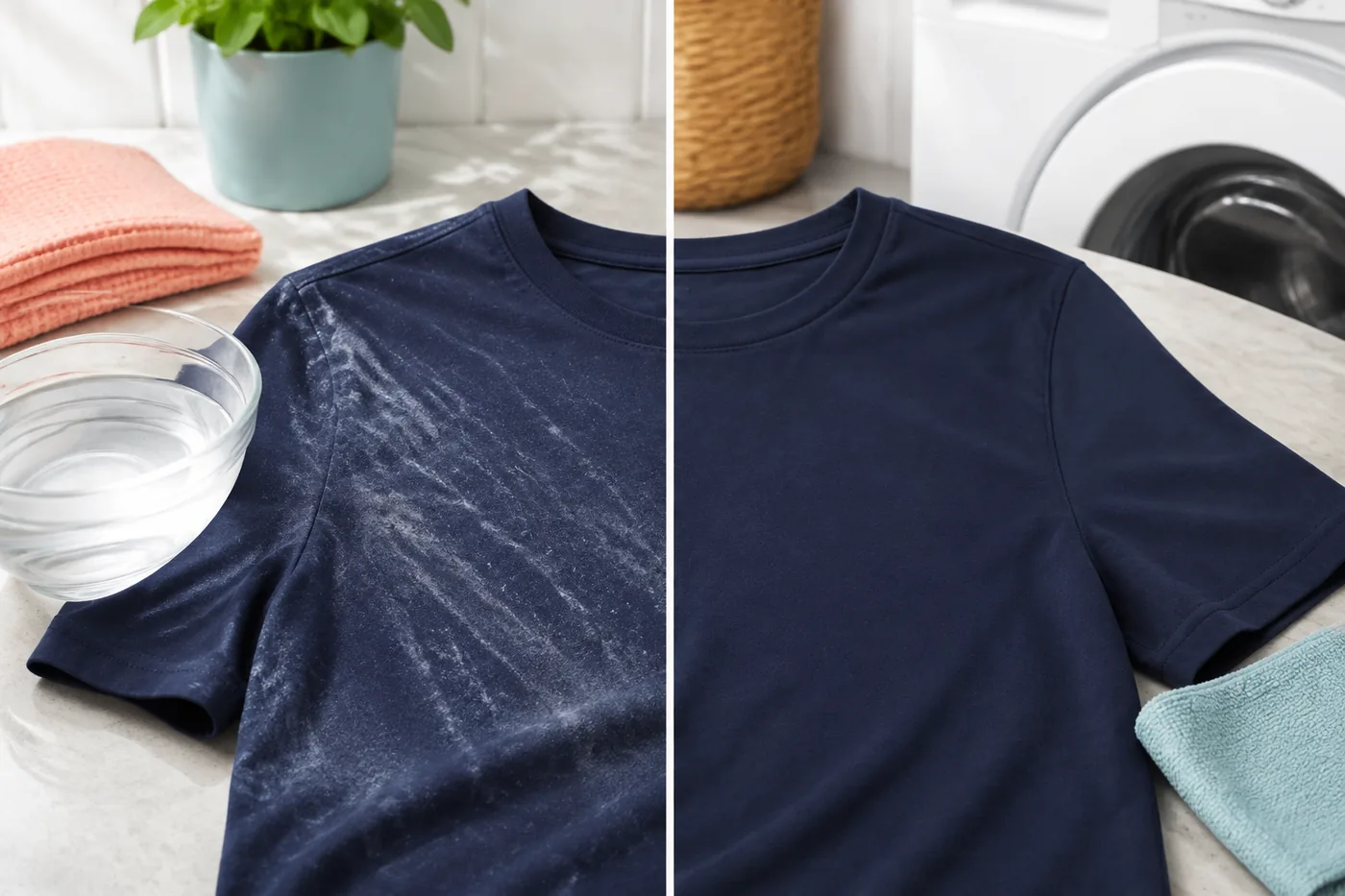
| Appearance | Likely cause | First safe check |
|---|---|---|
| White or chalky patch | Powder residue or too much detergent | Rinse the damp garment and use a smaller labeled dose |
| Blue or purple mark | Liquid or pod detergent touching dry fabric | Rewet and rinse before drying |
| Waxy or stiff area | Fabric softener or detergent buildup | Check whether it feels waxy or stiff, then use the matching safe step below |
| Mark remains after drying | Residue set into the fibers or a different stain | Check the care label and spot-test a suitable treatment |
Quick answer
Rinse before applying heat
Rewet the mark, gently work the fabric against itself or use a soft cloth, then rinse or rewash using the garment label and detergent instructions. Do not tumble-dry the item until the residue is gone.
If the mark contains food solids, oil, and red pigment, use the separate method for removing tomato sauce stains from clothes.
How to remove detergent stains
1. Read the care label
Confirm the fabric’s wash temperature, bleach restrictions, and drying method. Test any treatment on a hidden area first, especially on dark, delicate, or dyed fabric.
2. Rewet and rinse the mark
Hold the area under the care-label-approved water temperature. Gently rub the fabric against itself or use a soft cloth. Do not scrub aggressively or use a stiff brush on delicate fibers.
3. If the mark feels waxy, check for fabric softener residue
A waxy or slippery patch may be fabric softener rather than detergent residue. Follow the care label and spot-test first. If the fabric allows light rubbing, gently work a small amount of laundry bar soap into the mark with a soft cloth or soft-bristle brush, then rinse thoroughly before rewashing. Do not use this approach if the care instructions rule out rubbing, and do not add bleach, vinegar, ammonia, or another cleaner to the pretreatment.
4. Rewash without overloading
Wash the garment with room to move and the detergent amount recommended for the load. Put liquid detergent in the dispenser when the machine instructions require it; do not pour it directly onto dry clothing unless the product label says to do so.
5. Use an extra rinse when appropriate
An extra rinse can help remove residue, particularly after too much detergent was used. Follow the washer and garment instructions, and never combine cleaning products.
6. Air-check before drying
Inspect the mark while the item is damp. Repeat the label-safe rinse or rewash if residue remains. Heat can make some marks harder to remove, so do not dry the item until it looks clean.
Prevent detergent marks
Measure detergent for the load size and water conditions, use the correct HE product when required, avoid crowding the drum, and keep the dispenser clean. If many garments show residue, inspect the washer dispenser and run its approved cleaning routine.
When to get help
Use a professional cleaner for dry-clean-only garments, fragile fabrics, valuable clothing, or a mark that remains after careful label-safe treatment. A blue or white patch may also be a chemical or dye reaction rather than detergent residue.
Frequently asked questions
Can I remove detergent stains after drying?
Often you can improve them by rewetting and rinsing, but heat may make residue harder to remove. Check the label and avoid more heat until the mark is gone.
Why does my washer leave white marks?
Common causes include excess detergent, powder that did not dissolve, an overloaded drum, or inadequate rinsing. Use the recommended amount and give clothing room to move.
Can I use vinegar and bleach to remove residue?
No. Never mix bleach with vinegar, ammonia, or other cleaners because dangerous fumes can form.
Why detergent residue keeps returning
Residue can come from a dose that is too large for the load, powder used in a cold cycle, a blocked dispenser, hard water, or a drum packed too tightly for proper rinsing. Use the detergent type required by the appliance, measure for the actual load size, and clean the dispenser according to the manual. An extra rinse can help, but it does not correct an incompatible product or a washer fault.
Check before treating again
If a mark remains after rewashing, compare its color and texture with the original residue. A bleached patch, dye transfer, oil spot, or fabric finish change needs a different solution. Do not keep scrubbing or adding chemicals when the garment is valuable, delicate, or visibly damaged.
Sources
This guide follows residue and fabric-care guidance from Whirlpool, Maytag, Electrolux, and Samsung.