Washing Machine Smells Like Sewage? Find the Drain or Machine Source First
Last updated: October 23, 2026 — Focused this guide on drain timing, installation history, and the right service handoff. The gas, retained-water, chemical, and wet-electrical precautions reviewed October 21 are retained.
Quick answer: For a sewage-like smell at a washer’s drain connection, use the timing you already observed: did it begin after installation, appear while water drained, or coincide with trouble at other fixtures? Whirlpool identifies drain-hose, P-trap, and filter problems as possibilities—not a diagnosis from smell alone. Stop using a backing-up or leaking washer. Do not keep adding drum cleaner to a drain-side problem; choose the installer or plumber route below.
Stop and get help: A sudden strong or unexplained odor, smoke, burning, a leak, or someone feeling unwell is not a routine cleaning problem. If a gas appliance or gas line could be the source of a rotten-egg odor, leave without operating switches, plugs, appliances, or phones indoors; call the gas utility or 911 from a safe location. Do not run the washer or approach the drain to locate a suspected gas leak. Keep clear of wet electrical parts.
Follow PHMSA’s gas-leak guidance for a suspected gas source: leave first, avoid ignition sources, and call from a safe location. Odor location or strength cannot establish that the air is safe.
Use the timing and installation history
Apply the emergency rules first. If it is safe to make an ordinary observation, leave the machine in place, off and already empty, and compare only from a normal standing position in a dry area. Do not disconnect a hose, reach behind the washer, put your face over a standpipe, or run a locating cycle. If water remains in the drum or the door is locked, skip this comparison and use the retained-water route below.
| Pattern already observed | Useful next step | What it does not prove |
|---|---|---|
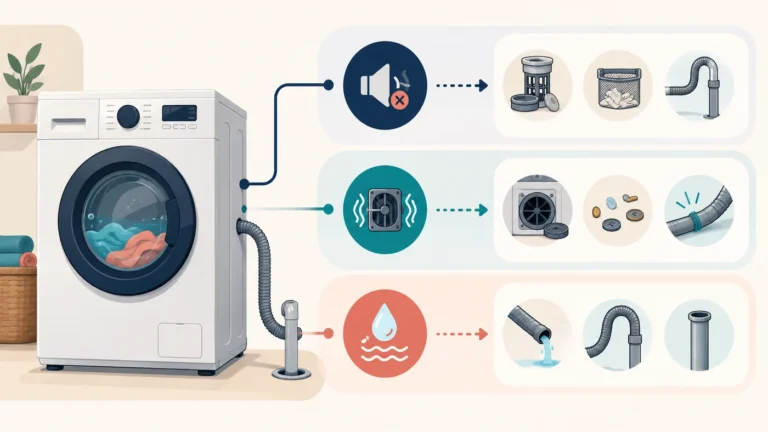
| Odor began after a new washer installation or a moved hose | Ask the installer to compare the visible routing, support, and connection with the exact installation manual | Timing alone does not prove the hose is the only problem |
| Odor appeared as the washer pumped out, with slow drainage, gurgling, or backup | Stop repeated cycles and arrange a drain assessment; keep the washer off if wastewater backs up or leaks | A drum cleaner cannot establish that the household drain is clear |
| A nearby sink, floor drain, or bathroom also gurgles, drains slowly, or backs up | Report the affected fixtures to a plumber; stop wastewater-producing appliance use when a shared backup is suspected | The observation does not identify an unseen trap, vent, or blockage |
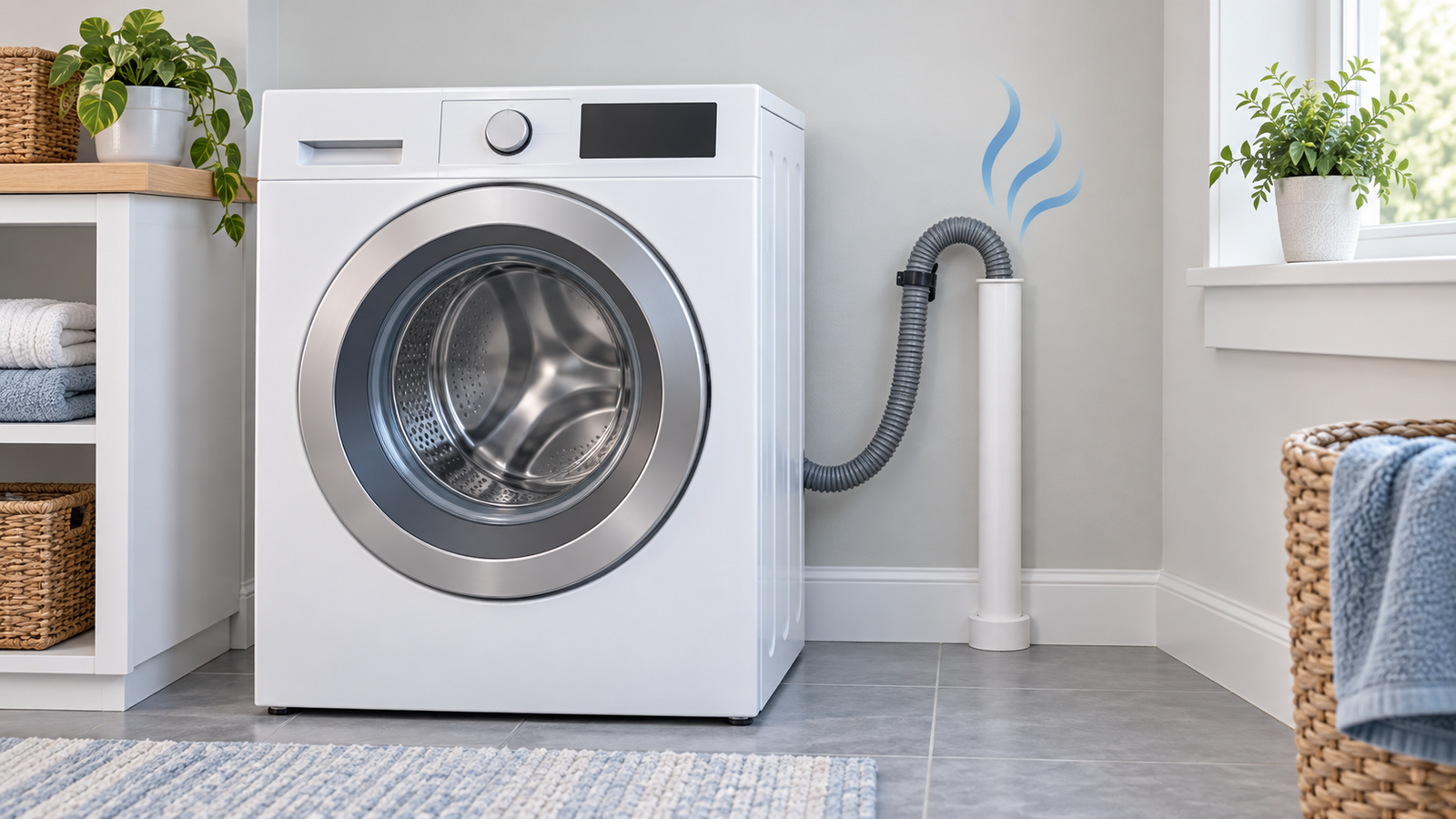
| Persistent odor is concentrated at the standpipe or rear drain while the washer is idle | Have a plumber assess the drain connection, trap, and venting; do not dismantle them to identify the smell | An idle washer or a weaker smell does not establish safe air |
| Only the already empty drum, gasket, or drawer smells, without a consistent drain-side pattern | Use the washer-versus-water guide below and the model-approved maintenance route | An unpleasant odor is not proof of sewer gas or of a failed washer part |

Record drain-side clues without restarting the washer
- Do not reproduce a fault. Use the timing and symptoms from the last ordinary cycle. For a leak, smoke, burning odor, or wastewater backup, stop using the machine and get appropriate urgent help. Stop a running cycle only if safe from a dry position; do not reach behind or under a wet appliance, cross water to reach a plug, or touch a wet electrical connection.
- Note what changed. Record the installation or move date, when the odor appeared, and any previously observed slow drainage, gurgling, or backup. Include other affected fixtures. A smell returning after cleaning does not by itself identify a plumbing fault.
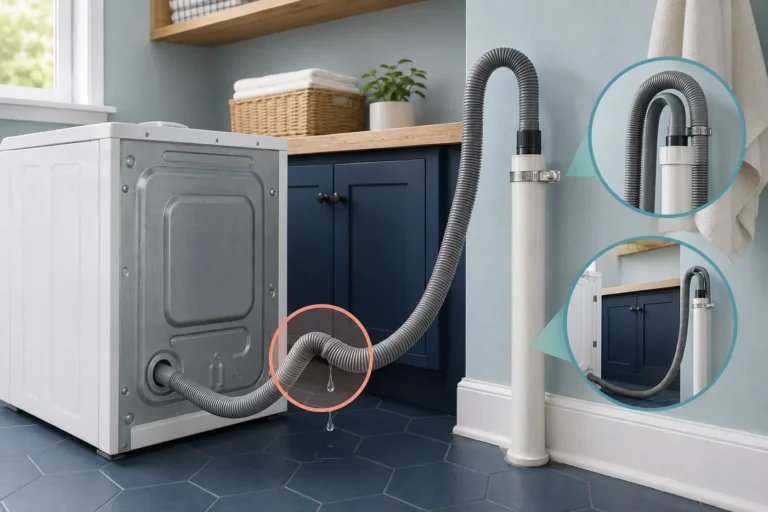
- Record only what is visible. From a dry, accessible position, note an obvious exterior kink, crush point, or slipped support. Do not pull the washer out or disconnect plumbing to collect evidence. The drain-hose guide explains the limits of these external checks.
- Keep retained water separate. Do not force a locked door, start a cycle to empty the drum for an odor check, or open a filter without the exact model’s cooling, isolation, and draining instructions. Use the washer-not-draining guide for that symptom.
Choose appliance support, an installer, or a plumber
After installation or a moved hose: start with the installer
Ask the installer to check the exact model’s hose routing, support, insertion, and drain connection. Maytag’s installation guidance describes siphoning when a hose extends too far and use of the supplied U-shaped form; those directions do not establish a universal depth for other washers. If other fixtures drain poorly or back up, involve a plumber rather than assuming a hose adjustment will solve everything.
Do not force the hose deeper, seal it airtight, alter the standpipe, or attempt an unseen trap repair. Hose height, insertion, and support depend on the washer and plumbing. Keep the washer out of use when wastewater backs up or leaks, even if the installation is new.
During draining, at an idle standpipe, or across fixtures: use the plumbing route
For a persistent drain-side odor, slow drainage, gurgling, or backup, a qualified plumber can assess the standpipe, trap, drain line, and venting. Report the timing and all affected fixtures instead of naming a failed part. Do not run another cycle to prove the pattern. If wastewater is backing up or spilling, stop the washer and other wastewater-producing appliance use while the shared drain is assessed.
If the strongest odor and symptoms are actually in the bathroom, the bathroom sewage-odor guide separates that fixture route. A normal-looking standpipe, a completed cycle, or a fading smell cannot confirm that a hidden drain fault or air hazard is resolved.
Only the machine or the supplied water smells: use the other guide
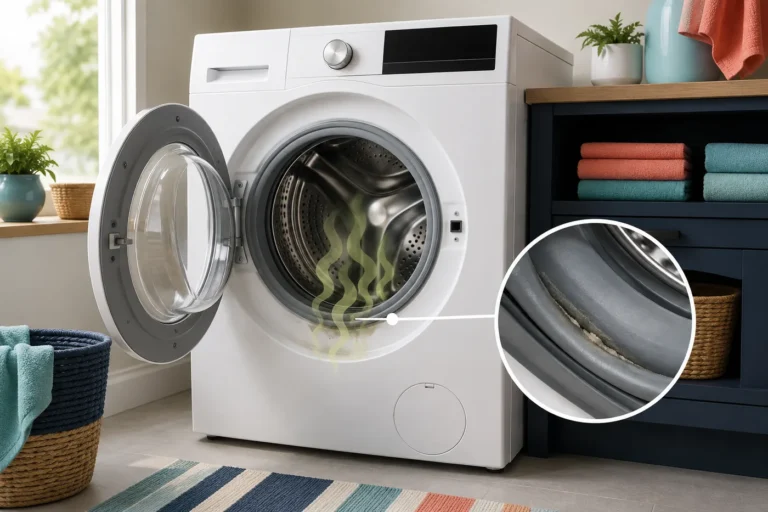
LG’s musty-odor guidance discusses retained moisture, laundry, and detergent residue. If the problem is confined to the empty drum, gasket, or drawer, use the washer-versus-water source checks and approved washer maintenance rather than repeating that cleaning procedure here. That guide also covers hot/cold water that smells away from a drain. Smell descriptions such as “eggs” and “sewage” overlap; the name alone does not choose a repair.
Use only the cleaner, cycle, and amount the exact washer manual permits. If odor remains inside the machine after approved maintenance, contact manufacturer support or an appliance technician; do not open cabinet panels or keep trying different chemicals. Report any accompanying standpipe or household-drain symptoms so plumbing can be assessed too.
When only clothing smells after use or storage and the washer/water checks do not reproduce it, use the musty-clothes guide for that fabric-care problem. If different loads smell as soon as a cycle ends, return to the washer assessment.
What not to do
- Do not mix bleach with vinegar, ammonia, alcohol, or an unknown cleaner residue.
- Do not keep running a washer through a slow or backing-up drain.
- Do not use tape, a rag, or foam to seal a drain hose tightly into a pipe.
- Do not force a drain hose farther into a standpipe or shorten it without the model-specific instructions.
- Do not move a washer alone if it could pull on water lines, the drain hose, or the power cord.
Before returning to normal use
Complete the installer’s, plumber’s, or appliance maker’s instructions for the identified problem. Do not resume normal cycles while a known leak or backup remains. Maintain the hose routing and support specified for the model, and have recurring drain symptoms assessed instead of masking them with fragrance. For machine-only maintenance, use the separate guide above: any door or drawer left open for drying must be permitted by the maker and kept inaccessible to children and pets.
For a service call, keep the model number, installation or move date, earlier odor timing, affected fixtures, and cleaning products already used. A photo of the visible hose setup can help only if it can be taken from a dry, accessible position without moving the washer. Do not restart a faulty machine, move it, or approach a suspected gas leak to complete the record.
If no fill, retained water, no spin, or a leak accompanies the odor, apply the stop rules first, then use the washing machine troubleshooting guide to identify the earliest failed cycle stage.