How to Get Smoke Smell Out of a House: Start With the Source
Quick answer
The right way to get smoke smell out of a house depends on where the smoke came from. For a contained cooking mishap, first confirm there is no active fire, remove the cooled source, and ventilate only when the outdoor air is clear. Then wash exposed textiles and clean compatible hard surfaces. If wildfire smoke is still outside, keep windows closed and filter the indoor air instead. Long-term tobacco residue, visible soot, or smoke from a house fire usually needs a broader cleanup and may require professional restoration.
Stop before cleaning
If you see active smoke or heat, hear an alarm, suspect fire, gas, or electrical damage, or anyone has trouble breathing or feels unwell, leave the area and call 911. Do not re-enter a fire-damaged home merely to work on the odor; the American Red Cross says to stay out until local fire authorities say it is safe.
Do not use a household ozone generator. The US EPA identifies ozone as a lung irritant and says the concentrations needed to reduce odors can exceed levels generally considered safe for people.
CHOOSE THE SAFE FIRST ROUTE
What is true right now?
Choose the closest situation. This tool does not certify the air as safe or replace fire, medical, or restoration advice.
Start with the source and current conditions. Choose a route above for the safest next decision.
Start by identifying the smoke source
Opening every window is useful after a burnt meal when the air outside is clean. It is the wrong first move when wildfire smoke is entering from outdoors. A cigarette odor that has built up over months is also different from a few minutes of cooking smoke: it can remain on walls, ceilings, fabrics, flooring, and filters after the room has aired out.
| What happened | Safest first move | What comes next |
|---|---|---|
| Burnt food or a brief cooking mishap; no active fire | Turn off the heat source if it is safe, wait for the pan or appliance to cool, and move the burnt material outside | Ventilate if outdoor air is clear, then clean nearby textiles and compatible surfaces |
| Cigarettes or repeated indoor smoking | Stop smoking indoors; do not rely on fans, fragrance, or an air cleaner to make secondhand smoke safe | Wash compatible surfaces and textiles, check the HVAC filter, and assess whether residue is too widespread for DIY cleaning |
| Wildfire smoke from outdoors | Keep windows and doors closed while outside air remains smoky; use recirculation and suitable filtration | Clean settled particles and replace dirty filters after outdoor conditions improve |
| House fire, visible soot, ash, or an uncertain source | Wait for official clearance and avoid disturbing residue | Follow fire-recovery guidance and use a qualified restoration professional when damage or contamination is extensive |
For a contained cooking-smoke incident
Use this route only when the fire risk has ended, there is no damaged wiring or appliance, and the odor came from a small cooking mishap rather than a structure fire.
- Stop the source safely. Turn off the burner or appliance only if you can do so without approaching flames, damaged wiring, or heavy smoke. Let cookware cool before moving it.
- Remove the burnt material. Once it is safe and cool, seal or take the food and disposable waste outside. Leaving the source in a kitchen trash can lets the odor continue spreading.
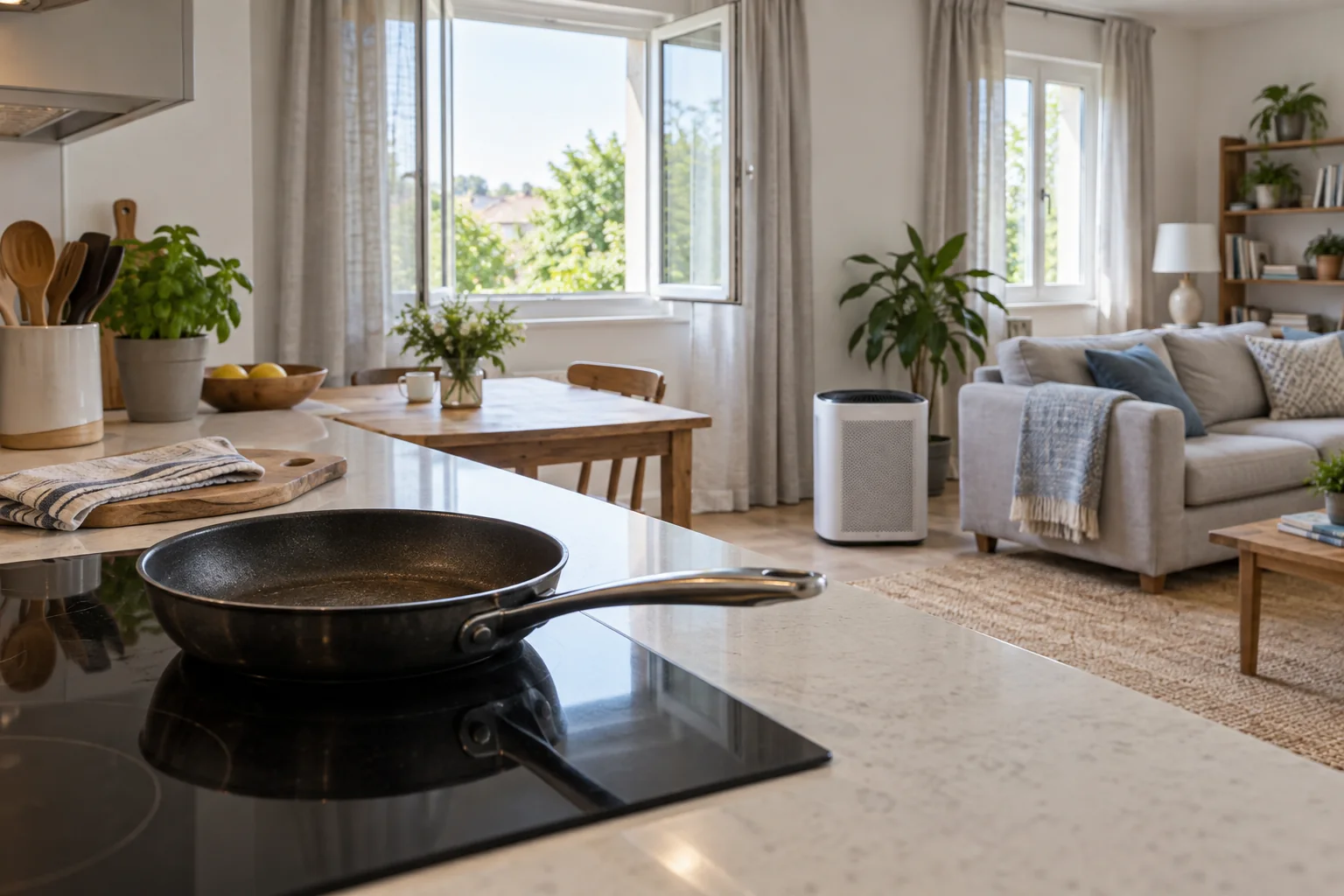
- Check the air outside. If outdoor air is clear, open windows on more than one side of the room and use a range hood that vents outdoors, following its instructions. If wildfire smoke or another outdoor pollution event is present, keep the house closed and use the filtration route below.
- Wash the nearest removable textiles. Curtains, washable cushion covers, table linens, and clothing can hold smoke odor. Follow each care label, use ordinary laundry detergent, and dry items completely. Do not combine laundry additives or guess at a treatment for delicate fabric.
- Clean residue, not just the smell. Wipe washable counters, cabinet fronts, walls, and floors with a mild detergent or a cleaner specifically allowed for that finish. Test a hidden spot first. Stop if paint softens, color transfers, or the surface changes.
- Check the exhaust and HVAC filters. Clean or replace a range-hood filter only as its manufacturer directs. If smoke circulated through a forced-air system, check the HVAC filter and replace it when dirty or odorous, using a type the system can safely accept.
Reassess after the room and textiles are dry. If the smell returns when the HVAC fan starts, seems strongest inside a cabinet or appliance, or remains across several rooms, the source or residue has not been fully addressed.
For cigarette smoke or long-term indoor smoking
The CDC says opening windows, running fans, using air purifiers, or spraying air freshener does not eliminate secondhand-smoke exposure. The protective step is a smoke-free home. Once smoking has stopped indoors, odor cleanup can address residue, but it should not be presented as making continued indoor smoking safe.
Work from removable items toward fixed surfaces:
- Launder washable curtains, covers, bedding, and clothing according to their care labels.
- Clean hard, washable surfaces with a mild detergent or a product approved for that finish. Test painted, stained, sealed, or delicate surfaces first.
- Check the furnace or HVAC filter. Replace it according to the equipment and filter instructions if it is dirty or smells smoky.
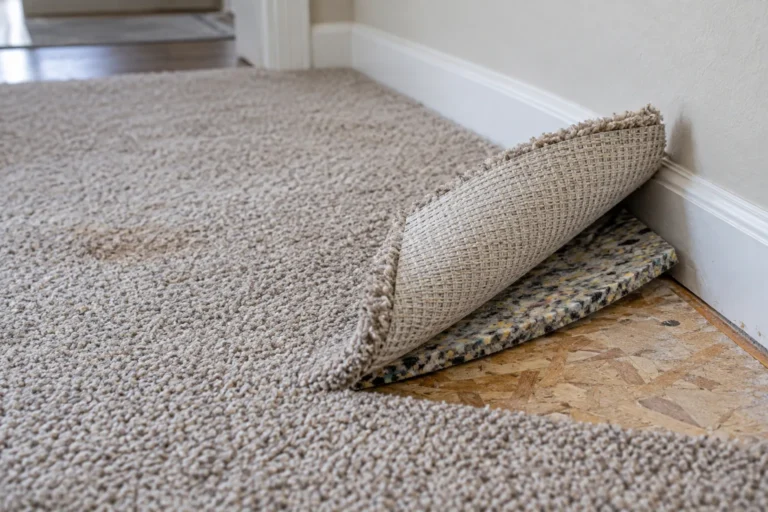
- Inspect carpet, upholstery, and other porous materials. The existing carpet-deodorizing guide can help with an ordinary dry odor, but visible tar, soot, or widespread smoke residue needs a different level of cleanup.
Do not keep adding fragrance when a yellow or brown film, tacky residue, or odor remains after cleaning. Long-term indoor smoking can affect paint, drywall, flooring, cabinets, and ventilation paths. A restoration or indoor-environment professional can assess whether repeated cleaning, sealing after proper preparation, or material replacement is appropriate.
For wildfire smoke entering from outdoors
During an active wildfire-smoke event, the goal is to reduce what enters the home—not to pull more outdoor air inside. AirNow recommends closing windows and doors, using an air conditioner or central system in recirculation mode when appropriate, and creating a cleaner-air room if needed.
For filtration, the EPA recommends checking system compatibility before moving to a higher-efficiency HVAC filter. A MERV 13 or higher filter may be useful when the system can safely handle it. For a portable air cleaner, EPA advises choosing a smoke clean-air delivery rate, or CADR, that is at least two-thirds of the room’s area in square feet. Use a mechanical unit that produces little or no ozone, place it where people spend time, keep airflow around it clear, and check the filter often.
When outdoor air quality improves, air out the home if local guidance says conditions are suitable. For settled ash or particles, AirNow advises minimizing dust, using damp cloths or mops, and using a HEPA-type vacuum rather than stirring material into the air. Replace dirty HVAC or portable-air-cleaner filters as needed. Children and pets should not be involved in ash cleanup.
After a house fire or when soot is visible
Smoke odor after a structure fire is not an ordinary deodorizing project. Ash and debris may contain harmful material, and the building may also have structural, electrical, water, or chemical hazards. Wait until authorities allow re-entry and follow the instructions supplied for the property.
AirNow’s post-fire guidance recommends protective clothing and a tight-fitting NIOSH-approved N95 respirator for ash cleanup; a cloth mask does not provide the same protection. It also advises avoiding actions that throw ash back into the air. Wet cleaning, a HEPA-type vacuum, and mild detergent may be part of an approved cleanup, but the safe method depends on what burned, the amount of residue, and the material underneath it.
Use professional restoration help when soot is widespread, porous material is heavily affected, ducts contain substantial debris, the building was exposed to firefighting water, or you cannot identify what burned. Do not paint or caulk over a damp or contaminated surface to trap the smell.
Match the cleanup to the surface
| Surface or area | Reasonable first step | Stop or escalate when |
|---|---|---|
| Washable curtains, covers, bedding, and clothing | Follow the care label; wash with detergent and dry completely | Soot transfers to your hands, the item is delicate or non-washable, or odor persists after a correct wash |
| Painted walls, ceilings, cabinets, and floors | Spot-test a mild detergent or finish-approved cleaner | Paint softens, color transfers, residue is heavy, or the surface is fire- or water-damaged |
| Carpet and upholstery | Inspect for dry odor versus visible residue; use material-specific care guidance | There is visible soot, widespread tobacco residue, delicate fabric, wet padding, or recurring odor |
| HVAC filter | Check and replace according to the system and filter instructions | The system may not accept a higher-efficiency filter, or odor returns whenever the system runs |
| Indoor air | Ventilate only when outdoor air is clear; otherwise close the home and use suitable mechanical filtration | Outdoor smoke remains high, the home cannot stay safely cool, or anyone develops symptoms |
Avoid a universal vinegar, bleach, ammonia, or steam recipe. Those products can damage some finishes, and mixing cleaners can release dangerous vapors. Use one surface-compatible product at a time and follow its label. Bowls of vinegar, baking soda, fragrance, or charcoal do not remove smoke residue embedded in walls, flooring, or upholstery.
Why an ozone generator is not a household fix
Some smoke-removal advice recommends running an ozone machine while people and pets are away. That is outside this DIY guide. The EPA says ozone is a lung irritant, ion generators may not remove gases or odors, and the ozone levels required for odor control can exceed concentrations generally considered safe for humans.
Choose source removal, compatible cleaning, and mechanical particle filtration instead. If a restoration company proposes a specialized treatment for an unoccupied property, ask what process it uses, who controls the exposure, what material it treats, and how the property is verified safe before re-entry.
How to know whether more help is needed
The absence of odor does not prove that the air or surfaces are free of pollutants. Use the history of the event and visible conditions as well as smell.
Call a qualified professional when:
- smoke came from a house fire or an unknown material;
- soot, ash, oily film, or discoloration covers more than a small, easily cleaned area;
- odor returns when the HVAC system runs;
- carpet padding, drywall, insulation, cabinets, or other porous material is affected;
- firefighting water or another source left materials wet;
- cleaning changes a finish or keeps transferring residue; or
- anyone has breathing symptoms, chest pain, severe irritation, or feels unwell.
For a small cooking incident, the practical endpoint is a removed source, clear air, clean and dry nearby textiles, and no returning odor. Long-term tobacco residue or fire damage may require several stages and should not be promised away with one household remedy.
Prevent smoke odor from returning
- Keep the home smoke-free. Smoking in another room does not prevent smoke from traveling through the building.
- Use the cooking exhaust system as its manufacturer directs and clean its filter on the recommended schedule.
- Keep HVAC and portable-air-cleaner filters available in the correct size and type for the equipment.
- During wildfire season, follow AirNow or local air-quality guidance before deciding whether to open windows.
- Maintain smoke and carbon-monoxide alarms according to their manufacturer instructions and local requirements.
Frequently asked questions
Should I open the windows to remove smoke smell?
Open windows only when the smoke source is inside, the incident is over, and outdoor air is clear. Keep them closed while wildfire smoke or another outdoor pollution source is affecting the area.
Will an air purifier remove smoke smell from a house?
A correctly sized mechanical air cleaner can reduce airborne smoke particles, but it does not clean residue from walls, fabrics, floors, or cabinets. Filtration is one part of the response; source removal and surface-specific cleaning still matter.
Can baking soda or vinegar remove smoke odor?
Neither is a universal whole-house solution. They may be compatible with some individual materials, but they do not replace source removal, textile washing, surface cleaning, or filtration. Never mix vinegar with bleach or use either product on a surface unless its care instructions allow it.
How long does smoke smell last in a house?
There is no reliable single timeline. A minor cooking odor may improve after the source is removed and the nearby air and surfaces are cleaned. Tobacco residue and fire smoke can remain in porous materials or ventilation paths and may return until those areas are treated.
Can I paint over cigarette-smoke odor?
Do not paint over a dirty, damp, or contaminated surface. Clean and dry the material first and follow the coating manufacturer’s preparation instructions. Widespread staining or odor may need a restoration or painting professional to assess the substrate before a coating is chosen.