How to Get Vomit Smell Out of Carpet: Clean the Spot, Then Check the Pad
Quick answer: To get vomit smell out of carpet, remove the soiling rather than cover it with fragrance. Keep people and pets away, wear appropriate protection, lift solids, and blot liquid with white absorbent material. For a small spot on compatible carpet, use one approved cleaning method and dry it fully. Odor that remains or returns needs a residue-and-depth assessment—not more soaking. Removing the smell does not disinfect the carpet.
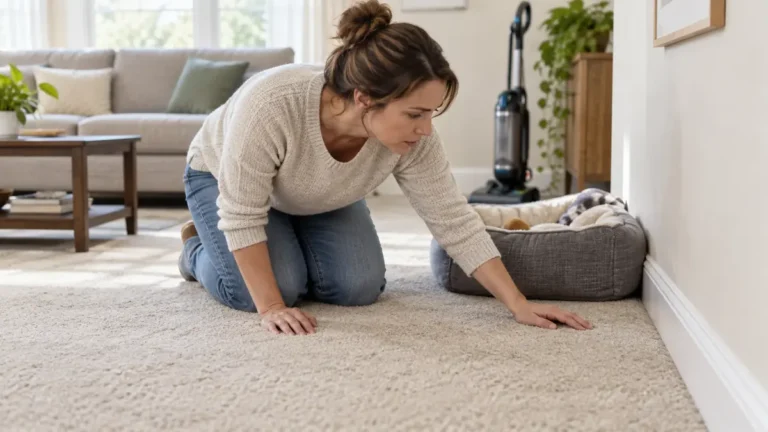
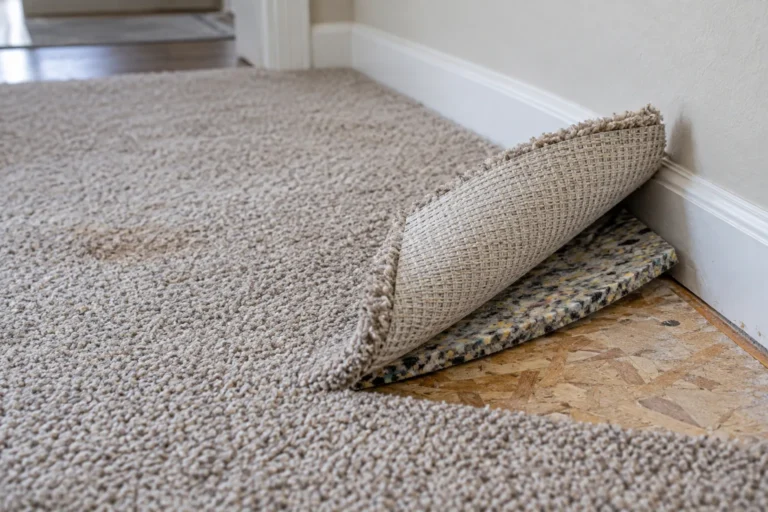
This guide covers a small, localized incident on installed carpet. A large or repeated spill, suspected stomach-bug contamination, blood, a strong chemical odor, or a delicate or unknown rug needs a suitable professional route. “Check the pad” means having deeper contamination assessed when the clues warrant it; do not pull up installed carpet to investigate.
Check illness, material and previous cleaners first
Treat vomit as potentially contaminated even when you do not know why a person or pet was sick. The IICRC carpet tip sheet distinguishes this from ordinary soil and notes that liquid can reach padding. A small-looking mark does not establish how far it traveled.
Do not vacuum vomit, even after it dries. University of Minnesota Extension’s norovirus cleanup guidance warns that vacuuming before cleanup can disperse pathogens. Do not brush dried debris, sniff close to the carpet, or aim a fan across uncleaned contamination. If you cannot contain the mess without splashing or exposing yourself, keep away and arrange suitable help.
For suspected infectious vomiting, read the CDC’s cleanup precautions before handling the area. Use appropriate protection; Minnesota Extension lists disposable gloves, an apron and a mask for norovirus cleanup. Bag contaminated waste, avoid shaking used fabrics, and wash hands with soap and water for at least 20 seconds after cleanup. Hand sanitizer is not a substitute.
A household odor treatment is not a complete illness-cleanup protocol. Clean and disinfect affected surrounding hard surfaces with a product labeled for the surface and norovirus, following its directions. Do not transfer a hard-surface bleach recipe to carpet. CDC’s healthcare guidance explains that soft furnishings are difficult to clean and disinfect completely; that limitation matters at home too. Ask a cleaner equipped for contamination about a carpet-compatible method, especially after heavy or repeated illness-related soiling.
Check the fiber, backing, warranty and prior treatments before adding moisture. Wool, silk, viscose, sisal, seagrass, hand-dyed or valuable rugs need their own care instructions or a rug specialist. If bleach, disinfectant or an unknown cleaner is already present, do not add water, another cleaner or a household mixture to experiment. Tell the professional exactly what was applied.
Choose a route from what you already know
| Current situation | What it tells you | Next useful action |
|---|---|---|
| Small, fresh spill on known compatible carpet | Some soiling may still be removable from the pile | Use protected removal and controlled blotting below; keep the illness precautions in place. |
| Dried material is still attached | Residue remains; dryness does not establish hygiene | Do not vacuum or grind it into powder. Use the maker-approved spot route or seek help if it will not lift gently. |
| Large spill, repeated incident, or liquid seen at a seam or edge | Backing or padding may be involved | Stop adding liquid. Arrange assessment of the carpet layers and contamination. |
| Unknown fiber, unknown previous chemical, or suspected infectious outbreak | Generic spot cleaning cannot resolve compatibility or hygiene | Keep the area out of use and contact the maker and an appropriately equipped cleaner. |
Clean one small spot without spreading it
Use this sequence only when the material and existing products are known, the incident is contained, and carpet-care instructions permit spot cleaning. It removes accessible soiling; it does not certify the area safe after infectious vomiting. Have disposable absorbent material, a waste bag, fresh white cloths, gloves and the specified carpet product ready.
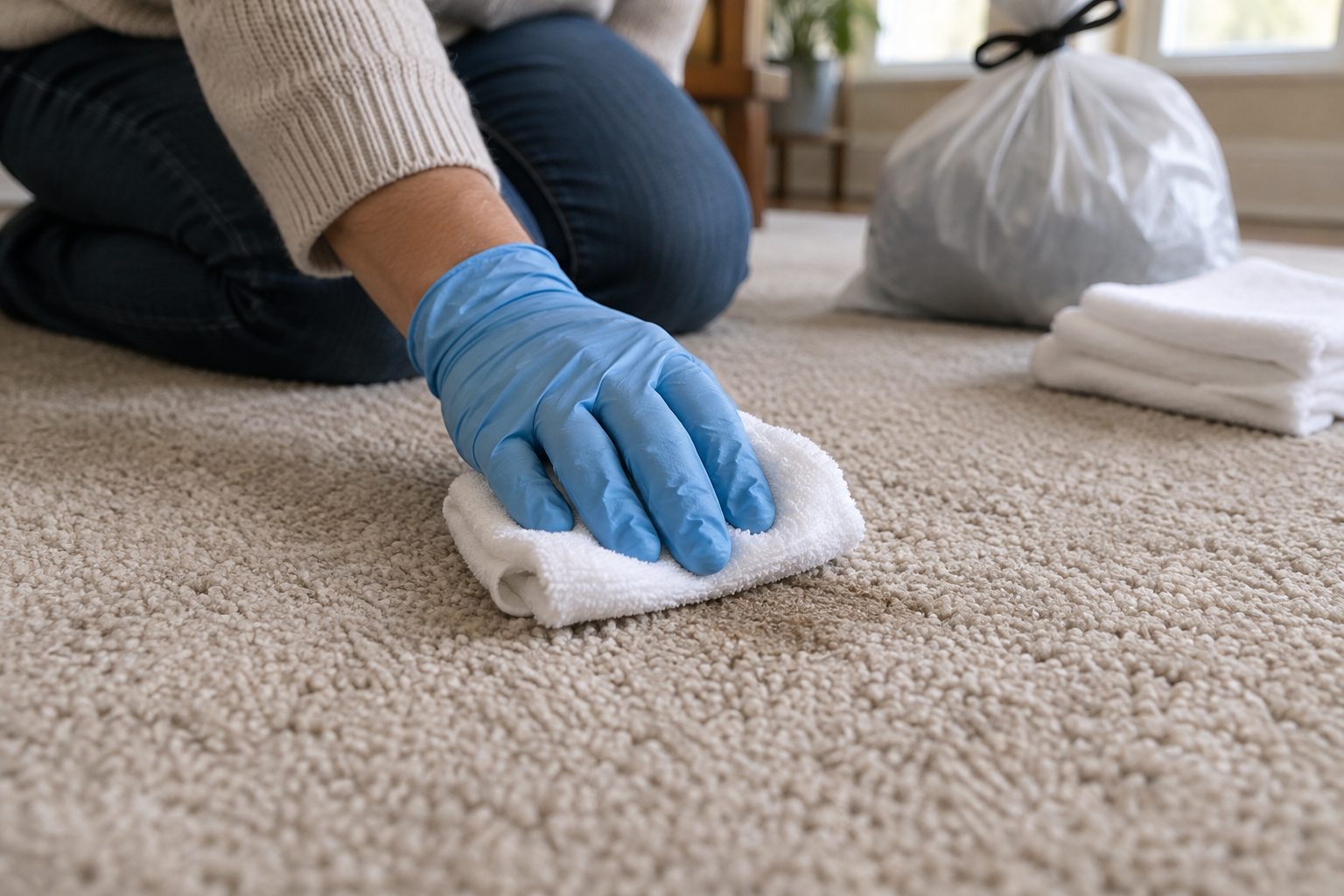
- Lift, do not grind. Carefully collect solids with paper towels or a disposable dull edge. Place them directly in a bag. Avoid squeezing, scattering or pushing material into the pile. Keep contaminated supplies separate from the clean ones.
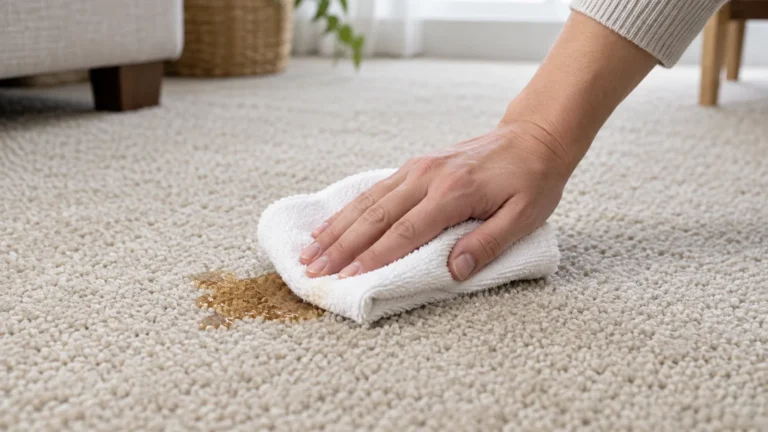
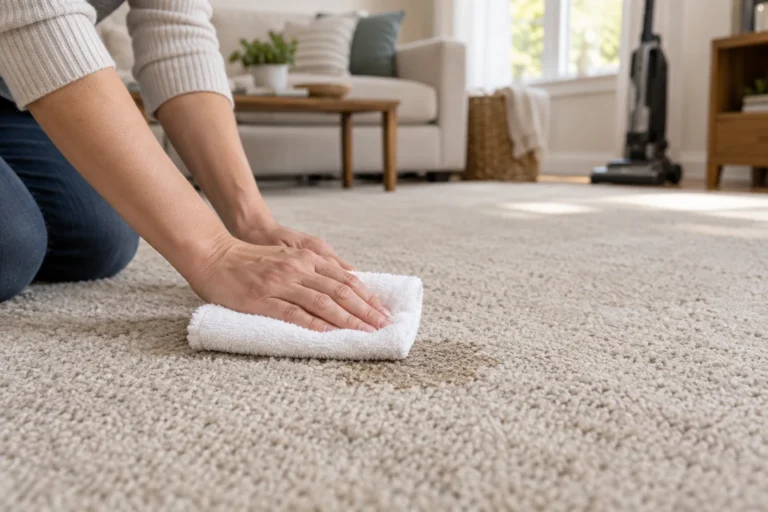
- Blot the liquid. Hold folded white absorbent material against the spot, lift it, and change to a fresh section as material transfers. Work inward from the boundary rather than wiping across it. Stop if the affected area is spreading.
- Pretest the permitted cleaner. Follow the carpet and product instructions on a spare piece or inconspicuous area. Include the instructed residue-removal and drying stages before comparing color and texture. Dye transfer, fading, fuzzing or stiffness means stop. A successful test cannot guarantee compatibility with hidden backing or adhesive.
- Treat the accessible residue. Use the product’s specified amount, application method and dwell time. For a label-approved cloth method, apply a small amount to a white cloth and blot gently. Do not improvise a longer soak or add another product when transfer slows. If there is no progress, seek advice rather than repeatedly wetting the spot.
- Remove cleaner as directed. If a clear-water rinse is permitted, use a fresh lightly dampened cloth and blot the moisture back out with dry material. Do not pour water through the carpet to reach the pad. If the product requires extraction you cannot provide, stop and use a suitable service instead.
- Finish cleanup and let the area dry. Bag waste, handle used fabrics carefully, and wash hands. Keep traffic off the area. After contamination cleanup, use only a drying setup allowed by the carpet and product instructions; do not blow air over remaining soiling. Do not cover damp carpet or use a hair dryer or steam mop to force drying.
The Carpet and Rug Institute’s spot-cleaning guidance supports pretesting, controlled product use, blotting and residue removal. These are carpet-care steps, not a substitute for the illness-related precautions above. If you lack an approved cleaner, contain the mess and remove accessible soiling safely; check the care route before adding a treatment.
Recheck after drying without testing by smell up close
There is no universal drying time: the amount of liquid, carpet construction and room conditions differ. Judge the visible result only after the permitted cleaning and drying process is complete. Notice odor at ordinary room distance; do not put your face against the spot. A dry surface cannot establish that the backing and pad are dry or uncontaminated.
| Result after the permitted clean | What it may mean | What to do next |
|---|---|---|
| No visible residue or noticeable odor | The accessible spot may have improved | Do not add more treatment. Keep any illness-cleanup requirements separate; odor loss is not proof of disinfection. |
| Pile looks coated or feels stiff after drying | Product or original residue may remain | Check the cleaner’s removal instructions. If they require more wetting than you can recover safely, use a professional. |
| Odor or a ring returns, or dampness persists | Residue, wicking or deeper contamination may remain | Stop surface retreatment. Arrange assessment; appearance alone cannot identify a wet pad. |
| Dye transfers, color fades, or pile changes | The material may be damaged or incompatible with treatment | Stop using that method. Tell the maker or rug/carpet specialist what was used. |
For the service handoff, record the spill’s time and approximate area, whether illness was involved, whether liquid reached a seam, the carpet details, products used, and what changed as it dried. Do not lift the carpet, probe the backing or deliberately rewet it to locate an odor. The cleaner can decide whether subsurface treatment, pad replacement or another response is appropriate.
If the spot has dried or several remedies were already tried
Do not scrape hard, grind the residue into dust or vacuum it. Lift only material that comes away safely with protected handling. For attached residue on a compatible carpet, follow the maker-approved spot method; stop if removal needs aggressive scraping, broad soaking or more moisture than you can recover.
An enzyme or oxygen-based cleaner is not automatically suitable for every fiber or every previous treatment. Choose it only when both the carpet instructions and current product label cover the situation. Do not combine products or put vinegar, peroxide, detergent or disinfectant over unknown residue. Tell a professional if several products have already been used.
Baking soda or fragrance cannot establish that the source is removed, the pad is clean or the carpet is disinfected. This guide does not prescribe a powder-and-vacuum route for vomit. Likewise, a household machine advertised as “steam” does not establish a validated disinfection process at the carpet surface. Material compatibility, equipment and the required process must all be appropriate.
Use another guide only when the problem has changed
- If there is no known spill and the issue is a stale dry-carpet odor, use the general carpet-odor guide.
- If the new problem is mustiness, persistent dampness or possible mold, stop ordinary spot cleaning and use the carpet mold and replacement guide. Odor alone does not diagnose mold.
- For a different identified spill or fiber question, the carpet stain decision guide routes you to the relevant treatment.
- For ordinary non-contaminated maintenance rather than this spill, see what hand cleaning can and cannot reach.
Sources
- IICRC Consumer Floor and Furnishings Care Information — vomit and subsurface limits
- Carpet and Rug Institute — cleaning, pretesting and spot removal
- CDC — norovirus prevention and cleanup precautions
- CDC — healthcare recommendations for soft furnishings, used here for their cleaning limitations
- University of Minnesota Extension — norovirus cleanup and the vacuuming warning
Source review: October 23, 2026.