Dishwasher Leaking From the Bottom? Find the Source Safely
Quick answer
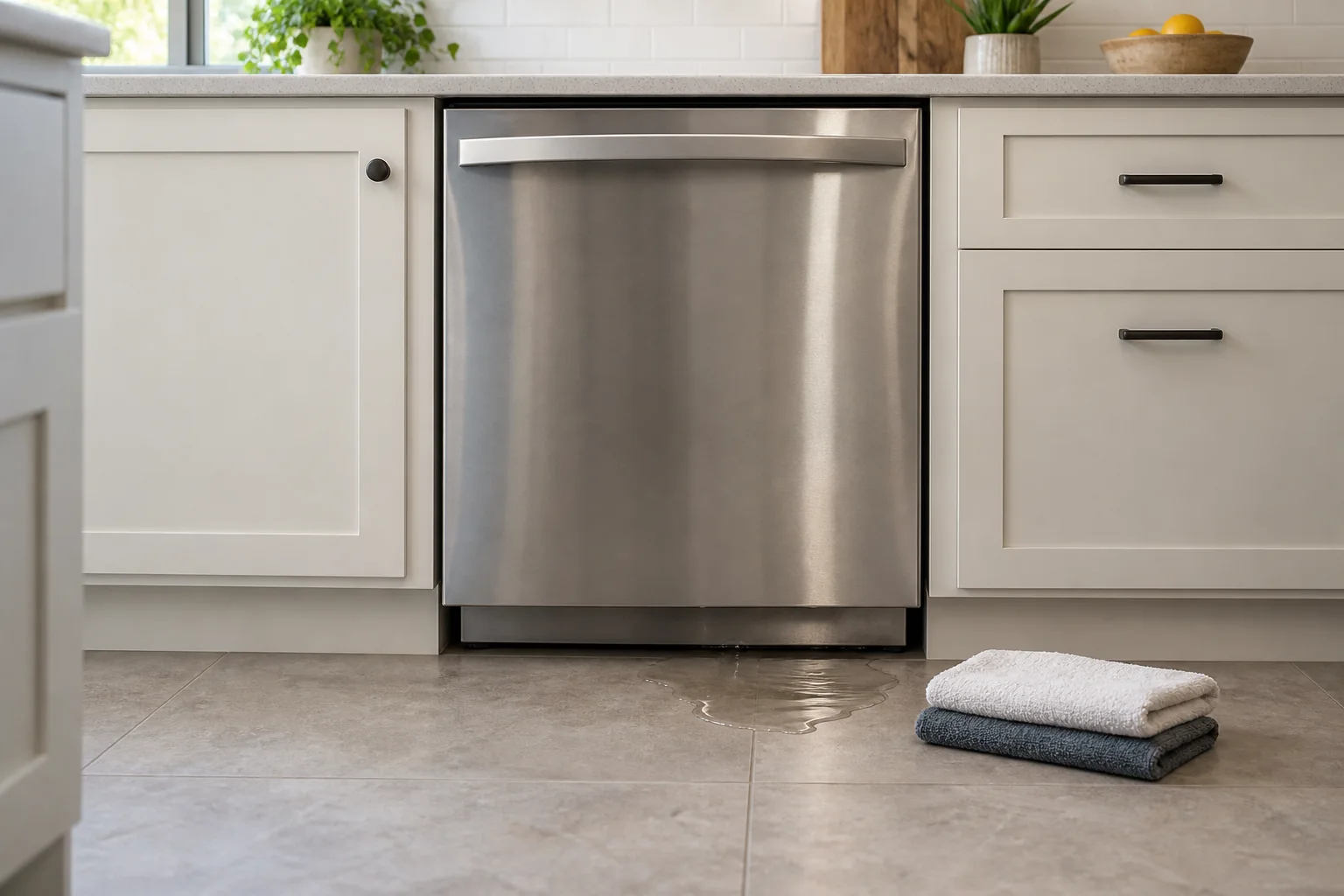
If your dishwasher is leaking from the bottom, stop the cycle and dry the floor first. Then note where the water first appears and when it appears. A leak at a lower door corner during washing often points to the door seal, loading, detergent suds, spray direction, or leveling. Water from a side connection during filling may involve the supply line or inlet system. Water under the sink during draining may come from the drain hose or its connection. A leak from the center underside usually needs appliance service.
Last updated: September 13, 2026 — Added a location-first dishwasher leak diagnostic to help readers find the relevant next step.
Make the area safe before checking the dishwasher
- Stop the cycle. Keep children and pets away, and dry the floor to prevent a fall.
- If water is near the power cord, outlet, junction box, or another electrical part, do not touch the dishwasher while standing on a wet floor. Turn off the dishwasher circuit breaker only from a dry, safe location.
- Close the dishwasher water-supply valve if water is flowing quickly, the machine leaks while turned off, or a supply connection is wet.
- Do not keep running test cycles to provoke the leak. A repeating leak can damage cabinets and flooring.
Use the leak location and cycle timing as your first clues
Water can travel along the dishwasher frame before reaching the floor, so the puddle is a clue—not proof of the failed part. If it is safe, dry the visible area and remember what the dishwasher was doing when you first noticed water: filling, washing, draining, or sitting unused.
START WITH THE PUDDLE
Where does the water first appear?
Choose the closest match for a safe starting point. This cannot identify a failed part remotely, but it can help you avoid the wrong check.
Choose a location to see the safest next step.
| What you notice | More likely area | Safest next step |
|---|---|---|
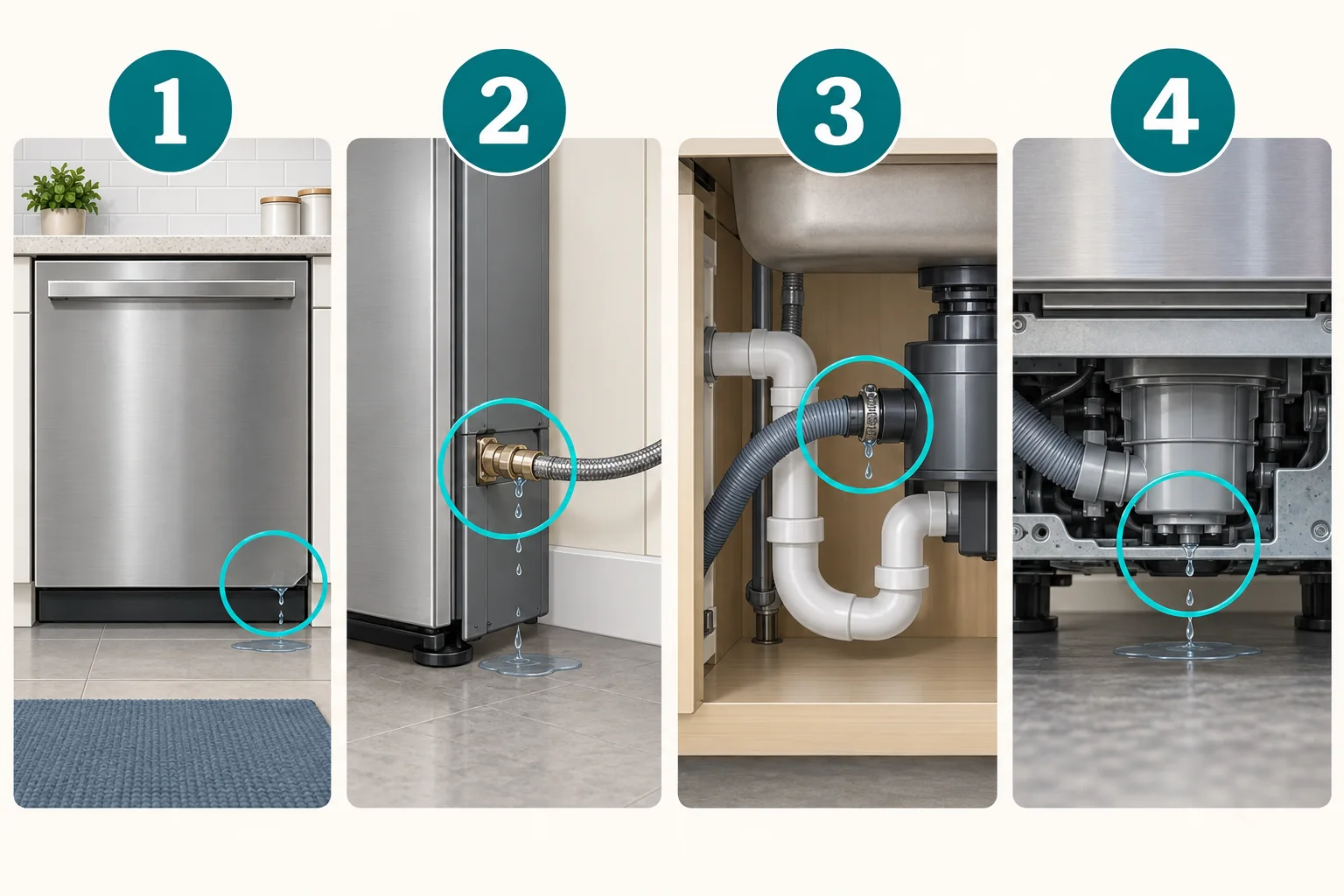
| Water appears at a lower door corner during washing | Door gasket, an item blocking the seal, excess suds, spray-arm obstruction, or an out-of-level dishwasher | Switch the machine off. Check the visible gasket, rack loading, detergent, and accessible spray arms without removing a panel. |
| Water appears near a lower front or side connection as filling begins | Visible supply-line connection, inlet-valve area, or an overfill condition | Turn off power and the water supply. Inspect only accessible connections; an internal valve or overfill problem needs service. |
| Water appears under the sink or at the rear while the dishwasher drains | Drain hose, clamp, disposal inlet, sink drain, or air-gap connection | Stop the cycle and inspect the visible under-sink connections. Keep the dishwasher off if a hose is split, loose, or leaking. |
| Water drips from the center underside during washing | Pump, sump, internal hose, or internal seal | Leave the dishwasher off and arrange appliance service. Do not remove the toe-kick or internal panels unless your model manual specifically authorizes that check. |
| The dishwasher leaks while it is turned off | Pressurized supply line, connection, or inlet valve | Close the dishwasher water-supply valve and arrange repair promptly. |
| Water remains inside the tub, but the floor is dry | A separate draining problem rather than a floor leak | Follow the drain checks in your model manual. If the connected sink or disposal also backs up, address that drainage problem first. |
This table narrows the next step; it cannot identify a failed part remotely. Use the dishwasher model number and manufacturer instructions before ordering a part or opening any access panel.
Five safe checks you can do first
1. Confirm the water is actually coming from the dishwasher
Dry the floor and nearby cabinet base. Check for a sink spill, a leaking disposal connection, a refrigerator water line, or water running along the countertop. If the dishwasher shares a sink cabinet, inspect that area while everything is off. A puddle beside the machine can originate several feet away.
2. Inspect and clean the visible door gasket
With the dishwasher off, look for food residue, a folded section, a gap, cracking, or a loose portion of the gasket. Clean the accessible seal gently with mild soap, water, and a soft cloth. Do not pull the gasket out merely to inspect it. Samsung’s dishwasher leak guidance recommends cleaning the seal and checking that it is seated correctly; a damaged seal should be replaced with the correct part for the model.
3. Check the rack loading and spray arms
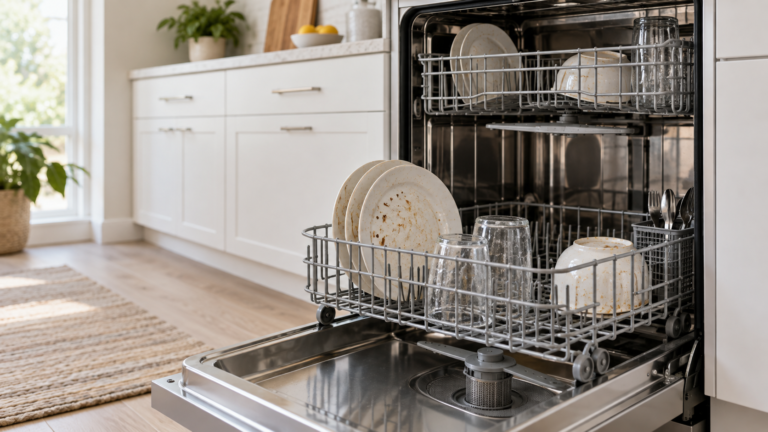
A utensil, pan handle, or misaligned rack can keep the door from sealing. A large item can also interfere with a spray arm or redirect water toward the door. Remove the obstruction and make sure each accessible spray arm can turn freely while the dishwasher is off. Replace a cracked spray arm with the model-correct part rather than sealing it with adhesive.
4. Rule out excess detergent suds
Use only detergent labeled for automatic dishwashers, and follow both the detergent directions and the dishwasher manual. Hand dish soap and excessive dishwasher detergent can create foam that escapes around the door. Whirlpool, Samsung, LG, and Maytag all include detergent or oversudsing among their leak checks. Do not add another household chemical to counteract the suds.
5. Inspect visible supply and drain connections
Turn off the dishwasher breaker and water supply before touching a wet connection. Under the sink, use a dry paper towel to find fresh moisture around the dishwasher drain hose, disposal inlet, air gap, and accessible supply connection. Do not over-tighten a fitting, substitute an unapproved hose, or use chemical drain cleaner in the dishwasher.
If the dishwasher leaks from the lower door edge
A lower-front leak is not automatically a bad door gasket. First check whether a dish prevents the door from closing, the gasket is dirty or visibly damaged, the wrong detergent created heavy suds, or a spray arm is blocked. Whirlpool’s troubleshooting guide also lists door sealing, spray arms, suds, and dishwasher leveling among possible leak factors.
The appliance should sit level according to its installation instructions. A visibly tilted built-in dishwasher may need an installer or technician to adjust it safely. Do not pull the unit from the cabinet or turn its feet while it is powered and connected unless the manufacturer instructions explicitly cover the procedure.
If the gasket is torn, will not stay seated, or water returns after the simple checks, stop using the dishwasher and arrange service. A technician can distinguish a seal problem from an internal overfill, latch, hinge, or spray-system fault.
If water appears from the center underneath
A center-bottom leak during washing can involve the pump, sump, an internal hose, or a seal. These parts are model-specific and usually sit behind the lower access area. Diagnosing them may expose wiring, sharp metal, or a pressurized connection, so this is a good stopping point for a homeowner check.
Leave the dishwasher off, close its water supply if the leak is active, and provide the technician with the model number, leak location, and cycle stage. That information is more useful than guessing at a replacement part.
If it leaks while draining or under the sink
A leak that begins only when the pump drains water points toward the dishwasher drain path. Look for water at the visible hose, clamp, air gap, disposal inlet, or sink-drain connection. A recently installed disposal may also have a connection problem that needs installer attention.
If the sink or disposal backs up at the same time, the drainage problem may be outside the dishwasher. See why a garbage disposal may not drain. If the puddle is actually beneath the disposal body rather than the dishwasher, use the separate guide to a garbage disposal leaking from the bottom.
Do not run the dishwasher with a leaking or cracked drain hose, and do not rely on towels or a tray as a permanent workaround. Replace the hose or connection according to the appliance and plumbing instructions, or call the appropriate technician.
If it leaks while turned off
A dishwasher that releases water while idle may have a pressurized supply-line, connection, or inlet-valve problem. Close the dishwasher’s water-supply valve from a dry, accessible location. If the household shutoff valve itself leaks or will not close, call a plumber. If the leak is inside the appliance, call appliance service.
Do not wait for the next wash cycle to see whether the problem repeats. Water entering an unused machine or cabinet can continue damaging the floor even when the controls are off.
What not to do
- Do not operate the dishwasher while water is reaching electrical parts or spreading across the floor.
- Do not stand in water to unplug the machine or touch its controls.
- Do not keep repeating a wash cycle to locate an active leak.
- Do not use hand dish soap or add random chemicals to reduce suds.
- Do not seal a damaged hose, pump, or spray arm with tape or adhesive as a permanent repair.
- Do not remove the toe-kick, tip the dishwasher, or disconnect plumbing unless the exact model instructions make the procedure safe and clear.
Who should repair the leak?
- Call an appliance technician for a pump, sump, inlet valve, internal hose, overfill, door-latch, or electrical problem, or any leak that requires appliance disassembly.
- Call a plumber for a leaking household shutoff valve, supply plumbing, sink drain, or another connection outside the dishwasher.
- Call the installer if a recently fitted dishwasher is visibly out of level or a new hose or disposal connection leaks.
- Get urgent help if water reaches wiring or an outlet, the leak is rapid, cabinets or flooring are swelling, or you cannot safely isolate the power and water.
How to reduce the chance of another leak
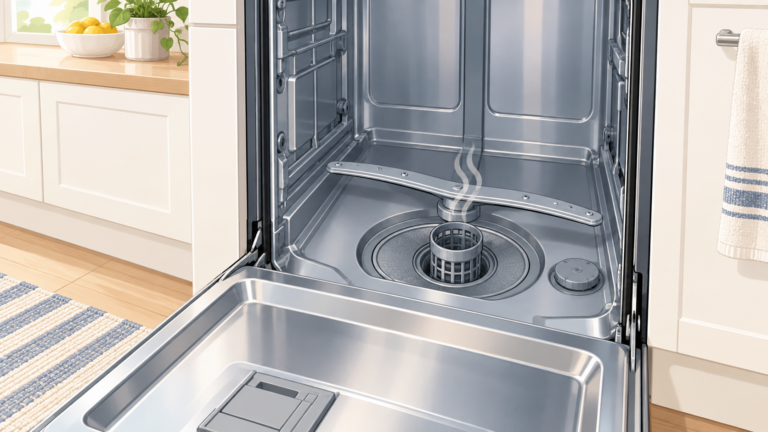
Use automatic dishwasher detergent in the amount recommended for your machine and water conditions. Load dishes so they do not block the door or spray arms. Clean the filter and door gasket on the schedule and by the method in the model manual. Occasionally look under the sink for moisture around the supply and drain connections, especially after plumbing or disposal work.
If another appliance may be the source, the location-based process in our refrigerator water-leak guide can help you separate nearby puddles before arranging repair.
Common questions
Can I keep using a dishwasher that leaks from the bottom?
No. Stop using it until the source has been identified and the leak has been corrected. Continuing to run it can worsen floor or cabinet damage and can create an electrical hazard.
Why does my dishwasher leak only sometimes?
An intermittent leak may depend on the cycle stage, rack loading, amount of detergent, water level, or the direction of spray. Record when and where it happens during normal use, but do not repeatedly provoke the leak. A technician can use those observations to narrow the cause.
Is standing water in the dishwasher the same as a bottom leak?
No. Water remaining inside the tub with a dry floor is primarily a draining symptom. A backed-up sink, disposal, hose, filter, or drain system may be involved. Water escaping onto the floor is a leak and needs the safety steps above.
Does a lower-front puddle always mean the door seal is bad?
No. A dirty or damaged gasket is one possibility, but blocked spray, poor loading, excess suds, leveling, or an internal fill problem can also send water toward the front. Check the simple visible causes before ordering a seal.
For other dishwasher symptoms, use the Dishwasher Troubleshooting guide to identify the primary problem before trying another repair.