Dishwasher Troubleshooting: Match the Symptom Before You Try a Fix
Quick answer
Dishwasher troubleshooting is easier when you start with the one thing the machine is actually doing: not starting, leaving water behind, washing poorly, leaking, not filling, trapping detergent, or making a new noise. Choose that symptom below, make only the safe checks in its guide, and use your model’s manual before interpreting an error code or opening anything.
Stop and get help first
Do not keep running the dishwasher if you see smoke or sparks, smell burning insulation, find water reaching an outlet or electrical connection, or cannot safely control an active leak. Turn off power at the breaker only if it is safe to do so, keep clear of standing water near electricity, and arrange qualified local help.
Find your dishwasher symptom
Use the first description that matches the end of the cycle or the moment the problem begins. A single symptom can have several causes, so this page routes you to the focused guide instead of asking you to try unrelated repairs.
| What you notice | Start here | Why this is the right route |
|---|---|---|
| The controls will not begin a cycle | Dishwasher not starting | Start, door, power, and control behavior need a different check from a washing problem. |
| Water is left in the tub after the cycle | Dishwasher not draining | This route separates an accessible filter or drain-path check from a sink or plumbing issue. |
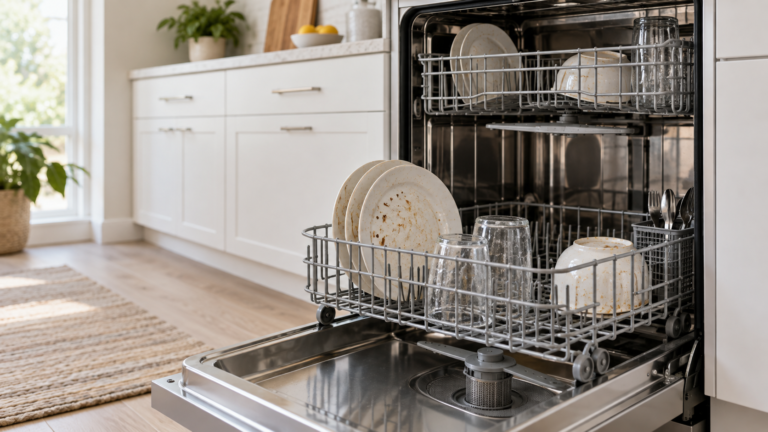
| Dishes are still dirty, cloudy, or gritty | Dishwasher not cleaning dishes | Loading, spray-arm movement, detergent, and maintenance belong here. |
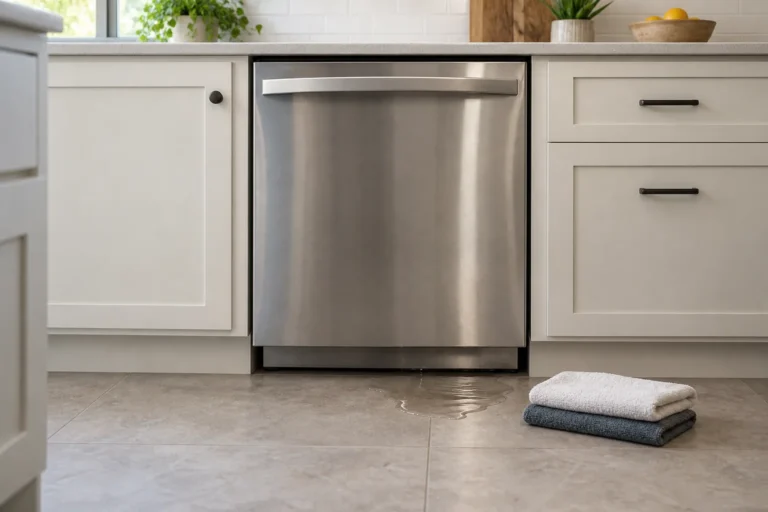
| Water appears under or in front of the dishwasher | Dishwasher leaking from the bottom | First identify whether it is a door, tub, supply, drain, or oversudsing problem—without running more cycles. |
| The tub does not seem to fill with water | Dishwasher not filling with water | A no-fill problem can look like a wash problem, but its safe observations are different. |
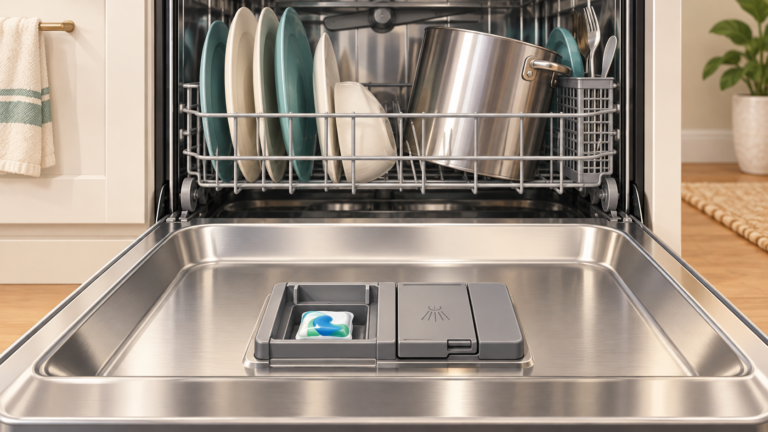
| The detergent door is still closed or the pod remains | Dishwasher soap dispenser not opening | Check what blocked the dispenser before treating it as a failed part. |
| A new grinding, buzzing, rattling, or squealing sound appears | Dishwasher making a loud noise | The sound and the point in the cycle help narrow the next safe action. |
Before you start a guide, note these four things
- When it happens: before the cycle starts, while filling, while washing, or after it should have drained.
- What changed: a power outage, a new detergent, a disposal installation, a recent move, or a new error message can matter.
- Whether the kitchen sink also drains slowly: that can point away from the appliance and toward the shared drain path.
- Your model number and any exact code: record them before resetting the machine. Button sequences and codes are model-specific.
Use a model-specific manual for codes and parts
This guide deliberately does not assign a universal meaning to a flashing light or code. Manufacturers use different displays and diagnostic routines. For example, GE Appliances lists code-specific guidance and notes that some leak-detection messages require service, while Bosch directs owners to their model support and manual pages for troubleshooting. Check your manufacturer’s instructions before resetting, removing a panel, or ordering a part.
GE Appliances: dishwasher error, fault, and function codes · Bosch dishwasher owner support
A few safe observations can prevent the wrong fix
If there is standing water, do not assume the dishwasher itself is the only cause. Food debris in an accessible filter or pump area is a common model-specific check, but a slow kitchen sink or water coming through an air gap can indicate a plumbing-path problem instead. Bosch’s owner guidance specifically advises checking the filter and pump according to the owner’s manual; GE also notes that a no-drain condition with no suds can be a plumbing issue.
For a leak, stop the cycle and look for the source rather than adding detergent or running a test cycle. Excess suds from the wrong soap or too much detergent can force water out of the tub. Use only detergent made for automatic dishwashers, and clean up a rinse-aid spill promptly.
Bosch: dishwasher not draining · GE Appliances: leaking or flooding underneath
When to stop troubleshooting
- The same code returns after you followed the model manual.
- There is a recurring leak, a cracked hose, or water near electrical parts.
- The dishwasher trips a breaker, smells hot, or makes a harsh new mechanical noise.
- The next step would require live electrical testing, disconnecting hard-wired wiring, moving the dishwasher, or opening a sealed water connection.
At that point, the useful information you recorded—symptom, cycle stage, code, model number, and whether the sink also drains—will help a service professional or plumber start in the right place.
The simple troubleshooting order
- Choose the single closest symptom above.
- Make the safe, visible checks in that focused guide.
- Use your exact model’s manual for controls, codes, and component access.
- Stop when the next step crosses into electrical, water-line, or major disassembly work.