What Should Indoor Humidity Be? Targets, Warning Signs, and What to Change
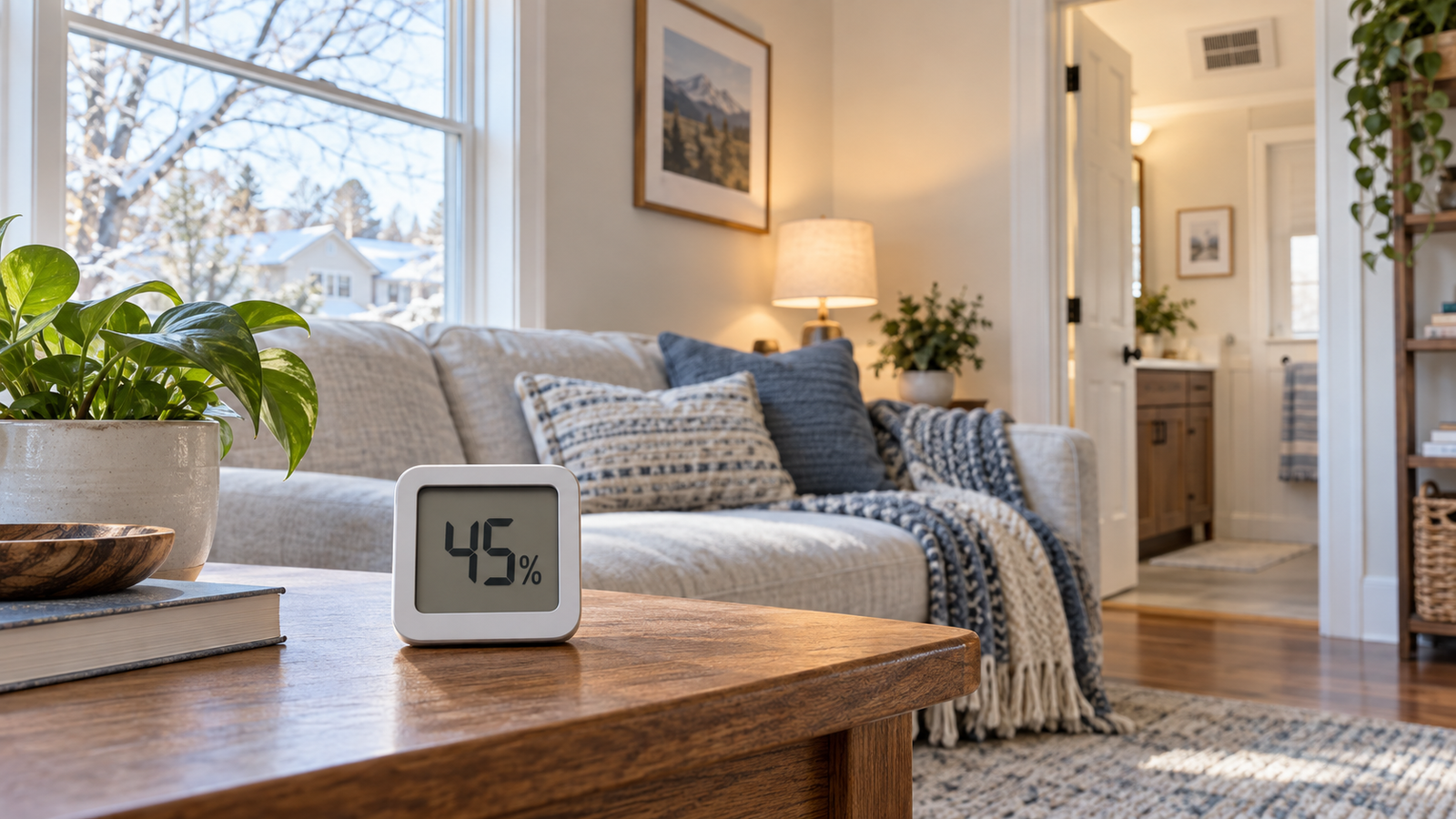
Quick answer: For most homes, aim for 30% to 50% relative humidity (RH). The U.S. EPA advises keeping indoor humidity below 60%, ideally in that 30% to 50% range. Treat the number as a starting point: if windows, walls, or pipes are collecting moisture, find and reduce the moisture source even if the thermostat looks acceptable.
Updated: September 19, 2026. The recommendations and source links below were reviewed against current EPA, CDC, and ENERGY STAR guidance.
Indoor humidity is not one perfect number for every room and season. A cold window, a closed bedroom, a damp basement, cooking, showers, or a local leak can make one space behave differently from the rest of the home. The useful question is: what does this reading, together with what I can see and smell, tell me to check next?
Use the reading to choose your next step
| What you notice | What to do first | Do not assume |
|---|---|---|
| 30% to 50% and surfaces are dry | Keep ordinary bathroom and kitchen exhaust habits. Recheck if a room becomes stuffy, dry, or damp. | One room’s reading describes every room in the home. |
| Above 50% repeatedly, or a room feels damp | Compare the room with a nearby hallway at another time of day. Look for moisture sources before buying equipment. | A dehumidifier can repair a plumbing leak or rain entry. |
| At or above 60% for long periods | Use source ventilation, air conditioning, or dehumidification as appropriate. Inspect for condensation, leaks, and damp materials. | The problem is only the air; wet materials can have another water source. |
| Below 30% with dry-air discomfort or static | Confirm the reading in another room. Increase humidity carefully and watch windows for condensation. | More humidity is always safer in winter. |
| Any reading with wet windows, a musty odor, visible mold, staining, or soft material | Dry the surface, identify the water source, and use the linked problem-specific guide. | A normal room reading proves there is no hidden dampness. |
What relative humidity means
Relative humidity is the amount of water vapor in the air compared with the maximum it can hold at that temperature. That is why a percentage is not a universal pass-or-fail result. Cold glass, exterior walls, closed bedrooms, basements, cooking, showers, and local leaks can create a different moisture pattern from the reading at a central thermostat.
Measure more than once and in more than one location. Lawrence Berkeley National Laboratory explains that indoor humidity varies with location, weather, and indoor temperature. Place a hygrometer in a lived-in part of the room, away from direct sun, supply vents, damp towels, and a running humidifier or dehumidifier. If one spot is troubling you, compare it with a nearby room rather than relying on one number.
When the reading is too high
The U.S. EPA recommends keeping indoor humidity below 60%, ideally 30% to 50%. A reading that briefly rises during a shower or a long cooking session is less useful than a pattern that stays elevated after the source has stopped.
- Moisture on the inside of windows, cold pipes, or exterior walls
- A musty smell, damp fabrics, or repeated staining
- A basement or closet that stays damp when the rest of the home does not
- A room that stays more humid than a nearby hallway across repeated checks
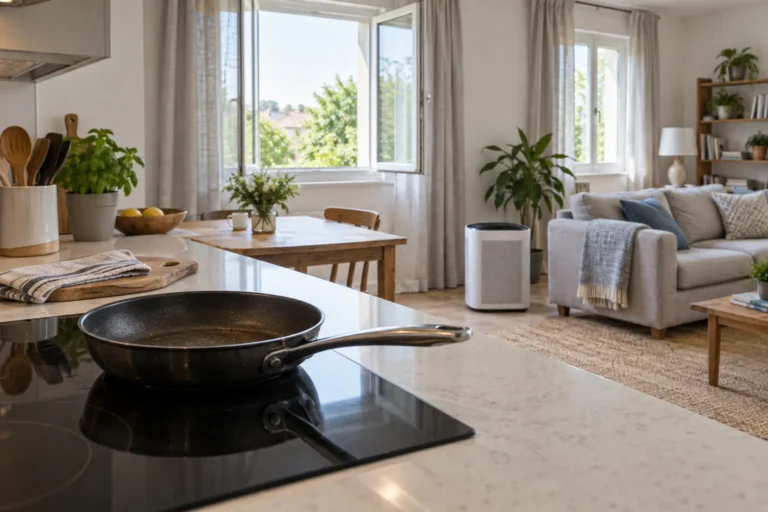
Start by reducing the source. Run an exhaust fan while showering; use the kitchen exhaust when cooking; make sure a clothes dryer vents outdoors; and dry wet surfaces promptly. EPA also lists air conditioning and dehumidification as ways to reduce moisture when needed.
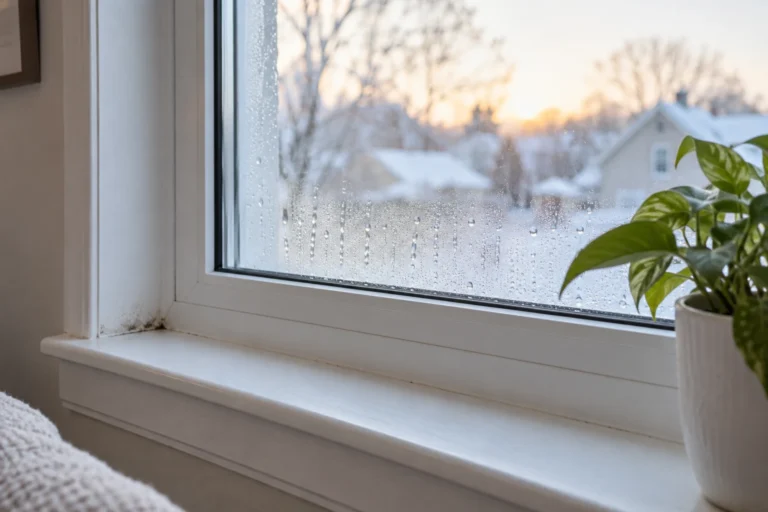
If windows are wet or fogged inside
Dry the surface first, then reduce the indoor moisture source. In cold weather, lower a humidifier setting gradually and check the same window the next morning. ENERGY STAR notes that 30% to 40% RH may be appropriate during the heating season in colder climates to reduce window condensation. A window can still condense because the glass or frame is unusually cold, so humidity control alone may not solve a failed seal, poor insulation, or air leak.
For a recurring window pattern or visible growth, see Mold Around Windows? Find the Moisture Source and Clean It Safely.
If the room smells musty or material stays damp
Humidity may be contributing, but it is not the only possible source. The CDC/NIOSH says excess moisture is the major cause of indoor mold growth. A dehumidifier can reduce moisture in the air; it cannot fix a roof leak, plumbing leak, or water entering through a foundation.
Use the Home Moisture and Mold Decision Chart if the source is unclear. If there is visible growth on a bathroom ceiling, use How to Remove Mold From a Bathroom Ceiling Safely rather than treating it as a generic humidity problem.
When the reading is too low
Below 30% does not automatically mean a house is unsafe. It is a reason to confirm the reading and look for dry-air effects such as static, dry skin, or dry throat. In a cold climate, adding moisture can make a room feel more comfortable, but the setting must stay below the point where moisture begins to collect on windows or walls.
Use the smallest practical change. Operate and clean a portable humidifier according to its manual. Keep watching the coldest window, pipe, or exterior wall. If condensation begins, reduce or stop added humidity rather than trying to hold a fixed percentage.
A practical checking routine
- Put the hygrometer in a normal living area, away from direct moisture and moving air.
- Note both the RH and temperature at the same time each day for several days.
- Compare a trouble room with a nearby hallway or living area.
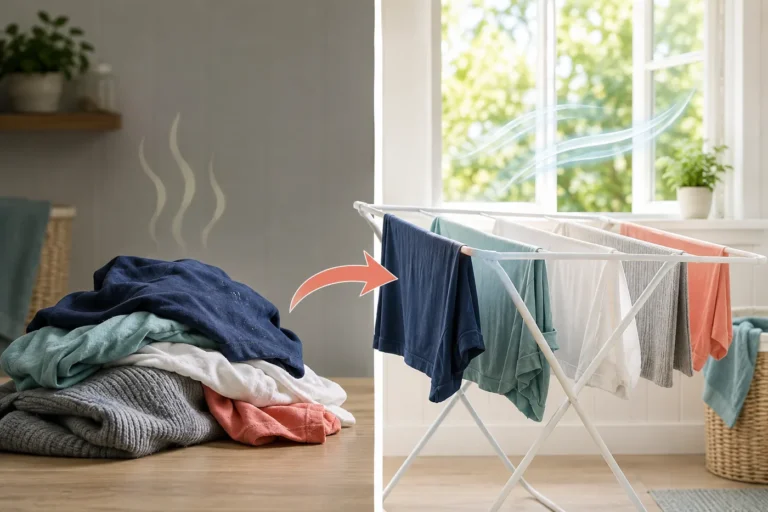
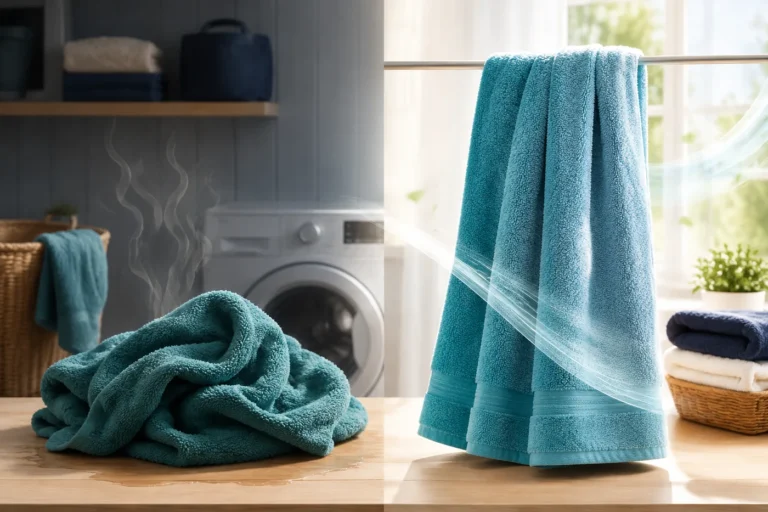
- Write down what was happening before a high reading: showering, cooking, drying clothes, rain, a closed door, or cooling that was not running.
- Inspect for water on surfaces, leaks, stains, musty odor, or soft materials. Those observations matter more than chasing a single perfect reading.
- Change one thing at a time, then recheck under similar conditions.
Know when the question is no longer just about humidity
Stop and get appropriate help for active water, sewage or floodwater, unsafe electrical equipment near water, a soft or sagging ceiling, widespread visible growth, or health circumstances that make mold exposure a concern. EPA advises professional help for sewage-contaminated water and cautions that suspected hidden mold may require an experienced professional. Renters should report leaks and persistent moisture problems promptly to the property owner or manager.
If you use a portable dehumidifier as part of the plan, keep its filter, bucket, grilles, and drain hose maintained according to the manufacturer’s instructions. See How to Clean a Dehumidifier Safely for that maintenance step.