Dehumidifier Size Calculator: What Size Do You Need?
Quick answer
Use the calculator below for a practical portable dehumidifier capacity range, measured in pints removed per day. Start with the area that shares air and the room’s moisture condition. If there is an active leak, rain entry, standing water, sewage or floodwater, wet building material, or recurring large mold growth, fix or contain that source first—a larger appliance is not the repair.
Stop and address the source first
- Do not use a dehumidifier as a substitute for stopping a plumbing leak, rain or exterior-water entry, standing water, sewage, or floodwater.
- Do not cover active moisture with paint or caulk. Wet or soft drywall, trim, flooring, or insulation may need a different response than dry air alone.
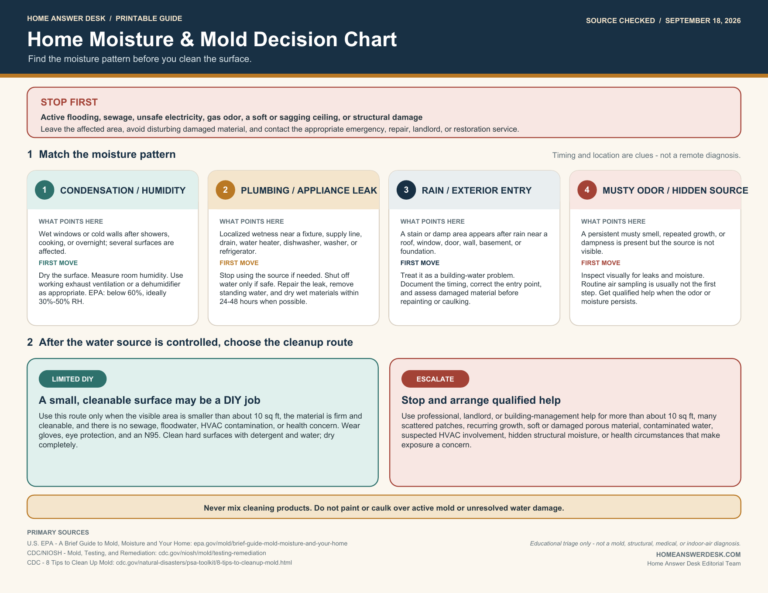
- If you have widespread or recurring mold, a persistent musty odor, or a moisture source you cannot safely identify, use the Home Moisture and Mold Decision Chart before selecting equipment.
Portable dehumidifier labels use a daily moisture-removal capacity. That is not the same as the bucket’s physical size, and it is not a promise that one device will solve every damp room. Drainage access, room layout, air movement, and the actual moisture source all matter.
Dehumidifier size and moisture check
For one room or open area—not a whole-home system.How this planner works
Ranges follow ENERGY STAR portable-dehumidifier guidance. EPA recommends indoor relative humidity below 60%, ideally 30%–50%.
Pints per day is a current capacity label, not bucket size. Older guides can use larger pre-2019 numbers because test conditions changed. Read how current labels are tested.
What the result means
The result is a transparent starting range based on ENERGY STAR’s portable-dehumidifier capacity guidance. For a space under 2,000 square feet, a slightly to moderately damp area starts at 20–30 pints per day; a very damp space starts at 25–40; and a wet or high-moisture-load space starts at 30–50. Larger spaces need higher capacities. Check the current label and your product manual before buying or installing a unit.
Compare labels carefully. Current dehumidifier labels use a different federal test condition than older guides, so an older chart can show a larger pint number for a similar capacity class. Use the current pints-per-day label on the unit you are considering, not its bucket size. ENERGY STAR explains the current test and label change.
Use a dehumidifier as part of the moisture plan
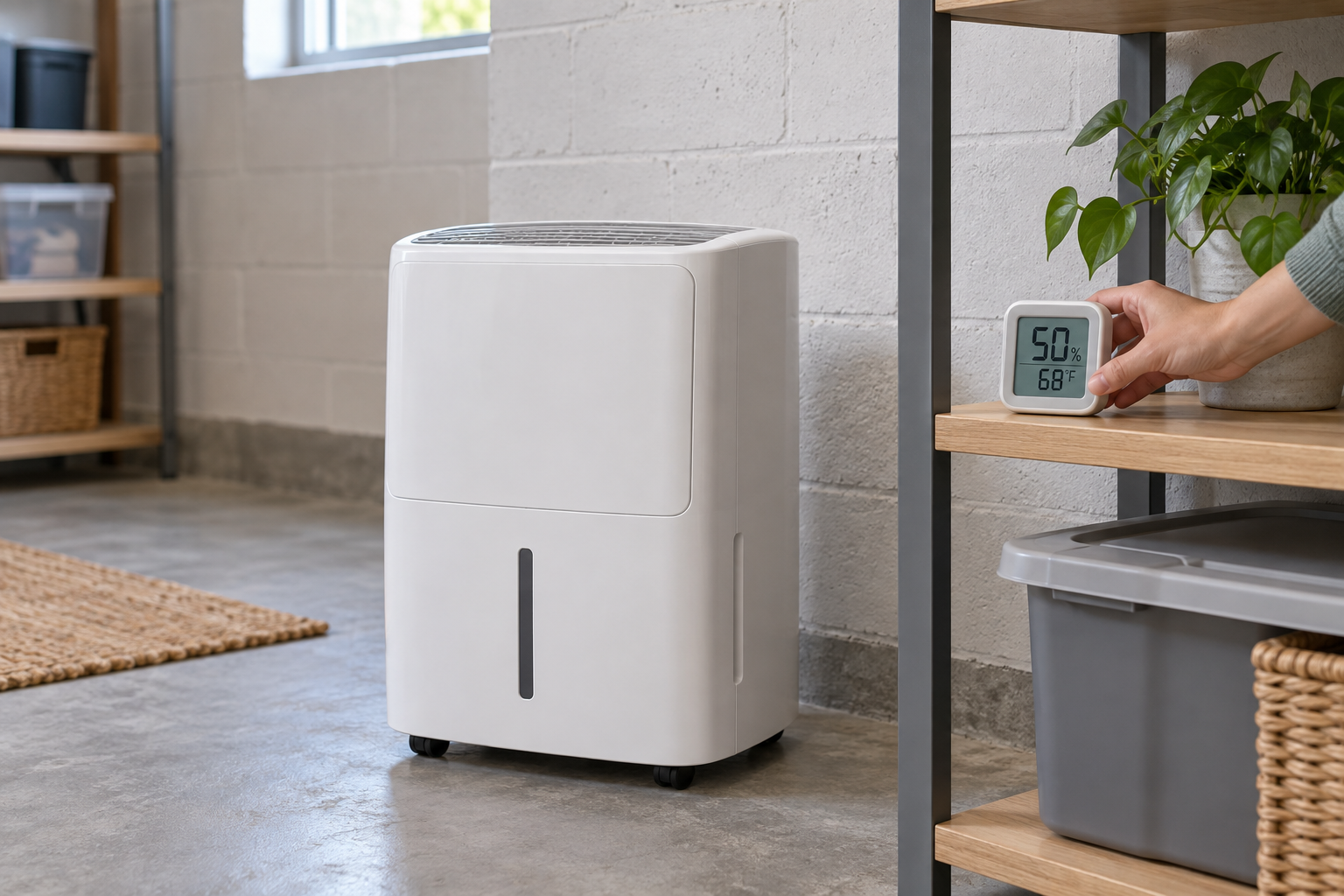
- Measure where the problem is. A hygrometer in the basement does not necessarily describe the bathroom, bedroom, or window area.
- Plan the drainage. A bucket works for occasional emptying; a hose or suitable drain can be more practical for a persistent damp space when the owner’s manual allows it.
- Keep airflow open. Place the appliance according to its manual and do not block its intake or exhaust.
- Check the humidity trend. EPA recommends keeping indoor relative humidity below 60%, ideally between 30% and 50%.
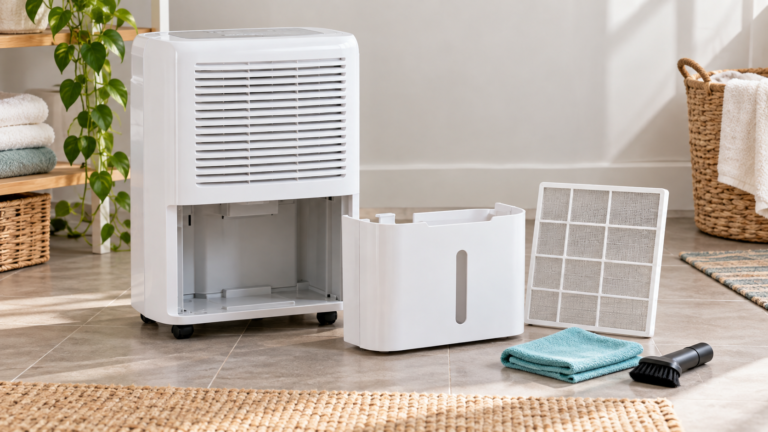
- Maintain the appliance. A dirty filter, bucket, grille, or drain hose can limit normal performance. See how to clean a dehumidifier safely.
When the issue may not be device sizing
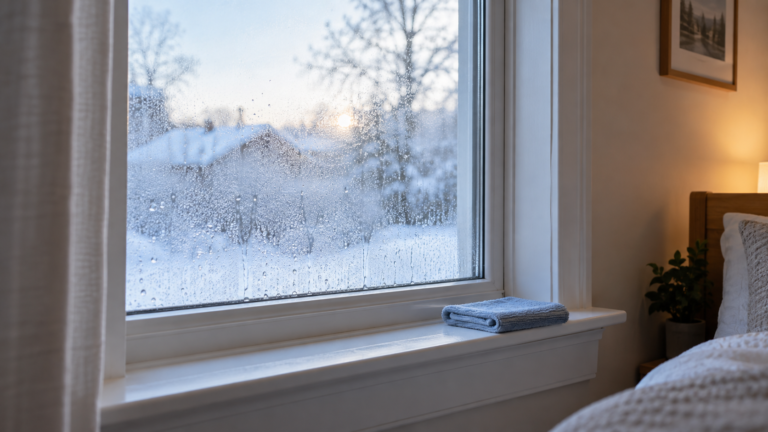
Condensation at windows, a damp basement wall, ceiling staining, or moisture that returns soon after a room dries can be a clue to ventilation, a building leak, or another water source. A dehumidifier may help with the air after that source is controlled, but it does not diagnose or repair it. For window-specific clues, read why mold can form around windows. For a small bathroom-ceiling patch versus a damaged or recurring surface, use the bathroom-ceiling mold guide.
Sources and method
This planner uses the published portable-dehumidifier ranges from ENERGY STAR and its explanation of the current capacity test and labels. Its moisture-source and relative-humidity boundaries are supported by the U.S. EPA’s mold and moisture guidance and EPA humidifier guidance. It is general household information, not a whole-home HVAC design, building inspection, or product recommendation.