How to Remove Mold From Clothes: Wash, Clean, or Discard?
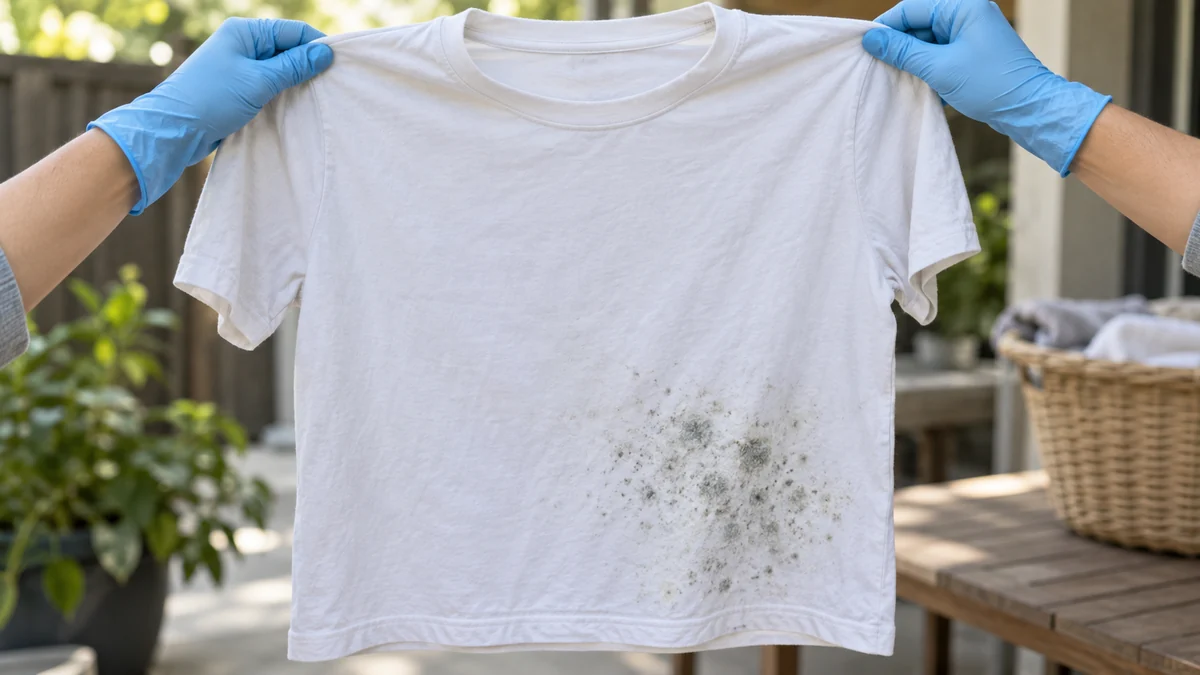
Small, localized mold spots on a sound, washable garment may respond to careful laundering. First check the care label, the moisture source, and whether the item can be handled without exposing people to mold. Keep it separate and avoid shaking it. Dry-clean-only clothing, damaged or heavily affected fabric, and sewage- or dirty-floodwater exposure need a professional handling decision rather than the ordinary wash below.
Quick answer
Decide whether the garment is safe to wash before choosing a cleaner
Use the home route only for limited growth on sound, washable clothing that you can handle with suitable precautions. Ask a cleaner about delicate, valuable, embellished, or dry-clean-only pieces. Extensive growth, weakened fibers, or contaminated water may make disposal the better decision. If you should avoid mold exposure, do not clean it yourself; arranging appropriate help is a separate decision from whether the garment must be discarded.
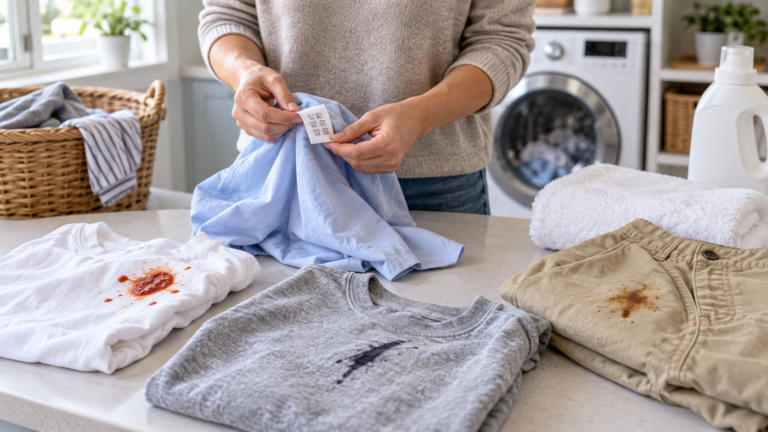
A musty odor alone is not proof of visible mold. If the cause of the mark is uncertain, use the clothing stain decision guide before choosing the mold route or adding a cleaning product.
Updated: October 21, 2026 — Clarified who should avoid handling mold, the no-safe-workspace route, laundry-product limits, and decisions after the garment is fully dry.
Choose the right path before you disturb the mold
| What you find | Best next step | Why |
|---|---|---|
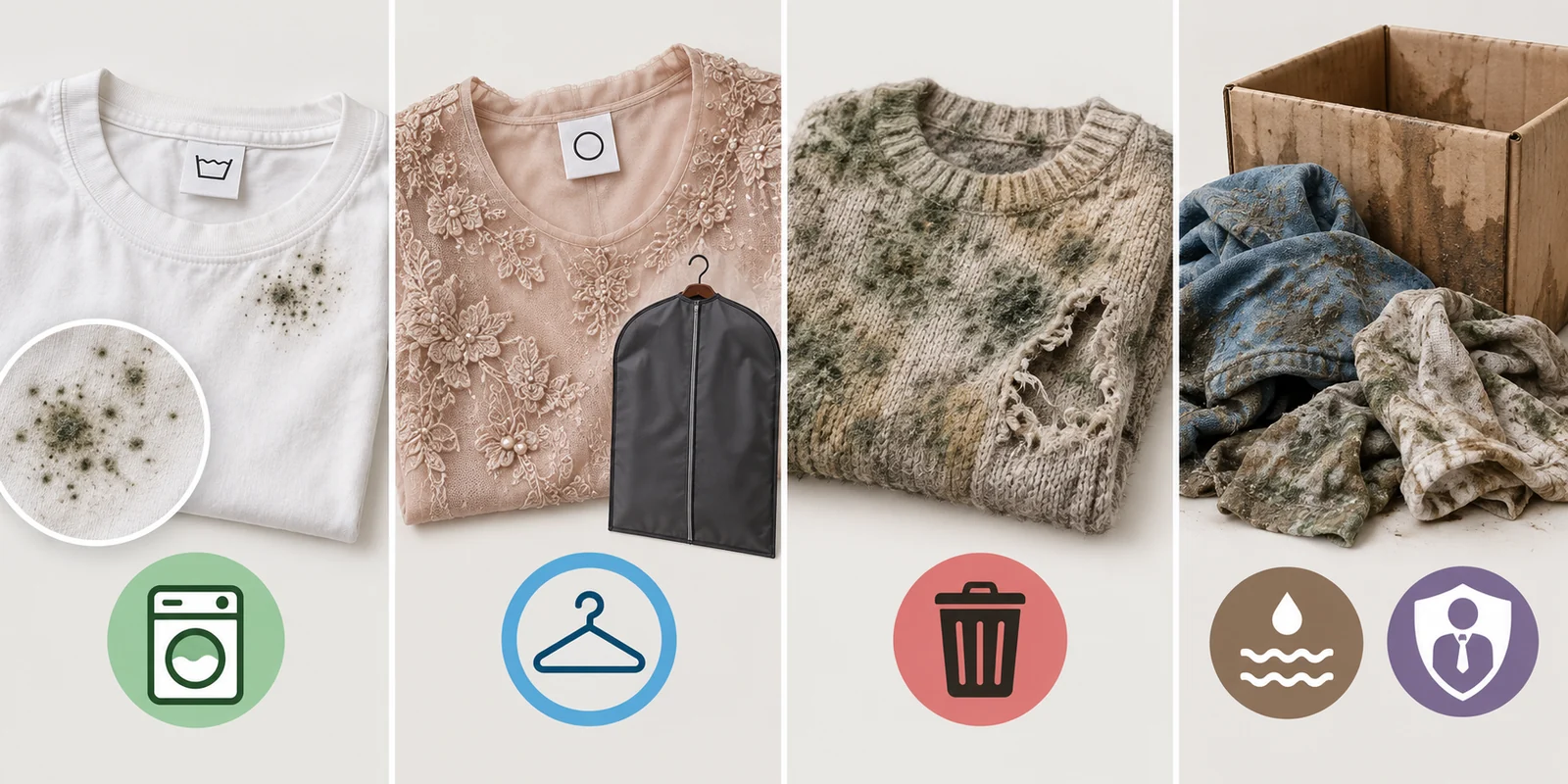
| A small patch on a sturdy, washable garment | Follow the label-controlled washing method below | The item can tolerate washing and the fabric is still intact |
| Dry-clean-only, wool, silk, leather, embellished, or valuable clothing | Keep it separate without shaking; call a suitable cleaner before transporting it | Water, agitation, bleach, or stain removers may damage the material or trim |
| Growth across much of the garment, holes, thinning, or fibers that tear easily | Consider discarding rather than repeated home treatment | Mold and moisture can leave permanent staining and material damage |
| Clothing exposed to sewage, dirty floodwater, or a heavily mold-damaged room | Get professional cleanup guidance; do not treat it as an ordinary laundry stain | The exposure may involve contaminants and a larger building moisture problem |
| Musty odor but no visible growth | Use the musty-clothes guide and check the washer, hamper, closet, and room moisture | Odor alone does not confirm visible mold on the garment |
Safety first
Do not shake or brush moldy clothing indoors. CDC advises at least a NIOSH Approved N95 respirator, protective gloves, and goggles that keep out particles; open-vent goggles or ordinary safety glasses do not provide that eye protection. People with allergies, immune suppression, underlying lung disease, asthma, or COPD should not take part in mold cleanup.
An N95 filters particles, not cleaning-product gases or vapors. Follow the product’s ventilation and protection directions too. If suitable protection, safe handling space, or the ability to use it is missing, do not improvise an indoor brushing step; ask a qualified cleaner or remediation professional how to proceed.
How to remove mold from washable clothes
1. Keep the garment separate and move it outdoors
Keep the item contained while moving it, without shaking or carrying loose debris through the house. Use an outdoor handling area away from open doors, windows, people, pets, and clean laundry. If that is not available, keep it separate and ask a cleaner for a handling plan rather than brushing in a bathroom or shared laundry room. For a professional handoff, call first, disclose the mold and moisture source, and follow their packaging and transport instructions.
2. Read the complete care label
Confirm that the garment can be washed and note the permitted water temperature, bleach instructions, and drying method. The Federal Trade Commission’s care-label guidance covers the complete garment, so trim, lining, elastic, printed graphics, buttons, and embellishments matter as well as the main fabric.
“Do not wash” and “dry clean only” exclude this general water-and-laundry route. “Do not bleach” is different: it rules out bleaching, not necessarily washing with an allowed detergent. Use a non-bleach laundry product only when both its directions and the garment label permit it; otherwise ask a cleaner.
3. Check whether the fabric is still sound
Look for holes, thin areas, roughened fibers, color loss, or a surface that pulls apart with light handling. Mold can leave permanent staining and cosmetic damage, and repeated cleaning cannot restore weakened fibers. Stop if the material is failing or if the growth is widespread through a thick, padded, or multilayered item.
4. Remove loose surface growth outdoors
Only for the limited, sound-fabric home route and with suitable protection and outdoor space, gently remove material that is already loose. Do not scrub, shake, or try to brush every dark mark away. University of Georgia Extension describes outdoor brushing and warns that mildew can weaken fibers. If there is no loose material, do not abrade the fabric to create it.
If the item cannot be handled without releasing a large amount of material, close the container and use a professional cleaner or remediation service rather than continuing at home.
5. Pretreat with one label-approved laundry product
Choose a laundry detergent or laundry stain treatment explicitly allowed for the garment and intended use. A bathroom or hard-surface mold spray is not automatically a clothing treatment. Test a hidden area as directed, complete the test rinsing, and let it dry by the care instructions before judging color and texture. Use only the product’s stated amount and contact time.
Do not improvise combinations of bleach, vinegar, ammonia, acids, peroxide, or other cleaners. If a labeled laundry method uses detergent and a laundry additive, follow only that product’s compatible dose, compartment, and sequence; never premix concentrated products. Do not pour a second treatment onto residues from the first. CDC’s household-surface bleach dilution is not a clothing recipe: use garment, laundry-product, and washer directions for laundry.
6. Wash at the warmest temperature the label permits
Wash the garment with laundry detergent at the warmest temperature allowed by the care label. Hotter is not automatically safer: heat can shrink, fade, or damage a garment whose label specifies cool or cold water. Do not exceed the label in an attempt to sanitize the fabric.
Keep the affected item out of the clean-laundry pile until it has been washed and inspected. Follow the washer and detergent directions for load size and dosage rather than adding extra product.
7. Air-dry completely and inspect
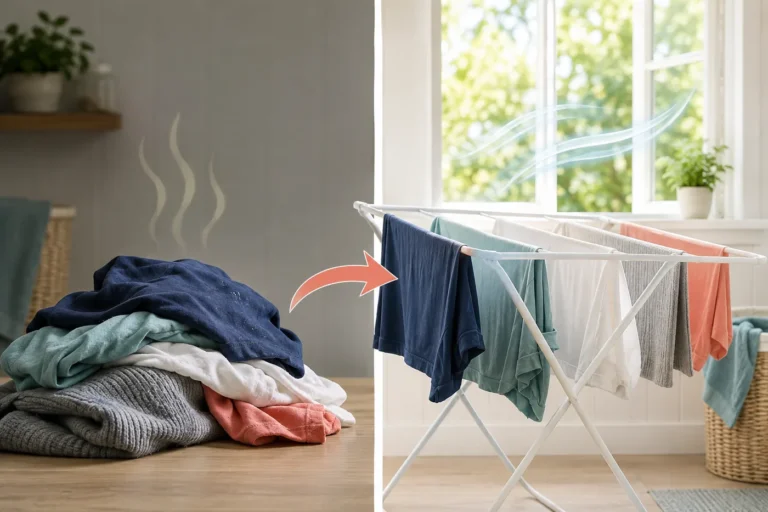
Air-dry the garment in a well-ventilated place that will not expose other people to residual debris. Check it in good light when it is completely dry. Look for remaining growth, persistent odor, color loss, and weakened areas. Manufacturer garment guidance recommends air-drying and inspecting before deciding whether to repeat treatment.
Do not treat every remaining dark mark as a reason to add more bleach. Use the after-wash decisions below. A clean-looking or odor-free garment is not a medical clearance, and persistent or returning growth needs a source and handling reassessment.
What the fully dry result does—and does not—tell you
EPA notes that mold can cause lasting cosmetic damage and may be difficult to remove from porous materials. Use these observations to choose the next step, not to certify the item as safe for a person with health concerns.
| Fully dry observation | What it can mean | Next decision |
|---|---|---|
| A flat discoloration remains after complete drying | Mold can leave permanent staining; a mark alone cannot confirm whether the item is adequately cleaned | Do not keep scrubbing or bleaching for appearance alone. Repeat only an explicitly permitted stain treatment on stable fabric, or ask a textile cleaner |
| Fuzzy material remains or growth returns | The cleaning or moisture-source problem is unresolved | Keep it separate; stop the ordinary laundry loop and obtain professional advice about cleaning or disposal |
| Musty odor remains without obvious growth | The garment, washer, or storage area may still contribute odor | Use the musty-clothes route and check the damp source; fragrance is not proof of resolution |
| Fibers thin, tear, roughen, or lose color | The material has been damaged | Stop treatment. Cleaning cannot restore weakened fibers; consider disposal or specialist assessment |
What changes for white, colored, and delicate garments?
White clothes
White color does not prove that chlorine bleach is safe. Read the bleach instruction on the garment label and the compatible-fabric list on the bleach product. Some white fabrics contain stretch fibers, finishes, prints, or trim that bleach can damage.
Colored and printed clothes
Spot-test the laundry product on an inside seam. Stop if dye transfers, the tested area lightens, or the finish changes. A product described as color-safe still has to be allowed by both the garment label and its own directions.
Wool, silk, leather, structured, and embellished items
Do not apply a generic soak or machine-wash routine. These items may need a cleaner who handles the specific fiber, dye, lining, structure, or decoration. Tell the cleaner that visible mold was present and where the item was stored.
When should moldy clothing be discarded?
Discarding is reasonable when the fabric is badly weakened, growth is widespread through padding or several layers, the item cannot be cleaned within its care instructions, or professional restoration would not be practical. Clothing contaminated by sewage or dirty floodwater should not be treated like a normal stain; ask the appropriate cleanup professional or local public-health authority about safe handling.
Do not use appearance or smell alone as a medical safety test. If someone in the household has a mold-related health concern, follow CDC guidance and ask a health professional rather than relying on a home laundry method.
Stop the mold from returning
Cleaning the garment is only half of the job. EPA guidance emphasizes fixing water problems and drying items completely. Check the place where the clothing became damp: a washer left closed, a wet hamper, a closet against a cold wall, a leaking pipe, a damp basement, a storage box, or flood damage.
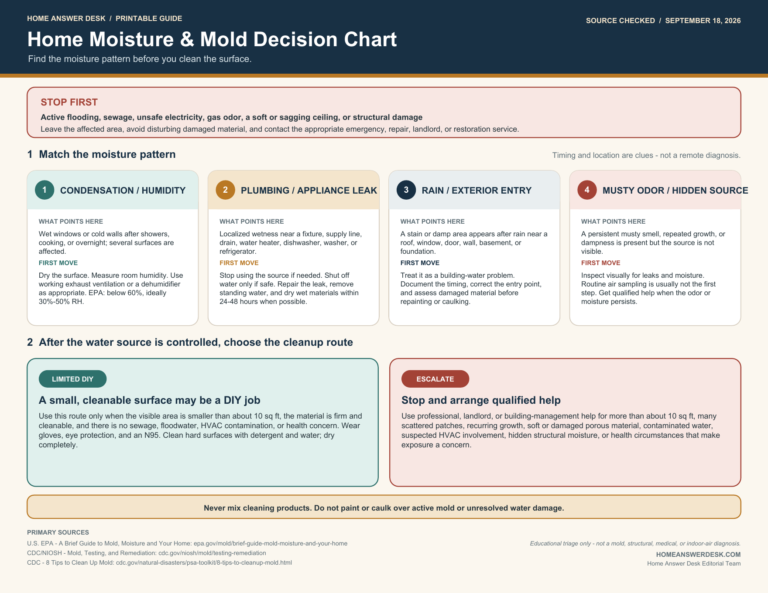
Dry the area, repair the leak or condensation source, and do not return clean clothing until the storage space is dry and free of visible growth. Leave room for airflow instead of packing damp garments tightly together. If several garments, the closet, or a storage box are affected, use the home moisture and mold decision chart to investigate the wider problem before cleaning more clothing.
Questions about mold on clothes
Can mold be washed completely out of clothes?
A small surface patch on a sound, washable garment may come out, but no home method can guarantee restoration. Staining may remain, and mold can penetrate or weaken porous material. The care label, extent of growth, fabric condition, and moisture source determine whether another wash is reasonable.
Can vinegar and bleach be used together?
No. Never combine bleach with vinegar, ammonia, acids, or other cleaners. Choose one laundry product that is permitted by the garment label and follow that product’s directions.
Is a musty smell the same as visible mold?
Not necessarily. A musty odor can come from clothing left damp, residue in the washer, a hamper, or a damp storage space. Inspect the garment and the moisture source. Use the musty-clothes guide when odor is the problem but no visible growth is present.
Related guides
- How to Get Musty Smell Out of Clothes
- Home Moisture and Mold Decision Chart
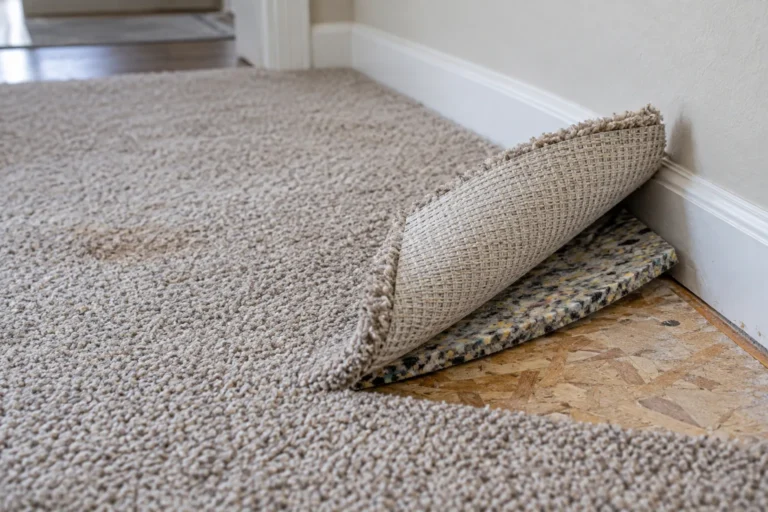
- How to Remove Mold From Carpet: Clean, Replace, or Call a Pro?
Sources
- University of Georgia Cooperative Extension: Remove Stains From Mildew, Mold — outdoor handling, care-label checks, and weakened-fiber cautions; its older solvent and bleach recipes are not adopted here
- CDC: Mold Clean Up Guidelines and Recommendations
- EPA: Mold Cleanup in Your Home
- Federal Trade Commission: Care Labeling Rule guidance
- Clorox: How to Get Mold and Mildew Stains Out of Colored Clothes