Dishwasher Not Cleaning Dishes? Start With These Safe Checks
Quick answer
If your dishwasher finishes a cycle but leaves food, grit, film, or a partly dissolved detergent pod behind, start with the water path—not replacement parts. Make sure the spray arms can turn, the filter and spray-arm holes are clear, dishes are not blocking the detergent dispenser, and the cycle and detergent match the load. If the machine does not fill, leaves the detergent dispenser closed, shows an error code, leaks, or makes a new grinding or electrical sound, use the model manual and arrange service rather than taking the appliance apart.
Do not add hand-washing liquid, laundry detergent, bleach, or a homemade cleaner to a dishwasher. These can create excessive suds, damage parts, or leave an unsafe residue. Stop the cycle if water is leaking or you smell burning. Disconnect power at the plug or breaker before any work that goes beyond the removable filter or spray arms described in your owner’s manual.
CHOOSE THE FIRST SAFE CHECK
What do you notice after the cycle?
Choose the closest result. This tool cannot identify a failed part; it helps you decide which visible, no-disassembly check is worth doing first.
Start with the visible result. Choose a pattern above for the safest next step.
| What you see after a cycle | What it may point to | First safe check |
|---|---|---|
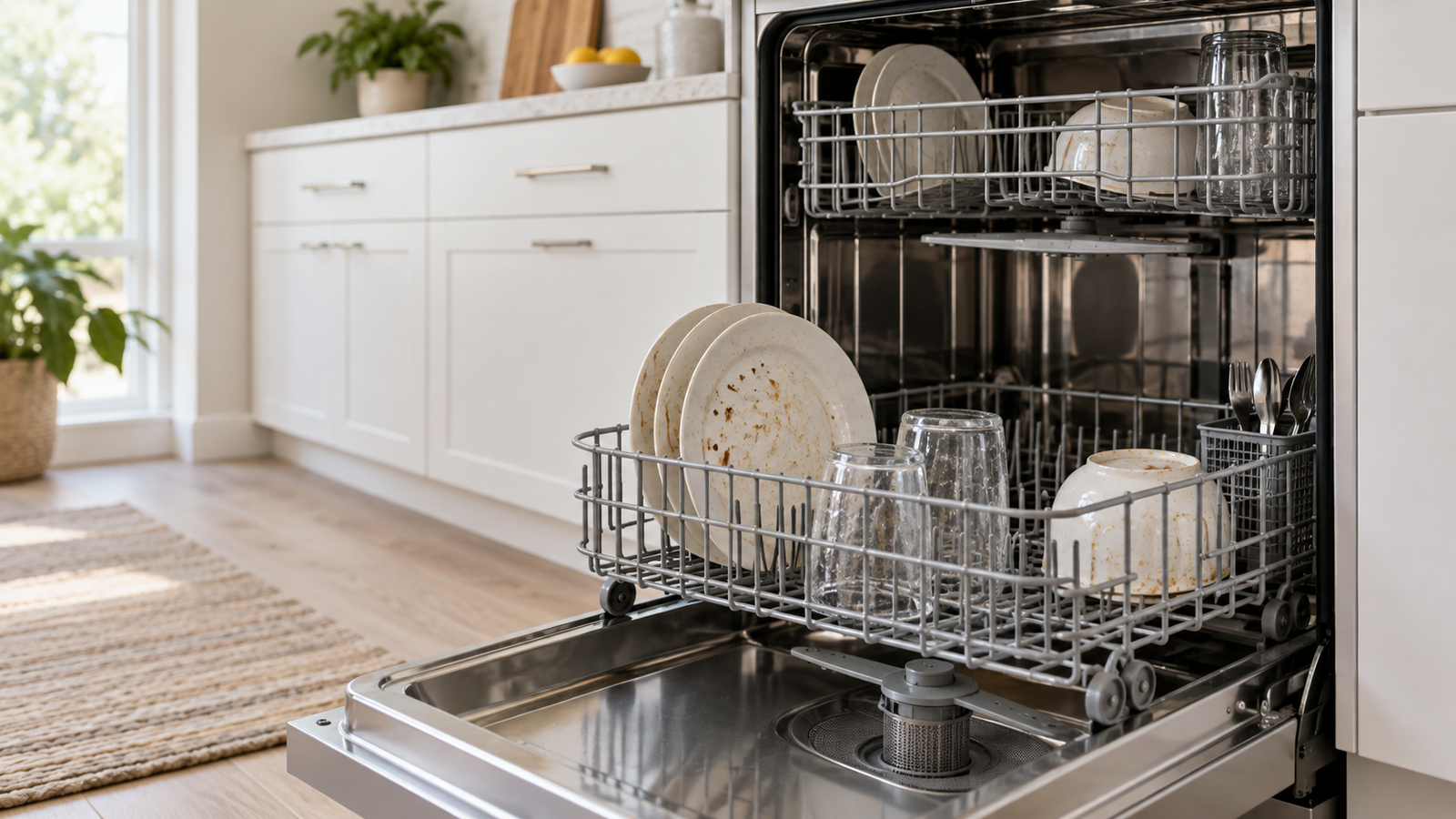
| Food or grit on dishes across both racks | Water may not be reaching the dishes well, or the filter and spray arms may need cleaning | With the dishwasher off, turn each spray arm by hand and check the filter using the manual |
| The upper rack is worse than the lower rack | A tall item, rack position, or upper spray-arm path may be blocked | Reload, then confirm that the upper spray arm has room to turn freely |
| White film or cloudy glasses | Detergent, rinse aid, water hardness, cycle choice, or permanent glass damage can look similar | Check the manual’s detergent and rinse-aid guidance before changing several products at once |
| A pod or detergent is still in the dispenser | The dispenser may have been blocked, detergent may be clumped, or the machine may not be getting enough wash water | Check that a large pan or utensil cannot block the dispenser; replace visibly clumped detergent |
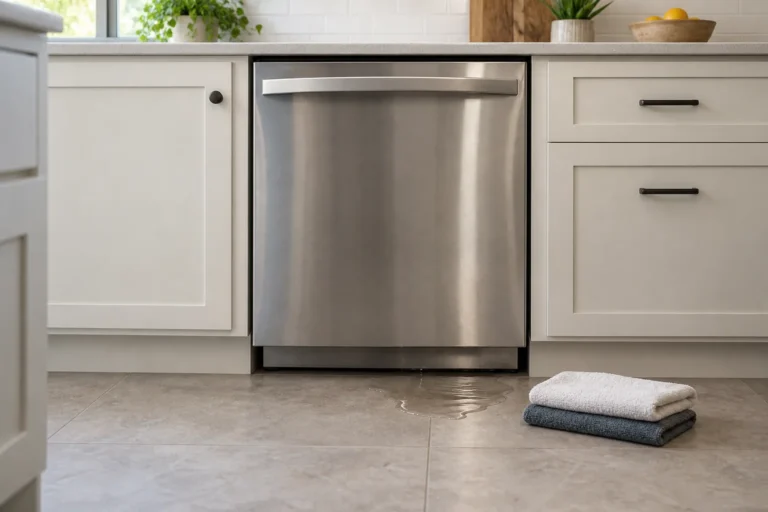
| Standing water, a leak, an error code, or a new harsh noise | This may be more than a cleaning-performance issue | Stop troubleshooting that requires disassembly and use the model manual or a qualified appliance technician |
If poor cleaning is paired with another symptom, see our Dishwasher Troubleshooting guide before replacing parts.
Check the loading and spray arms first
Poor cleaning does not automatically mean that a pump or heating part has failed. A single pan handle, tall plate, or incorrectly positioned rack can keep a spray arm from turning. Bosch and Whirlpool both advise checking loading and spray-arm clearance before moving on to more involved troubleshooting.
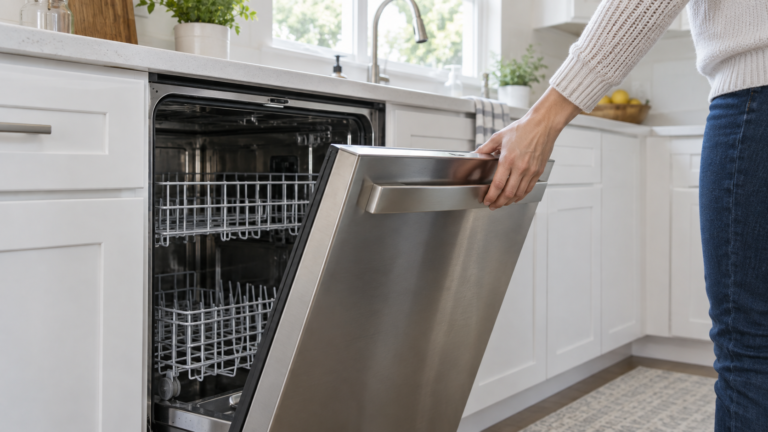
- Open the dishwasher after it has cooled and pull out both racks.
- Look for tall items, long utensil handles, or large pans that could touch a spray arm or cover the detergent dispenser.
- Turn each accessible spray arm gently by hand. It should have clear space to rotate. Rearrange the load if it touches an item or rack.
- Load bowls, cups, and containers so their openings face the spray rather than trapping water. Keep dishes separated enough for water to reach their surfaces.
If the problem is mainly in one rack, repeat this check with the rack in its normal height setting. Adjustable middle racks can change the clearance under the upper spray arm on some models.
Clean the filter the way your model specifies
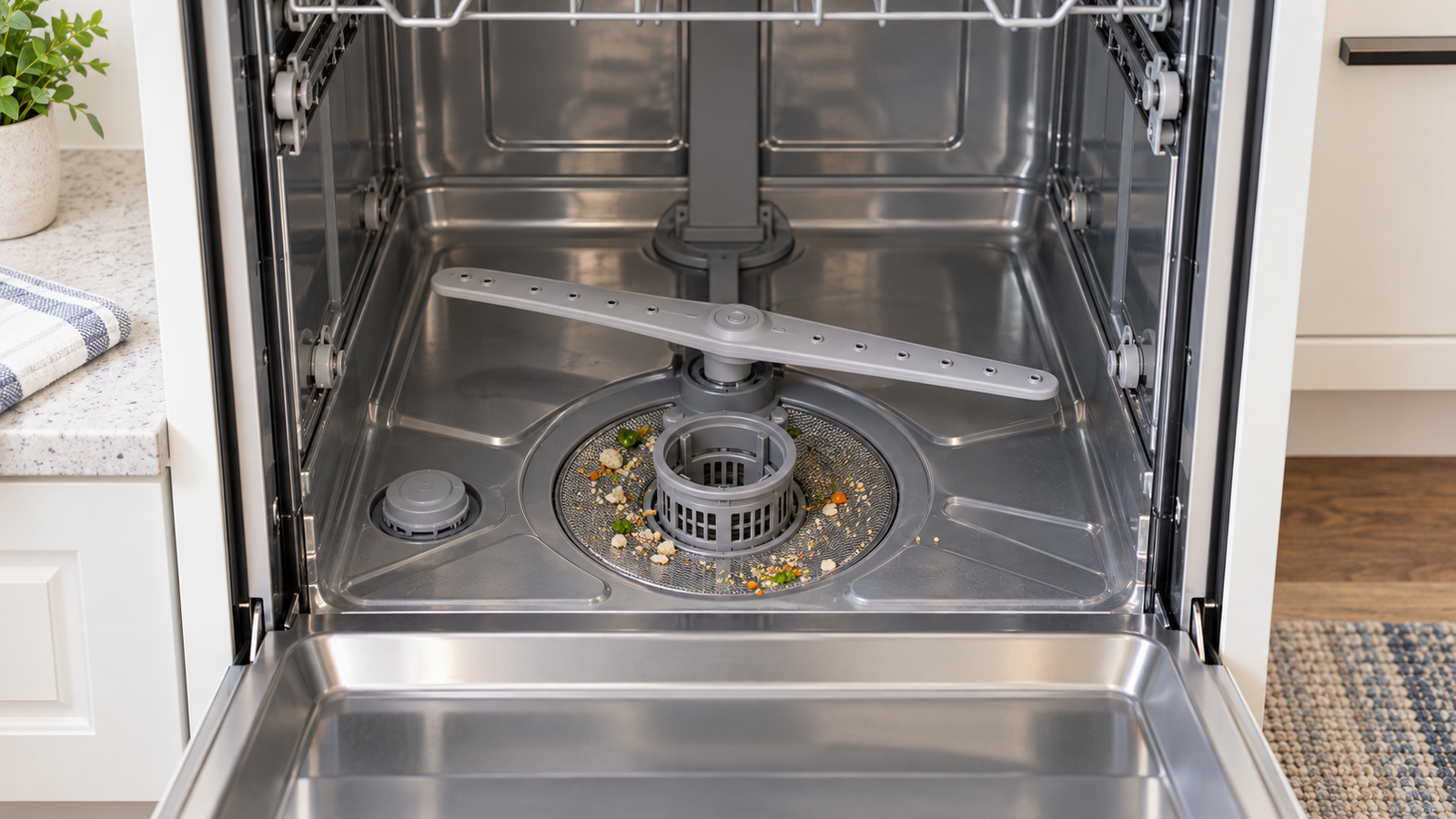
Many dishwashers have a removable filter at the bottom of the tub, but the design and removal method vary. A filter holding food debris can reduce water flow and allow particles to circulate back onto dishes. Bosch recommends cleaning its removable filter with water, mild soap, and a soft brush; use your own manual for the correct removal and reinstallation steps.
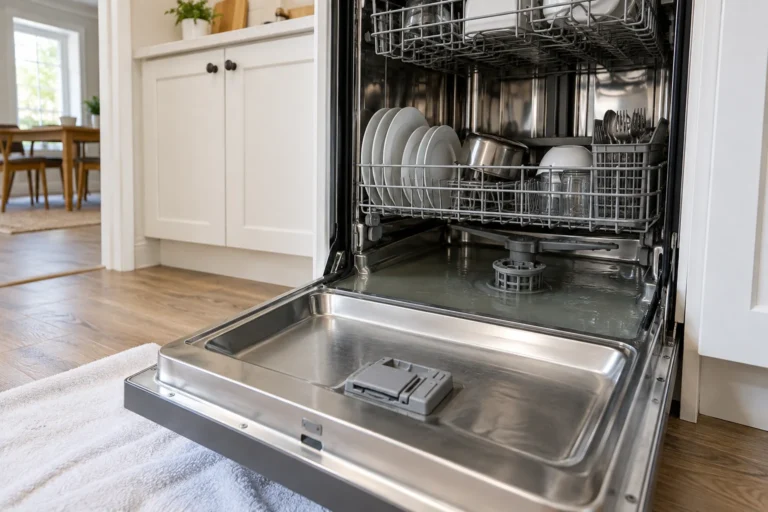
- Remove the lower rack and locate the filter assembly.
- Follow the manual to unlock and lift out only the removable parts.
- Rinse away loose debris. Use a soft brush and mild soap if your manual allows it.
- Reinstall every filter piece securely before running another cycle.
Do not run the dishwasher with the filter assembly missing. If you find broken mesh, a cracked filter, or debris below a part that the manual does not identify as user-removable, stop there and arrange service.
Check the spray-arm holes for blockages
The spray arms need open holes and enough water pressure to distribute wash water. With the dishwasher off and the arms removed only as your model manual directs, rinse them under running water. Bosch advises using a toothpick to loosen debris in blocked holes. Do not enlarge the holes or force a tool into a part that does not come out as described in the manual.
Reinstall the arm securely, then spin it by hand once more before loading dishes. If the arm is cracked, warped, or still will not turn freely after the load is rearranged, it is a model-specific repair question—not a reason to guess at parts.
Match the detergent and cycle to the symptom
Use only automatic dishwasher detergent that your appliance manufacturer allows, and follow the package and owner’s-manual directions for amount, cycle, rinse aid, and water-softener settings where applicable. Whirlpool notes that detergent exposed to air can clump and may not dissolve well; replace detergent that is visibly caked and keep the new product sealed in a cool, dry place.
For a heavily soiled load, a quick or rinse-only cycle may not provide enough washing time. Electrolux specifically notes that rinse, quick, and 30-minute cycles may not clean heavily soiled dishes. Choose a normal or heavier cycle that your model manual recommends for the load instead of adding extra detergent at random.
Use the result of the next cycle to narrow the cause
Run one ordinary load after you make the simple checks above. Change one or two things at a time so the result is useful.
- Dishes are wet but still have food on them: Recheck loading, spray-arm movement, filter condition, and cycle selection.
- The detergent is still mostly dry or the dispenser door did not open: Make sure no dish blocks the dispenser. If it happens again, the problem may involve filling or circulation and needs model-specific service guidance.
- Only glasses have a white haze: Check the manual’s guidance for detergent, rinse aid, and water hardness. Do not assume a haze is a filter problem; some glass damage is permanent.
- There is water in the bottom after the cycle: Treat that as a drainage symptom as well as a cleaning symptom. Do not keep running cycles until the cause is clear. If the dishwasher is also leaking, see our guide to a dishwasher leaking from the bottom.
When to call for dishwasher service
Simple maintenance is reasonable when the appliance fills, drains, and runs normally but cleaning has gradually declined. Call for service—or use the support path for your model—when you see an error code, no water enters the tub, the dishwasher leaks, a spray arm or filter is damaged, the detergent dispenser repeatedly stays closed, or the machine develops a burning smell, repeated grinding, or an electrical issue.
Avoid removing door panels, disconnecting water lines, bypassing a switch, or testing live electrical components as a general cleaning fix. Those steps depend on the model and can create a shock, leak, or damage risk.
Keep cleaning performance from slipping again
Scrape off large food pieces before loading, but do not assume every dish needs to be hand-washed first. Bosch and Whirlpool both explain that scraping is usually enough for normal loads; the exact advice still depends on the detergent and cycle guidance in your model manual.
Make a quick check part of your routine: keep the spray arms free to turn, clean the filter on the schedule in the manual, store detergent sealed and dry, and choose a cycle that matches the soil level. When a change in performance persists after those checks, record the model number and the exact symptom before contacting support. That makes the next diagnosis much more specific.