Dishwasher Smells Bad? Match the Odor Before You Clean It
Quick answer
Most dishwasher odors start with food debris, grease, or moisture left around the filter, spray arms, door seal, or tub. If the dishwasher drains normally and the smell is sour, musty, or food-like, start with the filter and the reachable surfaces. A sewage-like or rotten-egg smell with standing water needs a drainage check instead. A burning-plastic, electrical, or sharp chemical odor is a stop-and-get-help situation, not a cleaning job.
Stop and get help first
Do not run another cycle if you smell burning plastic, hot wiring, or a sharp electrical odor; see smoke; or find water near an outlet, cord, or other electrical connection. Turn off power at the breaker only if you can do so safely, do not stand in water, and arrange qualified appliance service.
Do not combine cleaning products. In particular, never add bleach to a dishwasher or mix bleach with vinegar, ammonia, or any other cleaner. Follow your dishwasher manual and the label for any dishwasher cleaner.
Start with the smell you notice
| What it smells like | What to look for before cleaning | Best first route |
|---|---|---|
| Sour, musty, old-food, or “wet dishcloth” odor | No unusual water left in the tub; residue in the filter, spray arms, or door seal | Clean the filter and reachable surfaces, then run a manufacturer-approved cleaning cycle if needed. |
| Rotten egg or sewage-like odor | Standing water, a slow drain, sink/disposal odor, or the odor returns immediately after cleaning | Do not keep masking it with cleaner. Check the drainage route and use the dishwasher not draining guide. Persistent sewage odor needs a plumber or appliance technician. |
| Burning plastic, electrical, or a sharp hot smell | Smoke, a hot control area, melted plastic, damaged wiring, or an unfamiliar electrical smell | Stop using the dishwasher. Keep clear of water and arrange qualified service. |
| New-plastic or varnish-like odor from a newly installed unit | The dishwasher is new and otherwise operates normally | Check the model manual and manufacturer support. Do not assume an odor is normal if it is strong, worsening, or accompanied by heat, smoke, or poor operation. |
An odor is a clue, not a diagnosis. The goal is to find out whether food residue is sitting inside the dishwasher or whether used water is not leaving the machine properly.
Before you remove the filter
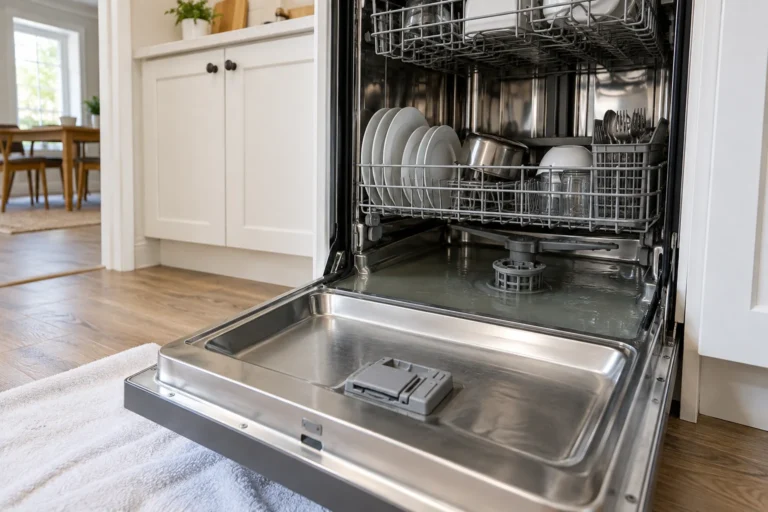
- Let the dishwasher finish and cool. Open the door and look at the tub floor before touching anything.
- If water is pooled above the filter area or the tub did not drain at the end of the cycle, follow the drainage guide instead of starting a cleaning cycle.
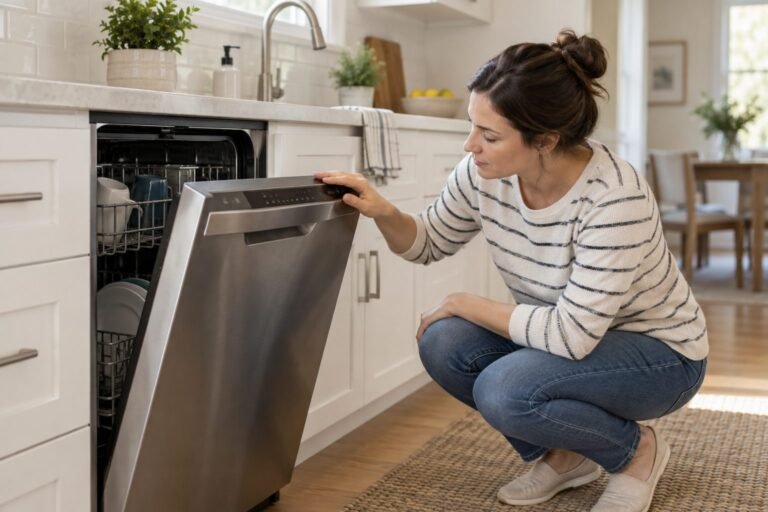
- If there is no standing water and no electrical warning sign, pull out the lower rack. Check the owner’s manual for the exact filter removal method—filter assemblies vary by model, so do not force one that does not lift or twist easily.
- Wear gloves if broken glass or sharp debris could be in the filter area.
Bosch and Whirlpool both identify trapped food debris and drainage problems as common odor sources. Your own model manual controls if its instructions differ.
If the smell is food-like, sour, or musty
1. Clean the filter the way your model allows
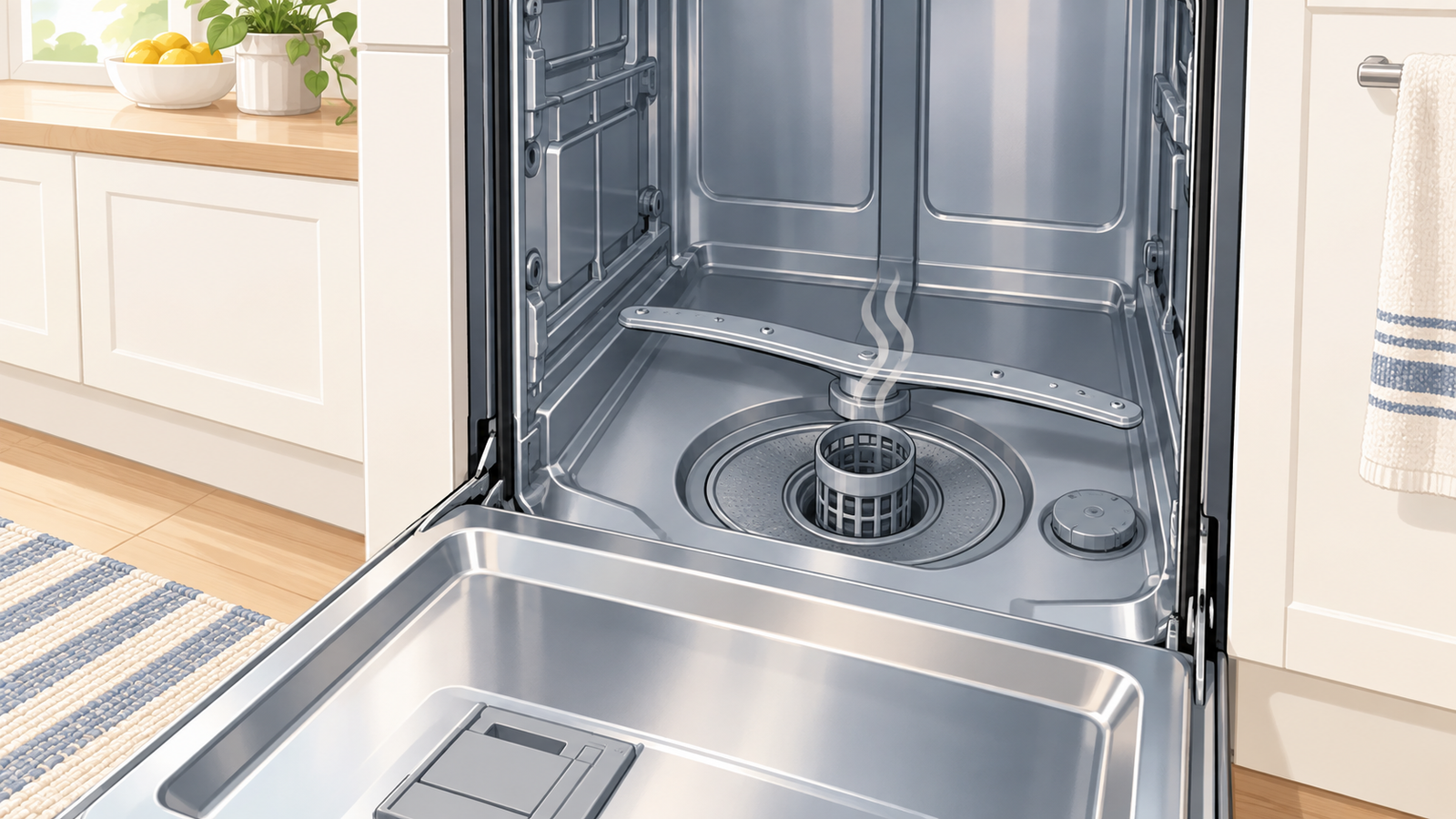
Remove the filter only as directed in your manual. Rinse loose debris away under running water and use mild dish soap with a soft brush for residue that remains. Reinstall the assembly securely before running the dishwasher again. If the filter is clean but the odor remains, look around the filter opening for visible food particles. Do not reach into an area you cannot see or access safely.
2. Wipe the door seal and door edge
Food residue and moisture can collect where the tub does not get much wash action: the rubber gasket, the door edge, and the detergent-dispenser area. Wipe these reachable areas with a damp cloth and mild detergent. Do not use abrasive pads or chlorine-based cleaners unless your manufacturer specifically permits them for that surface.
3. Check spray arms without forcing them apart
If your manual allows removal, inspect the spray-arm holes for visible debris and clean them as instructed. If the spray arm does not come off easily, leave it in place and use the manufacturer’s instructions rather than prying it loose.
4. Use one approved cleaning method—not a homemade chemical mix
Once the filter and reachable surfaces are clean, run an empty maintenance cycle only if the dishwasher drains normally. Use a dishwasher cleaner or other method your manual permits, and follow that product’s instructions exactly. Do not add multiple cleaners to the same cycle.
If the odor is gone after the next normal wash, the issue was likely residue or moisture inside the machine. If it returns quickly, move to the drainage checks below rather than repeating stronger cleaning products.
When a rotten-egg or sewage smell points beyond the tub
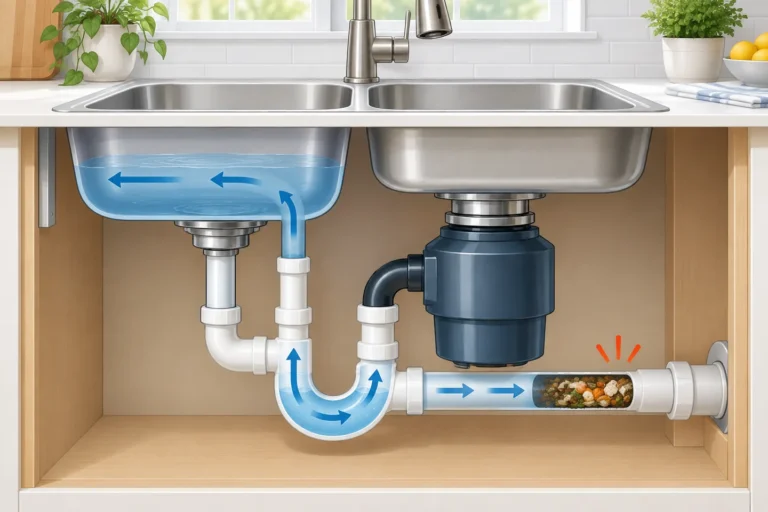
A sewage-like odor can come from food residue, but it can also appear when water is not draining correctly or wastewater is moving back toward the dishwasher. Check whether water remains in the tub after a cycle and whether the kitchen sink or garbage disposal also smells or drains slowly.
Start with the safe, accessible checks in the dishwasher not draining guide: a visible filter blockage, the sink/disposal connection, and obvious hose kinks under the sink. Do not disconnect hoses, remove the dishwasher from its opening, or alter plumbing you are not comfortable servicing. If the dishwasher keeps leaving water behind, the odor persists after accessible cleaning, or the drain setup appears wrong, call a qualified appliance technician or plumber.
What not to do
- Do not use bleach as a shortcut. The CDC says never to mix household bleach with any other cleaner or disinfectant because dangerous vapors can result. Read the CDC safety guidance.
- Do not mix vinegar, dishwasher cleaner, baking soda, or other products in the same cycle. Use one manufacturer-approved method at a time.
- Do not keep rerunning a dishwasher that has standing water, a sewage odor, or a burning odor.
- Do not force the filter, pump cover, or spray arm. Parts and release methods differ across models.
Keep the odor from returning
Scrape solid food into the trash before loading. If dishes must sit for a while, use the rinse option if your dishwasher has one. Check the filter on a schedule that fits your model and household use, and wipe the gasket and door edge when you see buildup. Leave the door slightly open after a completed cycle when it is safe to do so, so the tub can dry.
If your dishes are also coming out gritty, cloudy, or still dirty, use Dishwasher Not Cleaning Dishes rather than assuming odor is the only problem. If you are not sure which dishwasher symptom is primary, return to the Dishwasher Troubleshooting hub.
Sources used for this guide
- Bosch: Dishwasher smells
- Bosch: Dishwasher cleaning and maintenance
- Whirlpool: Removing odors in your dishwasher
- CDC: Cleaning and disinfecting with bleach
This article provides general household guidance. Your model’s owner manual and service instructions take priority.