How to Clean Couch Cushions: Check the Care Tag First
Start with the care tag
Cleaning couch cushions starts with two separate questions: What does the sofa’s upholstery care code permit? And does the maker explicitly say this particular cover can be machine washed? A zipper answers neither question. Vacuuming may remove loose dirt, but water, solvent, steam, and washing can change fabric or trap moisture inside the cushion.
Quick answer: Find and photograph the furniture’s care tag. Identify its W, S, WS/SW, or X code, then look for separate laundering instructions for the cover. A code alone is not permission to use a washing machine. If the tag is missing, the material is unknown, or liquid has reached the cushion core, pause before adding more cleaner.
Cleaning more than the cushions? Use the complete couch-cleaning decision guide to match the care code, material, and depth of the problem before choosing a product or method.
Updated October 22, 2026: corrected the zipper/removal distinction, completed the small-area test and spot-care sequence, and added drying, refitting, and stop decisions. The October 9 revision separated upholstery care codes from explicit machine-wash permission.
Choose the care route · Complete the spot-care check · Check before using the cushion
Before reaching for a tag or cleaner: move only loose cushions that are safe to lift. Do not tip a heavy sofa, reach into a reclining mechanism, or operate a wet powered seat to inspect underneath. If liquid reached a motor, control, plug, or outlet, keep clear and get qualified help before using it. Visible or suspected mold, sewage, floodwater, or an unknown chemical spill is not an ordinary upholstery spot; keep people and pets away and ask a qualified cleaner or restoration service before vacuuming, adding products, or directing airflow across it.
Identify what can actually be cleaned
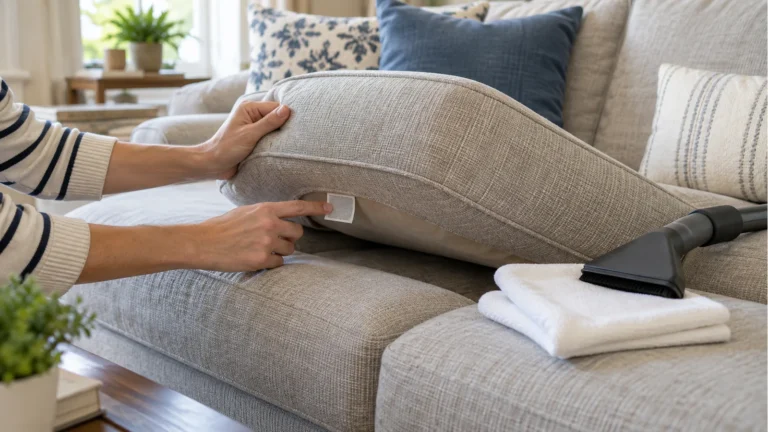
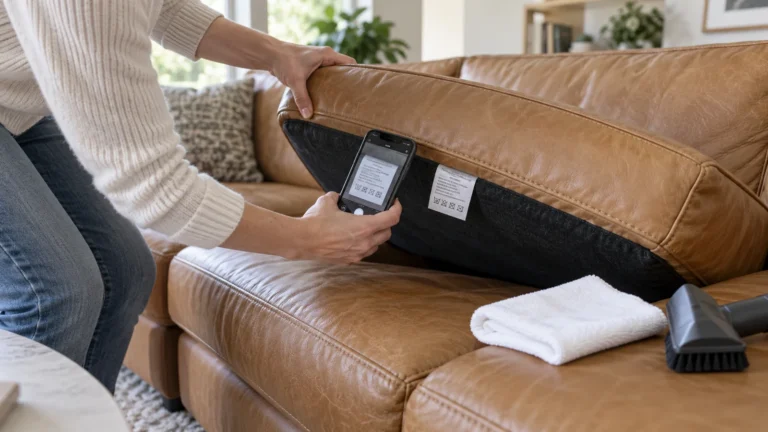
Look under safely removable loose seat cushions, at an accessible cushion seam, or in the owner’s paperwork for the upholstery care tag. Photograph it before cleaning. If the label is underneath a heavy frame or behind a mechanism, ask the maker for the instructions rather than lifting or operating the furniture just to find it. Do not open a fixed casing or liner to identify the fill.
The code applies to the upholstery-cleaning method, not automatically to the cover in a washing machine. Ashley lists W, S, SW/WS, and X routes for its furniture. La-Z-Boy says its W-coded upholstery is spot-clean-only and that those covers should not be removed and laundered. A different sofa may have an explicitly washable cover; its own label and maker instructions control.
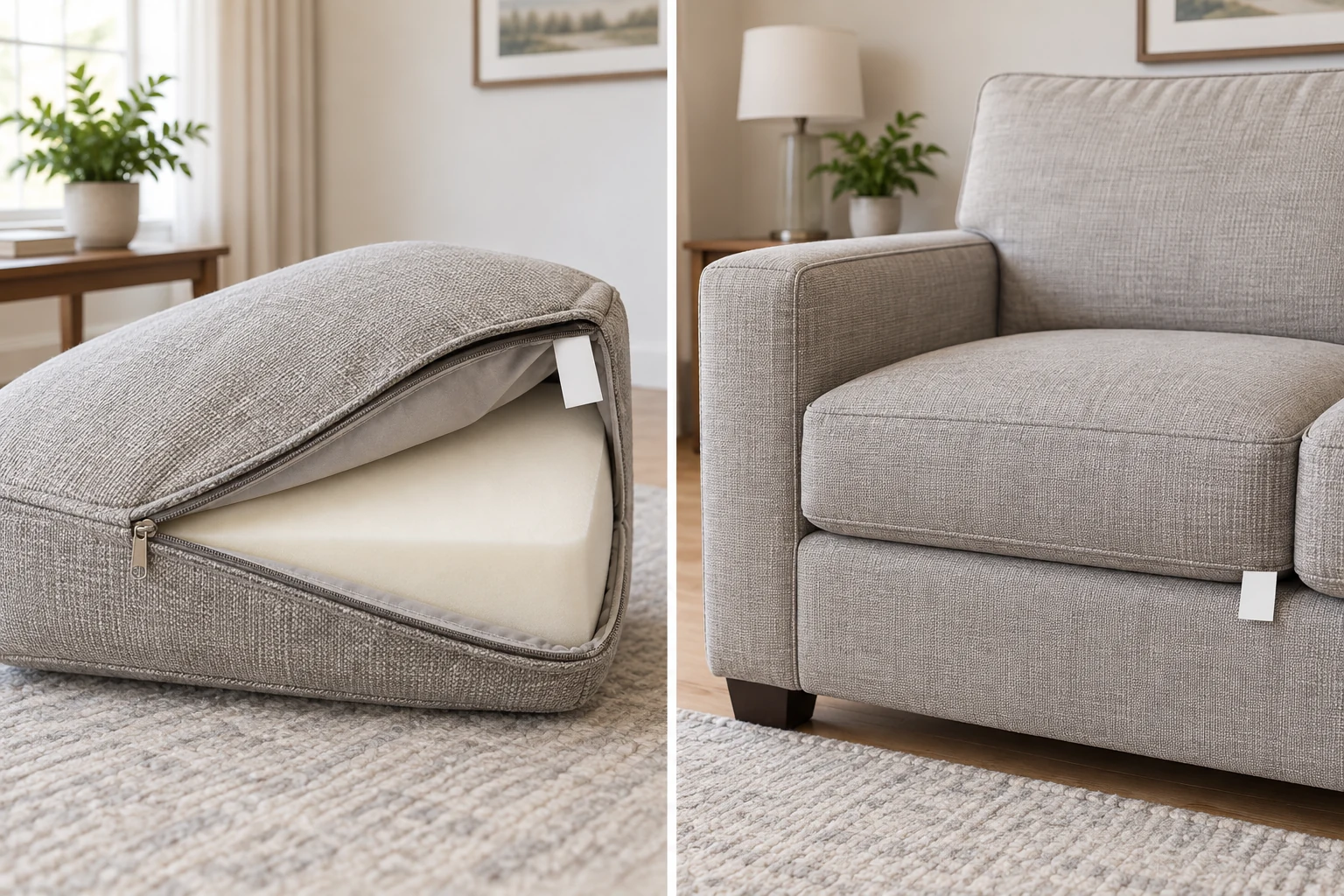
Use this route before you add moisture
| What the tag or maker says | Safe starting route | Do not assume |
|---|---|---|
| W | Use only the water-based upholstery spot-cleaning method allowed by the maker. Pretest where directed and avoid soaking. | A zipper or W code permits laundering the cover or washing the cushion core. |
| S | Follow the maker’s water-free solvent spot-cleaning route, or use a qualified upholstery cleaner. | The cover should be removed for separate dry cleaning. |
| WS, SW, or W-S | Use only a permitted water-based or solvent spot-cleaning method within the maker’s limits. | Every cleaner, steam machine, or laundry cycle is safe. |
| X | Vacuum or lightly brush as the maker directs. | Water, solvent, or foam cleaner is allowed. |
| Explicit machine-wash instructions for this cover | Wash only the cover according to its stated cycle, temperature, detergent, and drying directions. | The inner cushion or another cover on the sofa is washable too. |
| No readable instructions or a special fabric | Photograph the item and ask its maker or a qualified upholstery cleaner. | A generic recipe is safe for this material. |
These are broad cleaning categories, not universal recipes. Ashley says its coded cushion covers should not be removed for separate dry cleaning; La-Z-Boy explicitly says its W-coded cushion covers should not be removed and laundered. A different product can have an explicit washable-cover instruction; that product’s instructions control.
Remove dry debris before treating a mark
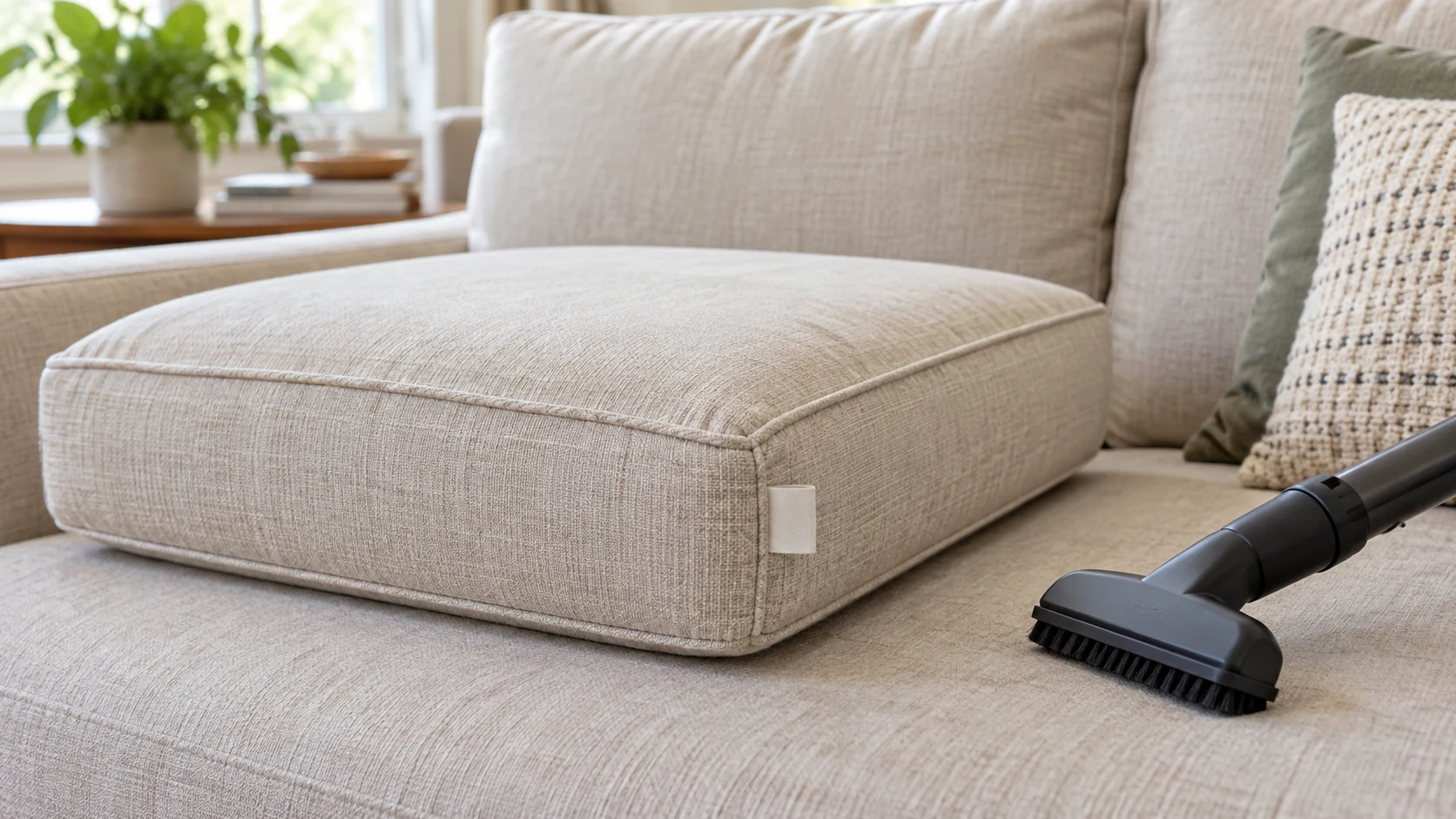
For routine dry crumbs, pet hair, and loose dirt on a cushion whose tag permits brushing or vacuuming, begin dry. Use the approved attachment on accessible fabric and seams. Do not insert it into the lining, wet fill, or a reclining mechanism. This step is not a way to remove unknown contamination or suspected mold.
Use a clean upholstery attachment or the tool the manufacturer recommends. Keep the pressure light. If the fabric has a raised or brushed texture, stop if the surface begins to look rough, flat, or uneven. Dry debris removal is often enough for a cushion that only needs routine freshening.
If the cover is explicitly machine washable
Follow the exact cover’s tag and sofa-maker instructions, not just a W or WS code. Before removal, photograph its orientation and note which insert it belongs to; inspect accessible seams and the zipper for damage without forcing them. Confirm the wash, dry, and refit directions and that the washer can handle the cover without packing it tightly. If the fit or instructions are uncertain, ask the maker or a laundry professional. The following sequence applies only to an explicitly machine-washable cover:
- Vacuum the cover before removal. Remove loose crumbs and hair so they do not work into the fabric or washer.
- Remove only the permitted cover. Keep its dry insert supported in a clean, dry place. Do not remove an inner liner, cut seams, or put foam, down, batting, springs, or a whole cushion into the washer unless its separate instructions expressly allow that method.
- Turn the cover inside out. This can reduce surface abrasion while it is washed.
- Use the tag’s permitted cycle, water temperature, and detergent guidance. Maytag’s generic washable-cover route uses a delicate cycle, cold water, and dye-free detergent, but your tag may require something different.
- Air dry rather than using the dryer unless the tag specifically says otherwise. Heat can shrink a cover. Maytag advises air drying; follow your own tag if it differs.
Do not wash another cover simply because one survived a previous wash. Fabric, backing, color, and construction can differ. Maytag describes refitting eligible covers slightly damp to reduce wrinkles, but that is not universal permission to trap moisture in your cushion. Refit before full drying only if your exact sofa instructions permit it over a clean, dry insert. Do not sit on it or add throws until it has finished drying as directed. Never force a tight cover or strained zipper; ask about shrinkage or replacement instead of pulling harder.
Brand exceptions matter even within “removable covers.” Home Zone’s current removable-cover page allows washing for its eligible ordinary covers but excludes HERO and other performance-fabric covers from that route. This is an example of why a generic cover-washing recipe cannot override your exact item’s instructions.
If the cover is attached or cannot be washed
An attached cover needs a smaller, more cautious approach. Do not unzip or cut a seam to make it removable. Start with the care tag and use only the limited spot-cleaning method it permits. For an X-coded fabric, follow the maker’s vacuum-or-light-brush route instead of applying a cleaner.
A cleaner must match both the furniture instructions and its own label, including fabric exclusions, dilution, application, removal, ventilation, and any protective-equipment requirements. “Upholstery cleaner” is not enough: Guardsman’s Stain & Odor Eliminator page, for example, excludes velvet, silk, and S- or X-coded items. This is a compatibility example, not a recommendation to buy or use it on your cushion.
For a permitted W or WS water-based spot-care method: use the sequence below only when both instructions allow all of it. A water-based code does not authorize soaking, a carpet extractor, or an improvised dish-soap concentration.
- Test accessible hidden outer fabric. Use the exact permitted product preparation, application, contact time, and residue-removal method. Do not unzip an unapproved casing to create a test spot.
- Let the test dry fully and compare. Check the color, texture, stiffness, and any dye transfer against untreated fabric. Stop immediately if damage appears; do not wait through visible change. Proceed only if the fully dried test is unchanged.
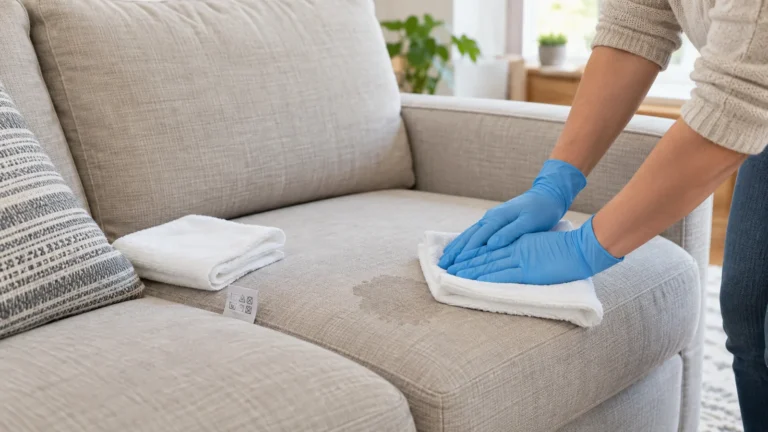
- Work one small mark from edge to center. Use the approved cloth or foam application and gentle blotting, not scrubbing or pressure into the fill. Keep the wet edge from spreading and stop if no progress occurs.
- Complete the approved residue-removal step. Some products need a water wipe or rinse, others do not. Use only what both labels permit; do not water-rinse an S-only material. If the required removal would soak the insert, do not use that treatment or improvise a partial rinse.
- Allow the treated area to dry before judging or repeating. Keep the cushion out of use and arrange only the maker-permitted support and airflow with safe, dry electrical access. Do not add heat, sit on it to squeeze moisture out, or cover damp fabric with a throw. Use the decisions below before another pass.
S, X, or unknown instructions need a different route. An S code is not permission to substitute rubbing alcohol or a household degreaser for the specified water-free product. Do not borrow the water-rinse step above. Follow the exact solvent label’s use and ventilation precautions or use a qualified upholstery cleaner if you cannot meet them. X permits only the maker’s dry vacuum/light-brush care; an unknown code is a reason to obtain instructions, not test a stronger product.
Stop if the fabric changes
Stop applying product immediately if the cover transfers dye, pills, stiffens, forms a ring, changes texture, or develops a spreading wet edge. Do not treat drying as permission to resume after damage. Keep it out of use and ask the maker or an upholstery professional; a second cleaner, heat, or extra water can worsen the result.
Avoid these common shortcuts
- Putting every zipped cover in the washer: a zipper may be for manufacturing or servicing. It proves neither user-removal permission nor a washing method.
- Soaking the cushion to remove an odor: a spot-cleaning permission is not a permission to saturate the cover or fill.
- Using steam, a carpet extractor, or a strong all-purpose cleaner without written approval: water-based spot cleaning does not automatically authorize deep extraction or heat.
- Mixing or layering cleaners: never combine cleaning chemicals or apply a second product over an unknown residue.
- Treating special fabrics as ordinary upholstery: use the furniture maker’s route for leather, suede, velvet, wool, silk, or delicate and antique fabric. For leather or leather-look cushions, use the leather-couch finish guide; if the couch is suede or suede-like, begin with the suede couch care-tag guide.
When a spill reaches the cushion core
A cover-only wash will not necessarily remove liquid or odor from foam, batting, or other fill. A dry top, a fresh smell, or a fixed number of airing hours cannot confirm that enclosed fill is dry or decontaminated. Do not open a fixed casing, squeeze the cushion, or reach into a mechanism to test it. If a spill, pet accident, or cleaner has soaked into the insert, stop repeated spraying and ask the maker whether the insert can be cleaned or replaced. For a urine accident, use the couch urine-odor guide to separate a surface spot from liquid that reached the foam or couch deck before selecting a product. A qualified upholstery cleaner can assess deep soiling. If liquid may have reached a power-reclining mechanism or other electrical parts, stop using the powered feature until qualified help assesses it.
Check before refitting or using the cushion
| What you find | Next useful action |
|---|---|
| Approved cover-only wash completed; insert stayed dry; cover, seams, and zipper are sound | Follow the exact refit and drying instructions. Use the cushion only after all treated layers have finished drying and the cover fits without strain. |
| Small spot treatment dried unchanged, residue removal complete, no reason to suspect wet fill | Return it to use once the permitted care is complete. A faint remaining mark is not a reason to keep adding products; ask before repeating a no-progress treatment. |
| Ring, tackiness, dye transfer, altered pile, or a cover/zipper that will not fit | Stop and ask the maker or upholstery cleaner. Do not force, stretch, heat, water-rinse a solvent-only fabric, or use a second cleaner to hide the problem. |
| Insert/deck remains damp or odorous; moisture depth is uncertain; powered parts were affected | Keep it out of use and get assessment of drying, cleaning, replacement, or repair. Surface feel and odor cannot certify the interior or electrical safety. |
When to use a professional upholstery cleaner
Use the sofa maker’s support channel or a qualified upholstery cleaner when the tag is missing, the material is special or valuable, the staining is widespread, a previous product left a ring or color change, or the cushion has a strong odor that persists after it is completely dry. Professional help is also the safer choice when the cushion core has become wet, a power-reclining sofa has nearby electrical components, or you cannot confirm the fabric and code.
If you have the purchase receipt, model number, or a photo of the tag, keep it with the sofa. That information is more useful to a cleaner or manufacturer than a guess about what the fabric looks like.
Keep couch cushions easier to clean
Vacuum dry debris as the tag allows, blot fresh spills promptly, and keep food or drinks away from fabric cushions when practical. Rotate or flip cushions only if the sofa maker says they are reversible. The most useful prevention is preserving the care tag and following it before a spill becomes a deep-cleaning project.
Sources
- Ashley: How to Care and Clean Your Furnishings — upholstery tag location, W/S/WS/SW/X categories, and cover-removal limits for Ashley furniture.
- La-Z-Boy: Fabric and Leather Care — W-code spot-cleaning scope, no-laundering instruction for covered cushions, and extraction limits for La-Z-Boy furniture.
- Maytag: How to Wash and Dry Couch Cushion Covers — general washing and drying sequence only for covers whose own care instructions permit laundering.
- Home Zone Furniture: Removable cushion covers — its ordinary-cover route and performance-fabric exclusion, not a rule for other brands.
- Guardsman: Stain & Odor Eliminator — a named product’s fabric/code exclusions; not an endorsement or universal cleaner.