How to Remove Urine Smell From a Couch: Check the Care Code and How Deep It Soaked
Quick answer: Blot fresh urine with clean white towels, but do not add a cleaner until you find the upholstery care code. A W or WS code may permit a water-based upholstery product; S, X, leather, suede, and unknown fabrics need a different route. Check the cushion underside, seams, and the deck below it. If the odor remains below the cover after everything is fully dry, another surface treatment is unlikely to reach the whole source.
Urine odor is not always a surface-cleaning problem. Liquid can pass through the face fabric into batting, foam, webbing, or the couch deck. The safest first response is therefore blot, read the care tag, and check the depth—not reach for a universal household mixture.
For ordinary soil and material-specific care, start with our complete couch-cleaning guide. The steps below focus only on a urine accident and the odor source it may leave behind.
Updated October 22, 2026: added a cleaner-versus-furniture compatibility check, a complete hidden-area test, and decisions for lingering odor, damage, or uncertain drying. Revised the layer illustration so it cannot be read as a home depth test.
Check whether the cleaner fits the couch · Handle a fresh accident · Decide before using the seat again
Before touching a powered sofa: if liquid reached a control, motor, cord, outlet, or powered console, stop using it and keep clear of wet electrical parts. Do not operate the mechanism to reach a tag or dry a spill. Follow the exact manual’s safe isolation instructions only with dry, safe access; otherwise get qualified help. A dry cushion does not clear a wet electrical component for use. La-Z-Boy’s power-recliner manual gives a model-specific example of the wet-control hazard.
Make these three checks before applying anything
| Check | What to look for | Why it changes the next step |
|---|---|---|
| Care code | W, WS/SW, S, X, a manufacturer-specific code, or no readable tag | The code narrows the cleaning route; the exact fabric and furniture instructions must also permit the complete method. |
| Soak depth | Dampness only on the fabric, transfer on the cushion underside, odor in the foam, or odor from the deck/frame | A surface product cannot reliably treat hidden material it never reaches. |
| Construction | Fixed seat, removable cushion, zippered cover, loose fill, foam insert, leather, suede, velvet, or natural-fiber fabric | A zipper proves neither permission to remove the cover nor permission to wash it; some materials need specialist care. |
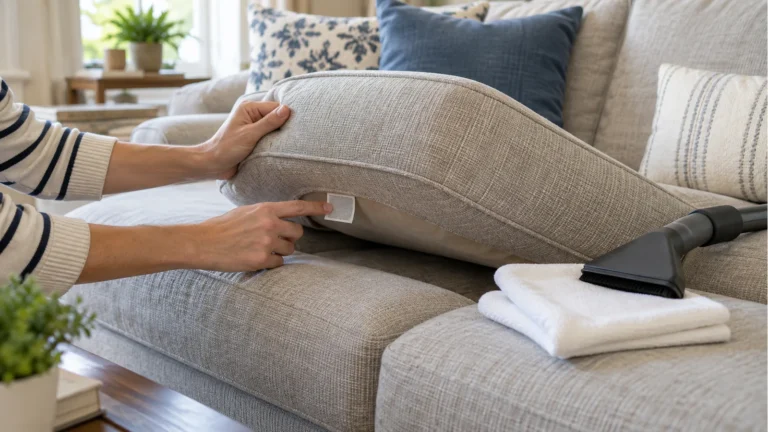
Care tags are commonly under a removable cushion or beneath the furniture frame. Look only where you can reach safely: do not tip a heavy couch, crawl under an unsupported frame, or reach into a reclining mechanism. Photograph an accessible tag before cleaning. If it is missing or inaccessible, use the exact model record or ask the manufacturer rather than guessing from appearance.
What the upholstery code allows
| Code or material | Safe starting point | Do not assume |
|---|---|---|
| W | Blot, patch-test, then use only a water-based upholstery product whose label permits the fabric and the type of mess | W does not mean the cushion can be saturated, steam-cleaned, or machine washed |
| WS / SW | Use a manufacturer-approved water-based or solvent route after a hidden-area test | Both options being possible does not make every household cleaner compatible |
| S | Blot fresh liquid with dry white towels and use the manufacturer’s solvent-care route or a qualified upholstery cleaner | Do not add water or a water-based enzyme cleaner |
| X | Blot dry only; then contact the manufacturer or a qualified upholstery cleaner for an odor problem | X does not permit liquid spot cleaners |
| Unknown, leather, suede, velvet, or delicate natural fiber | Blot without rubbing and check the maker’s instructions | Do not infer the method from color, texture, or an online recipe |
Ashley and La-Z-Boy both instruct owners to use the furniture tag and warn against saturating upholstery. Their detailed rules vary by code and product, which is why the tag on your couch outranks a general cleaning tip.
Safety boundary: Do not mix cleaners or keep adding different products when the first attempt fails. Do not apply bleach, ammonia, peroxide, vinegar, solvent, steam, or an enzyme product unless the furniture instructions and the product label permit that use. Use the protective equipment and ventilation the cleaner requires, avoid direct contact with the soiled area, and wash your hands after handling it. Keep children and pets away for the full label-directed period and until the treated layers are dry. Odor removal is not proof of disinfection.
If the urine is still fresh
1. Blot vertically instead of scrubbing
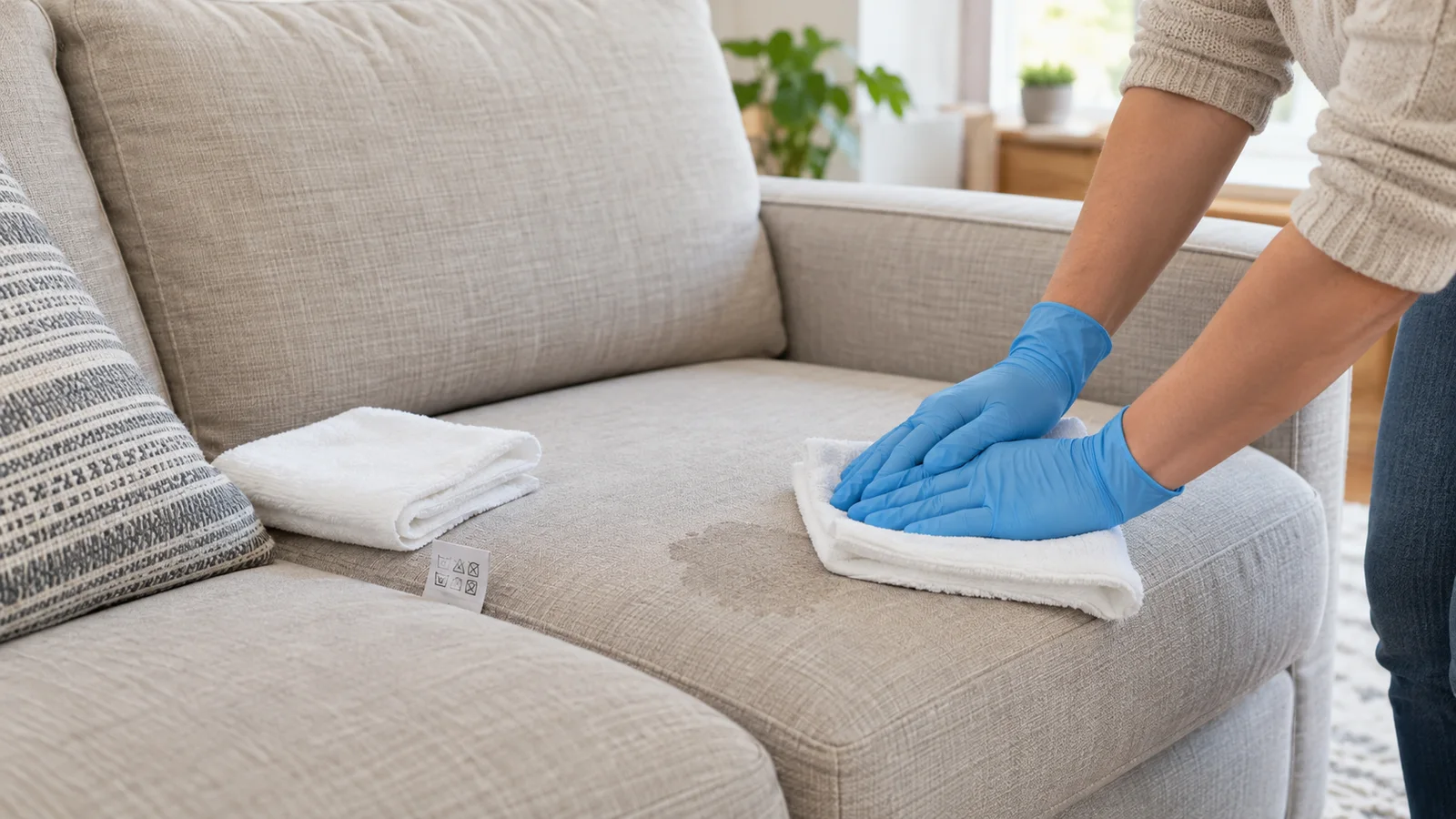
Place a clean white towel over the wet area and press straight down. Move to a dry section and repeat until little moisture transfers. Scrubbing spreads liquid sideways and can disturb pile fabrics.
If the cushion is removable, lift it only as the furniture is designed to be used. Check the underside, seams, piping, and the deck below it. Blot any accessible wet area with separate clean towels. Do not unzip or launder a cover just because it has a zipper; the care label must permit removal and washing.
2. Identify the deepest affected layer
A dry-looking top can hide moisture below it. Check only an underside or seam that is safely accessible in normal owner use; fresh moisture transfer to a dry white towel is a reason to stop adding liquid. No transfer does not prove that the foam is dry. Note where odor is apparent without putting your face against soiled material. Do not open a fixed casing, cut a liner, squeeze the core, or expose loose fill to determine the depth. If depth is uncertain, treat that uncertainty as a reason for assessment—not as permission for another surface treatment.

The IICRC notes that urine can move beneath upholstery into fiberfill, cushion interiors, and structural materials. For heavy contamination, cleaning the cover may need to be combined with replacement of a deeply contaminated cushion core.
3. Choose a product from the code and its label
For a W or WS fabric, first check whether the furniture instructions and the exact cleaner label allow the same application, dwell, removal, and drying process on this fabric. An upholstery or enzyme label alone is not enough. If the instructions conflict, do not compromise by diluting the product, spraying less than required, skipping removal, or soaking a no-saturation cushion. Ask the furniture maker for a compatible route or use a qualified upholstery cleaner.
A real conflict to watch for: the linked Nature’s Miracle cat-product directions call for saturation and leaving the odor treatment wet. Ashley and La-Z-Boy warn against saturation on the coded fabrics described in their care guides. That product is therefore not an automatic fit for those fabrics. Its stain-removal instructions also differ from its odor-treatment instructions; do not combine the two sequences or borrow their wait times for another formula.
Only when the complete method is compatible, test a small hidden area of the same outer fabric before treating the visible mark:
- Photograph or note its dry color and texture. Use the cleaner’s stated amount, applicator, ventilation, and protective equipment on that test area.
- Allow the label-directed contact time, then remove or leave the product exactly as that formula requires. Do not water-rinse an S-only material or leave a rinse-required cleaner in place.
- Let the tested fabric finish drying before comparing it with the untreated area. Check for dye on the white cloth, rings, stiffness, tackiness, or altered pile. Stop immediately if a change appears; drying is not permission to resume after damage.
- If unchanged, treat only the accessible affected area using the same permitted process and keep-off period. Do not enlarge the wet area to chase a suspected hidden deposit. If the label or furniture instructions do not give a compatible completion route, stop and ask.
For S, X, leather, suede, velvet, natural fibers, or an unknown code, do not translate a W-fabric procedure to your couch. Use the maker’s instructions or arrange qualified upholstery cleaning. Our suede couch guide explains why a suede-like appearance alone is not enough to select a liquid method.
4. Remove excess moisture and let every layer dry
After the label-directed treatment, complete its removal step; blot only when directed, and do not improvise a rinse or extraction cycle. Allow the approved drying process with ordinary room airflow. A fan may be used only with dry, safe electrical access and when the cleaner’s ventilation and ignition precautions permit it—not to disperse visible mold or contamination. Do not use heat or a powered sofa mechanism as a drying tool. Keep treated cushions separate as the maker allows and out of use until the required drying and keep-off conditions are met.
Judge the result after the permitted treatment and drying are complete, not while the cleaner is masking the odor. Surface feel, a dry towel, a timer, or a fresh scent cannot certify enclosed foam as dry or decontaminated. If the insert or deck is damp, the accident was substantial, or you cannot assess the affected layers without opening fixed upholstery, keep the seat out of use and ask the maker or an upholstery professional about drying, cleaning, or replacement.
If the odor is old or keeps returning
Start with the same two decisions: the care code and the deepest affected layer. Do not flood a dried spot to “reactivate” it unless the furniture instructions and a compatible product label specifically support that process.
Use this path:
- Locate the strongest odor without adding moisture. Compare the face fabric, cushion underside, seams, adjacent deck, and floor below the couch.
- Check whether the insert is accessible. Only if the maker permits opening that cover for owner inspection, check the normally exposed insert without cutting, disturbing loose fill, or operating a mechanism. Removal permission is not washing permission.
- Treat only within the label’s scope. A product approved for furniture may still exclude leather, suede, silk, wool, or other materials.
- Let the entire piece dry before deciding. Odor that disappears while damp and returns after drying is a clue that residue may remain below the treated surface.
- Stop repeating surface treatments when the source is deeper. A qualified technician may be able to assess hidden layers, but even professional injection cannot guarantee that every deposit has been reached.
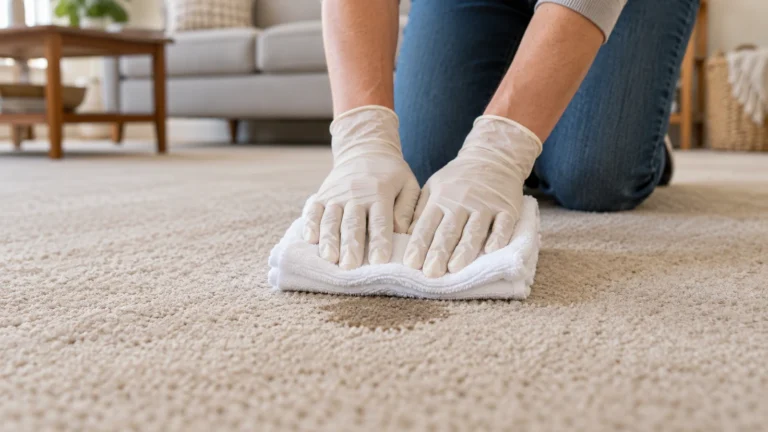
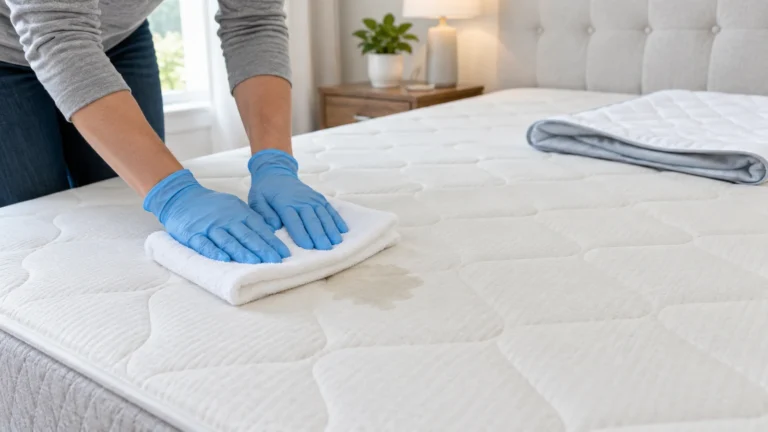
If you are also dealing with another surface, use the construction-specific guide rather than copying this method. Carpet has a backing and pad, covered in our carpet urine-odor guide. A mattress has different cover and comfort layers, covered in our mattress urine-cleaning guide.
Decide before using the seat again
| Result after permitted care | Next decision |
|---|---|
| Known small surface accident; compatible treatment completed; no fabric change, residual moisture, or reason to suspect wet fill | Resume use only when the furniture and cleaner’s drying and keep-off requirements are met. This is a practical use decision, not a disinfection or interior-moisture certificate. |
| Urine odor remains, returns after drying, or is strongest at an insert or deck | Do not automatically repeat the surface treatment. Record where it is apparent and ask whether the affected layer can be cleaned or needs replacement. |
| New ring, brown area, dye transfer, sticky residue, or changed pile | Stop adding products. Keep the seat out of use while asking the maker or cleaner; do not hide the change with heat, powder, a second cleaner, or an incompatible rinse. |
| Enclosed layers may still be wet, or a powered component was affected | Keep the furniture out of use and arrange the appropriate upholstery or electrical assessment. Do not sit on it or cycle the recliner to test it. |
When cleaning the cover is not enough
The odor source may be beyond DIY reach when:
- the cushion insert still smells after the cover and insert are completely dry;
- liquid reached a fixed seat, loose fill, webbing, wood, or particleboard;
- the odor is strongest at the deck or frame rather than the fabric surface;
- a stain or color change appeared after wetting;
- the fabric is code S, code X, delicate, or unlabelled and the needed treatment would require liquid;
- repeated compatible treatment has not changed the odor after complete drying; or
- the manufacturer’s instructions do not provide an owner-safe route.
The IICRC warns that hidden materials can bleed or stain during subsurface odor treatment and that heavy contamination may require replacement of seat or pillow cores. Ask a qualified cleaner what layers can actually be accessed and whether replacing a removable foam insert is more realistic than another treatment.
Mistakes that can make the problem harder
- Treating the code as optional. A method that is acceptable on W fabric can damage S or X upholstery.
- Washing a zippered cover automatically. Some manufacturers use zippers for assembly, not as permission to machine wash.
- Cleaning only the visible circle. The wet boundary may be larger below the fabric, while aggressive spot cleaning can leave a ring.
- Adding more liquid when odor returns. More moisture can enlarge the affected area without reaching or removing the hidden source.
- Using perfume as the result check. A scented product can mask odor until the fragrance fades.
- Reassembling while damp. A cover placed over damp foam slows drying and makes it harder to judge whether the source remains.
How to reduce damage from the next accident
- Keep absorbent white towels where accidents are likely.
- Use a washable, waterproof furniture protector when pets, toilet training, illness, or caregiving makes another accident likely.
- Check beneath the protector after every accident; a cover can shift or leak at a seam.
- Photograph the couch care tag and save the model and manufacturer instructions.
- If the cushion has an approved removable cover, learn the correct removal and drying route before an accident happens. Our couch-cushion guide explains the tag and construction checks.
The practical stopping point
For a fresh surface accident on compatible upholstery, thorough blotting plus one label-directed treatment may be enough. When the odor sits in foam, fill, webbing, or the frame, the problem changes from spot cleaning to hidden-material remediation. At that point, more surface product adds moisture without proving it reached the source.
The useful decision is not “Which homemade mixture is strongest?” It is what the couch permits and whether the contaminated layer is accessible. That decision protects the fabric and tells you when professional assessment or insert replacement is the more honest next step.
Sources
- IICRC: Consumer Floor and Furnishings Care Information — Urine Odors–Upholstery
- Ashley: How to Care and Clean Your Furnishings
- La-Z-Boy: Fabric and Leather Care
- Nature’s Miracle: Stain and Odor Remover for Cats — product directions and compatibility example
- IICRC: ANSI/IICRC S300 Standard for Professional Upholstery Cleaning
- La-Z-Boy Power Plus operating instructions — wet-control hazard; use the exact manual for your powered furniture