How to Get Rid of Fruit Flies in Your Kitchen: Find the Source First
The most reliable way to get rid of fruit flies in your kitchen is to remove the place where they are feeding or breeding, then trap the adults that remain. Check ripe produce, trash, recycling, compost, sugary spills, and wet food residue around the sink. A vinegar trap may reduce the visible flies, but it will not end the problem while the source remains.
Quick answer
- Remove the source: discard spoiled produce and empty food waste, recycling, and compost.
- Clean the residue: wash bins, wipe spills, clear dishes, and dry the sink area.
- Trap the adults: place one small vinegar or paper-funnel trap near the activity.
- Check again: if many flies remain after 24 to 48 hours, look for a missed source or a different type of small fly.
Start with a 10-minute source sweep
Before setting a trap, check one area at a time and remove anything that could contain fermenting food, juice, or residue.
| Where the flies gather | What to check | What to do |
|---|---|---|
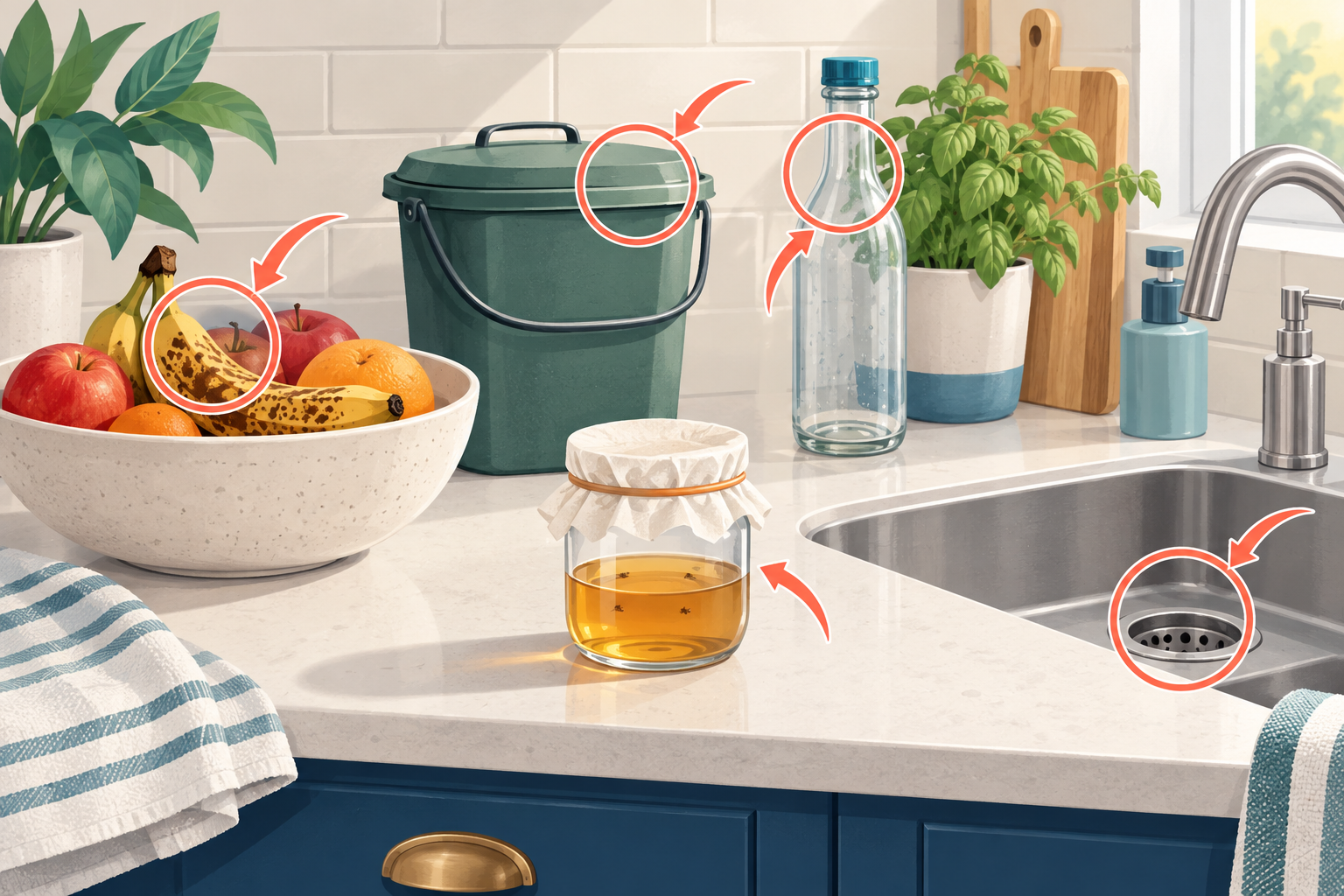
| Fruit bowl or counter | Overripe, bruised, cut, or leaking produce | Discard spoiled produce; refrigerate suitable remaining produce while you clear the outbreak. |
| Trash, recycling, or compost | Food cans, bottles, banana peels, coffee grounds, and residue under the liner | Empty it, wash the container and lid with warm soapy water, and take kitchen scraps outside. |
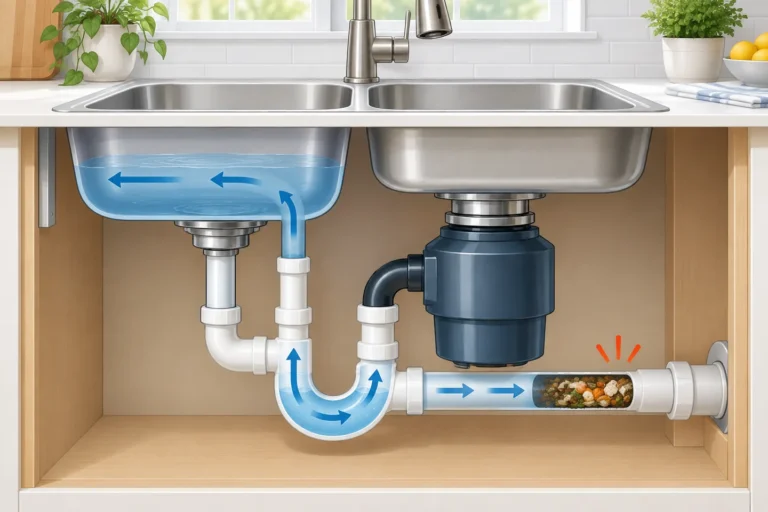
| Sink and garbage disposal | Food debris, splash marks, dishes, a sponge, or a dirty dishcloth | Wash dishes, wipe the sink surround, and clean only removable parts you can safely reach. |
| Hidden food | A forgotten potato, onion, lunchbox, mop bucket, or small spill under an appliance | Remove the item and clean the area. |
| Houseplants | Wet potting mix and tiny flies lifting from the soil | Do not assume they are fruit flies; use the identification check below. |
Fruit flies are commonly associated with ripe or decaying fruit and vegetables, wet food residue, and sugary spills. Cornell Integrated Pest Management notes that they can enter on store-bought or homegrown produce. Oregon State University Extension also lists decaying food and drink residue as common kitchen sources.
How to get rid of fruit flies in your kitchen
1. Remove the attraction
Put ripe fruit and vegetables in the refrigerator for a few days when the item can be chilled. Discard food that is spoiled, leaking, or visibly infested. Empty the kitchen trash, recycling, and indoor compost; rinse containers that held juice, wine, beer, or food residue.
Then wipe counters, cabinet pulls, the outside of containers, and the floor around the bin. Do not forget the underside of the trash-can lid and the area under the liner.
2. Reset the sink area
Clear dishes from the sink. Wash the basin and surrounding counter with warm soapy water. Launder or replace a sour dishcloth or sponge, and leave the area as dry as practical overnight.
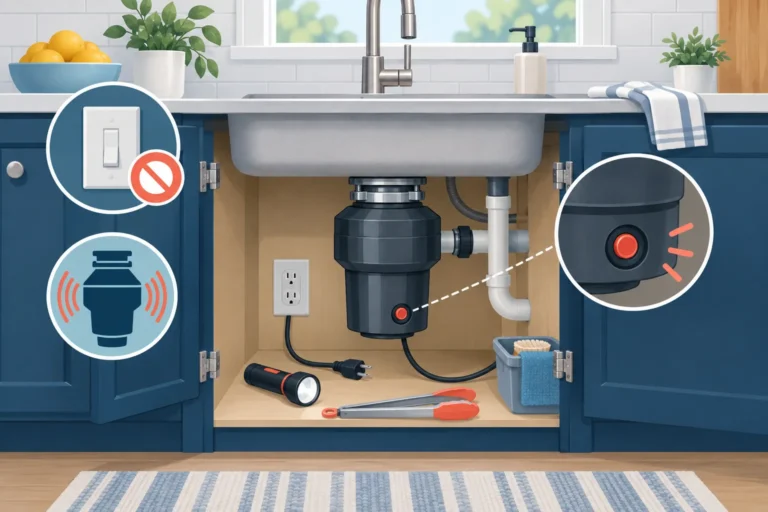
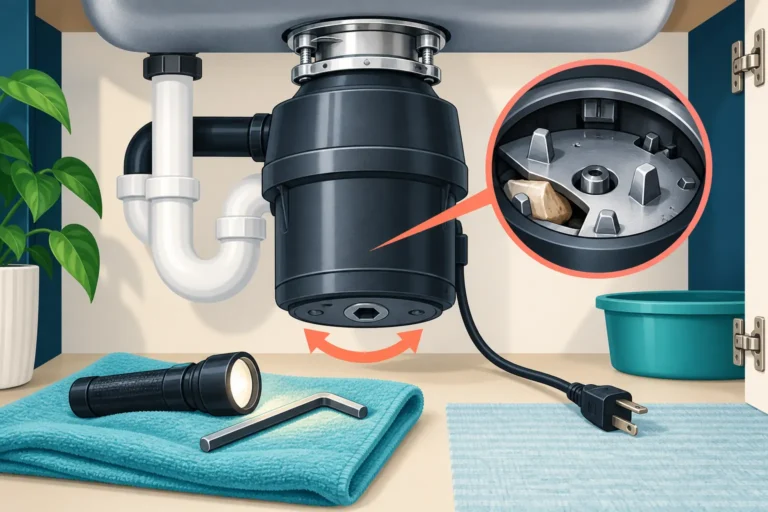
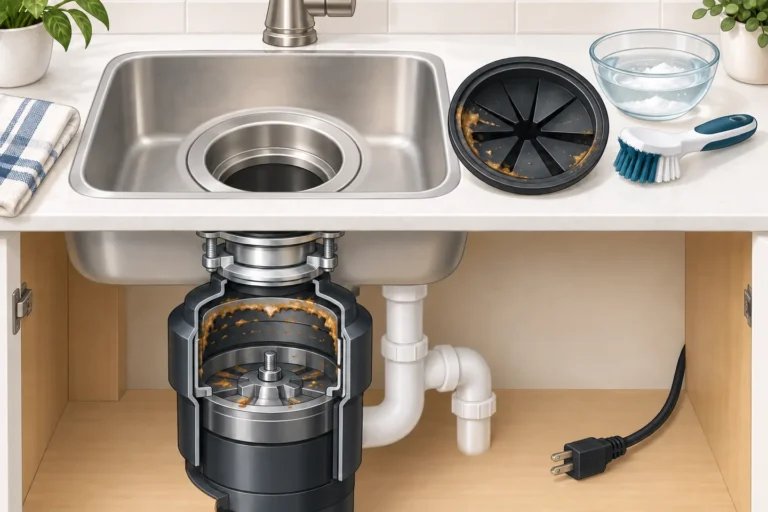
Garbage-disposal safety: Keep the disposal switched off while you inspect the opening with a flashlight. Never put your hand or tools inside. Run it only when the opening is clear and the manufacturer’s instructions allow it. If it smells bad, use the checks in our garbage disposal odor guide.
Do not rely on insect spray or a single drain treatment to solve a recurring kitchen-fly problem. University of Wisconsin–Madison Extension explains that eliminating breeding sites provides lasting control; adult-only measures do not remove the cause. Its fruit-fly guidance also describes a baited jar as a short-term way to catch adults.
3. Trap the remaining adult flies
After the source sweep, place one small trap near the most active area and away from food preparation.
One option is a small jar or glass with a little apple cider vinegar or another fermented liquid. Add one small drop of dish soap. The scent attracts adult fruit flies, and the soap changes the liquid’s surface so the flies are less likely to escape. Keep the trap out of reach of children and pets, and replace it when it is full or no longer attracting flies.
For a paper-funnel trap, put a little fermented bait in a jar and set a paper funnel in the top with a small opening. This catches adults while helping you monitor whether the source cleanup worked.
If the trap keeps catching many flies after several days, repeat the source sweep instead of adding more traps.
4. Recheck after 24 to 48 hours
You should see fewer adults after the food and moisture source is gone. Recheck the bottom and outside of the trash and recycling containers, bags of onions or potatoes, forgotten drink containers, the compost pail, drip trays, mop buckets, and residue around the sink, dishwasher, or disposal.
Make sure they are actually fruit flies
Small flies in a kitchen are not always fruit flies. Identifying where they gather helps you investigate the correct source.
| What you notice | More likely | First place to investigate |
|---|---|---|
| Tiny tan or brown flies around ripe fruit, recycling, or a sticky spill | Fruit flies | Produce, food waste, compost, and spills |
| Small fuzzy, moth-like flies resting near a drain | Drain flies | Organic buildup around or inside a drain; a fruit trap alone will not solve it |
| Tiny dark flies rising from damp potting mix | Fungus gnats | Houseplant soil and watering habits |
| Persistent small flies with a sewage-like odor, moisture damage, or a suspected leak | A plumbing or moisture issue may be involved | Arrange a qualified inspection when the source is not safely accessible |
Oregon State University Extension identifies fruit flies, drain flies, phorid flies, and fungus gnats as separate small-fly problems in kitchens. If you are unsure, take a clear close-up photo and note where the flies gather before choosing a treatment.
What not to do
- Do not spray pesticide around food-preparation surfaces as your first response. It may kill visible adults while leaving the breeding source behind.
- Do not mix bleach with vinegar, ammonia, or any other cleaner. Dangerous fumes can result.
- Do not pour a chemical product into a disposal or drain unless both the product label and appliance manufacturer say it is appropriate.
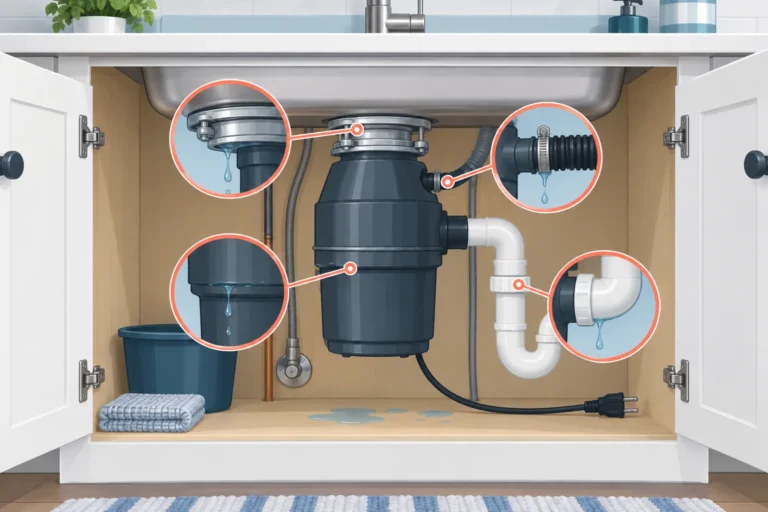
- Do not reach into a garbage disposal. Switch it off and follow the manufacturer’s approved method, or call a professional for a jam, leak, electrical problem, or persistent odor.
Keep fruit flies from returning
For the next week, refrigerate very ripe produce or use it promptly, empty food scraps often, rinse bottles and cans before recycling, wipe juice and syrup spills, wash dishcloths, and keep the sink and bin area dry overnight.
If the kitchen is clean but the flies keep returning, look beyond the counter. Hidden food, a wet trash area, an infrequently used drain, or a plumbing leak can keep the cycle going. Persistent flies together with drain backup, sewage odor, or water damage need a qualified plumber or pest professional rather than another DIY trap.
Related guides
- Garbage disposal smells: safe checks before you reset it
- Garbage disposal not working: safe steps in order