Garbage Disposal Smells? Find the Source and Clean It Safely
If your garbage disposal smells, trapped food is usually hiding under the splash baffle or around the upper grind chamber. First confirm that the sink drains normally. Then disconnect the disposal from power, clean the removable baffle according to its manual, and use a manufacturer-supported warm-water and baking-soda flush. A smell that returns quickly, follows dishwasher use, or affects several drains needs a different diagnosis.
Quick answer
Find where the odor starts before cleaning
- Food or sour smell at the opening: clean the underside of the baffle and flush the chamber.
- Slow drain plus odor: clear the drain restriction; cleaning the disposal alone will not remove trapped waste.
- Smell after the dishwasher runs: check the dishwasher drain path and connection.
- Sewer-like odor from several drains: stop treating it as a disposal-cleaning problem and call a plumber.
What does the garbage disposal smell like?
| What you notice | What it may point to | Best next step |
|---|---|---|
| Sour, stale-food, or greasy smell at the drain | Residue under the baffle or in the upper chamber | Disconnect power and clean the baffle |
| Odor with slow drainage or standing water | Food buildup in the outlet, P-trap, or drain line | Use the not-draining guide |
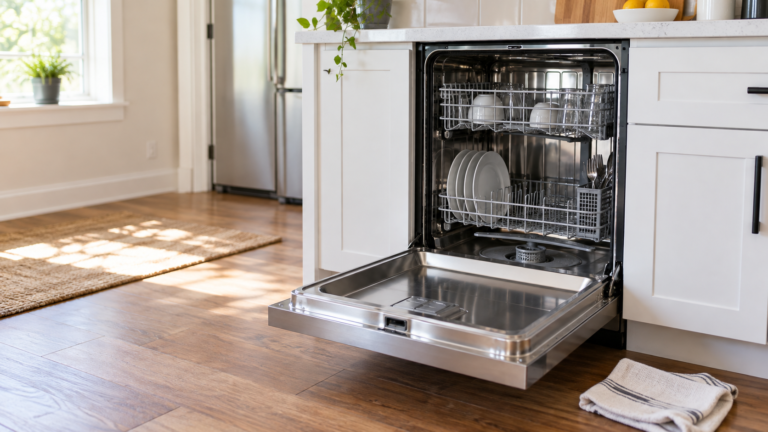
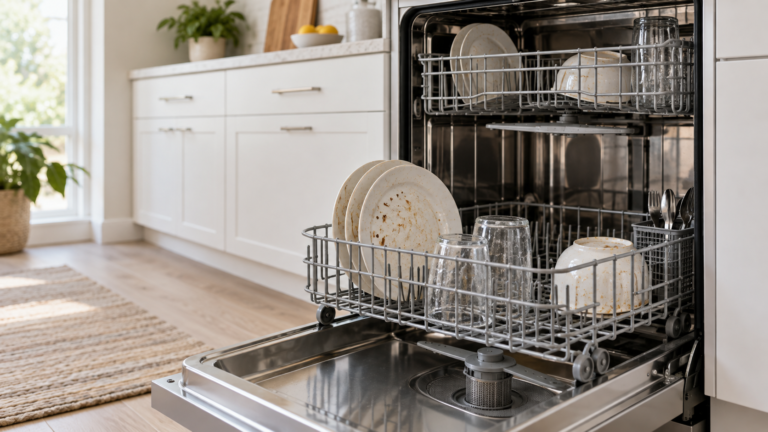
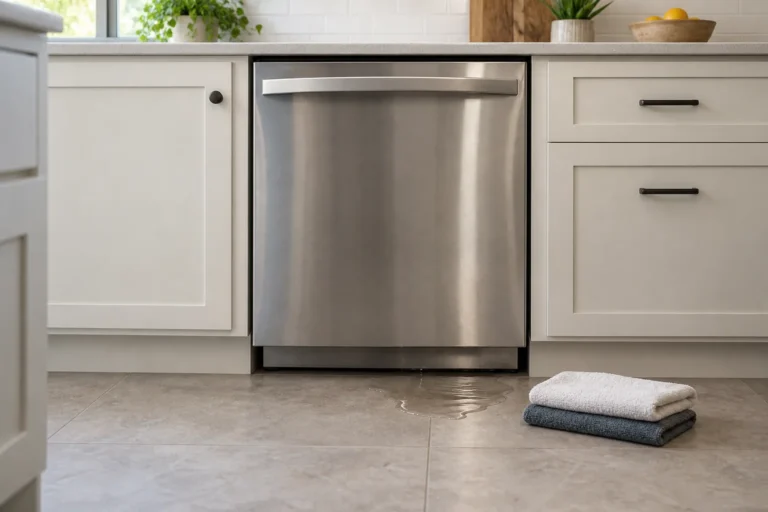
| Odor appears after the dishwasher drains | Residue or a drainage problem in the connected hose or air gap | Stop using the dishwasher if water backs up; inspect the drain path |
| Smell remains when the disposal opening is covered | Trash, dishwasher, cabinet leak, or another nearby source | Check each source separately |
| Rotten-egg odor comes from faucet water with the drain covered | Water supply or water-heater issue rather than the disposal | Compare hot and cold water and contact the appropriate professional |
| Sewer odor affects more than one drain | Trap, vent, or drain-system problem | Arrange a plumbing inspection |
Rule out a possible gas leak
If a strong rotten-egg odor could be natural gas—especially near a gas range, water heater, furnace, or gas pipe—do not operate the disposal, lights, switches, or a phone inside. Leave the building and call 911 and the gas utility from a safe location. Do not try to locate the leak yourself.
Before cleaning the disposal
- Empty the sink and confirm that water drains normally.
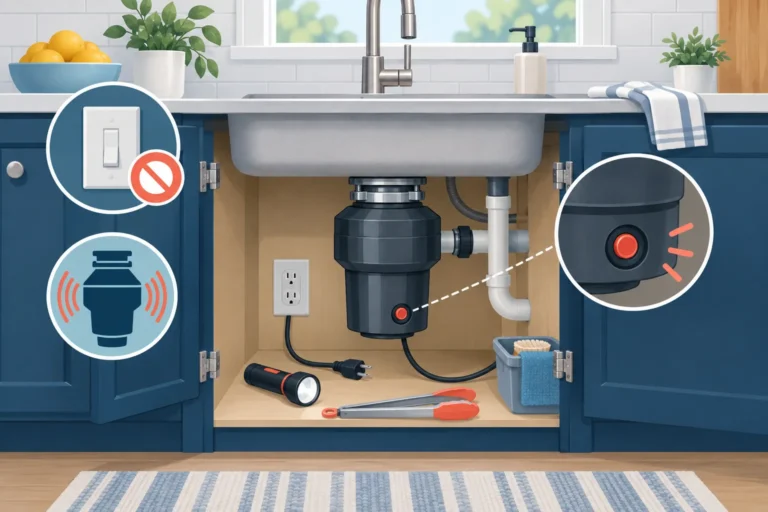
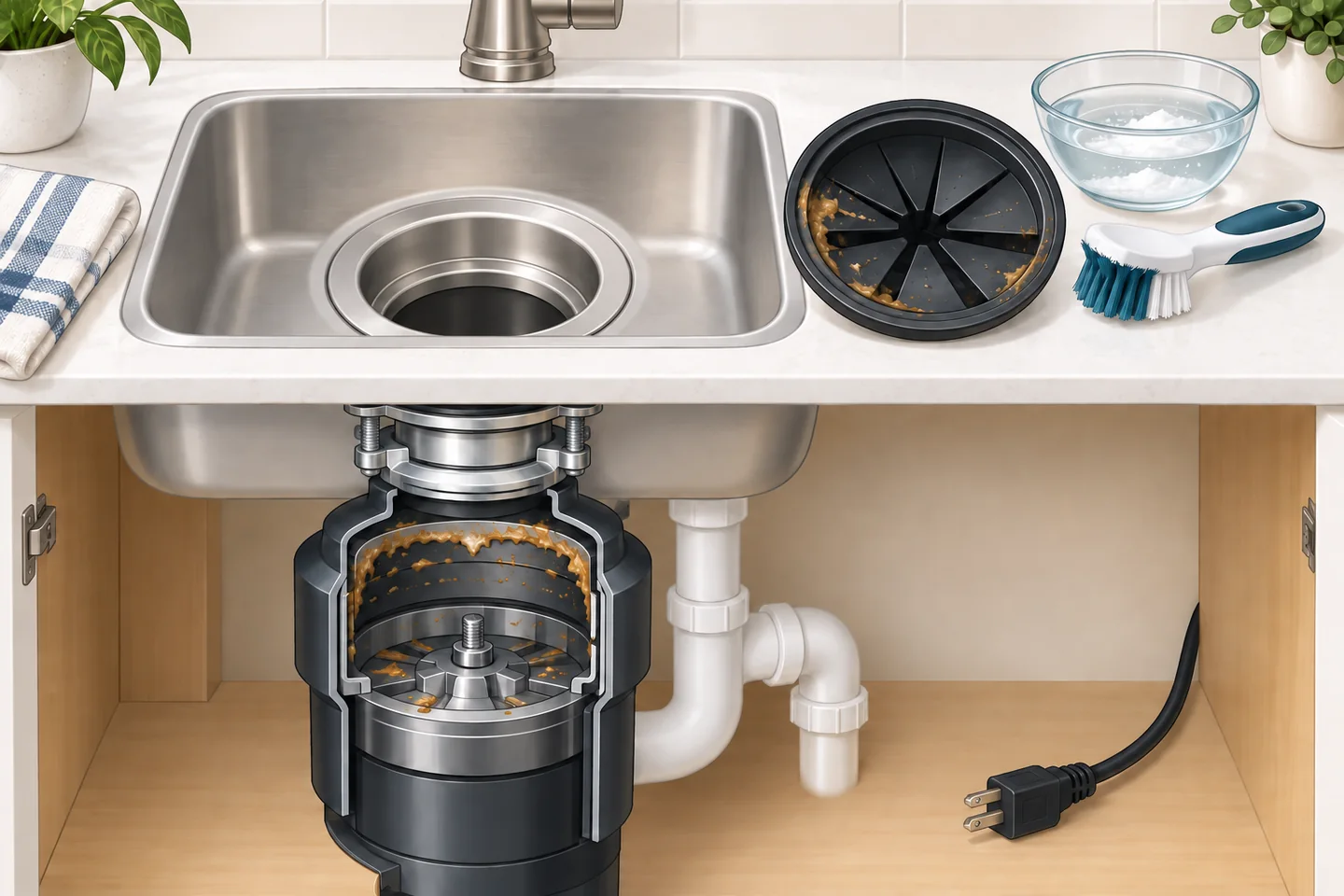
- Turn off the wall switch, then unplug the disposal with dry hands or switch off its breaker if it is hardwired.
- Never put a hand or fingers into the grinding chamber.
- Check the manual before removing the splash baffle; some designs are removable and others are not.
- Do not add baking soda, vinegar, bleach, drain cleaner, or another product when an unknown cleaner may already be present.
How to clean a smelly garbage disposal safely
1. Check the drain before treating the odor
Run plain water and watch how quickly it clears. Moen notes that a clogged or slow-draining disposal can develop a noticeable odor. If water drains slowly, stands in the sink, or backs into the second bowl, use Garbage Disposal Not Draining first. Do not mask a drainage problem with fragrance.
2. Disconnect power and inspect the splash baffle
The black rubber splash baffle is a common hiding place for food film. With power disconnected, use a flashlight to inspect its top and underside without reaching into the chamber. If your manual says the baffle is removable, lift it out and clean it separately with warm water, baking soda, and a nylon brush or nonabrasive pad. Moen says its removable splash guard can also be washed in the dishwasher, but follow the instructions for your model.
For a fixed baffle, use only the cleaning approach approved by the manufacturer. Keep your fingers above the opening and do not force, cut, or pull a part that is not designed to come out. Replace a cracked, stiff, or permanently odor-soaked removable baffle with a compatible part.
3. Flush the chamber with warm water and baking soda
Reinstall the baffle before operating the disposal. InSinkErator’s cleaning directions call for placing the stopper in the sink, filling the sink halfway with warm water, and mixing 1/4 cup of baking soda into the water. Restore power, turn on the disposal, and remove the stopper at the same time so the full sink flushes loose particles through the unit.
Stay clear of the opening and switch the disposal off after the sink empties. Run a moderate stream of cold water for a few additional seconds to move loosened residue through the drain. Do not combine this method with bleach, vinegar, drain cleaner, or another cleaning product.
4. Recheck the odor after the sink dries
Wipe the sink rim and leave the area undisturbed for a short period. Then smell near the disposal opening, the other sink drain, the dishwasher air gap if present, and the cabinet below. This simple location check helps distinguish remaining disposal residue from a drain, appliance, or leak problem.
Why the smell may return after cleaning
- The baffle was cleaned only on top. Residue commonly collects underneath it.
- The sink drains slowly. Food may remain in the outlet, P-trap, or branch line.
- The dishwasher shares the drain. Odor may appear when the dishwasher discharges or when dirty water backs up.
- Water was not run long enough. InSinkErator recommends a moderate cold-water flow during use and for several seconds after grinding ends.
- Grease entered the drain. It can coat plumbing and hold food residue; do not pour grease or fat into the disposal.
- The source is outside the disposal. A cabinet leak, trash container, dishwasher filter, or another drain can create a similar smell.
What not to put in a smelly disposal
A pleasant scent does not prove that the residue is gone. Avoid pouring concentrated fragrance, grease-cutting chemicals, or drain cleaner into the unit unless the product is approved by the disposal manufacturer and used exactly as labeled. Never mix cleaning products. Citrus may temporarily freshen some disposals, but use only small pieces if the model manual allows them; peels cannot correct a clogged drain or dirty dishwasher connection.
When to call a professional
- The odor returns immediately after the baffle and chamber are cleaned.
- The sink drains slowly, repeatedly clogs, or backs up into another fixture.
- Several drains produce a sewer-like odor.
- Wastewater returns through the dishwasher or sink.
- The disposal leaks, grinds poorly, makes a new noise, trips its reset, or smells hot or electrical.
- You cannot verify that power is disconnected or the baffle cannot be cleaned safely.
If the unit hums or stops grinding, switch it off and follow the humming-disposal guide. For a silent unit, use the no-power troubleshooting guide. Keep power off when a leak is near wiring or the motor housing.
Prevent the odor from coming back
- Use a moderate flow of cold water before, during, and for several seconds after grinding.
- Feed small amounts gradually and stop when the sound or drainage changes.
- Keep grease, fat, coffee grounds, and items restricted by your model manual out of the disposal.
- Clean the removable baffle periodically instead of waiting for a strong odor.
- Correct slow drainage early so food does not remain in the plumbing.
Frequently asked questions
Why does my garbage disposal smell even after I clean it?
The remaining source may be under the splash baffle, in a slow drain, or in the dishwasher connection. Check when and where the odor appears instead of repeating the same deodorizing method.
Can I clean a garbage disposal with baking soda?
Yes. InSinkErator instructs users to mix 1/4 cup of baking soda into a half sink of warm water, then run the disposal while releasing the water. Use baking soda alone for this method and do not combine it with another cleaner.
Can I put my hand under the splash guard?
Never reach into the grinding chamber. Disconnect power first. Remove the baffle only if the manual identifies it as removable, then clean it outside the disposal. Use a manufacturer-approved method for a fixed baffle.
Does a rotten-egg smell always come from the disposal?
No. It may come from water, plumbing, or odorized natural gas. If gas is possible, leave immediately without operating electrical switches and call for emergency help from a safe location.
Sources
This guide was checked against current manufacturer cleaning instructions and federal gas-safety guidance. Follow the manual for your exact disposal because baffle designs and approved cleaning methods vary.