How to Remove Blood From Carpet Without Setting the Stain
For a small, fresh surface blood spot on a carpet whose maker permits water-based spot cleaning, attend to the injury first, put on disposable protective gloves, and blot with a clean white cloth. Lightly dampen the remaining spot with cool water, then use one carpet-compatible method if needed. Blot again and dry the area promptly. Do not rub, soak the carpet, use hot water, or combine cleaners. If the carpet is wool, silk, leather, antique, or of unknown construction, check its care instructions or use a professional before applying a cleaner.
Stain removal is not proof of decontamination. These steps address a small surface mark, not a pooled spill or blood soaked into the backing or pad. Keep children and pets away, avoid direct contact, and wear disposable gloves suitable for the cleaning product. Wash your hands after removing them. For a large spill, blood of unknown origin, or broken glass or needles, keep the area out of use and contact a cleanup service that specifically handles blood contamination. Do not pick up sharps by hand.
CDC’s healthcare environmental guidance distinguishes blood-contaminated carpeting from hard surfaces. It is not a home carpet-cleaning recipe: do not copy a hard-surface bleach dilution onto the carpet or assume that a faded stain means it has been disinfected.
Is this a small surface stain on a compatible carpet?
Here, water-washable means the carpet maker permits water-based spot cleaning. It does not mean installed carpet can be soaked, or that a rug can go in a washing machine. Check the fiber, backing, dyes, and care or warranty instructions before adding a cleaner.
Do not assume a stain product that works on synthetic carpet is safe for wool, silk, leather, natural-fiber, antique, hand-knotted, or unknown carpet. OxiClean’s cited guidance specifically says not to use its method on carpets containing wool, silk, or leather. If you cannot identify the fiber, backing, dyes, or prior treatments, blot up surface moisture only and ask a qualified cleaner before applying a chemical product.
| What you have | First move | Do not do this |
|---|---|---|
| Fresh blood on a known water-washable synthetic carpet | Blot with a dry white cloth, then use cool water | Rub, scrub, or use hot water |
| Dried blood on a known water-washable synthetic carpet | Lightly dampen with cool water, blot, then use one compatible cleaner | Saturate the backing or pile several cleaners together |
| Wool, silk, leather, antique, hand-knotted, or unknown carpet | Read the maker’s care instructions or contact a qualified carpet cleaner | Try a general oxygen cleaner, peroxide, bleach, or an internet mixture |
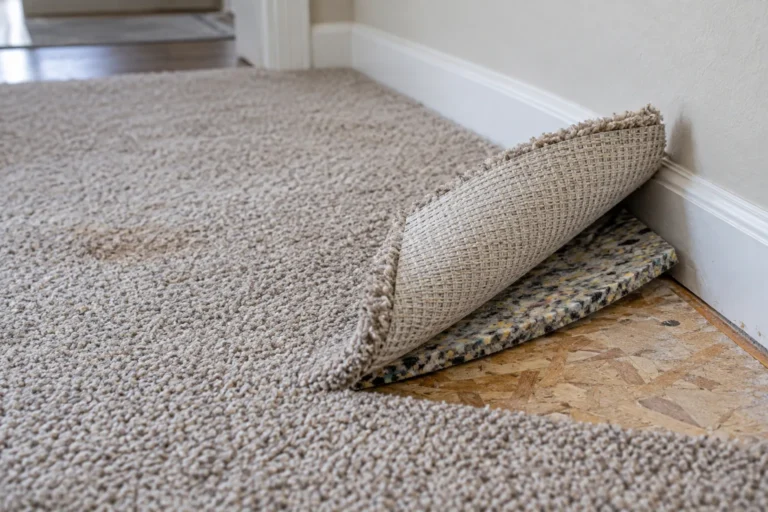
| A large spill, odor, padding that is wet, or a stain that keeps returning | Stop adding liquid; tell a qualified cleaner that blood is involved and ask about the underlying layers | Keep soaking the same area to chase the mark |
| Pooled blood, unknown-origin blood, or any sharps | Keep the area out of use and arrange blood-contamination cleanup | Handle sharps or treat this as an ordinary cosmetic spot |
If the blood has dried, change the first blotting step
For a small dried surface spot within the safe scope above, use a cool, lightly damp cloth to soften only the marked area. Blot without pulling bonded fibers, then follow the tested compatible method. Do not dry-brush or vacuum blood residue as a DIY stain-removal step, and do not use a stiff brush to break it into the pile.
A dried stain may need repeated, gentle treatment. It may also leave a shadow even when most of the stain has lifted. Do not trade a faint mark for a bleached patch, water damage, or a rough carpet texture. A professional cleaner is the safer next step for a valuable carpet or a stain that does not improve after a compatible method.
Treat the compatible surface spot without soaking the carpet
Set out one compatible treatment
- Several clean white, absorbent cloths or white paper towels
- Disposable protective gloves compatible with the cleaning product
- Cool water
- A small bowl or spray bottle used only to lightly dampen the area
- One cleaner that the carpet maker allows for the exact carpet
- Optional: clear, nonbleach, nonlanolin dishwashing liquid if the carpet is water-washable and its care instructions allow the Carpet and Rug Institute’s method
Avoid colored towels. Dye from a dark cloth can transfer to damp carpet, making it harder to tell what is stain and what is color transfer.
1. Blot before adding anything
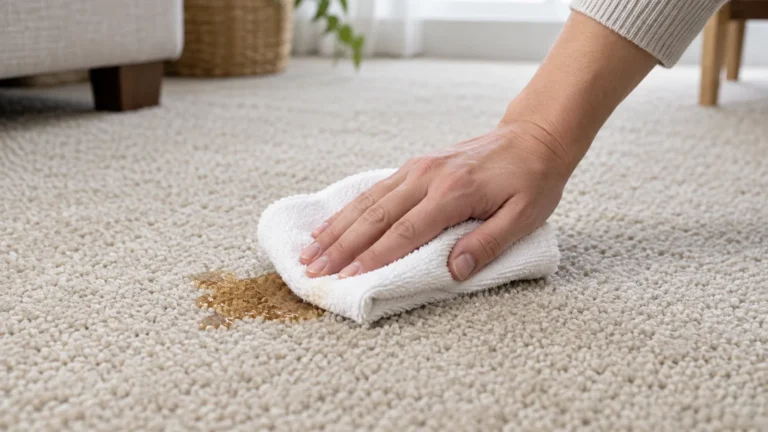
Place a dry white cloth over the spot and press down. Lift it straight up, move to a clean section, and repeat. Work from the outer edge toward the center so you do not spread the stain into clean fibers. Rubbing can spread the stain and roughen the pile.
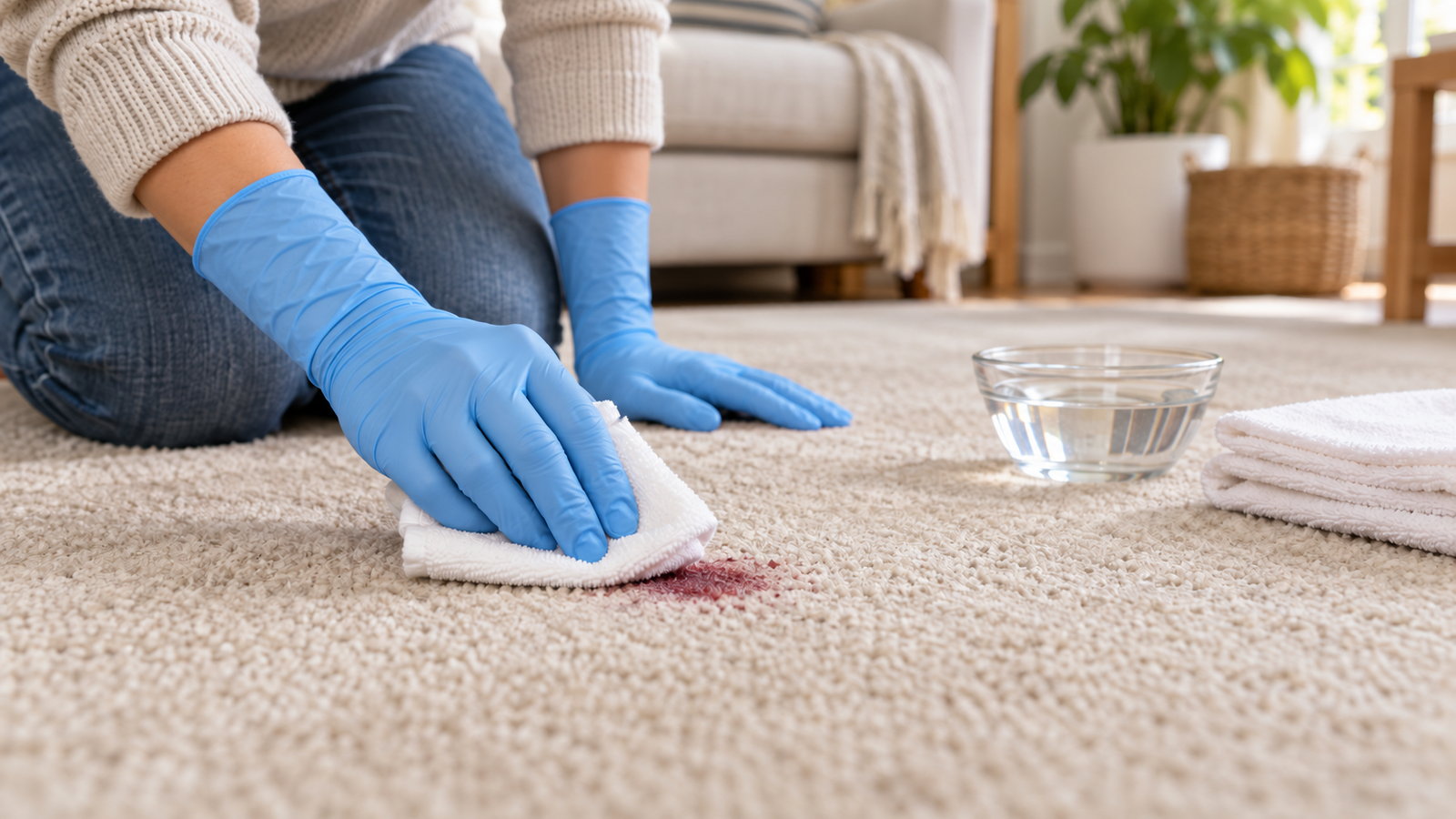
Do not use this carpet-care guide in place of first aid or medical advice. If there is an injury or concern about blood exposure, address that first. Keep used cloths separate from clean supplies, avoid touching the clean cloth stack with soiled gloves, and follow local instructions for disposing of blood-contaminated materials.
2. Use cool water sparingly
Lightly dampen the remaining spot with cool water. Do not pour enough water to soak through the carpet into the pad. Blot again with a fresh dry white cloth. The Carpet and Rug Institute recommends a cool-water first step; OxiClean also specifies cold water for fresh blood. Do not use hot water.
3. Pick one carpet-compatible cleaner
First check the carpet maker’s instructions and test the proposed cleaner on an inconspicuous edge or spare piece. Follow the product’s test directions, including rinsing if required, and let the area dry fully. Compare color, texture, and sheen with the untreated carpet; stop for dye transfer or any change.
If the test passes and the carpet care instructions permit it, the Carpet and Rug Institute’s simple blood-stain tip gives this option: mix 1/4 teaspoon of clear, nonbleach, nonlanolin dishwashing liquid with 1 cup of cool water. Do not increase that concentration or substitute laundry detergent or automatic-dishwasher detergent.
Apply a little solution to a white cloth rather than pouring the cup onto the carpet, then blot the spot. Continue only while the mark transfers and the carpet remains unchanged.
A manufacturer-permitted carpet spot cleaner is another route, not an extra ingredient for the dish-liquid solution. Follow its own dilution, application, contact time, rinse directions, and fiber exclusions. OxiClean’s cited method requires a rinsed, fully dried patch test and excludes wool, silk, and leather. Do not transfer its scoop or wait time to a different product. If a product requires a wetting method the carpet maker forbids, do not use it.
4. Blot, then rinse out the cleaner
For the dish-liquid route, remove the loosened stain and detergent by alternating a cloth lightly dampened with fresh cool water and a dry absorbent cloth. For a ready-made spot cleaner, use that product’s stated contact time and residue-removal directions instead. Do not invent a rinse for a product whose approved instructions differ.
Stop if the spot spreads, the pad seems wet, or another light rinse is no longer improving the result. Do not switch immediately to vinegar, ammonia, peroxide, bleach, or another stain remover when the first method does not work. Stop, let the area dry, and check the carpet care guidance or a qualified cleaner instead of layering products. Layering products can change the color or texture, leave residue, or make later professional cleaning harder.
5. Dry the spot completely
Press fresh dry white cloths onto the treated spot to lift remaining moisture. Keep people and pets off the area until it is fully dry, and follow the carpet maker’s drying guidance. A dry-feeling surface does not establish that the pad underneath is dry. Do not use heat to rush the process or keep rewetting a spot that stays damp. Once dry, use the result checks below rather than automatically starting another treatment.
Read the dry result before treating again
- The mark is smaller and the pile is unchanged: Another round of the same compatible method may help if its label allows it. Stop when no more stain transfers; more liquid is not a substitute for progress.
- The spot disappeared wet but returned dry: Residue or material below the surface may be involved. Appearance cannot confirm which. Do not keep soaking it. Tell the cleaner when it reappeared, what products were used, and whether the backing or pad may have become wet.
- The pile is stiff, sticky, lighter, fuzzy, or rough: This may be residue or damage, not simply more blood. Stop treatment and check with the maker or a qualified cleaner before adding another product.
- The area remains damp, develops odor, or blood reached lower layers: Keep it out of use and arrange an assessment that includes the backing, pad, and floor. Removing visible color does not settle the contamination question.
When surface treatment is not the right scope
Use a qualified carpet cleaner for delicate or unknown construction, failed spot tests, no improvement, or a recurring mark. Say that the spill was blood before booking; ordinary stain cleaning and blood-contamination cleanup are not interchangeable services. Pooled or unknown-origin blood, sharps, or contamination below the pile needs a provider equipped for that situation. Ask whether the affected carpet, pad, or other materials need removal rather than further surface cleaning.
Blood-stain cleaning will not solve a separate moisture problem. If there is ongoing dampness or a musty odor, our guide to remove mold from carpet explains why the layers matter. It is not a substitute for blood-contamination cleanup. If you know the mark came from a different ordinary spill, use the carpet-stain decision guide instead of assuming every red or brown mark is blood.
Related carpet guides
- How to Deodorize Carpet: Find the Odor Source and Freshen It Safely
- How to Remove Mold From Carpet: Clean, Replace, or Call a Pro?
- How to Get Smoke Smell Out of a House: Start With the Source
Updated October 23, 2026: removed the duplicate opening answer, put material and dried-stain decisions before the treatment, and moved repeated cautions beside the relevant steps. The blood-contact, hidden-area test, cleaner-residue, and returning-stain precautions clarified October 21 are retained.