How to Remove Nail Polish From Carpet Without Spreading It
Nail polish can often be lifted from carpet, but the safest cleaner depends on the carpet—not just the color of the polish. Do not scrub the spill or pour remover onto it. Blot wet polish or lift dry fragments first, identify the carpet or rug, and follow its maker’s care instructions. If those instructions allow a nail-polish remover, apply a small amount to a white cloth, test it in a hidden area, and keep it out of the backing.
Keep away from ignition sources. Never mix products or add remover over bleach, ammonia, peroxide, vinegar, another solvent or unknown residue. If there are strong fumes, symptoms or an unknown chemical spill, leave the area and contact Poison Control for exposure advice from a safe location rather than continuing to clean. Move the polish bottle only if this is safe. If it broke, do not reach into the carpet for glass with bare hands. Keep foot traffic away so the spill is not tracked into a larger area.
Solvent safety
If the permitted product contains acetone or another flammable solvent, read its label before use. CDC/NIOSH classifies acetone as a highly flammable liquid. Ventilate the room and keep the area away from smoking materials, flames, pilot lights, heaters, sparks, and other ignition sources.
Check the carpet before choosing a remover
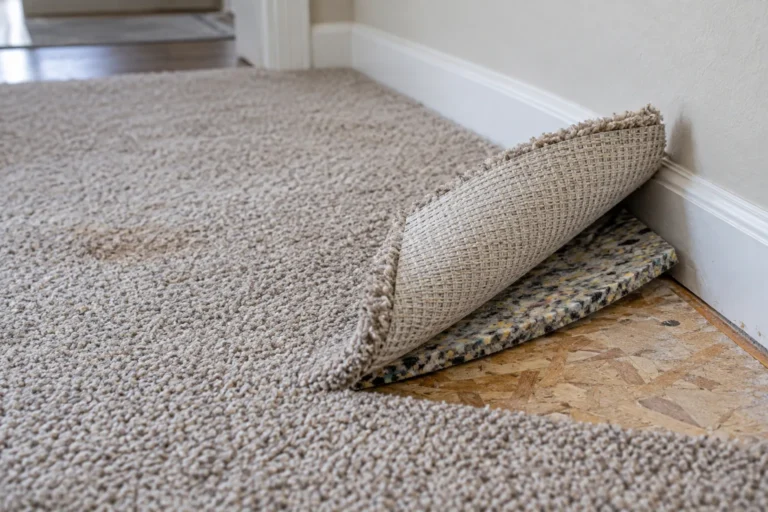
Check purchase records, the installer, a remaining sample, a rug label, or the manufacturer’s website. You need to know whether this is installed synthetic carpet, wool, a plant-based fiber, a handmade rug, or an unknown material. The backing, dyes, stain treatment, and warranty can change what is safe.
This step matters because reputable guidance differs. The Carpet and Rug Institute’s consumer tip describes a small amount of non-acetone remover on a white cloth. Shaw publishes an acetone-type method for carpet covered by its procedure. Neither instruction proves that the same remover is safe for every carpet.
Is non-acetone nail-polish remover always safe?
No. “Non-acetone” describes what is absent, not whether every remaining ingredient is compatible with the carpet’s fiber, dye, treatment, and backing. Check the carpet guidance and remover label, then test the exact product in a hidden area.
The Carpet and Rug Institute’s full care guide also says to use nail-polish remover without conditioners and to pretest every spot-removal agent.
The practical rule is to use the exact method that applies to your carpet. Do not assume dark carpet always rules out one product, or that light carpet makes a solvent safe. Fiber, dye, backing, prior treatments, product ingredients, and warranty instructions all matter.
Should I use hairspray, peroxide, vinegar, or baking soda?
Not as a default treatment. These popular suggestions are not one manufacturer-approved system, and adding them can leave residue, alter color, or complicate later cleaning. Use one documented carpet-compatible method instead of combining household products.
Match the spill state to the next action
| What you see | First safe action | Do not do this | Stop or get professional help when… |
|---|---|---|---|
| Fresh, wet polish on known carpet | Press with a dry white cloth and work toward the center | Rub, scrub, or pour cleaner onto the spill | The spot spreads, dye transfers, or the backing becomes wet |
| Dry polish sitting on the pile | Lift loose material with a rounded spoon; vacuum fragments only under the dry-fragment restrictions below | Pull fibers, use a blade, or grind the crust into the pile | The polish is bonded through the pile or fibers start to pull |
| Manufacturer permits a specific spot treatment | Test that exact product and procedure in a hidden area | Substitute a stronger solvent or skip the stated rinse step | The test changes color, texture, or sheen |
| Polish has soaked into the backing or pad | Blot surface moisture and stop adding liquid | Keep soaking the area to chase the stain | The pad is wet, the stain returns after drying, or odor develops |
| Wool, silk, plant fiber, antique, handmade, valuable, or unknown carpet/rug | Blot or lift surface material only, then check the maker or a qualified cleaner | Use a general internet recipe | No compatible care procedure can be confirmed |
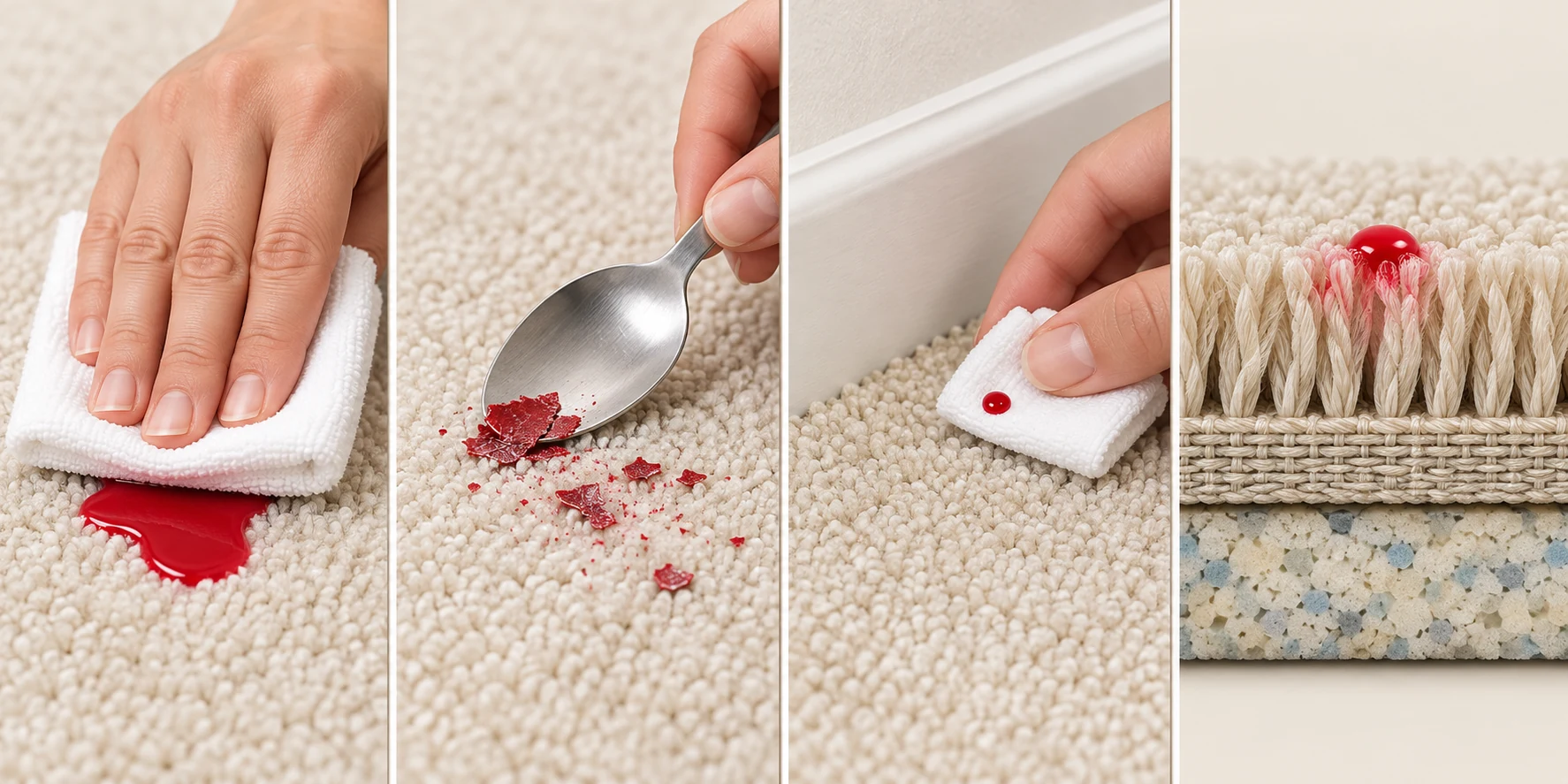
Contain wet polish or lift dry fragments first
Wet polish: blot without adding liquid
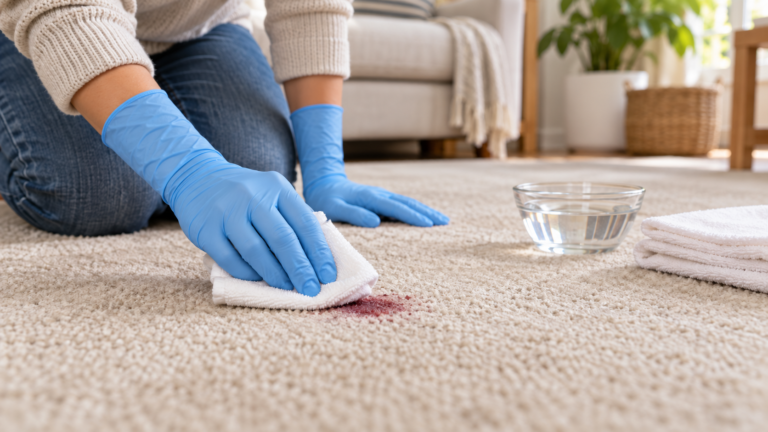
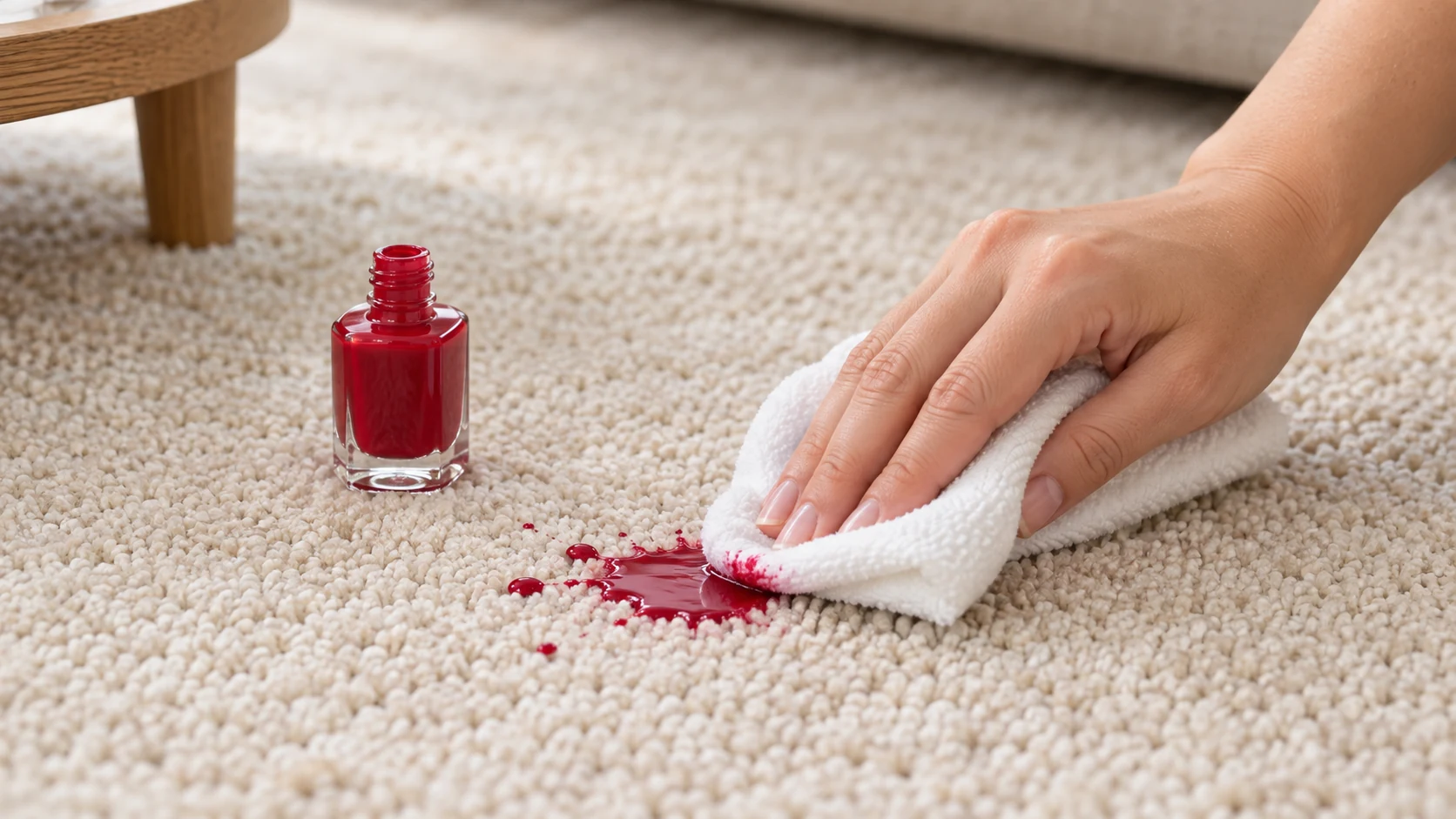
Place a folded dry white cloth at the outer edge of the wet polish. Press straight down, lift, and move to a clean section of cloth. Continue from the edge toward the center while polish transfers.
Do not wipe side to side. Rubbing can spread color into clean fibers and distort the pile. Do not begin with water unless the applicable care procedure tells you to; extra liquid can move the spill deeper before the correct treatment is known.
Dry polish: lift only the material that releases
Start dry. Use the edge of a rounded spoon to lift brittle polish that is sitting on top of the pile. Work gently and stop if carpet fibers stretch or come loose. Vacuum only loose, dry fragments before any remover has been applied and only when no liquid, flammable material/vapor or unknown residue may be present. Check your vacuum’s safety instructions. Do not use a household vacuum to recover remover or prove a treated patch is dry.
Do not trim the pile or use a sharp blade. A small stain can become permanent texture damage. After the loose material is removed, follow the same identify-test-treat sequence used for a fresh spill. Dried polish may need several controlled transfers, but repeated soaking is not a safe shortcut.
Use one permitted treatment for either starting state
Set out only what that procedure requires
- Several clean white, absorbent cloths or plain white paper towels
- A rounded spoon for dried surface material
- A vacuum only for loose dry fragments before any remover is used, and only as the carpet and vacuum instructions permit
- The carpet or rug care instructions, warranty, or manufacturer support page
- One cleaner that the carpet maker or applicable professional guidance permits
- A small amount of clean water for rinsing only when the applicable procedure calls for it
A white cloth serves two purposes: it avoids adding dye and lets you see whether polish or carpet color is transferring. Do not assemble several cleaners “just in case.” One compatible treatment is easier to control and rinse than a stack of household chemicals.
Test the exact product before treating the visible spot
Use the product and dilution stated by the carpet maker or applicable care guide. Test it on a hidden carpet edge or spare piece first. The Carpet and Rug Institute care guide advises checking for color transfer, color change, or fiber damage before treating the visible spot.
Apply the test product to a white cloth—not directly to the carpet. Stop if the cloth picks up carpet dye or the test area changes color, sheen, or texture. A successful test reduces risk but cannot guarantee that a larger or deeper treatment will be harmless.
Transfer the polish in small rounds
If the hidden test passes and the procedure permits treatment, dampen a clean section of white cloth with a small amount of the approved product. Work gently from the outside edge toward the center. Blot and lift; do not scrub.
Rotate the cloth as color transfers. Continue only while the spot is improving and the carpet remains unchanged. Never pour remover onto the carpet or saturate the area. The Carpet and Rug Institute care guide warns that overwetting can separate the backing or seams and cause shrinkage, discoloration, or odor.
Remove treatment residue as directed
Follow the same care procedure for rinsing. Carpet and Rug Institute guidance commonly uses small amounts of water after spot treatment, followed by blotting. Shaw’s nail-polish procedure also includes detergent and water steps for carpet within that procedure. Do not invent a rinse or add another chemical when the instructions do not call for it.
Use a fresh cloth and as little moisture as practical. Residue can attract soil, while excess water can reach the backing and pad.
Blot and allow full drying under the product directions
Press dry white cloths onto the treated spot until little moisture transfers. Let the area air-dry using only the product’s permitted ventilation and re-entry directions, and keep foot traffic away. Do not add an iron, heater, steamer or powered vacuum over solvent-treated material. A dry-looking surface or no remaining odor alone is not clearance for electrical equipment; use the label or ask the product maker if uncertain. Inspect only after it is fully dry; wet carpet can look darker than the surrounding area.
Read the dry result before trying anything stronger
Stop if the pile feels stiff, color has changed, the spot expands, or the stain reappears. Those signs call for the carpet maker or a qualified carpet-cleaning professional rather than a stronger home treatment.
When a professional is the safer next step
Arrange professional advice before applying a remover when the carpet or rug is wool, silk, sisal, seagrass, coir, viscose, handmade, antique, valuable, or of unknown construction. WoolSafe’s fine-fiber guidance emphasizes compatible products, small applications, ventilation, and professional help for difficult cases. The same caution applies to a large spill, a highly visible area, damaged fibers, or polish that has reached the backing or pad.
Stop a DIY attempt if:
- carpet color transfers during the hidden test;
- the pile becomes fuzzy, stiff, flattened, or shiny;
- the spot grows instead of shrinking;
- the backing or pad becomes wet;
- the stain returns after drying;
- the product label and carpet instructions conflict; or
- the room cannot be ventilated or kept free of ignition sources.
If the area remains damp or develops a musty odor, the problem is no longer only a surface stain. Use the separate guide to remove mold from carpet to decide whether the carpet layers can be cleaned or need professional attention.
Related carpet guides
- How to Deodorize Carpet: Find the Odor Source and Freshen It Safely
- How to Remove Blood From Carpet Without Setting the Stain
- How to Remove Mold From Carpet: Clean, Replace, or Call a Pro?
If the nail polish landed on a garment rather than carpet, use the nail-polish-on-clothes guide; fabric labels and construction change the safe removal route.
Updated October 23, 2026: moved the answer before the editorial history, brought wet and dry surface handling together before one shared treatment sequence, and consolidated repeated remover advice. The unknown-residue, ignition, restricted-vacuuming and no-dryness-clearance precautions added earlier October 23 are retained.
Sources
- Carpet and Rug Institute: Carpet and Rug Care Guide
- Carpet and Rug Institute: Cleaning and Maintenance
- Carpet and Rug Institute: Simple Stain Removal Tips and Tricks
- Shaw Floors: Solvent and Detergent — Nail Polish Procedure
- WoolSafe: Cleaning and Maintenance of Wool Carpets
- WoolSafe: Cleaning and Maintenance of Fine Fibres
- CDC/NIOSH: Acetone