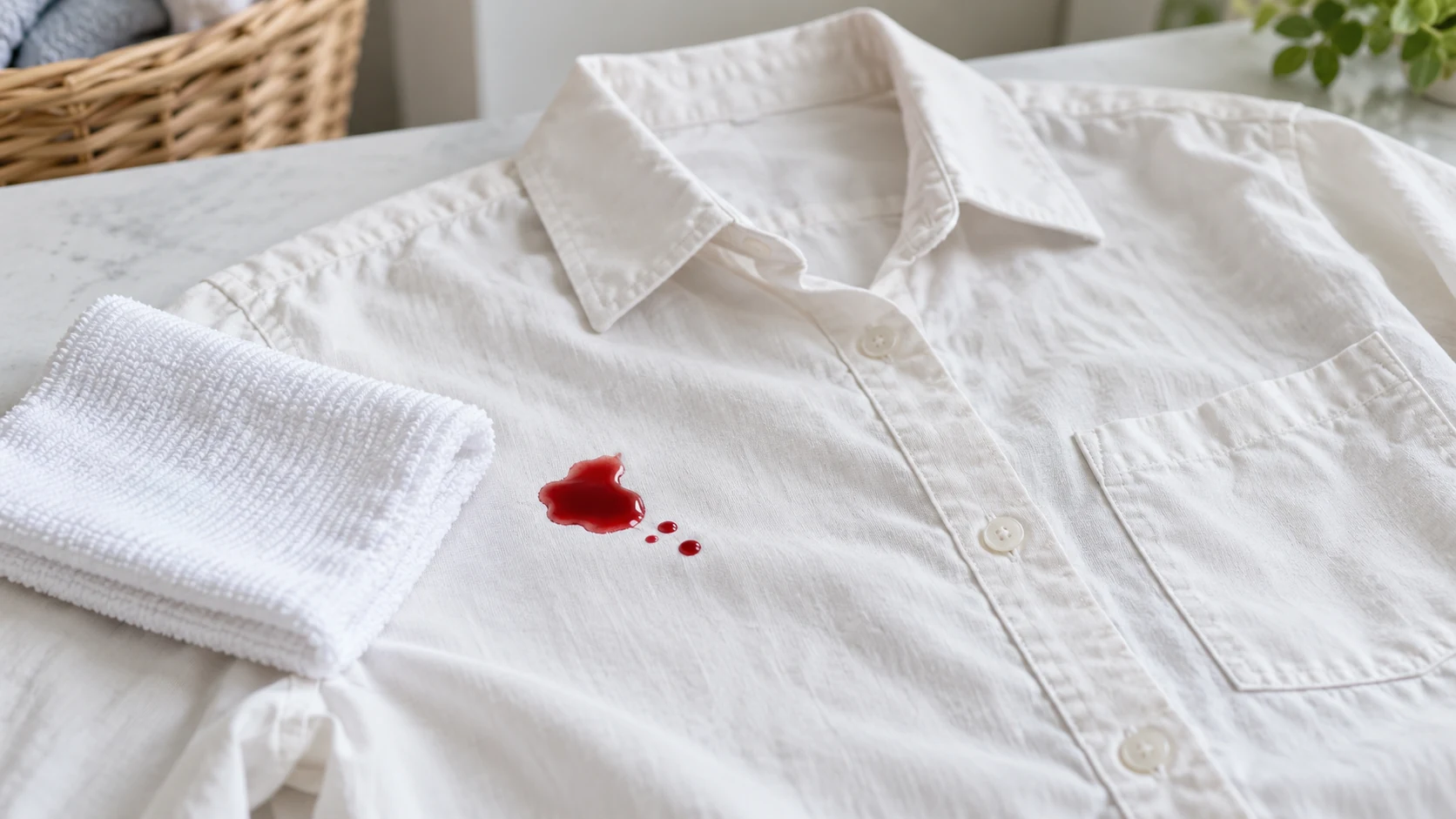
How to Remove Nail Polish From Clothes Without Spreading It
Quick answer
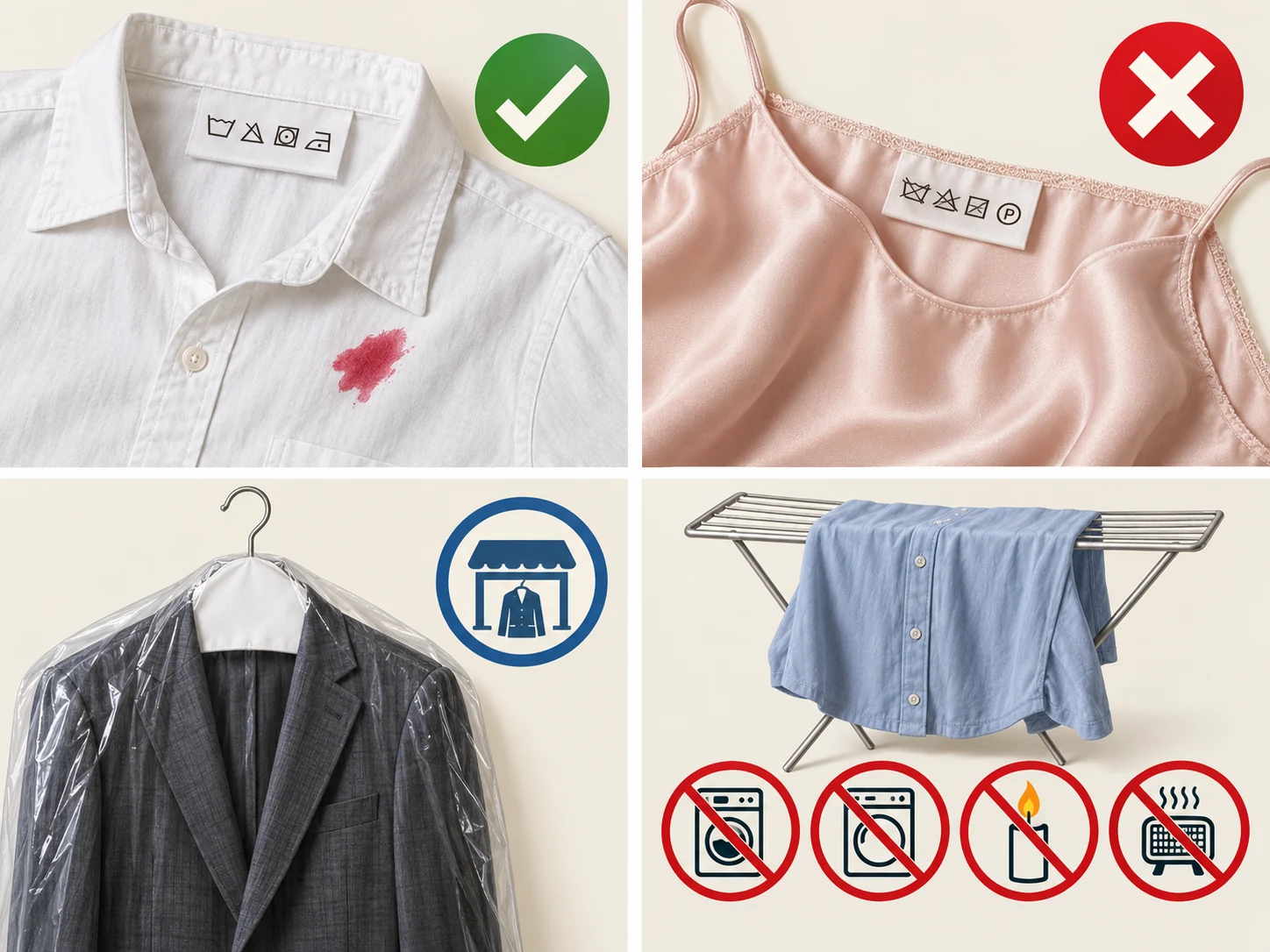
Lift wet nail polish with a dull edge instead of rubbing it into the fabric. Then read the garment's care label and fiber-content label before adding a cleaner. On a washable, colorfast garment, start with a small amount of liquid laundry detergent, rinse as the care label permits, and air-dry to inspect the result. Do not use acetone or an acetone-based remover on acetate, triacetate, or modacrylic. Send dry-clean-only, delicate, valuable, embellished, or unknown-fiber garments to a professional cleaner.
Nail polish is a colored lacquer, so dissolving it is only part of the problem. The loosened color still has to move out of the fibers without spreading, stripping garment dye, or damaging a finish. A remover that is safe for one plain cotton shirt can harm a blended, printed, coated, or trimmed garment.
Safety first: check before you treat
- Read both the garment label and the nail-polish-remover label. The garment label sets the fabric limit; the product label controls safe use, rinsing, storage, and disposal.
- Do not use acetone or acetone-based nail-polish remover on acetate, triacetate, or modacrylic. If any of those fibers appears in a blend, use a professional cleaner.
- Do not combine nail-polish remover with bleach, ammonia, vinegar, peroxide, alcohol, or an unknown stain-treatment residue.
- Use any flammable remover with ventilation and away from cigarettes, candles, pilot lights, sparks, hot appliances, and other ignition sources. Wear the protection required by its label.
- Do not put a garment with solvent residue or solvent odor into a washer or dryer. Follow the remover's post-treatment directions; absence of odor alone does not prove the item is appliance-safe.
Choose the route by fabric and stain condition
| What you have | Safest first action | Conditional next step | Stop or escalate when |
|---|---|---|---|
| Fresh polish on a washable, colorfast cotton or polyester garment | Lift surface polish with a dull edge; do not rub | Use the detergent-and-rinse route | Dye transfers, fabric distorts, or the label limits treatment |
| Dried polish on a washable, known compatible fiber | Lift only loose flakes | Test the exact remover on a hidden seam, then transfer from the back if all labels allow it | Treatment stops transferring polish or changes the garment |
| Acetate, triacetate, or modacrylic | Remove only loose surface material | Take the garment to a professional cleaner and identify the stain | Do not use acetone or acetone-based remover |
| Dry-clean-only, silk, wool, embellished, vintage, valuable, or unknown fiber | Do not add a household solvent | Take it to a professional cleaner and explain what has already been used | Color loss, finish change, loose trim, or uncertainty |
| Garment already treated with remover or another solvent | Keep it away from heat and flame; check the product label | Rinse or hand-wash only as both labels permit, then air-dry | Solvent odor remains or the post-treatment instructions are unclear |
Check these five details before adding cleaner
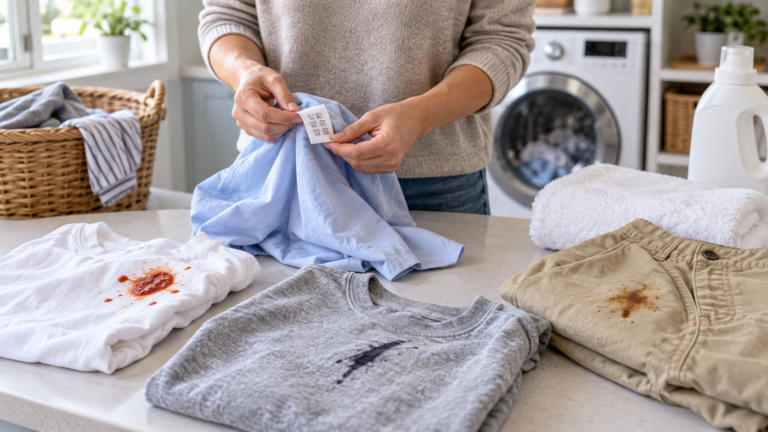
Is the garment washable?
If the label says dry clean only, stop after gently lifting any surface polish. Water, agitation, and a home solvent can change the shape, dye, lining, adhesive, or finish even when the visible fabric looks sturdy.
What is the complete fiber blend?
Check every listed fiber, not just the largest percentage. University of Georgia Extension says acetone destroys acetate, and both Georgia and Texas A&M Extension exclude acetate and triacetate from acetone treatment. Texas A&M also excludes modacrylic. If the label is missing or unreadable, treat the fiber as unknown.
Is the polish wet or dry?
Wet polish can spread under pressure. Lift the excess instead of wiping across it. Dried polish is less likely to smear, but aggressive scraping can pull threads, roughen a knit, or create a pale abrasion mark.
Is this ordinary nail lacquer?
Gel polish, nail glue, acrylic nail products, and unknown salon products should not be assumed to follow an ordinary lacquer method. Check the product maker's cleanup guidance or show the stain to a professional cleaner.
If you cannot confirm that the product was ordinary nail lacquer, use the clothing stain decision guide before choosing any solvent route.
Has another product already been used?
Do not layer a new cleaner over bleach, ammonia, peroxide, alcohol, vinegar, or an unidentified spot treatment. Tell a professional cleaner what was applied. If you know the product, follow its rinse and disposal directions before considering any other step.
What to gather for a washable garment
- A spoon, old card, or another dull nonporous edge
- Plain white paper towels or a folded white absorbent cloth
- Cotton swabs or a small white cloth for controlled application
- Liquid laundry detergent allowed by the garment label
- The exact remover only if the fiber, care label, remover label, and hidden test all support it
- A drying rack or hanger
White absorbent material makes it easier to see whether polish or garment dye is moving. Avoid colored towels because their dye can confuse the test or transfer onto the garment.
How to remove fresh nail polish from washable clothes
1. Lift the wet excess
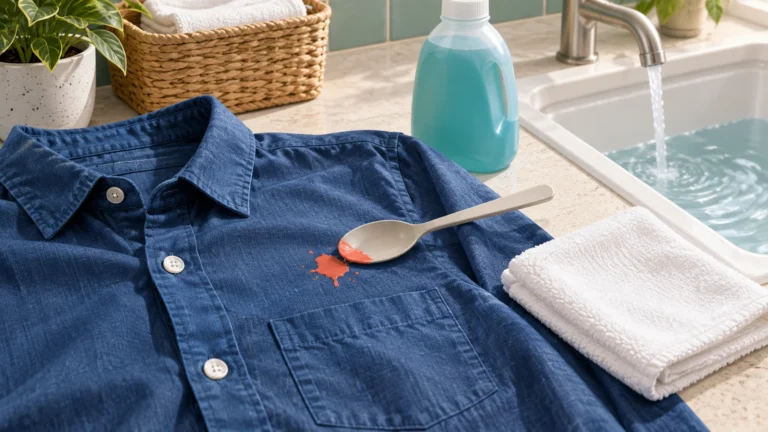
Lay the garment on a protected surface with the stain accessible. Slide a dull edge under the surface polish and lift it away. Wipe the tool after each pass so you do not return lacquer to the fabric. Do not scrub, pinch the stained layers together, or press a paper towel across the wet spot.
2. Blot only what is loose
Touch a clean white towel to the edge of the spill without sweeping across it. Move to a clean part of the towel after each contact. If the polish begins to feather outward, stop blotting and let the remaining surface film settle before the next controlled step.
3. Try detergent before a remover
Place a clean white absorbent pad under the stain. Apply a small amount of liquid laundry detergent with a cotton swab, following the detergent label. Work from the outer edge toward the center and replace the swab as it picks up color. Do not flood the spot.
Rinse from the back of the fabric with the water temperature allowed by the care label. The goal is to push loosened material back out through the route it entered instead of carrying it across clean fabric.
4. Wash within the care-label limit
If the stain has released and no solvent was used, launder the garment according to its label and the detergent directions. Wash it separately when loose color could move to other items.
5. Air-dry and inspect
Check the damp fabric in good light, then air-dry it. Do not use the dryer while color remains. If a faint mark survives the detergent route, decide whether the garment and exact remover qualify for the controlled transfer method below rather than adding several different products.
How to treat dried polish on a compatible washable fabric
1. Remove only loose flakes
Flex the fabric gently and lift pieces that release without force. Keep the dull edge nearly flat to the cloth. Stop scraping if threads lift, the weave opens, or the surface becomes fuzzy.
2. Test the exact remover on a hidden area
Confirm that the garment contains no acetate, triacetate, or modacrylic and is not dry-clean-only. Put a drop of the exact product on an inside seam or facing, following its label. Blot with a white cloth and allow the test area to dry.
Do not continue if garment color transfers, the test spot lightens, a print softens, the finish turns tacky, or the fabric changes texture. A stable hidden test lowers the risk; it does not override a fiber or care-label prohibition.
3. Transfer the polish into a white pad
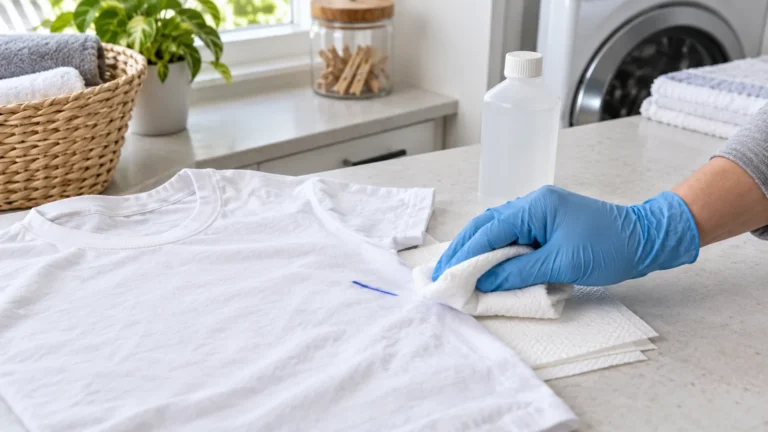
Move to a ventilated area away from heat, sparks, and flame. Place the stain face-down on several layers of clean white paper towel or a folded white cloth. Lightly dampen a cotton swab or white cloth with the compatible remover—do not pour it onto the garment—and press from the back of the stain.
Check the pad after several presses. When polish appears, move the garment to a clean section or replace the pad. Continue only while color transfers and the fabric remains stable. This face-down setup helps move dissolved lacquer out of the garment instead of through a wider clean area.
4. Stop when the transfer stops
More solvent and more rubbing do not guarantee a better result. Stop if no additional polish reaches the pad, the stain spreads, garment dye appears, or the fibers change. Dried lacquer can remain permanently bonded or leave a shadow even after some color is removed.
5. Follow the product's post-treatment directions
Rinse or hand-wash only when the remover and garment labels permit it. Keep the item away from heat and flame and air-dry it in a ventilated location. Do not put it in a washer or dryer while solvent residue or odor remains, and do not assume that no odor automatically means machine laundering is safe. If the label does not clearly explain what to do after spot treatment, ask the product maker or a professional cleaner.
Acetone, non-acetone remover, and “without acetone” advice
The words non-acetone do not mean fabric-safe. A non-acetone remover is still a formulated solvent product and may affect dye, finishes, prints, adhesives, or trim. University of Georgia Extension also warns that nail-polish remover is not pure acetone and that its other ingredients can worsen the stain.
Texas A&M AgriLife Extension allows carefully tested acetone or acetone-based remover on washable fabrics other than acetate, triacetate, and modacrylic. That is a compatibility boundary, not a promise that every cotton, polyester, or denim garment will keep its color and finish. The complete garment construction and the product label still matter.
If you want to avoid acetone, use the detergent-first route. When that does not remove the mark, the safest alternative is professional cleaning—not an escalating series of vinegar, hairspray, hand sanitizer, peroxide, and baking-soda experiments.
Methods not to use as a default
| Method | Why it is not the default |
|---|---|
| Scrubbing or brushing wet polish | It can spread lacquer and abrade the fabric before the color transfers |
| Pouring remover directly onto the stain | It can enlarge the treated area and drive dissolved color through more fabric |
| Hairspray or hand sanitizer | Formulas vary and may add fragrance, polymers, thickeners, moisturizers, or other residue |
| Vinegar, peroxide, or baking soda | They do not remove the need for a fiber check and can affect dyes or finishes; do not layer them over another cleaner |
| Chlorine bleach | White fabric is not automatically bleach-safe, and bleach must never meet ammonia, acids, or unknown residues |
| Dryer heat before inspection | Heat removes your chance to evaluate the wet result and can make the remaining mark harder to treat |
When to stop and use a professional cleaner
Stop home treatment when:
- the label says dry clean only or the fiber content is missing;
- the garment contains acetate, triacetate, or modacrylic;
- it is silk, wool, vintage, structured, embellished, coated, or valuable;
- the stain sits on a print, bonded seam, waterproof finish, logo, trim, or adhesive;
- the hidden test lifts garment dye or changes the texture;
- a large spill soaked several layers;
- another cleaner was used and its residue is unknown;
- polish no longer transfers but the remaining mark is unacceptable; or
- the garment still smells of solvent or the post-treatment instructions are unclear.
Bring the polish bottle or a photo of its label if available, and tell the cleaner exactly what has already touched the garment.
Frequently asked questions
Can acetone ruin clothes?
Yes. It can destroy acetate and can damage other fibers, dyes, finishes, prints, adhesives, and trims. Do not use acetone on acetate, triacetate, or modacrylic. Even on an otherwise compatible washable fabric, follow both labels and perform a hidden test first.
Can dried nail polish come out of clothing?
Sometimes. Loose surface polish may lift, and a compatible remover may transfer part of the remaining lacquer into a white pad. Complete removal is not guaranteed, especially after rubbing, heat, previous chemicals, or a long delay.
Should I use the washer after nail-polish remover?
Not while solvent residue or odor remains. Follow the remover's post-treatment directions and the appliance guidance. If the product does not clearly state when machine laundering is safe, hand-rinse or hand-wash only as the labels allow, air-dry away from heat and flame, and ask the maker or a professional cleaner.
What if the spill landed on carpet instead?
Do not reuse the clothing procedure. Carpet fibers, backing, padding, and adhesives change the risk. Use the separate guide to removing nail polish from carpet without spreading it.
Related laundry guides
- How to Remove Paint From Clothes Without Setting the Stain
- How to Remove Marker From Clothes Without Spreading the Ink
- How to Remove Detergent Stains From Clothes
Sources
- Texas A&M AgriLife Extension: Removing Stains From Washable Fabric
- University of Georgia Extension: Remove Stains From Fingernail Polish, Lacquer
- University of Georgia Extension: Understand Your Fibers
- Clorox: How to Remove Nail Polish From Clothes
- Martha Stewart: How to Remove Nail Polish Stains From Clothes
- Whirlpool: How to Get Nail Polish Out of Clothes