Water Backing Up in Your Shower? Check Which Fixture Triggers It
Quick answer
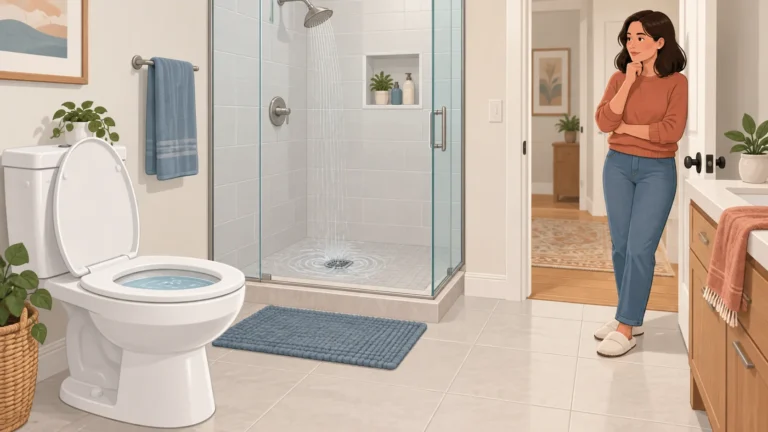
Water backing up in a shower usually means wastewater cannot move freely past a restriction. The most useful clue is what was already running when the water rose; do not flush or start an appliance to recreate it. If the shower only pools while you use it, the restriction may be close to that drain. If flushing a toilet, draining a sink, or running the washing machine makes water rise in the shower, the blockage is likely farther downstream in a shared drain. Stop using water immediately if dirty water, sewage, or more than one fixture is backing up.
Stop when water may be contaminated or electrically unsafe
Keep people and pets away from sewage or unknown wastewater. Do not keep flushing toilets or run appliances to repeat the symptom. If water is near outlets, wiring, or powered equipment, stay out of the wet area and get qualified help. If a chemical was added or the water’s contents are uncertain, do not bail, insert tools or open plumbing; tell the professional. Do not pour drain cleaner into standing water or mix it with another cleaner. For a shared or uncertain backup, stop adding wastewater from household fixtures and appliances rather than guessing which branch is connected.
Updated October 22, 2026: clarified safe washer stopping versus automatic drain-on-cancel, narrowed the local water recheck and added result decisions and mobile table labels. The shared-drain and sewage stop routes are retained.
Check whether to stop · Match the previous trigger · Use the limited shower-only route
Match the trigger before you touch the drain
| What you observe | What it may point to | Safest next action |
|---|---|---|
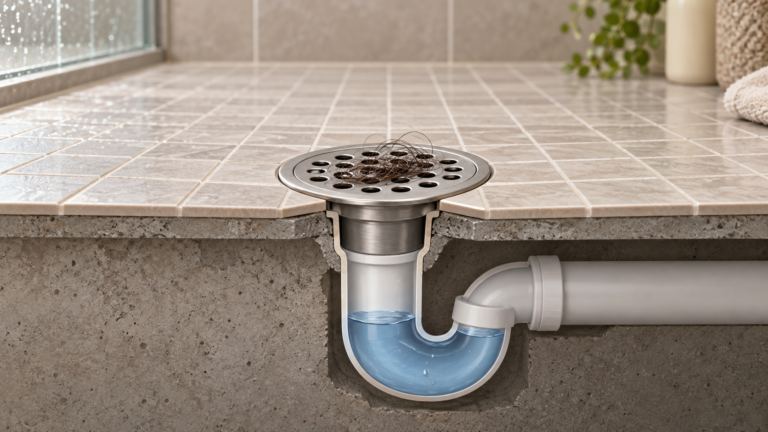
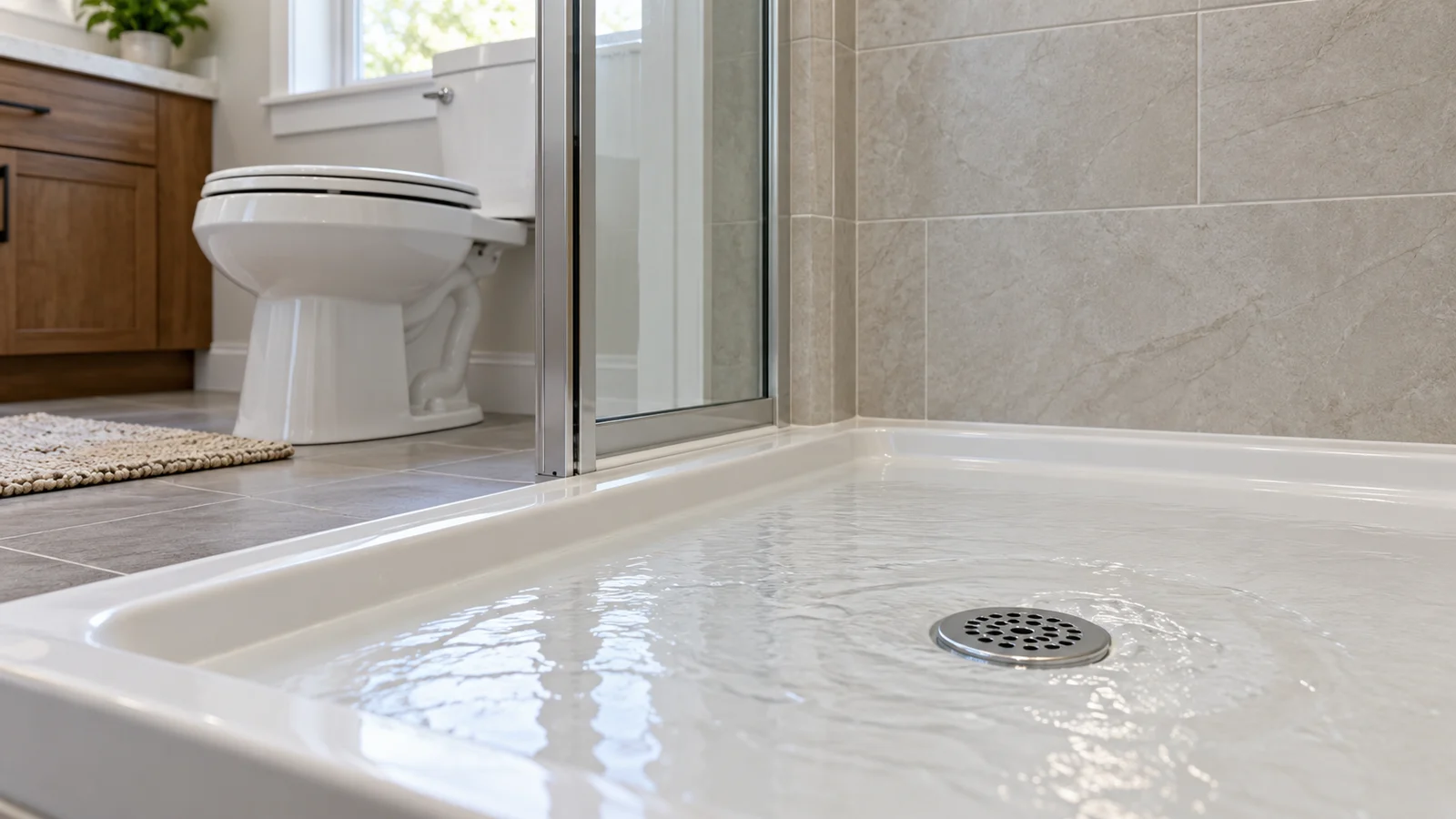
| The shower slowly fills only while that shower runs | Hair, soap residue, or another restriction near the shower trap or branch | Stop the shower. If the water is clean and no chemical cleaner is present, remove only debris you can reach safely at the drain opening. |
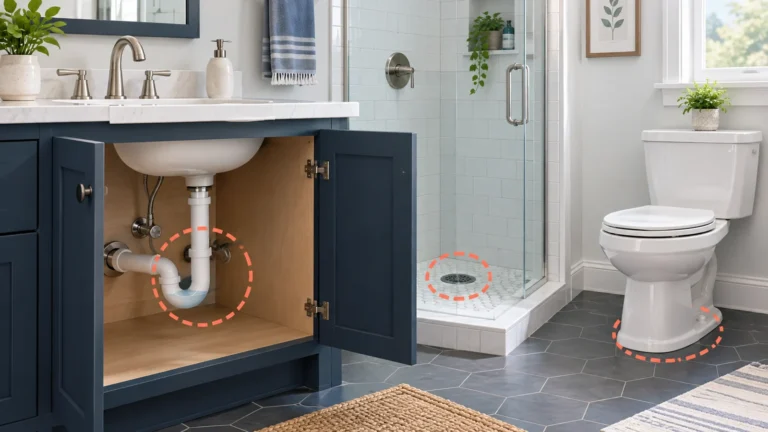
| Water rises in the shower when a nearby toilet flushes or sink drains | A restriction after those fixtures join a shared branch | Stop using the connected fixtures and arrange drain diagnosis; clearing only the shower opening may not reach the blockage. |
| The washing machine discharge makes water rise in the shower | A downstream branch or building-drain restriction that cannot pass the washer’s discharge | Stop the washer and other water use. Treat this as a multi-fixture drainage problem. |
| Multiple fixtures are slow, gurgling, or backing up | A building drain, private side sewer, septic, or public-sewer problem is possible | Stop water use and contact a plumber; follow your utility’s procedure if a public-main problem is suspected. |
| Dirty water or sewage enters the shower | An active wastewater backup | Keep away from the water, stop fixture use, and arrange professional plumbing and cleanup guidance. |
| The backup appears during heavy rain even when little indoor water is being used | A sewer-system, side-sewer, or inflow problem may be involved | Record the timing and affected fixtures, then contact the local sewer utility and a qualified plumber. |
The table narrows the zone of the problem; it does not confirm the exact obstruction. Pipe layouts vary, and a camera or drain inspection may be needed.
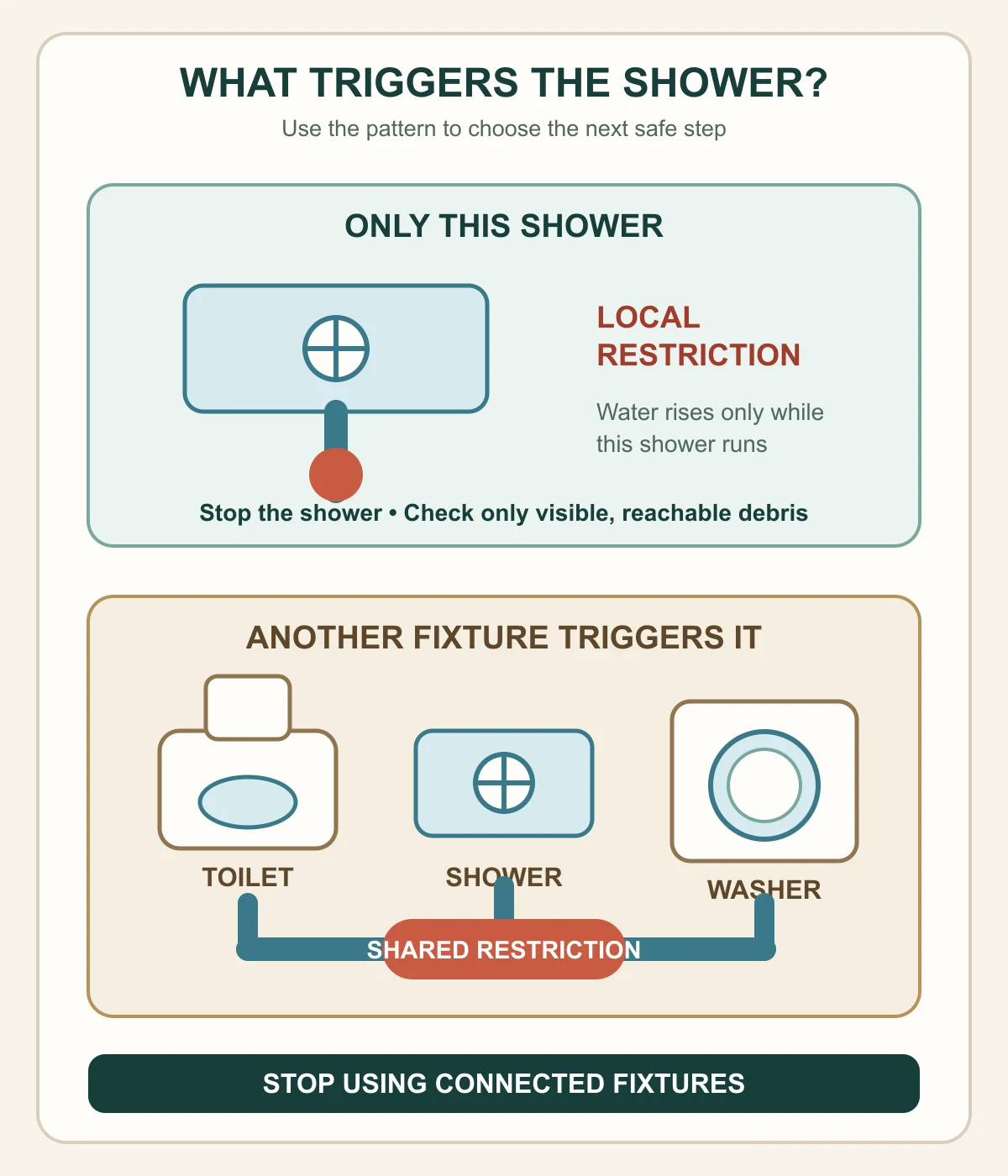
If the shower backs up only while you use it
A shower-only problem is usually more local than a backup triggered by another fixture. Turn the water off and let the pan drain. If it does not drain, or if the water is dirty, skip the hands-on check.
Consider only visible surface debris when the pan has drained, the area is electrically safe, water is known to be untreated shower water, no other fixture or rain triggered the backup, and the cover is owner-removable under its care instructions. If the history, contamination or cover access is uncertain, stop. With those conditions met, you can:
- Put on waterproof gloves.
- Lift away hair or residue that is visible at the opening with a simple drain-hair tool.
- Bag the debris and wipe the tool clean.
- After removing the tool and debris and correctly refitting the cover, use only a small controllable amount of plain water. Stop at the first rising level, leak or unexpected return; do not run a full shower or another fixture as a stress test.
Do not push a tool beyond the accessible opening, remove plumbing, probe for a hidden blockage or force a cover. A small successful recheck does not prove that the branch is fully clear; recurrence still needs diagnosis. Do not resume shared-fixture use merely because the shower drained while the other appliances were off.
If the problem is odor rather than rising water, use the separate Shower Drain Smells guide. Odor and backup can occur together, but they do not always have the same cause.
After the limited local check
| Result | What it means | Next step |
|---|---|---|
| Small plain-water recheck drains without rising | A visible local obstruction may have contributed; the full branch is not certified clear | Do not stress-test. Watch for recurrence during appropriate normal use; any prior shared backup still needs assessment |
| Water rises again, remains standing, or another fixture was involved | The accessible surface check did not resolve the relevant drain path | Stop adding wastewater and arrange drain/utility diagnosis. Do not move to chemicals or a deeper DIY tool |
| No active backup while fixtures are off | Only that no return is visible under that idle condition | Do not restart appliances to prove clearance. Give the professional the earlier trigger, water appearance and chemical history |
If flushing the toilet makes water rise in the shower
When a toilet flush changes the water level in the shower, the symptom crosses two fixtures. That places the likely restriction downstream of the point where their drains connect—not necessarily inside either fixture.
Stop flushing to “test” it again. Each flush adds more wastewater to a pipe that is not draining properly. Clearing hair from the shower opening may be useful for a separate local clog, but it will not correct a blockage farther down a shared line.
A toilet that only makes a sound, without visible backup, has a different starting symptom. See Toilet Gurgling: Diagnose the Drain, Vent, or Sewer Problem Safely. If the toilet itself is the only fixture that will not drain, see Toilet Clogged? Safe Causes and Fixes.
If the washing machine backs up into the shower
A washing machine releases a substantial amount of water into the drainage system in a short period. If that discharge appears in the shower, the shower is acting as a low exit for water that cannot pass a restriction farther downstream.
Use only a safely reachable dry control and the exact model’s pause/stop instructions that do not deliberately start pumping. Do not assume holding Cancel simply stops the washer: Whirlpool documents a cancel sequence that drains the tub. Do not choose Drain/Spin, force open a locked door or disconnect a full drain hose into a backed-up system. If pumping cannot be stopped safely with the normal control, isolate the identified power supply only from a safely reachable dry position; do not cross water or touch a wet plug. If safe stopping is uncertain, keep away and get qualified help. Do not start another load. Avoid running the dishwasher, flushing toilets, or draining a full sink until the line has been assessed. Tell the plumber exactly which appliance triggered the backup, how quickly the shower rose, and whether any toilet or floor drain also changed.
Do not disconnect a washer hose, open a cleanout, or snake a shared drain unless you are qualified and know the layout. Those actions can release wastewater or expose a pressurized blockage.
If more than one fixture is affected
Multiple slow or backing-up fixtures shift the concern away from a single shower trap. The possible problem area may include a shared branch, the building drain, the private pipe connecting the property to the sewer, a septic system, or the public main. The symptom alone cannot tell you which one is responsible.
The City of Middleton’s sewer-backup guidance tells residents to stop using sinks, showers, laundry, dishwashers, and other water sources immediately. It explains that many backups occur in the private sewer lateral, while the city can check whether the public system is involved.
Responsibility and contact procedures differ by location. Ask your local utility:
- Whether there is a reported public-main problem.
- Where private responsibility ends in your area.
- What number handles an active sewer backup.
- Whether you should document damage before cleanup.
If your home uses a septic system, give the service provider the same trigger and fixture information. Do not open a septic tank or enter any confined space.
What to do when the water may contain sewage
Treat dirty, foul-smelling, or toilet-related backup water as contaminated. Keep children and pets out of the area. Avoid walking through it, splashing it, or trying to block the drain with your hands.
If the backup reaches electrical equipment, outlets, or cords, do not step into the water to switch anything off. Contact emergency or qualified electrical help as appropriate. A plumber can stop the drainage problem; significant contamination may also require professional cleanup. CDC guidance warns that floodwater may contain sewage and says children and pets should stay out of the affected area during cleanup.
For a bathroom odor without visible wastewater, see Bathroom Smells Like Sewage? Find the Source Safely.
Why drain cleaner is the wrong first move here
An unknown or fully blocked line can leave drain cleaner sitting in the shower or cause it to splash back. Poison Control explains that many non-enzymatic drain cleaners contain highly corrosive acids or alkalis that can burn skin and eyes. It also warns never to mix household cleaning products.
Do not add drain cleaner when:
- Water is standing or returning through the shower.
- Sewage may be present.
- Another cleaner was already used.
- A plumber may need to open or cable the line.
- More than one fixture is affected.
If a chemical product is already in the drain, keep people away and tell the plumber exactly what was used. For a splash, exposure, or fumes, follow the product label and contact Poison Control in the United States at 1-800-222-1222 or use its online tool.
Information that will speed up a plumbing diagnosis
Write down what happened before calling. Useful observations include:
- Which fixture or appliance was running first.
- Whether the shower water was clear, gray, or sewage-like.
- Whether a toilet gurgled or changed level.
- Which floor of the home is affected.
- Whether a floor drain, tub, or second bathroom also backed up.
- Whether the problem follows heavy rain.
- Whether the property uses a sewer or septic system.
- Whether any drain chemical was added.
- Whether this has happened before.
These details help distinguish a local shower restriction from a shared or property-wide drainage problem without repeatedly running water to recreate it.
Reduce the chance of another backup
Prevention depends on the cause. For a shower-only hair restriction, use a removable hair catcher and clear it routinely. Keep grease, wipes, hygiene products, and other non-flushable material out of household drains.
Repeated or multi-fixture backups need more than routine drain cleaning. Ask the plumber whether inspection found roots, settled debris, a damaged private lateral, a septic issue, or a public-main problem. Base any repair or maintenance plan on that finding rather than a generic schedule.
Sources
- City of Middleton: Handling Sewer Back-ups
- San Francisco Public Utilities Commission: Sewer Laterals
- CDC: Guidelines for Cleaning Safely After a Disaster
- CDC: Reentering Your Flooded Home
- Poison Control: What’s in Drain Cleaner and What Happens if You Drink It?
- Poison Control: Top Tips for Safe Spring Cleaning