Shower Drain Smells? Start With the Pattern Before You Clean It
Before water or cleaning: If gas is suspected, or a sudden strong odor could be fuel gas, leave the area and call 911 or the gas utility from a safe location. Do not investigate the drain, operate switches or fans, use a phone inside or pull plugs. PHMSA explains the suspected-leak precautions. Odor descriptions alone cannot identify a gas or establish a safe exposure level.
For wastewater, a shared backup, unknown water or wet electrical equipment, keep away and get qualified help; stop household wastewater input when the backup is shared or uncertain. If drain cleaner was used or its history is unknown, do not add products, bail, plunge, insert tools or dismantle the drain. Tell the professional what may be in the line. Poison Control describes the corrosive splash hazard.
Quick answer: A shower drain can smell because buildup is sitting near the opening, because an infrequently used shower has lost its water seal, or because a wider drainage problem needs inspection. Start with the pattern. A slow drain with visible hair points toward accessible buildup; a sewage-like odor from more than one fixture, gurgling, or backup is a reason to stop treating it as routine cleaning.
The odor alone cannot identify the cause. Use what you already noticed about timing, drainage and other fixtures; do not flush toilets or start appliances to reproduce it. If the smell seems to follow the supply water rather than the drain, ask the water utility or a qualified water professional to assess that separate path. Drain cleaning does not certify the water safe.
Updated October 22, 2026: moved gas, chemical and shared-backup precautions before the checks, limited owner-removable cover cleaning, clarified what temporary odor improvement means and added mobile table labels. The October 10 dry-trap restrictions remain.
Match the odor pattern · Check the unused-shower route · Clean only a serviceable surface part · Decide what the result means
Start with the pattern you notice
| What you notice | Most useful next step | Do not assume |
|---|---|---|
| A musty or sour smell, with hair or residue at the opening | Use the surface-cleaning steps below only after the safety checks, with normal drainage and a cover the exact model identifies as owner-removable. | A strong chemical is needed first. |
| A shower that has not been used for weeks smells sewage-like | Only if drainage is normal and there is no known backup, wastewater, or chemical treatment, run water to refill the trap. Stop immediately if water rises. | A dry trap proves there is no other plumbing problem. |
| Water drains slowly or stands around your feet | Stop using the shower if water is rising; treat it as a drain-flow issue, not just an odor problem. | Adding more cleaner will safely clear a clog. |
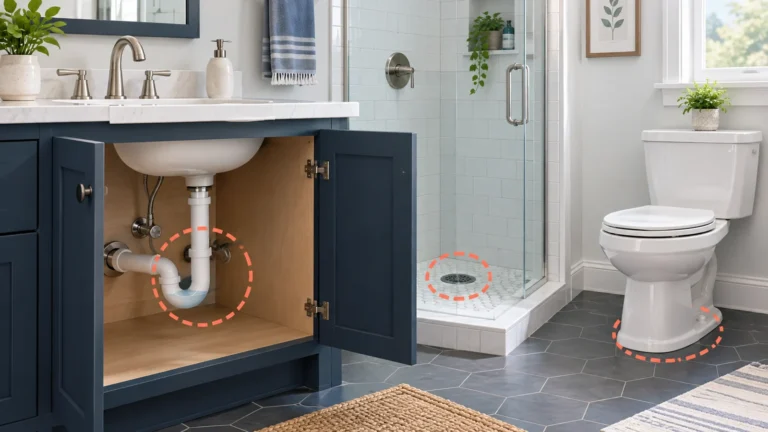
| The shower gurgles, the toilet affects it, or another drain also smells | Stop household wastewater input if there is a shared or uncertain backup, then arrange plumbing diagnosis. Do not recreate the trigger. | The shower drain alone is the source. |
| You notice wastewater, a backup, a sewage smell that persists, or damaged plumbing | Keep people away from the area and contact a qualified plumber or property manager. | Scrubbing the strainer solves a sewage or backup issue. |
Why an unused shower can smell like sewage
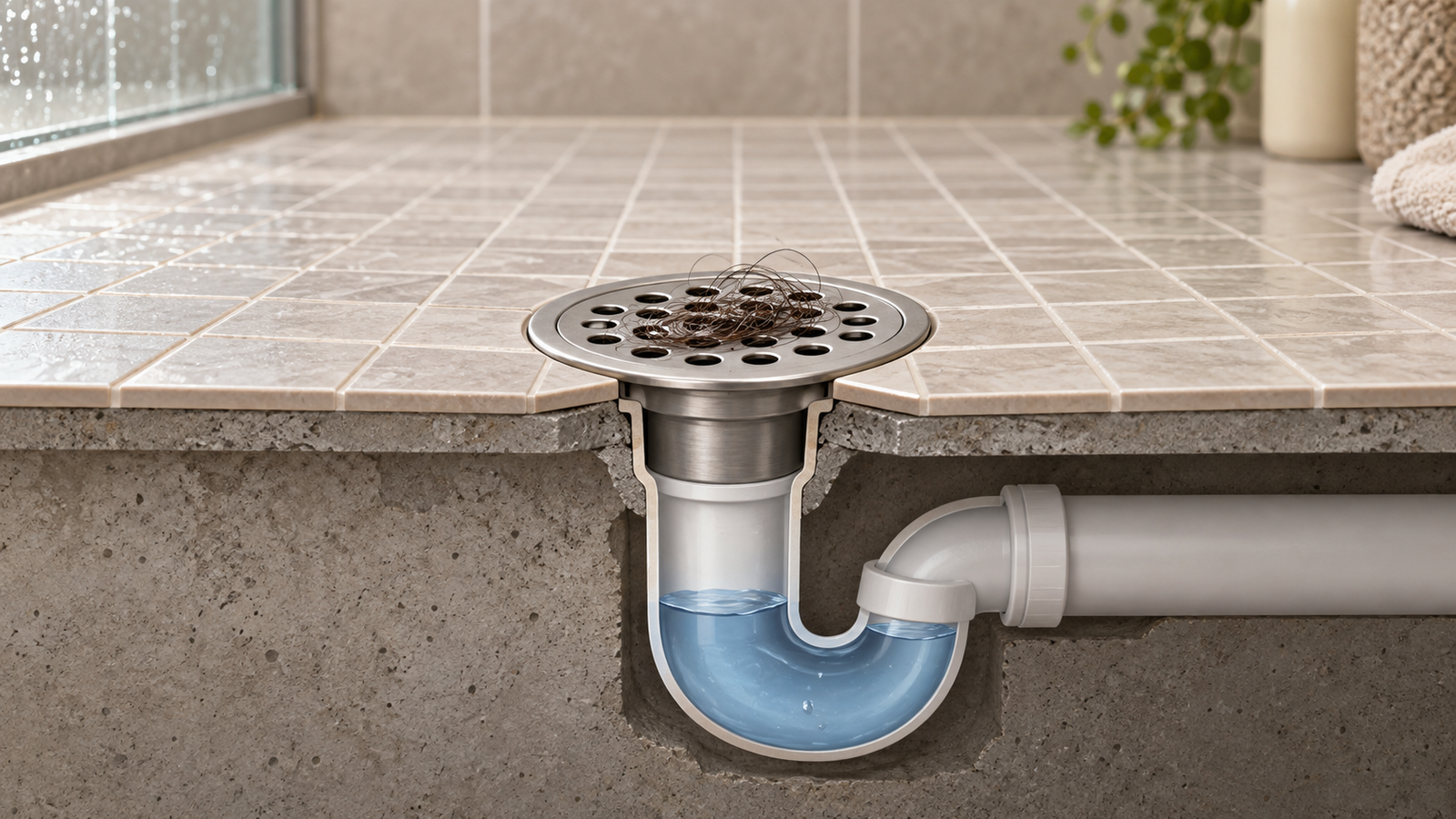
Plumbing traps hold water to help block odors from the drainage system. South Davis Sewer District explains how evaporation in a little-used fixture can remove that barrier. Charlotte County also recommends keeping unused shower traps supplied with water. This is a possible pattern, not a diagnosis from smell alone.
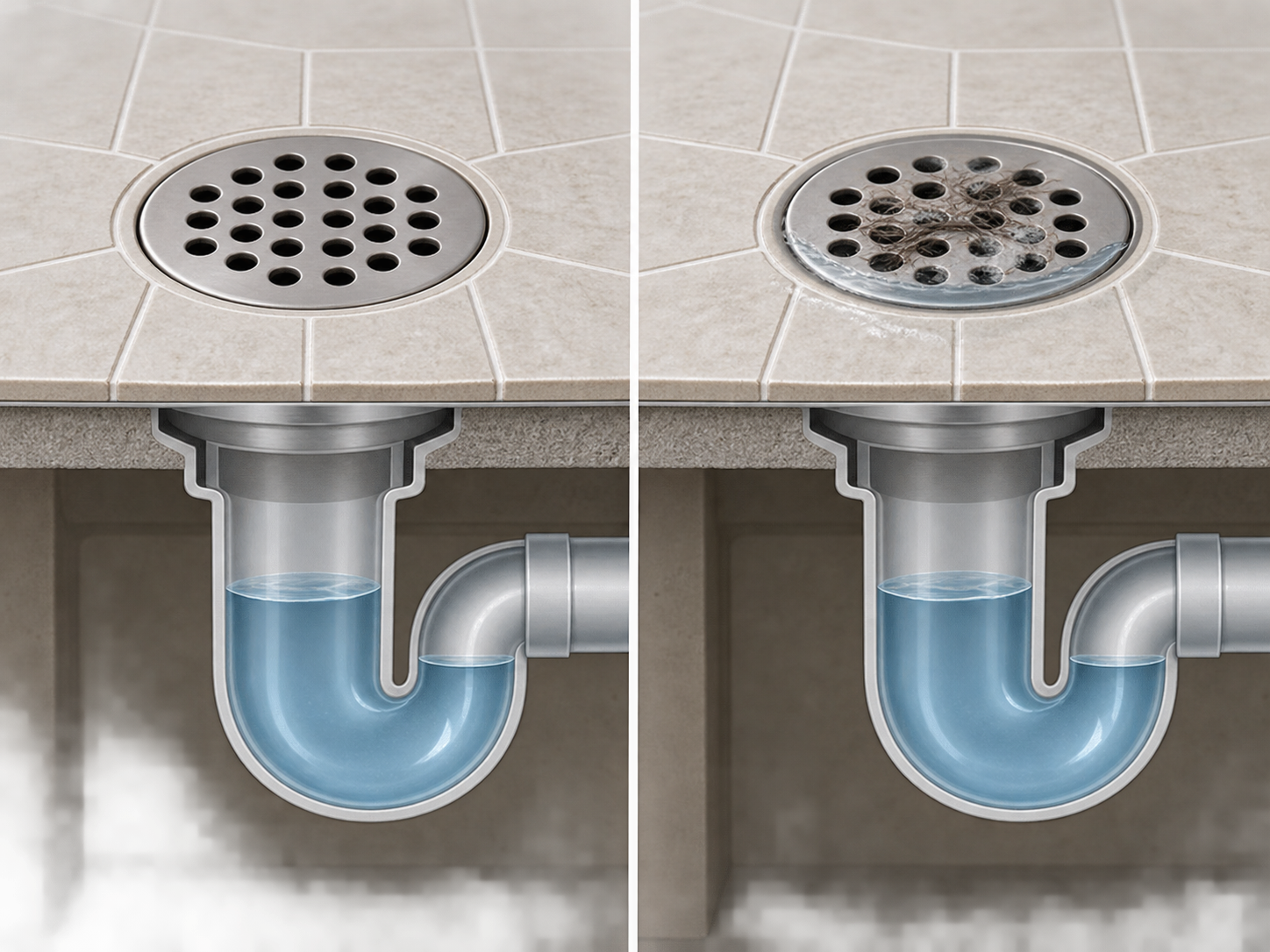
Only when there is no gas concern, the area is electrically safe, drainage has been normal and there is no leak, backup, wastewater or chemical-treatment concern should a little-used shower receive plain water to replenish the trap. Use a small controllable flow while watching the drain, rather than running a long unattended shower. Stop at rising water, a leak or another unexpected return. Do not sniff into the opening or use disappearance of the odor as an exposure test. If ordinary use later shows that the odor returns quickly, or there is gurgling or another affected fixture, arrange diagnosis rather than repeated refills. A temporary improvement is consistent with a water-seal contribution but does not prove the hidden trap is sound.
When the smell is probably near the drain opening
Hair, soap residue, skin oils, and product residue can collect around a shower strainer and in the reachable part of the drain. That can smell sour or musty even when the shower still drains. For a normally draining, untreated shower with no warning signs, the limited first job is cleaning an identified serviceable surface part, not an improvised chemical reaction. Have gloves, a soft cloth and the model-approved mild or neutral cleaner ready. If the cover or finish is unidentified, leave it assembled and obtain its care instructions.
- Do not start with standing water, a backup, suspected leakage, a gas or electrical concern, drain cleaner, or an uncertain treatment history.
- Put on gloves. Lift only the grate or strainer identified as owner-removable by the installed model, using its documented method. Do not pry the frame, cut sealant, disturb waterproofing or remove an unfamiliar insert.
- Lift away visible hair and residue from the removable part and accessible surface. Do not reach into the pipe, probe a hidden passage or force debris farther down. Stop for sharp objects or uncertain access.
- Clean the removed part with a soft cloth and the mild or neutral cleaner allowed for its finish; rinse off the cleaner as directed before refitting. For example, Schluter specifies a neutral cleaner and no abrasive tools for KERDI-DRAIN grates. That does not authorize the same removal method or chemistry on every drain.
- Remove the cloth and debris and refit every owner-removable part correctly. If the original safety conditions still hold, use a small controllable amount of plain water and stop at pooling, leakage or an unexpected return. Do not run a full shower to prove clearance.
Safety first: Do not combine cleaners, or add vinegar, bleach, ammonia, or another product after an unknown drain treatment. If a cleaner has already been used, follow its label and do not continue mechanical work or try to neutralize it. Ventilation advice does not override the suspected-gas instruction to leave without operating fans or switches. A plumber should know that a chemical may be in the line before they work on it.
What the result does—and does not—tell you
| Result | Meaning | Next step |
|---|---|---|
| Odor improves after a permitted trap refill | A water-seal contribution is possible; hidden integrity is not established | Keep the little-used fixture maintained, but arrange assessment if the smell quickly returns. Do not keep refilling a leaking or backed-up drain. |
| Surface residue is removed, with normal limited drainage | The accessible residue has been cleaned, not the entire hidden pipe or a disinfected system | Resume appropriate ordinary use only with no warning signs; note recurrence rather than escalating to a stronger chemical. |
| Odor persists or returns, or gurgling, moisture or backup appears | The surface route has not explained or resolved the relevant fault | Stop using a leaking fixture; for shared or uncertain backup stop household wastewater. Give a plumber the timing, affected fixtures and cleaner history. |
A slow drain changes the decision
Odor plus slow drainage is different from odor alone. It can mean debris is restricting flow, but it does not tell you exactly where the restriction is. Do not keep pouring products into a drain that is already slow. If corrosive drain cleaner may remain in the line, do not plunge, cable, or open the drain; splashback can cause burns. Follow the product label and tell the plumber exactly what was used.
Updated October 10, 2026: limited the dry-trap water check to normally draining showers and clarified the no-plunging boundary when drain cleaner may remain.
If you need help with a simple bathroom-sink blockage, see How to Unclog a Bathroom Sink Safely. For water rising into the shower, especially after another fixture ran, use the shower-backup trigger guide and stop adding wastewater when the backup is shared or uncertain. A shower that is gurgling or affecting other fixtures needs a different path; see Toilet Gurgling: Diagnose the Drain, Vent, or Sewer Problem Safely.
When to stop and call for help
- sewage or wastewater coming into the shower;
- water rising while you are not using the shower;
- gurgling, bubbling, or odor at more than one fixture;
- a persistent sewer smell after an unused shower’s trap has been refilled;
- a leak under or around the shower, soft flooring, or a ceiling stain below it; or
- an odor after a chemical drain product has failed.
These signs can involve the drainage path, a vent, a trap seal, or a leak that cannot be safely confirmed from the strainer. If you rent, report the pattern and the fixtures affected rather than guessing at a failed part.
Keep the smell from returning
With no warning signs, remove visible surface hair during routine care using the same owner-access limits. Keep little-used traps supplied with water only when drainage and the surrounding area are safe; do not restart a suspect shower simply for a maintenance schedule. If your bathroom stays damp after use, reduce the moisture source too: How to Prevent Mold in a Bathroom explains the ventilation and moisture checks that matter.
For a broader bathroom odor diagnosis, including toilets and sinks, see Bathroom Smells Like Sewage? Find the Source Safely.