Garbage Disposal Smells? Find the Source and Clean It Safely
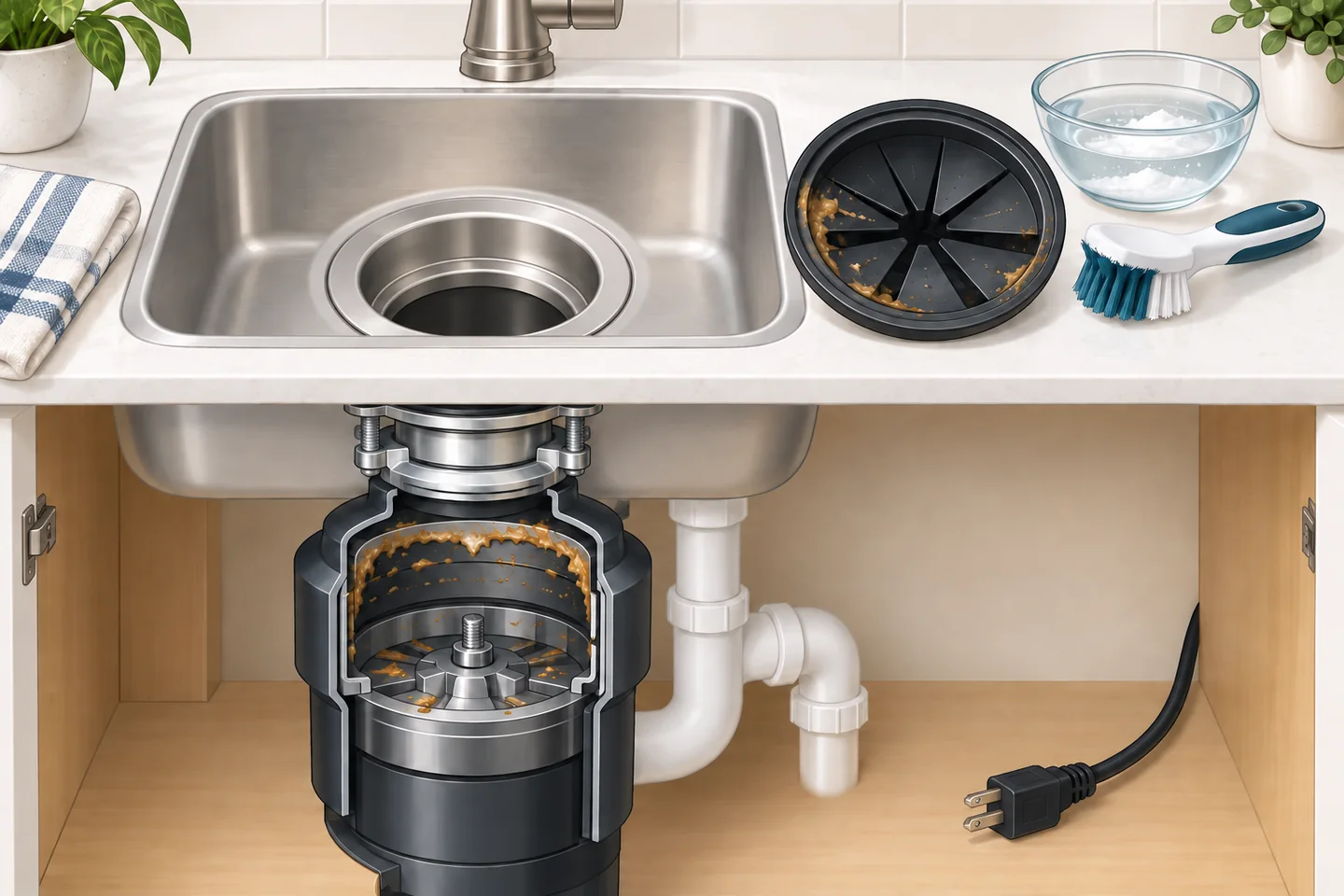
If your garbage disposal smells, trapped food is usually hiding under the splash baffle or around the upper grind chamber. Start with the gas, electrical and chemical stop checks below—not a trial run. If the recent drain history is normal and cleaning is appropriate, safely isolate power and clean only the user-removable baffle as its manual permits. A powered chamber flush is optional and model-specific, not the first diagnostic test. A smell that returns quickly, follows dishwasher use, or affects several drains needs a different diagnosis.
Check whether cleaning is safe · Follow the baffle-cleaning steps · Interpret what happens afterward
Rule out a possible gas leak
If a strong rotten-egg odor could be natural gas—especially near a gas range, water heater, furnace, or gas pipe—do not operate the disposal, lights, switches, or a phone inside. Leave the building and call 911 and the gas utility from a safe location. Do not try to locate the leak yourself.
What does the garbage disposal smell like?
| What you notice | What it may point to | Best next step |
|---|---|---|
| Sour, stale-food, or greasy smell at the drain | Residue under the baffle or in the upper chamber | Disconnect power and clean the baffle |
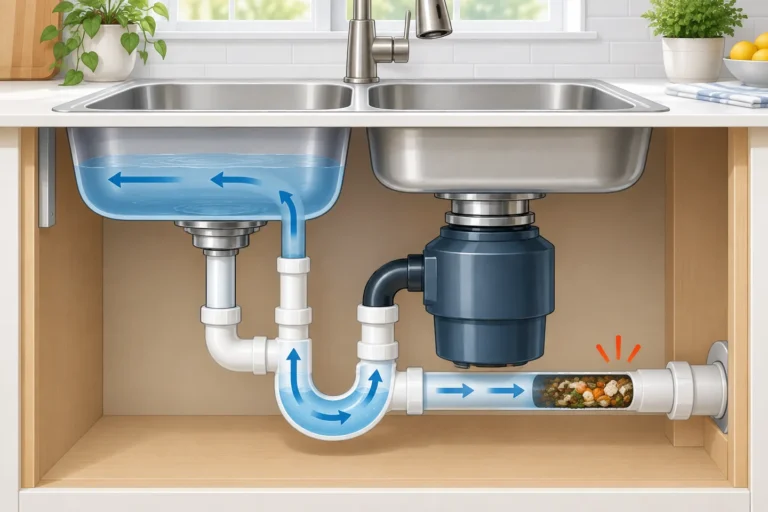
| Odor with slow drainage or standing water | Food buildup in the outlet, P-trap, or drain line | Use the not-draining guide |
| Odor appears after the dishwasher drains | Residue or a drainage problem in the connected hose or air gap | Stop using the dishwasher if water backs up; inspect the drain path |
| Smell remains when the disposal opening is covered | Trash, dishwasher, cabinet leak, or another nearby source | Check each source separately |
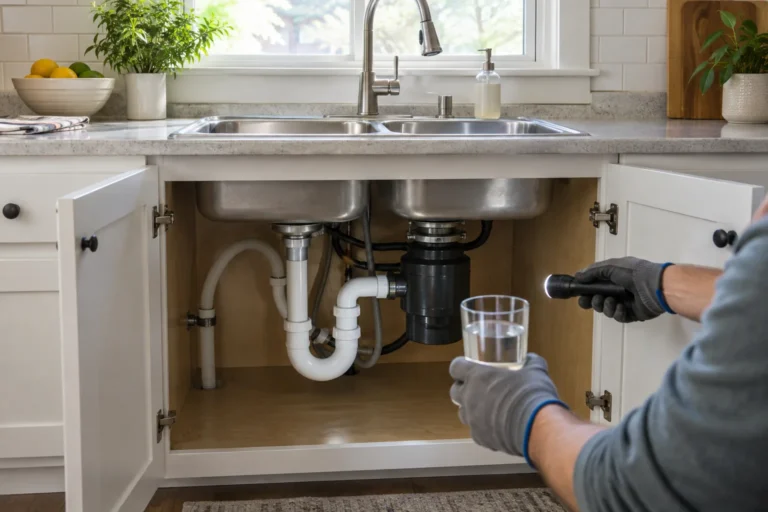
| Rotten-egg odor seems to be in the faucet water, not the drain | Water-heater or water-supply issue | Fill a clean glass and move away from the sink; compare hot and cold. Hot-only: ask a licensed plumber. Both or cold: contact your water supplier. See Portland Water Bureau’s odor check and Michigan EGLE’s water guidance. |
| Sewer odor affects more than one drain | Trap, vent, or drain-system problem | Arrange a plumbing inspection |
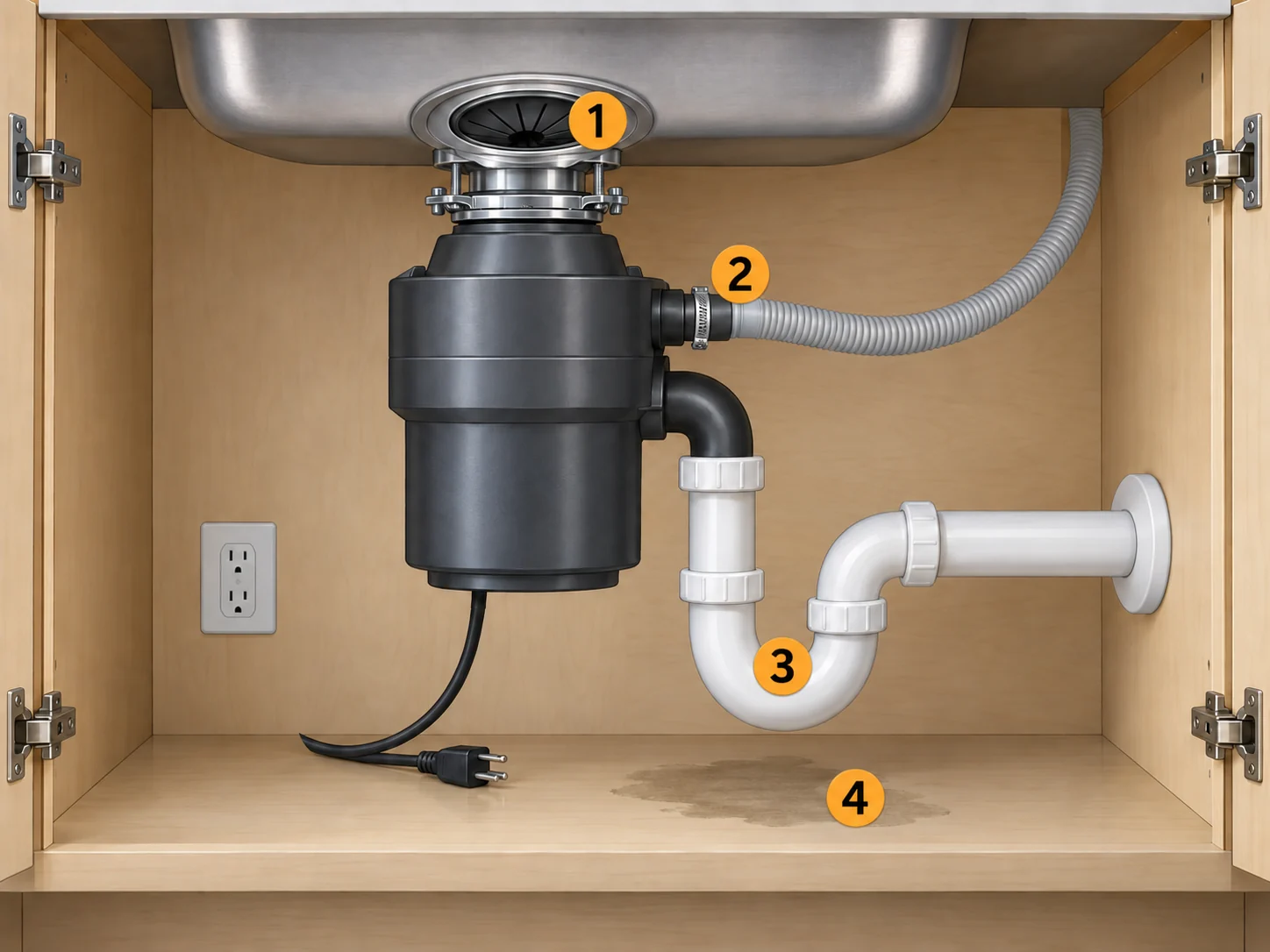
| Musty odor under the sink with dampness, staining, or swollen cabinet material | Slow leak, condensation, or moisture trapped around a hose or drain joint | Keep power off if water is near wiring; locate the first wet point |
Before cleaning the disposal
- Use the recent drainage history; do not bail or run water through a blocked, leaking or chemically uncertain sink to confirm it. If other fixtures back up, stop adding household wastewater and get drain help.
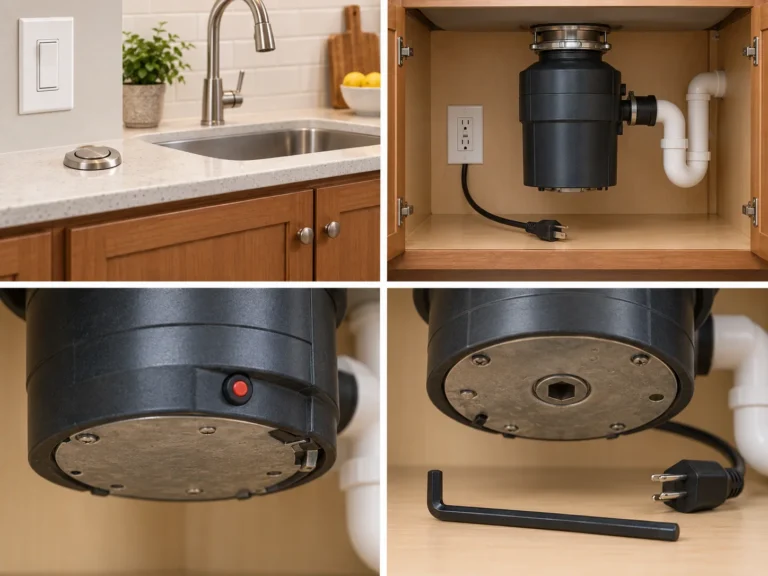
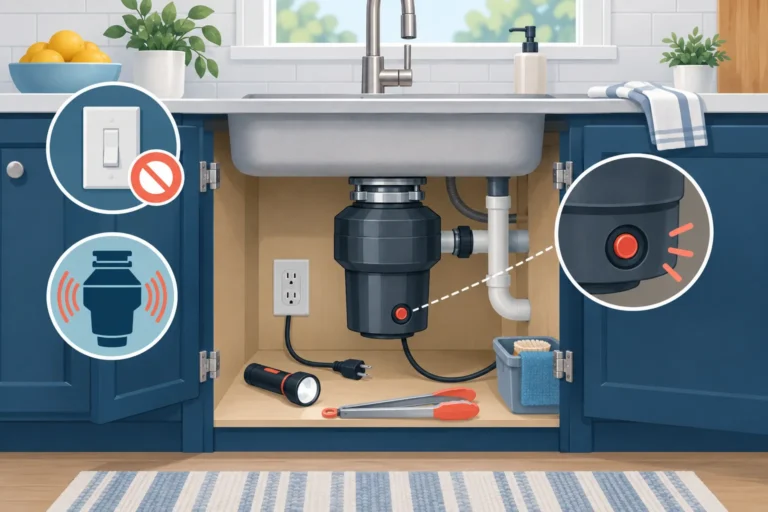
- After ruling out a gas emergency, turn off only a safely reachable dry control. Isolate power by unplugging an accessible dry plug with dry hands on a dry floor, or switching off the identified breaker from a safe dry position. A wall switch alone is not isolation. Do not touch wet equipment, cross water to reach a plug or open wiring covers. If safe isolation is uncertain, stop.
- Never put a hand or fingers into the grinding chamber.
- Check the manual before removing the splash baffle; some designs are removable and others are not.
- If a drain cleaner or unknown treatment is present, do not add water/products, bail, insert a brush or open plumbing. Tell the professional what may be present. Broken glass, hidden fragments, a jam, burning smell, supply trip, damaged cord or wet electrical area also rules out this cleaning route.
How to clean a smelly garbage disposal safely
1. Check the drain before treating the odor
Moen notes that a slow-draining disposal can develop an odor. Use what you already observed. Only when there is no gas concern, leak, wet-electrical area, chemical uncertainty, existing standing water or wider backup may a small plain-water observation with disposal power isolated help check an uncertain drain history. Stop at the first rising level or drip; do not run the motor or dishwasher to investigate. If water drains slowly, stands in the sink, or backs into the second bowl, use Garbage Disposal Not Draining first. Do not mask a drainage problem with fragrance.
2. Disconnect power and inspect the splash baffle
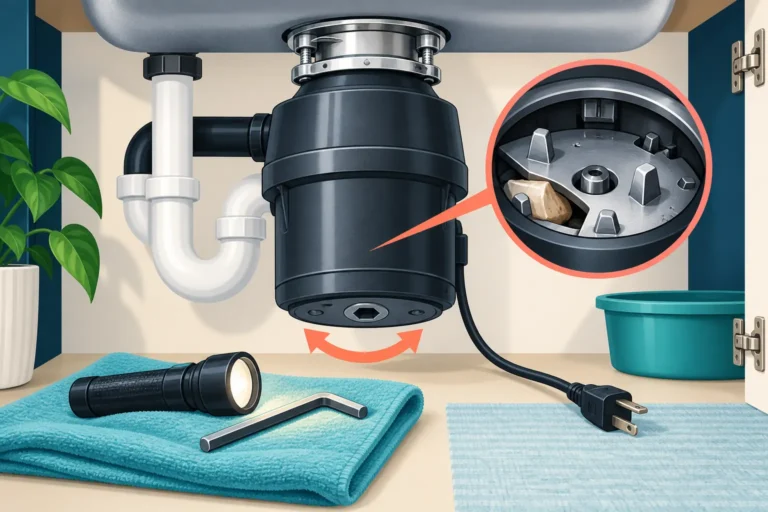
The black rubber splash baffle is a common hiding place for food film. With power disconnected, use a flashlight to inspect its top and underside without reaching into the chamber. Remove it only by the method in the exact manual; do not reach into the chamber or pull a fixed guard. For Moen’s described removable guard, its care page specifies warm water and baking soda, followed by a warm-water rinse and refitting; dishwasher cleaning applies only to guards approved for that use. Follow your own part’s cleaning/product limits. If safe removal or refitting is unclear, stop rather than improvise.
For a fixed baffle, use only the cleaning approach approved by the manufacturer. Keep your fingers above the opening and do not force, cut, or pull a part that is not designed to come out. A damaged, distorted or persistently smelly baffle needs the manufacturer’s compatible-part advice; odor alone does not prove the part must be replaced. Do not operate without the required guard correctly seated.
3. Flush the chamber with warm water and baking soda
Reinstall the required baffle correctly and remove every brush, tool and loose object. Do not restore power when leakage, electrical damage, a trip, chemical contents, fragments, a jam or abnormal control behavior remains unresolved. Surface drying alone does not clear water-damaged equipment. Only if the drain is known to flow normally and every gate passes, consider this optional flush when the exact manual permits it and a separate operating switch controls the unit. InSinkErator’s directions for that setup use a half sink of warm water with 1/4 cup of baking soda; restore power only after reassembly, then operate the switch and release the stopper as directed. If the stopper itself starts a batch-feed or Cover Control model, skip this switch-and-remove-stopper sequence and follow its own cleaning instructions. Never bypass the stopper interlock.
Keep others clear and follow the exact manual’s water/control order. Stop immediately for a rising level, leak, hum, electrical odor, trip or failure to shut off; isolate only from a safe dry position and arrange service, not another flush. For a normal completed cycle, switch off as directed and follow the manufacturer’s cold-water after-flow guidance. Do not combine this method with bleach, vinegar, drain cleaner, or another cleaning product.
4. Recheck the odor after the sink dries
Wipe the sink rim and leave the area undisturbed for a short period. From a normal standing distance, note whether the odor remains at the disposal, other drain or cabinet; do not put your face near an opening or run appliances to recreate it. This simple location check helps distinguish remaining disposal residue from a drain, appliance, or leak problem. If the odor seems to come from the sink rather than the disposal, use the kitchen sink smell guide to separate drain, faucet-water, and cabinet causes.
What the cleaning result means
After cleaning: less odor with normal drainage supports a residue explanation, but is not proof of disinfection or a repaired drain. If odor remains or returns promptly, do not keep repeating powered flushes; record its location and when it occurs, then use the matching dishwasher, moisture or drain route. If small flies gather near the sink or bin, use the kitchen fruit-fly source guide to distinguish food or bin activity from a drain-related clue. New dampness, a hum, a trip, rising water or uncertain gas odor overrides any improvement and requires the appropriate stop/service response.
If the odor is musty or the cabinet is damp
A musty odor below the sink, water staining, a swollen cabinet base, or moisture around a hose or slip joint points to a moisture problem rather than food residue alone. Keep the disposal disconnected if water is near its cord, outlet, switch, or motor housing. Do not wipe wet electrical equipment or unknown wastewater. Only when power is safely isolated and the reachable moisture is known chemical-free may you absorb it away from electrical parts. Record existing wet points before wiping, then use the garbage-disposal leak-location guide to identify the first wet point. A recurring leak, damaged cabinet material, or wastewater requires repair before deodorizing.
What not to put in a smelly disposal
A pleasant scent does not prove that the residue is gone. Avoid pouring concentrated fragrance, grease-cutting chemicals, or drain cleaner into the unit unless the product is approved by the disposal manufacturer and used exactly as labeled. Never mix cleaning products. Citrus may temporarily freshen some disposals, but use only small pieces if the model manual allows them; peels cannot correct a clogged drain or dirty dishwasher connection.
When to call a professional
- The odor returns immediately after the baffle and chamber are cleaned.
- The sink drains slowly, repeatedly clogs, or backs up into another fixture.
- Several drains produce a sewer-like odor.
- Wastewater returns through the dishwasher or sink.
- The disposal leaks, grinds poorly, makes a new noise, trips its reset, or smells hot or electrical.
- You cannot verify that power is disconnected or the baffle cannot be cleaned safely.
If the unit hums or stops grinding, switch it off and follow the humming-disposal guide. For a silent unit, use the no-power troubleshooting guide. Keep power off when a leak is near wiring or the motor housing.
Prevent the odor from coming back
- Use a moderate flow of cold water before, during, and for several seconds after grinding.
- Feed small amounts gradually and stop when the sound or drainage changes.
- Keep grease, fat, coffee grounds, and items restricted by your model manual out of the disposal.
- Clean the removable baffle periodically instead of waiting for a strong odor.
- Correct slow drainage early so food does not remain in the plumbing.
Sources
This guide was checked against current manufacturer cleaning instructions and federal gas-safety guidance. Follow the manual for your exact disposal because baffle designs and approved cleaning methods vary.
- InSinkErator: There’s an Odor Coming From the Garbage Disposal
- InSinkErator: Installation, Care, and Use Manual
- Moen: How to Eliminate Odors in a Garbage Disposal
- Portland Water Bureau: Taste and Odor Issues in Drinking Water
- Michigan EGLE: Common Drinking Water Quality Concerns
- PHMSA: Pipeline Leak Recognition and What to Do