Dishwasher Soap Dispenser Not Opening? Check What Happened During the Cycle
Quick answer
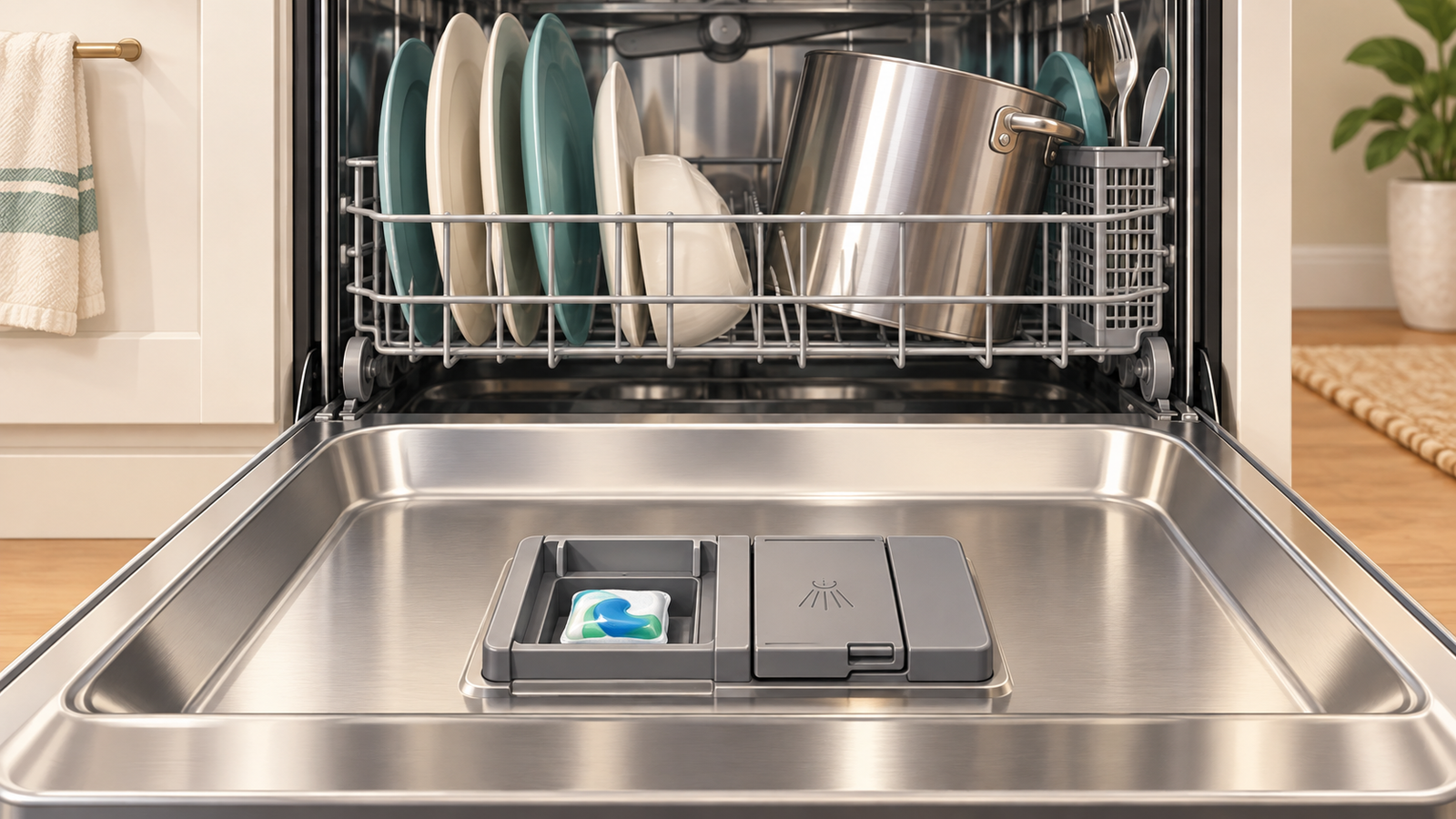
If the dishwasher detergent cup is still latched shut after a normal cycle, first check whether a dish, pan, utensil, or rack could have blocked its path. If the door is open but a pod or powder remains, the door may have released and the problem is more likely detergent dissolving or water circulation. Clean only visible detergent residue, use detergent as directed for your model, and check the owner’s manual before running a dish-free test cycle. Do not force the cup open or remove the door panel. If the cycle stops, shows an error, leaks, or the door stays shut despite a clear path, arrange model-specific service.
Keep this check at the accessible, inside-the-tub level. Do not pry the dispenser, defeat a latch, remove the inner door panel, or test wires or electrical parts. Stop if the dishwasher leaks, smells hot or burnt, trips a breaker, has damaged wiring, or will not complete a cycle normally. Water and electricity make those situations a service issue, not a detergent-cup cleaning task.
| What you see after the cycle | What it can mean | Safest next step |
|---|---|---|
| The detergent-cup door is still latched shut | A large item may have blocked it, visible residue may be sticking it, or the release may not have occurred | Check the cup’s path and accessible residue; if it repeats with a clear path, use the model manual or service support |
| The door is open but a pod or detergent remains | The door may have opened, but detergent did not dissolve or wash away | Check detergent condition, cup dryness, compatible cycle, and spray-arm clearance as your manual allows |
| The door is only partly open | A rack, pan, plate, or accessory may be in its path | Reload for clearance and run a normal cycle only if the model manual supports it |
| The cycle ended early, shows an error, or left standing water | The dispenser is not the main symptom | Address the cycle, error, or drain problem first |
Start with the cup’s final position
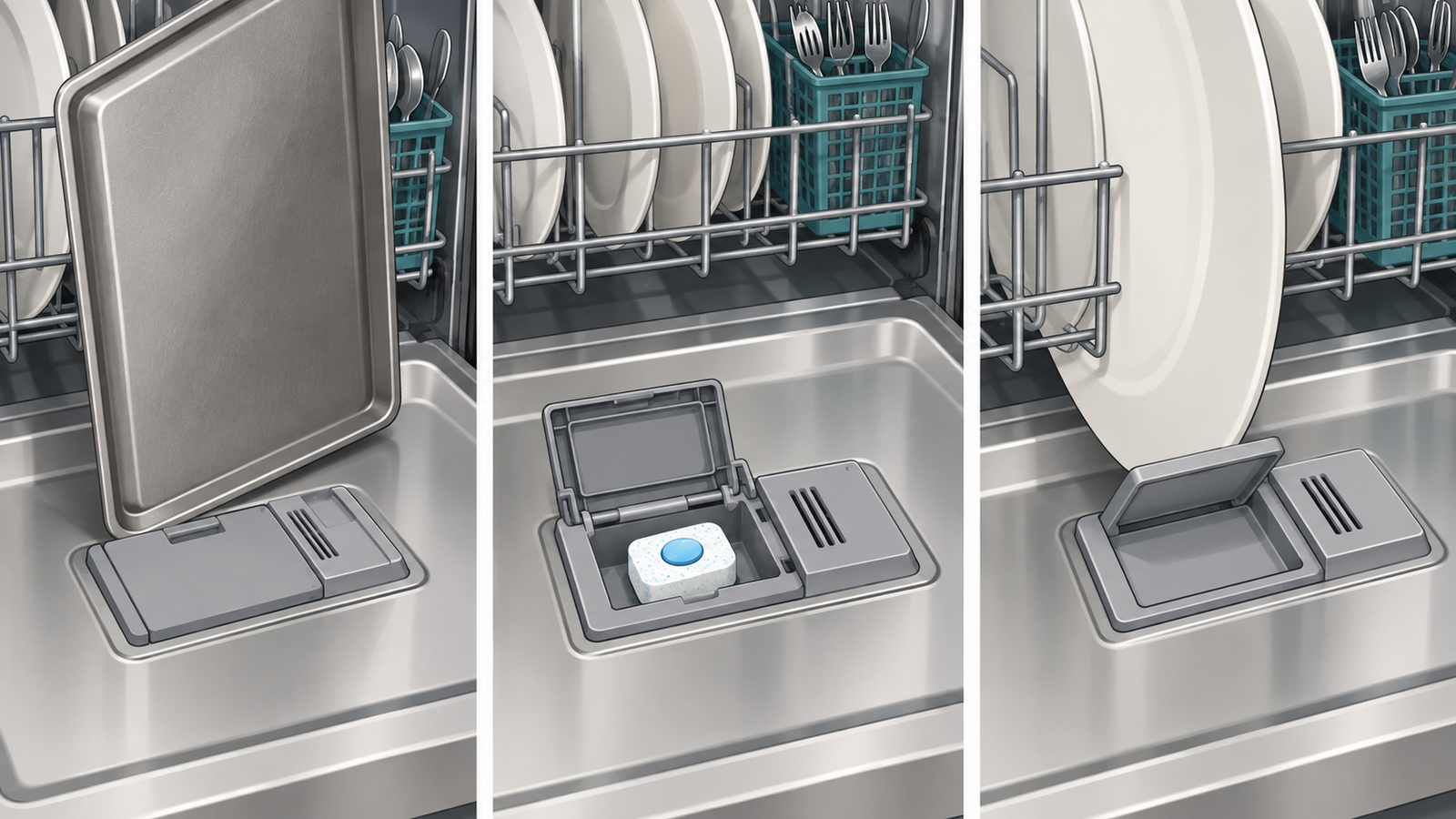
“The soap dispenser did not open” can describe two different problems. The small door may have stayed latched, or it may have opened while a pod or detergent powder stayed behind. Those observations need different next steps.
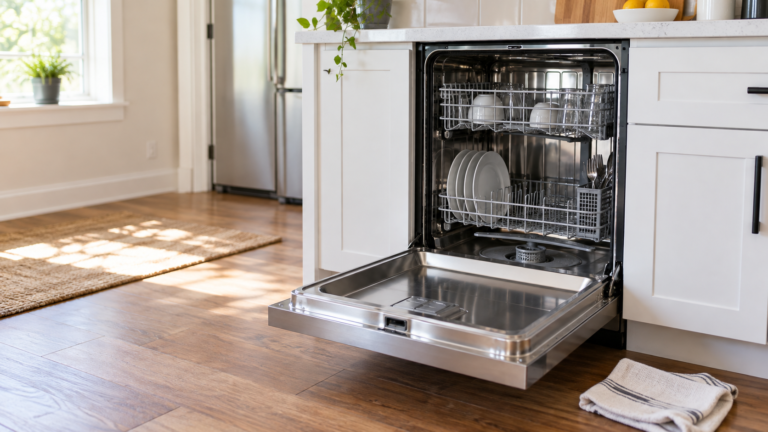
Open the dishwasher only after the cycle has ended and the appliance is quiet. Look at the detergent compartment without touching the latch first. Note whether the door is closed, partly open, or open with detergent still inside. Also note whether the cycle completed normally, displayed a code, or left water in the bottom of the tub.
That short observation prevents an expensive mistake: treating a dissolving or interrupted-cycle problem as proof that a dispenser assembly has failed.
If the dispenser door stayed shut
Start with a physical clearance check. Whirlpool notes that large cookware placed too near the dispenser can obstruct its movement. Look for a baking sheet, tall pan, cutting board, utensil handle, bottle, or shifted rack that sits directly in front of the compartment door.
Move only the items that interfere with the door’s path. Do not bend a rack or force the compartment door. Then look for visible detergent buildup around the cup’s edge or latch area. Samsung advises cleaning residue from accessible dispenser surfaces with warm water. Use a soft cloth or soft brush rather than a knife or metal tool, and leave the compartment dry before refilling it if your owner’s manual calls for that.
If the latch looks cracked, the lid will not stay closed before a cycle, or the cup stays latched after a normal cycle with a clear path and no visible buildup, stop at that point. The cause can be model-specific, and the next repair may require door-panel removal or electrical diagnosis.
If the door is open but detergent is still inside
An open door with detergent left behind is not the same as a door that never released. Bosch troubleshooting guidance distinguishes a blocked cover from detergent that has not dissolved or washed out. In that second situation, check the conditions that affect detergent use before assuming a failed door.
Check the detergent itself
Use dishwasher detergent that has been stored as its label directs. Whirlpool notes that older detergent exposed to air can clump and dissolve poorly. Do not overfill the compartment. Samsung advises filling only to or below the marked fill line and placing tablets correctly before closing the door.
If a tablet is large or sitting upright, follow your model manual’s placement instructions. Some manuals specify that tablets should lie flat. Do not put detergent loose in the tub as a general workaround, because the correct location can vary by program and manufacturer.
Check the cycle and visible water path
A short or quick program may not be suitable for every tablet formulation. Bosch manuals describe this as a possible reason a tablet remains, but the right cycle depends on the detergent label and your exact dishwasher model.
Check that no dish blocks the lower or upper spray arms from turning. Do this only while the machine is off and quiet. If the arms are visibly blocked by cookware, reload the rack so they can move freely. Do not remove spray arms or parts unless your owner’s manual gives the exact method.
If the cup is open but detergent remains after correcting loading and using fresh detergent, use the manufacturer’s troubleshooting page for the exact model. The next cause could involve wash performance, water conditions, or a model-specific cycle issue rather than the dispenser latch.
For broader wash-performance checks, see our guide to a dishwasher not cleaning dishes.
If the door opens only partway
Partial opening does not automatically mean a broken dispenser. Zanussi’s manufacturer guidance notes that a basket or item can stop the door from opening fully. A tall plate, pan, fragrance accessory, or another item near the compartment can physically limit the door once the release occurs.
Reload the area in front of the dispenser so the door can swing without striking anything. Check the rack position and make sure no long utensil or tall item can shift into the cup’s path when the rack slides in. Then follow the normal program and detergent directions in your owner’s manual.
Do not treat partial opening as permission to pry the door wider during a cycle. The mechanism, timing, and safe access differ by model.
When a dish-free test cycle can help
Samsung’s support guidance uses a dishwasher with no dishes as a way to separate a loading obstruction from a repeat dispenser problem. That can be useful only after you check your model’s manual and use the correct detergent setup for that model.
Before running the test, make sure the compartment is clean and dry if the manual directs it, place detergent according to the manual and its fill line, and use a normal cycle rather than guessing with an unusual setting. Do not run repeated tests just to make the door open. One clear result is enough:
- Detergent dispenses with no dishes inside: loading or a movable obstruction is the likely direction to investigate.
- The door remains shut or detergent still does not dispense: record the model number, cycle, and exact result, then use manufacturer support or qualified service.
- The cycle does not complete or displays an error: stop dispenser testing and address that problem first.
When the cycle itself is the problem
The detergent compartment normally releases during a wash sequence. If the dishwasher will not start, pauses, ends early, or shows an error, a closed detergent cup may only be a result of the cycle not reaching that point.
Use our guide for a dishwasher not starting if the panel or cycle behavior is the main issue. If the tub has standing water or the cycle appears to stop around draining, use dishwasher not draining instead.
Do not keep rerunning a dishwasher that leaks, repeatedly trips a breaker, smells hot or burnt, or has water near an outlet, plug, or hardwired connection. If water is escaping from the appliance, see dishwasher leaking from the bottom and arrange help where needed.
When to call for model-specific service
Arrange service when any of these conditions apply:
- the detergent-cup door stays latched after a normal cycle even though its path is clear;
- the cup or latch is visibly cracked, broken, or jammed;
- cleaning accessible residue and correcting the load did not change the problem;
- a dish-free test, when the manual supports one, repeats the same result;
- the dishwasher displays a persistent error or does not complete its cycle;
- there is leaking water, a burning smell, smoke, sparks, a shock, or a breaker that trips again.
Have the model number, the cycle selected, and a short description of what the detergent cup looked like at the end of the cycle ready for the support call. That tells a technician much more than “the soap did not come out.”
Prevent a repeat problem
Keep tall cookware and utensils clear of the detergent compartment. Use fresh dishwasher detergent, do not overfill the cup, and store detergent as its label directs. Check the cup and nearby rack area when loading rather than after a poor wash result.
Most importantly, use the owner’s manual for your exact dishwasher whenever detergent placement, cycle choice, a diagnostic program, or a repair step differs from what you see here. A generic guide can help you observe the problem safely; the manual determines what is correct for that appliance.
Sources
- Whirlpool: Detergent Dispenser Is Not Opening
- Samsung: Detergent Does Not Dispense in Samsung Dishwasher
- Bosch US dishwasher use-and-care manual
- Zanussi: Dishwasher Detergent Dispenser Does Not Fully Open / Does Not Open
- Cove: Dishwasher Detergent Compartment Does Not Open
If the dispenser problem is only one sign among several, use the Dishwasher Troubleshooting guide to compare the main symptom first.