Dishwasher Making a Loud Noise? Identify the Sound Before You Call for Service
Quick answer
A dishwasher can normally hum, spray, click, drain, or run a drying fan, depending on the cycle and model. A sound deserves attention when it is new, much louder than usual, repeats every cycle, or appears with poor cleaning, draining, filling, an error code, a leak, heat, smoke, or a burning smell. First note when the sound happens, then make only the safe checks below.
Do not reach into a running dishwasher. Stop using it and arrange qualified service if you hear persistent metal-on-metal scraping, see water leaking, smell something burning, see smoke or sparks, or notice an electrical problem. If a bang seems to come from the wall or water pipes, do not adjust plumbing or water pressure yourself; call a qualified plumber if it is loud or may be causing damage.
MATCH THE SOUND TO THE CYCLE
When does the loud noise happen?
Choose the closest pattern. This tool does not identify a failed part; it points to the safest visible check or service boundary.
Start with timing. Choose a pattern for the safest next action.
Start with when the noise happens
A sound by itself rarely identifies a failed part. The time it appears in the cycle is usually more useful.
| When you hear it | Common safe explanation to check first | What to do next |
|---|---|---|
| Right after the cycle starts | Water entering, a control click, or a normal first fill | Listen for a change in performance; do not assume a fault from a brief hum alone. |
| During washing | Water spray, dishes shifting, or a spray arm touching a tall item | Stop the cycle before opening the door; rearrange the load and make sure the spray arms can turn freely. |
| Near draining | Drain-pump sound or water moving through the drain path | If water remains in the tub afterward, use the dishwasher not draining guide. |
| After the cycle ends | A drying fan on models that have one | Check the owner’s manual. Whirlpool notes that some models can run a drying fan for hours after the cycle, but this is not universal. |
| Throughout the cycle or suddenly much louder | Repeated load contact, vibration, debris, or a mechanical issue | Stop after the safe checks below and arrange service if it continues or the dishwasher is not working normally. |
What the sound can tell you — without guessing at a part
A single click or clunk
A click from the controls can be normal as the dishwasher changes phases. A single clunk about halfway through a wash can also be the detergent dispenser opening. Beko identifies those sounds as normal operating sounds on many models.
What changes the answer: a click that becomes rhythmic, keeps repeating, or happens with a stalled cycle. Stop the cycle and check whether a dish, utensil, or rack is blocking the spray arm. If the dishwasher also displays an error code or does not wash normally, use the model manual or qualified service instead of trying to diagnose the control system.
Rattling, tapping, or a repeated knock during washing
This often comes from the load. A long utensil, a baking sheet, a large plate, or a lightweight item can move into the spray arm’s path. Zanussi and Bosch both advise checking that dishes are secure and that the spray arms can move freely.
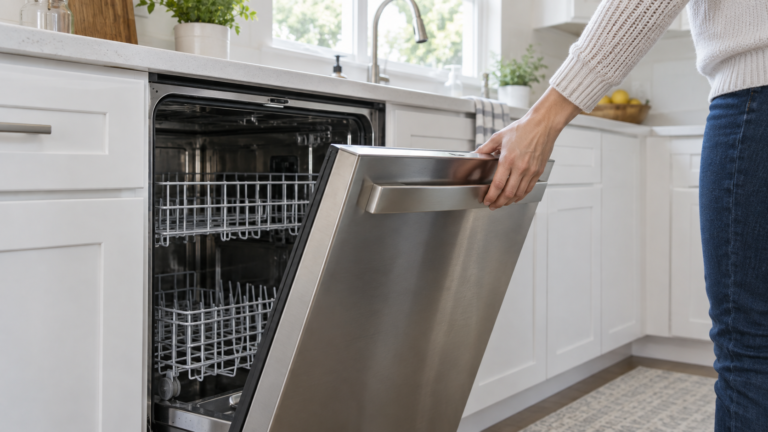
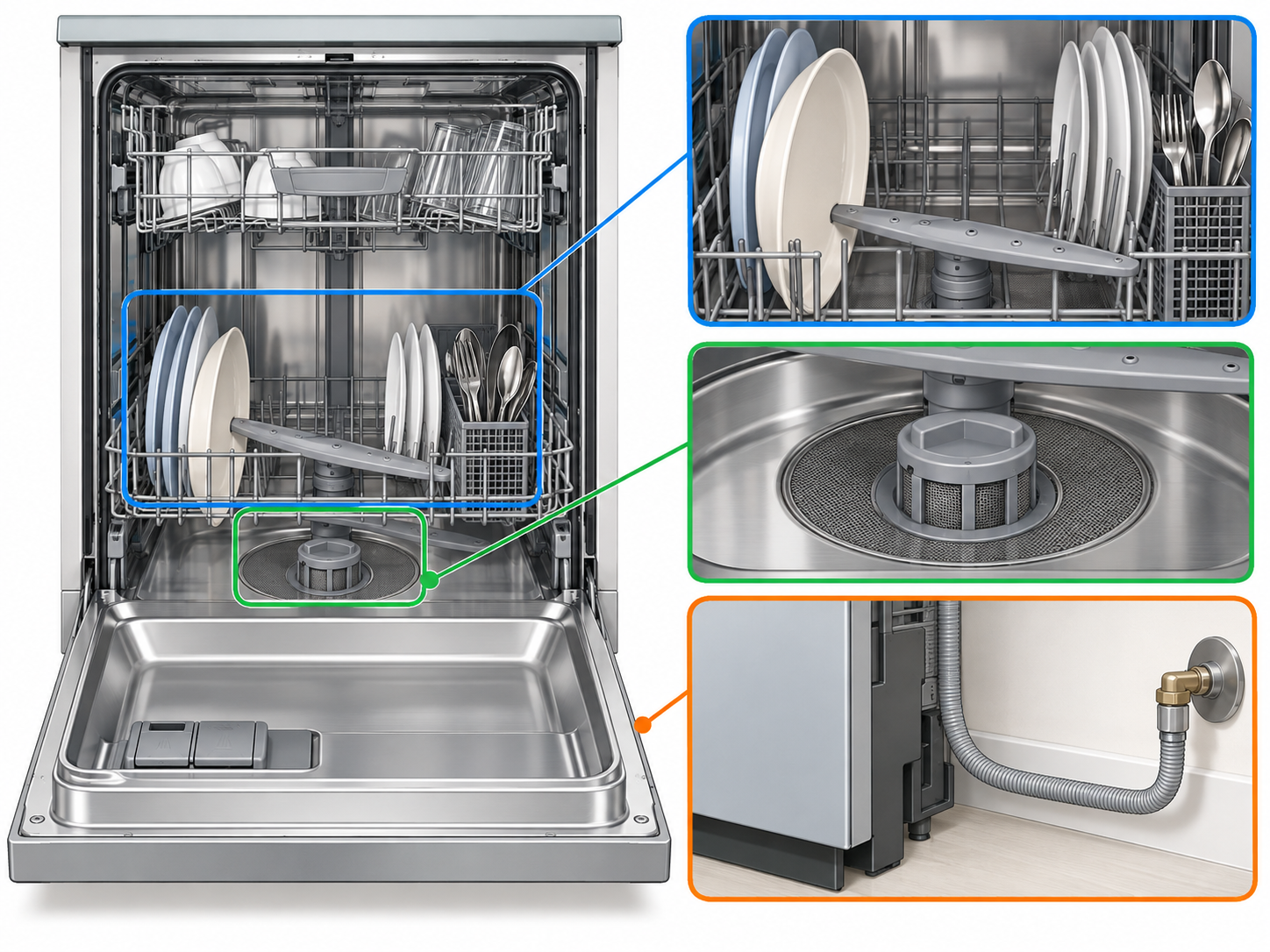
When the dishwasher has stopped, open the door and rotate the spray arms gently by hand. They should not strike dishes, tall utensils, or the rack. Rearrange anything that can move. If the same knock returns with an empty machine, do not keep running test cycles; that is a better point to arrange service.
A hum or buzz
A short hum can be normal while water enters, the wash system circulates water, or the machine drains. A hum after the cycle can also be a model-specific drying fan. That is why the cycle timing matters more than the word “humming.”
Do not treat a loud hum as proof that a pump or inlet valve has failed. If the hum is new, continues unusually long, gets louder, or appears with standing water, poor washing, no fill, or an error code, stop after the manual-supported checks and arrange service. If water remains after the cycle, see Dishwasher Not Draining? Find the Blockage Before You Call for Service.
Grinding, crunching, or metal scraping
Grinding, scraping, or a harsh sound that was not there before is not a noise to ignore. Manufacturer guidance lists loud grinding, metal-on-metal scraping, and persistent mechanical knocking as signs that need further inspection or service.
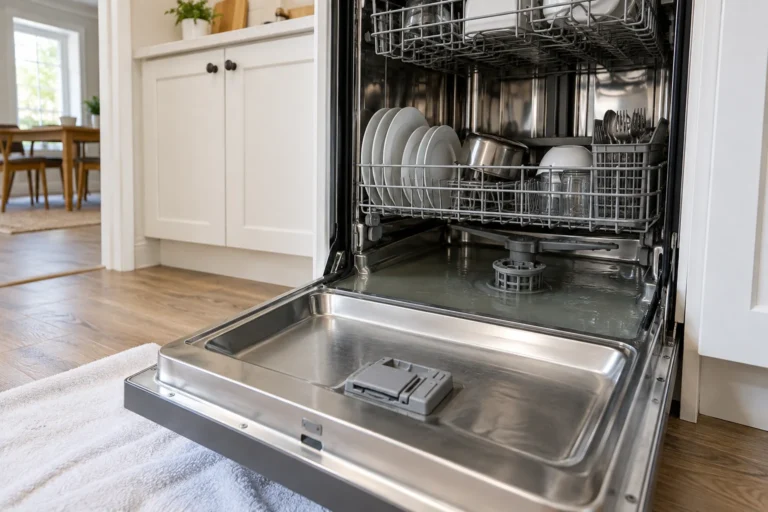
Turn the dishwasher off. If your owner’s manual shows that the filter can be removed by the owner, follow that exact procedure and use gloves around any visible debris. Broken glass, labels, hard food pieces, or small loose objects can be present near the filter area. Do not remove a pump cover, force an impeller, or reach into an area you cannot see clearly unless your manual specifically makes that an owner task.
If the sound returns, happens with an empty machine, or occurs with poor washing or draining, arrange qualified appliance service.
Banging or booming from the back wall, cabinet, or pipes
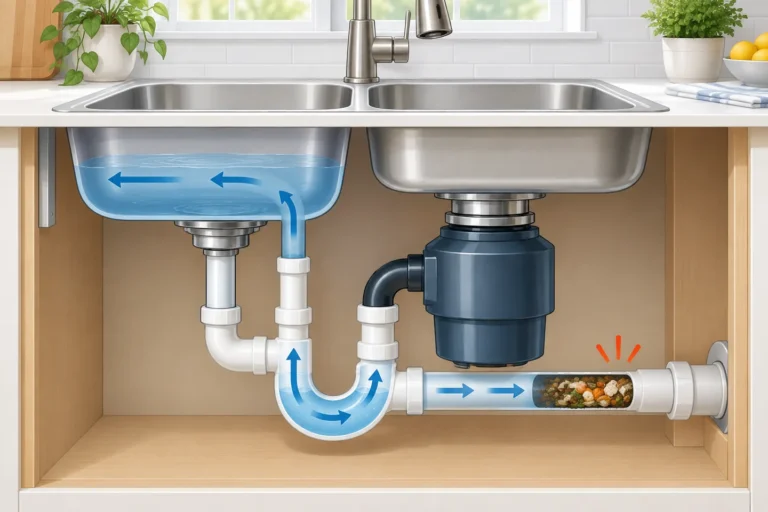
The dishwasher may not be the source. Beko says that banging or booming can come from water pipes rattling as the water valve closes, sometimes called water hammer. A hose behind the dishwasher can also strike the cabinet or appliance.
If you can safely see a loose hose under the sink without moving the appliance, make sure stored items are not pressing against it. Do not pull a built-in dishwasher out of its cabinet or alter a plumbing connection. If the noise is very loud, repeats when water flow changes, or may be damaging pipes or walls, call a qualified plumber.
Three safe checks before you call for service
- Correct the load. Stop the cycle. Make sure long utensils, baking sheets, and large plates are not in the spray arms’ path. Secure light items that can move.
- Notice the pattern on the next normal load. You only need one careful observation. Note whether the sound happens during fill, wash, drain, or after the cycle. Do not keep restarting a noisy machine to “test” it.
- Use the manual for filter-area access. If the manual identifies an owner-removable filter, turn the dishwasher off, follow the stated steps, and remove only loose, visible debris. Wear gloves if there may be broken glass. Reinstall the filter exactly as the manual shows.
Do not use drain-opening chemicals, force parts, remove panels, test live wiring, or assume the access steps are the same for every dishwasher.
When noise and another symptom happen together
The extra symptom is often the best clue:
| Noise plus… | Best next page or action |
|---|---|
| Water left in the bottom after a cycle | Read Dishwasher Not Draining rather than treating it only as a noise issue. |
| Dishes that are still dirty | Check Dishwasher Not Cleaning Dishes for loading, filter, spray-arm, and detergent checks. |
| Water on the floor | Stop running cycles and use Dishwasher Leaking From the Bottom. |
| The cycle does not begin normally | Use Dishwasher Not Starting for power, door, lock, and code checks. |
| An error code, burning odor, smoke, sparks, or repeated breaker trip | Stop using the appliance and arrange qualified service. |
When to stop troubleshooting
Call for appliance service when a new loud noise persists after you correct the load and complete any manual-supported filter check, especially if it is grinding, scraping, squealing, or excessive vibration. The same is true when the dishwasher is not filling, cleaning, drying, or draining as it normally does.
Call a plumber when the bang seems to be in the home’s pipework, a water line or hose is damaged, the kitchen sink also drains slowly, or water is backing up through shared plumbing. This keeps a dishwasher issue from becoming an unsafe appliance or plumbing repair attempt.
Sources
- Zanussi: Dishwasher Making Noises – Normal Sounds and Faults
- Beko US: Dishwasher noise troubleshooting FAQs
- Whirlpool US: Fan Noise – Dishwasher
- Bosch: Dishwasher is making noise
To compare a new noise with other dishwasher symptoms, return to the Dishwasher Troubleshooting guide before attempting a repair.