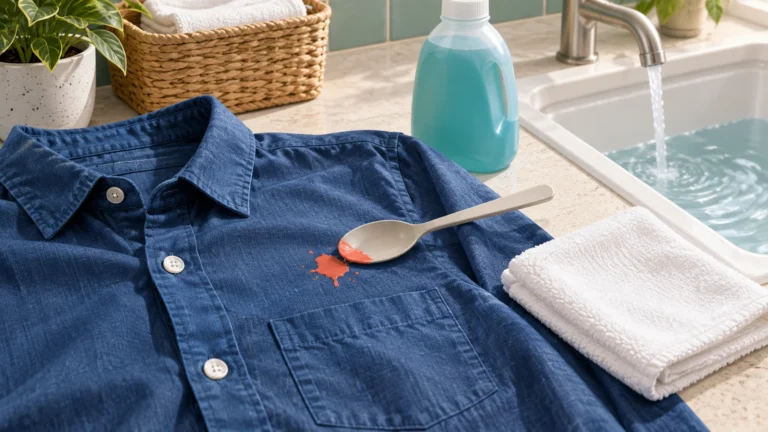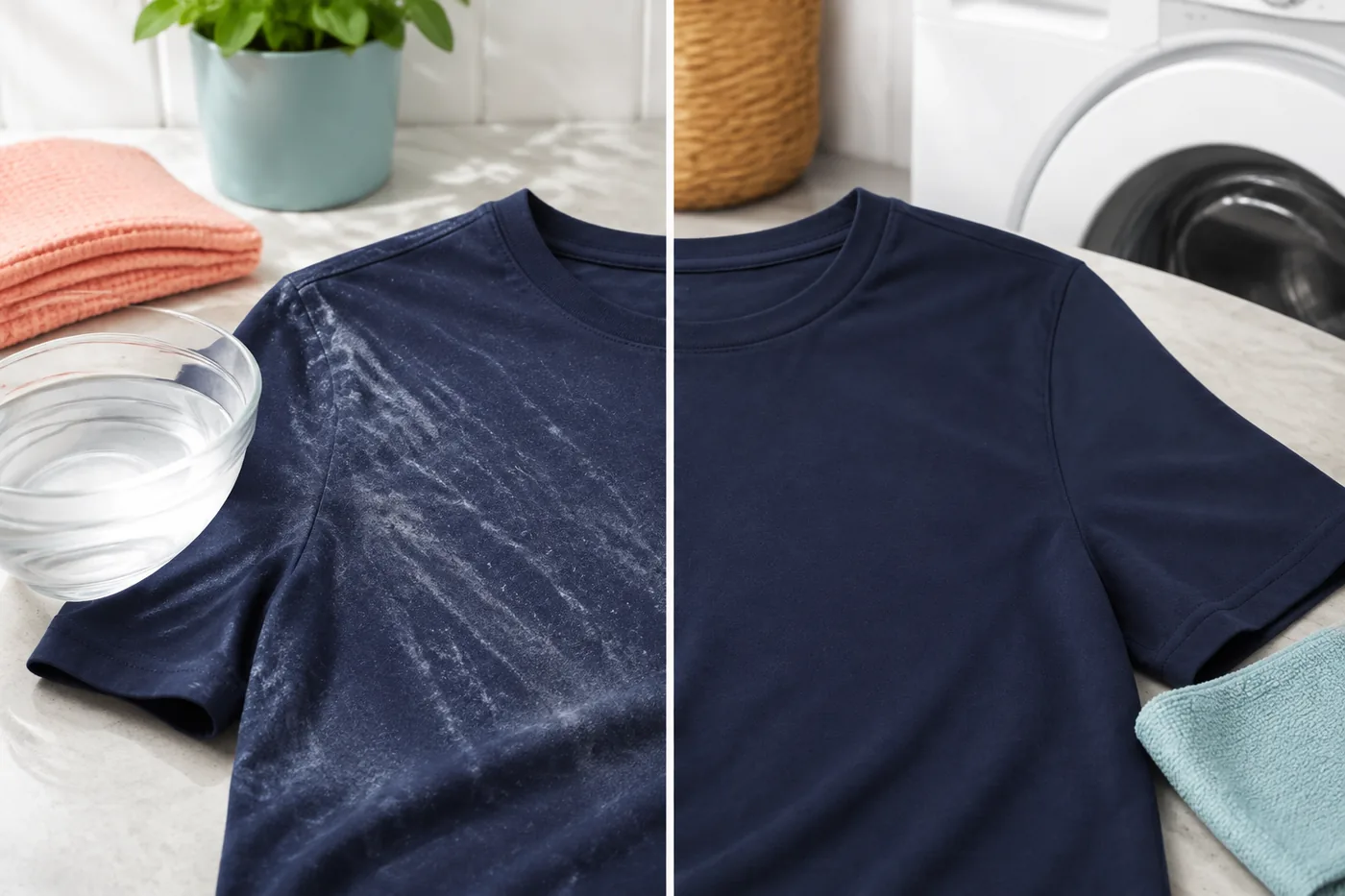
How to Remove Detergent Stains From Clothes
First confirm that the mark behaves like residue. A chalky or slippery deposit that softens when rewetted may rinse away; a greasy or waxy patch may be fabric softener or another oil-based soil; a lighter patch with no material on the surface may be color loss, which cleaning cannot reverse. For a washable garment, follow its care label, rewet and gently rinse the affected area, then use either a clear-water rinse or a correctly dosed rewash. Keep it out of the dryer until you know what remains. Never mix bleach with another cleaner.
Quick answer
Rinse the residue—not the color out of the fabric
Start with water and texture, not a homemade mixture. If the mark loosens within the garment’s care limits, rinse and rewash it. If nothing sits on the surface and the area is simply lighter, stop: that may be dye loss or wear rather than detergent.
Identify the mark before adding another product
“Detergent stain” is a useful description of when the mark appeared, but it does not prove what caused it. Whirlpool lists body-soil interaction, lint, excess detergent, incompatible detergent, washer buildup, water quality, and water temperature among possible causes of white residue. Fabric softener, transferred dye, cosmetic products, and fiber wear can also appear after washing. For loose hairs or fibers sitting on dry fabric, use the lint-removal guide before treating the mark as detergent residue; it separates surface lint from attached pills and flat film.
If the mark did not appear after laundering, or its texture does not fit a residue, use the clothing stain decision guide to separate detergent buildup from food, rust, ink, paint, mold, or material damage before treating it.
Check the wash load, the product you used, and the surface of the dry garment. Then dampen a small part only when the care instructions permit water. Do not taste or closely smell an unknown residue.
| What the mark looks or feels like | What it may be | First low-risk decision |
|---|---|---|
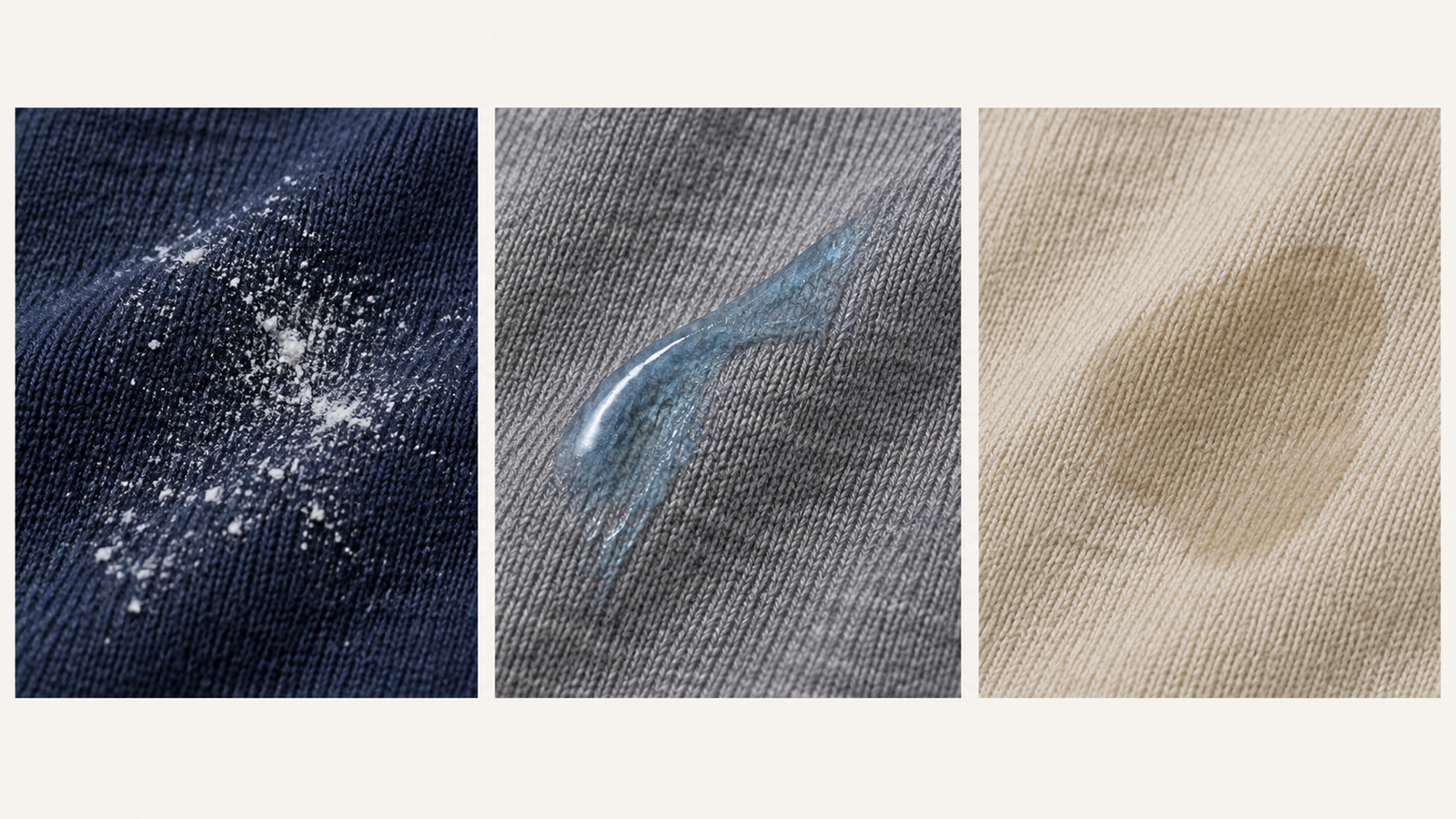
| Chalky, grainy, or white material sitting on dark fibers | Undissolved powder, excess product, lint, or mineral/soil residue | Brush off only loose dry particles, then test whether care-label-safe rinsing releases the rest |
| Blue, green, clear, or translucent streak with a slippery or gel-like feel | Concentrated liquid detergent or incompletely dispersed packet material | Rewet and rinse within the care-label limits; do not add more concentrated detergent to the spot |
| Darker, greasy, or waxy-looking patch | Fabric softener, a dryer-sheet deposit, or another oil-based soil | Use the separate softener route only when the item is washable and the mark fits that history |
| Lighter patch with normal texture and nothing that lifts or softens | Dye loss, abrasion, or a finish change | Stop stain treatment; cleaning cannot replace missing color or worn fibers |
| Similar marks across several items or repeated loads | Dose, loading, dispenser, detergent compatibility, water, or washer-maintenance issue | Treat one test item gently and troubleshoot the laundry process before repeating the load |
Use a water-first route for washable detergent residue
Read both sets of instructions
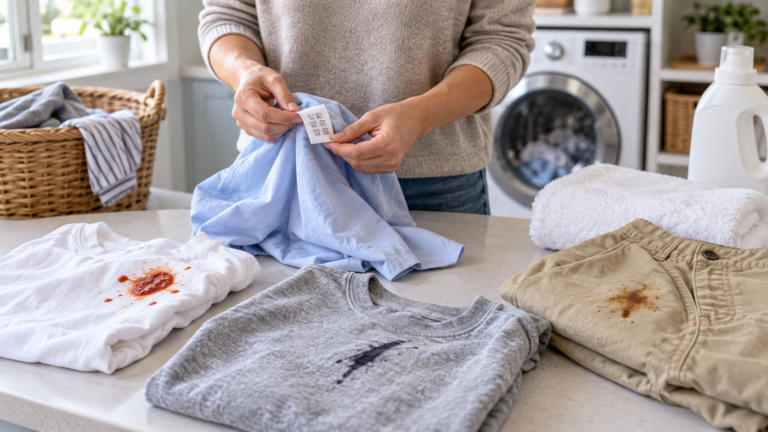
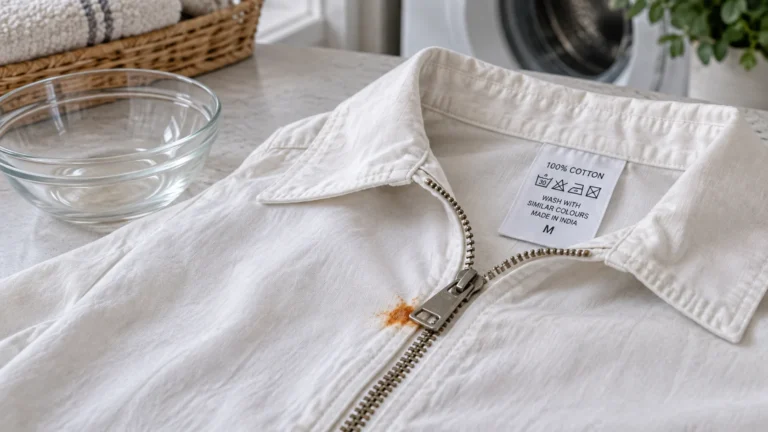
The sewn-in garment label sets the allowed washing, bleaching, and drying boundaries. The detergent or pretreatment label sets its dose, placement, fabric limits, and contact time. The washer manual controls where the product goes and whether an extra rinse or other cycle option is appropriate.
Keep dry-clean-only, non-washable, valuable, embellished, or color-unstable garments out of this general water route. Show an uncertain mark to a professional cleaner and explain which laundry products contacted it.
Remove loose material without grinding it in
For a chalky dry deposit, shake or lift only what releases easily. Do not use a stiff brush on knits, dark surfaces, prints, coatings, or raised fibers. If the mark is sticky, skip dry scraping because that can spread it.
Rewet and rinse within the garment limits
Hold the affected area under water at a temperature the care label allows. Work from the clean surrounding fabric toward the mark and gently move the fabric against itself only when its construction tolerates that handling. The goal is to move soluble residue out, not to scrub the surface until its texture or color changes.
Rinse until the area no longer feels unusually slippery or stiff. Stop if dye runs, a print lifts, fibers fuzz, or the mark becomes a lighter patch rather than removable material.
Choose the next wash by what is still on the garment
If the garment was otherwise clean and the problem was clearly excess product, a clear-water rinse or the washer’s approved extra-rinse option may be enough. If the garment still needs washing, use the detergent amount and type stated for the actual load, soil level, water conditions, and machine. Do not pour concentrated detergent onto dry fabric unless the product expressly directs that use.
Give the load enough room to move. Follow the exact packet, dispenser, or drum-placement instructions rather than assuming that every washer and detergent uses the same location.
Air-check instead of using heat as a test
Inspect the area while damp, then let it air-dry by the garment’s permitted method so water does not hide a faint film. If residue remains, repeat only a compatible rinse or labeled laundry treatment. Do not use dryer heat merely to discover whether the mark is gone; the mark may turn out to be oil, dye transfer, or another stain that needs a different route.
Use a separate route for a waxy softener mark
A greasy or blue-gray patch after direct softener contact is not handled exactly like powder residue. University of Georgia Extension recommends dampening a washable fabric-softener mark, rubbing it with bar soap, and laundering it. Keep that method narrow:
- Confirm that the garment may be washed and lightly rubbed.
- Test plain laundry or bath bar soap on a hidden area; avoid deodorant, exfoliating, or heavily colored bars.
- Dampen the mark, work a small amount of soap across it without aggressive brushing, and rinse thoroughly.
- Launder by the garment label and inspect before normal drying.
Do not use this route on dry-clean-only fabric, leather or suede, fragile trim, or any item whose care instructions prohibit the handling. If the mark is oily but no softener contacted the item, identify the actual oil source rather than repeating a softener treatment.
When the whole load has marks
Several affected garments point to the wash process, not dozens of unrelated spot stains. Review one load at a time:
- Dose: use the product’s measuring method for its concentration, the load size, and soil level. More detergent can create more residue; too little can also leave soil behind.
- Compatibility: use HE detergent when the washer requires it, and follow the detergent’s water-temperature and placement directions.
- Load size: tightly packed items have less room for water and product to circulate and rinse away.
- Dispenser: clean it only by the washer manual. Do not pry apart or chemically soak a part unless the manufacturer permits it.
- Washer condition: if residue returns with correct loading and dosing, use the model’s approved cleaning or service path. White marks can also be lint, body-soil interaction, or water-related residue.
Test the correction on ordinary, machine-washable items before exposing valuable clothing to another full load.
If the mark has already been through the dryer
Dryer exposure does not prove that a mark is permanent. Rewet a washable item, repeat the gentle residue route, and allow more than one label-safe attempt when the material and dye remain stable. Stop when repeated treatment changes the color, finish, or texture.
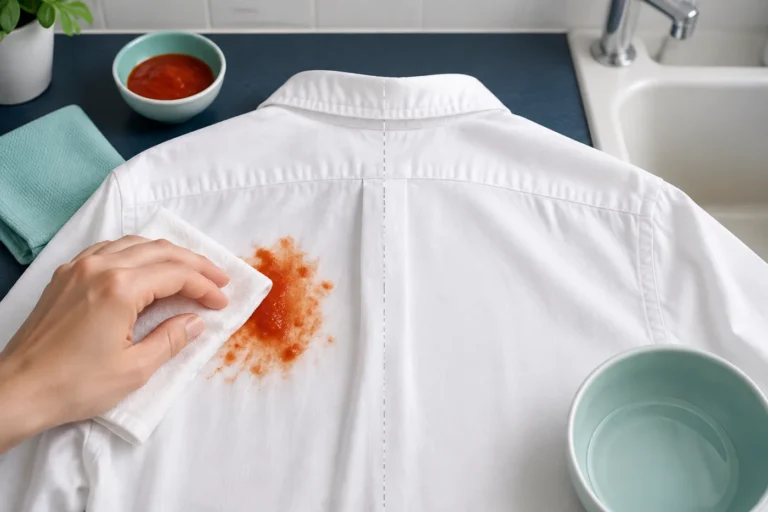
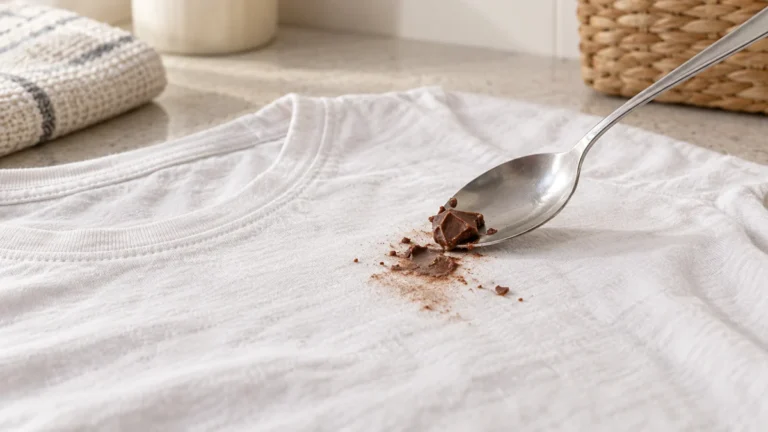
A pale area that remains the same after rinsing and has no surface deposit may be color loss rather than set detergent. A rusty orange-brown spot needs the separate cautions in the rust-stain guide. Red-orange food color or an oily halo belongs in the tomato-sauce guide, while cocoa or chocolate needs the chocolate-stain route. If the mark is paint rather than laundry-product residue, identify whether it is water- or oil-based and follow the paint-removal guide before using heat.
Stop home treatment when
- the garment is dry-clean-only, non-washable, valuable, embellished, or has an unreadable care label;
- the test area loses color, becomes rough, stretches, or changes finish;
- the mark is a light patch with no removable residue;
- an unknown chemical, bleach, solvent, or cleaning product may be present; or
- correct dosing, loading, rinsing, and manual-approved washer cleaning do not stop marks across later loads.
Safety first
Do not combine bleach with vinegar, ammonia, a stain remover, or another cleaner. The CDC warns that household bleach mixed with other cleaners can release dangerous vapors. Use one labeled method at a time, rinse as directed, and get fresh air and poison-control or emergency advice if products were accidentally mixed and fumes or symptoms occur.
Prevent the next residue mark
Use the exact detergent type, dose, and placement specified by its label and the washer manual. Leave enough room for the load to move, select a cycle intended for the fabric and load, and keep the dispenser clean by the appliance instructions. Put softener only where and when its label and the washer manual direct it; do not pour concentrated softener onto clothing.
When a mark appears again, note the affected fabric, detergent form, dose, load size, cycle, and location in the drum. That record is more useful for finding a repeatable cause than adding a different household ingredient after every wash.
Sources
- Federal Trade Commission: Clothes Captioning—Complying With the Care Labeling Rule
- American Cleaning Institute: Laundry Products and Detergents
- Whirlpool Product Help: Clothing Has White Residue
- Whirlpool: How to Remove Detergent Stains From Clothes
- University of Georgia Extension: Remove Stains From Fabric Softener and Bluing
- CDC: Cleaning and Disinfecting With Bleach